Junte-se a nós em uma viagem ao mundo dos livros!
Adicionar este livro à prateleira
Grey
Deixe um novo comentário Default profile 50px
Grey
Assine para ler o livro completo ou leia as primeiras páginas de graça!
All characters reduced
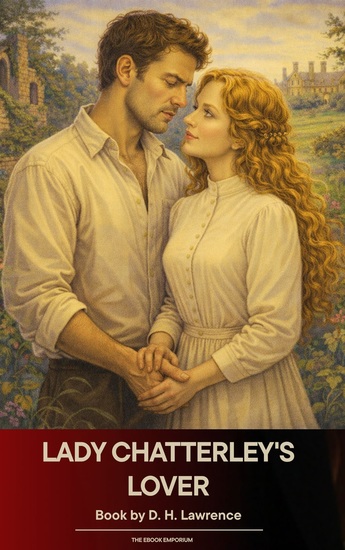
Lady Chatterley's Lover - cover
LER

Lady Chatterley's Lover

D. H. Lawrence

Editora: The Ebook Emporium

  • 0
  • 0
  • 0

Sinopse

What happens when love defies society's rules?

First published in 1928, Lady Chatterley's Lover by D. H. Lawrence is one of the most discussed and influential novels of the twentieth century. Banned for decades for its frank treatment of intimacy, the novel is now recognized as a profound exploration of human connection, emotional honesty, and personal freedom.

Set in post-World War I England, the story follows Constance Chatterley, trapped in a lifeless marriage and rigid class system. Her relationship with the gamekeeper Oliver Mellors becomes a deeply transformative experience—challenging social conventions, emotional repression, and the divide between mind and body.

More than a controversial love story, this novel is a bold critique of industrial society, class inequality, and emotional alienation. Lawrence's lyrical prose and psychological insight make the book as intellectually powerful as it is emotionally intense.

Inside this eBook, you'll experience:

A groundbreaking exploration of love and intimacy

Themes of class, individuality, and emotional awakening

One of the most important novels of modern literature

A work that reshaped attitudes toward freedom and expression

Now studied worldwide and celebrated as a literary masterpiece, Lady Chatterley's Lover remains essential reading for anyone interested in classic fiction, romance, and social commentary.

Read the novel that challenged society and changed literature. Buy now and experience one of the most influential classics of the modern age.
Disponível desde: 23/01/2026.
Comprimento de impressão: 262 páginas.

Outros livros que poderiam interessá-lo

  • Mansfield Park - Full Cast Drama - cover

    Mansfield Park - Full Cast Drama

    Jane Austen

    • 0
    • 0
    • 0
    Jane Austen's novel "Mansfield Park" is a rich tapestry of characters, relationships, and societal norms. Published in 1814, it stands as one of Austen's most intricate and morally complex works. At its heart, the novel is a nuanced exploration of morality, social class, and the individual's place within a rigidly stratified society. 
     
    The story revolves around the character of Fanny Price, a poor young girl who is sent to live with her wealthy relatives, the Bertrams, at Mansfield Park. Fanny's humble background sharply contrasts with the opulence of her new home, and she occupies a unique position within the Bertram family. As an outsider, Fanny serves as a keen observer of the behaviors, attitudes, and moral values of those around her. 
    Central to the novel is the idea of morality and virtue. Fanny is portrayed as a paragon of moral integrity, while other characters, like her cousin Maria Bertram and her brother Henry Crawford, reveal moral shortcomings. The contrast between Fanny's unwavering moral compass and the moral lapses of those around her highlights Austen's examination of the consequences of one's actions and the moral decay that can occur within a society obsessed with appearances and social status. 
     
    The novel also delves into the rigid social hierarchy of early 19th-century England. The Bertrams, as members of the landed gentry, occupy the highest rungs of the social ladder, while Fanny, a poor relation, occupies the lowest. Through Fanny's eyes, readers witness the subtle but significant ways in which social class impacts every aspect of life, from marriage prospects to personal worth. This social commentary forces readers to confront the inherent inequalities of the era and consider the moral implications of a society that values wealth and social standing over character and virtue.
    Ver livro
  • A Funny Man's Dream - cover

    A Funny Man's Dream

    Fyodor Dostoyevsky

    • 0
    • 0
    • 0
    Dostoyevsky was never shy to play with the issues of human mind in his work. A funny man's dream is one of his shorter pieces that, nevertheless, lacks none of the profundity or the mind-bending power of his larger works.
    Ver livro
  • The Brothers Karamazov - cover

    The Brothers Karamazov

    Anônimo

    • 0
    • 0
    • 0
    The Brothers Karamazov, also translated as The Karamazov Brothers, is the last novel by Russian author Fyodor Dostoevsky. Dostoevsky spent nearly two years writing The Brothers Karamazov, which was published as a serial in The Russian Messenger from January 1879 to November 1880. Dostoevsky died less than four months after its publication. It has been acclaimed as one of the supreme achievements in world literature.
    
    Set in 19th-century Russia, The Brothers Karamazov is a passionate philosophical novel that discusses questions of God, free will, and morality. It has also been described as a theological drama dealing with problems of faith, doubt, and reason in the context of a modernizing Russia, with a plot that revolves around the subject of patricide. Dostoevsky composed much of the novel in Staraya Russa, which inspired the main setting.
    Ver livro
  • Young Man on a Bicycle and The Goldini Bath - cover

    Young Man on a Bicycle and The...

    Victor Canning

    • 0
    • 0
    • 0
    Victor Canning’s light-hearted and cleverly plotted novella set on the beautiful French Riviera 
     
    Young Paul Ashcroft has travelled to the beautiful French Riviera. His goal: to make a lot of money. His methods: more than questionable. Following his motto ‘the world owes me a living’, he steals and swindles – using what he needs for himself and passing on the rest to those less fortunate. 
     
    After coming across the beautiful Villa Triton, he disguises himself as M. Durobat, a middle-aged Frenchman, to inspect the villa and to pawn the owner’s ornaments and paintings. At the local Casino, he becomes acquainted with the rich ladies of the resort. As he steals their jewellery, he blames the robberies on 'Gringo the Greek', a small crook he knew a long time ago.  
     
    But just as Paul's schemes and tricks start to be fruitful and he falls in love with the intriguing Elise Benoit, the real Gringo the Greek appears on the scene, ready to take on the cunning thief who has been blaming him all this time… 
    Praise for Victor Canning: 
     
    ‘Quite delightful … with an atmosphere of quiet contentment and humour that cannot fail to charm’ Daily Telegraph 
     
    ‘What counts for most in the story … is his mounting pleasure in vagabondage and the English scene’ The Times 
     
    ‘A paean to the beauties of the English countryside and the lovable oddities of the English character’ New York Times 
     
    ‘His delight at the beauties of the countryside and his mild astonishment at the strange ways of men are infectious’ Daily Telegraph 
     
    ‘A swift-moving novel, joyous, happy and incurably optimistic’ Evening Standard
    Ver livro
  • History of the Necronomicon The (Unabridged) - cover

    History of the Necronomicon The...

    H. P. Lovecraft

    • 0
    • 0
    • 0
    "History of the Necronomicon" is a short text written by H. P. Lovecraft in 1927, and published in 1938. It describes the origins of the fictional book of the same name: the occult grimoire Necronomicon, a now-famous element of some of his stories. The short text purports to be non-fiction, adding to the appearance of 'pseudo-authenticity' which Lovecraft valued in building his Cthulhu Mythos oeuvre. Accordingly, it supposes the history of the Necronomicon as the inspiration for Robert W. Chambers' The King in Yellow, which concerns a book that overthrows the minds of those who read it.
    Ver livro
  • Catriona - cover

    Catriona

    Robert Louis Stevenson

    • 0
    • 0
    • 0
    "Catriona, also known as David Balfour, is an 1893 novel written by Robert Louis Stevenson as a sequel to his earlier work, Kidnapped (1886) 1. The novel continues the story of the central character, David Balfour.    The plot unfolds in two distinct parts:      Edinburgh    Edinburgh, Scotland (1751): The book begins precisely where Kidnapped ends, at 2 pm on August 25, 1751, outside the British Linen Company in Edinburgh, Scotland. David Balfour endeavors to seek justice for James Stewart (James of the Glens), who has been arrested and charged with complicity in the Appin Murder. Despite his efforts, David is once again kidnapped and confined on the Bass Rock, an island in the Firth of Forth, until James' trial concludes, resulting in James being condemned to death. During this time, David falls in love with Catriona MacGregor Drummond, the daughter of James More, also held in prison. Catriona engineers her father's escape 1.    Holland    Holland: In the second part, David and Catriona travel to Holland, where David studies law at the University of Leyden. Catriona, having no money, is under David's protection. James More eventually arrives but proves to be a disappointment, living off David's largesse. David learns of his uncle Ebenezer's death and discovers that he has inherited a substantial fortune. Despite misunderstandings, David and Catriona remain fast friends. James and Catriona eventually find their way to Dunkirk in northern France. Meanwhile, Alan Breck joins David in Leyden and imparts his wisdom on understanding women 1.  Catriona weaves together adventure, romance, and the complexities of human relationships, making it a captivating continuation of David Balfour's journey"
    Ver livro