Begleiten Sie uns auf eine literarische Weltreise!
Buch zum Bücherregal hinzufügen
Grey
Einen neuen Kommentar schreiben Default profile 50px
Grey
Jetzt das ganze Buch im Abo oder die ersten Seiten gratis lesen!
All characters reduced
Improvised Munitions Handbook - cover

Improvised Munitions Handbook

Defense U.S. Department of

Verlag: DigiCat

  • 0
  • 0
  • 0

Beschreibung

The "Improvised Munitions Handbook," published by the U.S. Department of Defense, serves as a vital resource in the realm of unconventional warfare and military strategy. This meticulously crafted manual outlines various techniques for crafting improvised explosive devices and munitions, reflecting a pragmatic, detail-oriented literary style aimed at military personnel and field operatives. Drawing on a rich context of military history and counterinsurgency efforts, the handbook synthesizes empirical knowledge and tactical insights into a coherent guide that addresses the complexities of asymmetric warfare. The U.S. Department of Defense has a long-standing commitment to equipping military forces with effective strategies and tools. This handbook emerges from a pressing need to adapt to evolving combat scenarios where traditional tactics may fall short. The authors, comprising military strategists and tactical experts, have produced this volume to share critical knowledge that underscores the importance of ingenuity and resourcefulness in conflict situations, particularly in guerrilla warfare environments. Highly recommended for military professionals, security analysts, and scholars of defense studies, the "Improvised Munitions Handbook" is an indispensable text that unveils the reality of modern warfare. Readers seeking to understand unconventional tactics and the rationale behind improvisation in military contexts will find this handbook both enlightening and practical.
Verfügbar seit: 13.11.2022.
Drucklänge: 95 Seiten.

Weitere Bücher, die Sie mögen werden

  • Marked by the Music Master (Gay Age Gap Erotica) - cover

    Marked by the Music Master (Gay...

    Archer Vale

    • 0
    • 0
    • 0
    Become the flute. I need to become the flute. 
    A rare opportunity—private music lessons with my professor. 
    His teaching methods are unconventional. He stands behind me, arms wrapped around my frail body while he guides my trembling fingers. The tight chastity cage in my underwear is a constant reminder of what we’ve done… 
    To become skilled, he says I need to become one with the instrument. I need to let his music flow into my brain. 
    Becoming the instrument…becoming an object. 
    Flutes don’t think. They just sit with an open hole, waiting for a man to breathe inside. 
    --- 
    CONTAINS EXPLICIT GAY SEXUAL CONTENT. 
    For exclusive stories, visit www.ArcherVale.com.
    Zum Buch
  • Re(start) - Moving from despair to defiance - cover

    Re(start) - Moving from despair...

    Tara Brabazon

    • 0
    • 0
    • 0
    How do we make change, particularly in difficult times?  How to do we transcend the confusion, anger and fear?  While cliches like quiet quitting and deaths of despair punctuate our present, why do these phrases – and these tragic realities - exist?  This book – ReStart:  moving from despair to defiance - walks with you through change.  To restart.  To return meaning to your life in a careful, embedded compassionate and way.  We build a mattering map for your life.
    Zum Buch
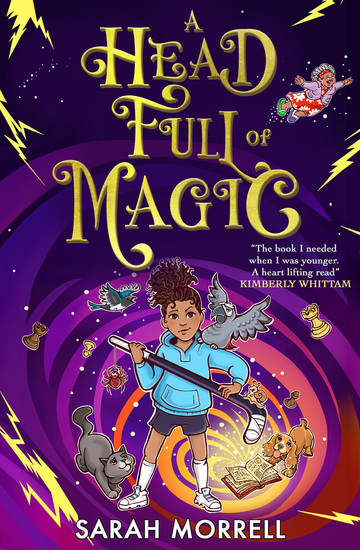
  • A Head Full of Magic - cover

    A Head Full of Magic

    Sarah Morrell

    • 0
    • 0
    • 0
    Fleur is used to balancing her two different cultures from her English Mum to her West Indian Nan but when she discovers that she can talk to animals she finds herself in a whole new world! Can her new powers help her take down Celeste 'The Best' the hockey-loving, ankle-smashing new girl, once and for all?
    Zum Buch
  • Foolproof - Why Misinformation Infects Our Minds and How to Build Immunity - cover

    Foolproof - Why Misinformation...

    Sander van der Linden

    • 0
    • 0
    • 0
    From fake news to conspiracy theories, from inflammatory memes to misleading headlines, misinformation has swiftly become the defining problem of our era. The crisis threatens the integrity of our democracies, our ability to cultivate trusting relationships, even our physical and psychological well-being—yet most attempts to combat it have proven insufficient. 


    With remarkable clarity, Sander van der Linden explains why our brains are so vulnerable to misinformation. Like a virus, misinformation infects our minds, exploiting shortcuts in how we see and process information to alter our beliefs, modify our memories, and replicate at astonishing rates. Once the virus takes hold, it's very hard to cure. 


    But we aren't helpless. As van der Linden shows based on award-winning original research, we can cultivate immunity through the innovative science of "prebunking": inoculating people against false information by preemptively exposing them to a weakened dose, thus empowering them to identify and fend off its manipulative tactics. Deconstructing the characteristic techniques of conspiracies and misinformation, van der Linden gives listeners practical tools to defend themselves and others against nefarious persuasion—whether at scale or around their own dinner table.
    Zum Buch
  • Greatest Indigenous Empires in the Americas The: The History of the Groups that Dominated the Western Hemisphere Before Columbus - cover

    Greatest Indigenous Empires in...

    Editors Charles River

    • 0
    • 0
    • 0
    The Olmec people are widely recognized as the first major civilization of Mexico and are thus generally regarded as the mother civilization of Mesoamerica, making them the people from which all subsequent Mesoamerican cultures derived. In fact, the term Olmec is thought to have originated with the Aztec people, as Olmec in their Nahuatl language means “the rubber people”, a reference to the inhabitants of the land from which they accessed rubber. By and large, the Olmec culture is perhaps best identifiable by their so-called colossal heads, mammoth basalt head-statues wearing helmet-like headdresses found throughout Olmec habitation sites. 
    	From the moment Spanish conquistador Hernan Cortes first found and confronted them, the Aztecs have fascinated the world, and they continue to hold a unique place both culturally and in pop culture. Nearly 500 years after the Spanish conquered their mighty empire, the Aztecs are often remembered today for their major capital, Tenochtitlan, as well as being fierce conquerors of the Valley of Mexico who often engaged in human sacrifice rituals. Ironically, and unlike the Mayans, the Aztecs are not widely viewed or remembered with nuance, in part because their own leader burned extant Aztec writings and rewrote a mythologized history explaining his empire’s dominance less than a century before the Spanish arrived.  
    	While scholars continue to debate whether the Toltec were an actual historical group, there is an added layer of mystery to the fact that the settlement at Tula has a lot in common with the famous Mayan settlement at Chichén Itzá. The architecture and art at both sites are so similar that archaeologists and anthropologists have assumed they had the same cultural influences, even as historians struggle to determine the historical timelines, and thus whether Tula influenced Chichén Itzá or vice versa. 
    Zum Buch
  • Ballers of the New School - Race and Sports in America - cover

    Ballers of the New School - Race...

    Thabiti Lewis

    • 0
    • 0
    • 0
    Ballers of the New School is one of the first and best books to come along that effectively explains contemporary athletes and the public response to them.  It asks readers to consider the role of race in the sweaty as well as the sweat-free zones of sport. It challenges the well-worn narrative of sport as America's most significant site of racial progress by scrutinizing the true role of sport in mobilizing and shaping definitions, social relations, and public life.American sport culture performs and propagates rituals, symbols, and expressions of fear and difference that sustain racism, and notions of racial supremacy and block bridges to racial progress.  
     The text encourages a restructuring of the power of the racial subtexts thrust into sporting arenas, upon the bodies of athletes of color, and into the mind and hearts of spectators via the racial contract.  The book's impetus is for readers to emerge with more truthful narratives, more honest dialogues, better American values, better social relations, and hopefully, using this new vision of sports culture as a model, real change.
    Zum Buch