Begleiten Sie uns auf eine literarische Weltreise!
Buch zum Bücherregal hinzufügen
Grey
Einen neuen Kommentar schreiben Default profile 50px
Grey
Jetzt das ganze Buch im Abo oder die ersten Seiten gratis lesen!
All characters reduced
Transsexual Apostate - My Journey Back to Reality - cover

Transsexual Apostate - My Journey Back to Reality

Debbie Hayton

Verlag: Forum

  • 0
  • 0
  • 0

Beschreibung

'Brave and deeply considered… Her experience, and Transsexual Apostate, shouldn't be dismissed' The Telegraph
In a compelling first-hand account of what it means to be a transwoman – and where she feels the impulse comes from – Hayton explains why much of gender identity ideology is, in her view, false and damaging. Once a prominent member of the TUC LGBT+ committee, she charts how her views developed and put her at odds with the majority of trans activists. She issues a compassionate call to move beyond ideological conflicts, and to acknowledge the legitimate concerns that many have with an agenda that asserts that transwomen are women.
Hayton's honest, humane and moving book shows that by accepting reality, transwomen can live their best lives based on the truth of who they are – rather than the fantasy of who they are not.
'Brave, unflinching, insightful' - Professor Michael Bailey, author ofThe Man Who Would Be Queen
Verfügbar seit: 08.02.2024.
Drucklänge: 224 Seiten.
Weitere Bücher, die Sie mögen werden

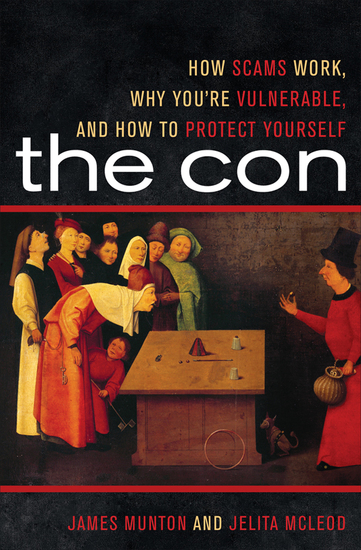
  • The Con - How Scams Work Why You're Vulnerable and How to Protect Yourself - cover

    The Con - How Scams Work Why...

    James Munton, Jelita McLeod

    • 0
    • 0
    • 0
    “[A] fascinating, informative, and highly entertaining primer on the various ways the uninitiated may find themselves ripped off by a con artist.” —Publishers Weekly   No one thinks it can happen to them, but Americans are forty times more likely to be defrauded than to have their cars stolen or their homes burgled. Con artists ruin people financially and emotionally, leaving in their wake a trail of destruction, broken hearts, and deflated dreams.    The first step to combating fraud is to understand it. What do scams look like? Why are they effective? The next step is to take action. How can we protect ourselves and our families? The Con: How Scams Work, Why You’re Vulnerable, and How to Protect Yourself informs and engages with accessible stories of ordinary people from all walks of life thrown into unexpected and disorienting circumstances. The book goes behind the scenes of real-world cons to examine the logistics and psychology that enable scams to succeed. The goal is to help people understand and recognize deception, and in the same way that they avoid other potentially dangerous situations, take a detour. Once readers have gained a clear idea of what scams look and sound like and learned simple strategies to reduce personal risk, protecting themselves will be just as instinctive as putting on a seat belt.  “This compelling work goes a long way toward putting distance between scammers and their prey.” —Foreword Reviews  “Completely fascinating and insightful.” —Booklist  
    Zum Buch
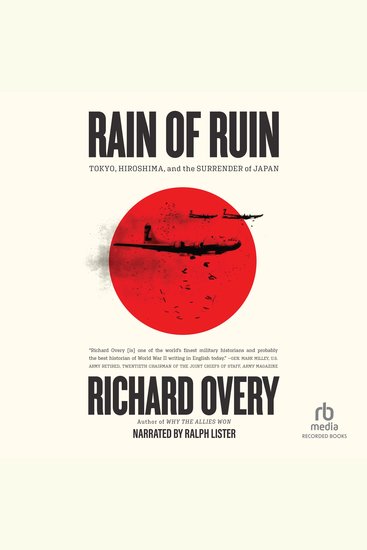
  • Rain of Ruin - Tokyo Hiroshima and the Surrender of Japan - cover

    Rain of Ruin - Tokyo Hiroshima...

    Richard Overy

    • 0
    • 0
    • 0
    A leading historian of World War II sheds new light on the purposes and impact of the U.S. incendiary and atomic bombing of Japan’s cities in 1945. 
      
    With the development of the B-29 “Superfortress” in summer 1944, strategic bombing, a central component of the Allied war effort against Germany, arrived in the Pacific theater. In 1945 Japan experienced the three most deadly bombing attacks of the war. The firebombing of Tokyo in March burned the city’s most densely populated sector, killed some 85,000 residents, and left more than one million homeless. The attack was part of a months-long campaign of incendiary bombing that destroyed almost two-thirds of Japan’s cities. The two atomic blasts in August killed hundreds of thousands in Hiroshima and Nagasaki, most of them civilians. The bombing brought a destabilizing devastation that, combined with a declaration of war by the Soviet Union, induced Japan, as they put it, to terminate the war. 
      
    Many at the time and since have credited American air power, and especially the two atomic bombs, with Japan’s surrender. But Richard Overy tells a different, more dimensional story. Drawing on his expertise on the war and its bombing campaigns, he delivers a precise recounting of these aerial attacks, and a balanced, informed assessment of how and why they occurred. Overy is astute on the Allied decision-making, and, notably, integrates the Japanese leadership as well. He ably navigates the dramatic endgame of the war, which featured factional infighting within the Japanese cabinet, a scramble by American officials to formulate an acceptable version of “unconditional surrender,” and the crucial role played by the emperor, Hirohito. The atomic bombing emerges as impactful but not decisive in this rich, multilayered history.
    Zum Buch
  • Maximize Your Influence - How to Make Digital Media Work for Your Church Your Ministry and You - cover

    Maximize Your Influence - How to...

    Phil Cooke

    • 0
    • 0
    • 0
    This is your ticket to make the digital revolution work for you. 


    The digital age has changed everything we know about engaging this culture with the gospel message. And now media producer and consultant Phil Cooke has created the ultimate reference to help pastors and church leaders speak the language of this generation. Whether you lead a church of 20 or 20,000, this information will help take your ministry to the next level. The need to share our message never changes, but how we share it does, and this is the moment to embrace the digital world. It's not about being famous. It's about saying something that matters, and nothing matters more than the gospel. 


    Maximize Your Influence in: branding and positioning; marketing, communication, and websites; social media, video, digital, and streaming media; publishing, television, and fundraising; and handling a crisis; plus so much more!
    Zum Buch
  • Through the Morgue Door - One Woman’s Story of Survival and Saving Children in German-Occupied Paris - cover

    Through the Morgue Door - One...

    Colette Brull-Ulmann,...

    • 0
    • 0
    • 0
    In 1934, at the age of fourteen, Colette Brull-Ulmann knew that she wanted to become a pediatrician. By 1942, Brull-Ulman and her family had become registered Jews under the ever-increasing statutes against them enacted by Petain's government. Her father had been arrested and interned at the Drancy detention camp and Brull-Ulman had become an intern at the Rothschild Hospital. 


    Under Claire Heyman, a charismatic social worker who was a leader of the hospital's secret escape network, Brull-Ulmann began working tirelessly to rescue Jewish children treated at the Rothschild. Ultimately, Brull-Ulmann was forced to flee the Rothschild in 1943, when she joined her father's resistance network, gathering and delivering information for De Gaulle's secret intelligence agency until the Liberation in 1945. 


    In 1970, Brull-Ulmann finally became a licensed pediatrician. It wasn't until decades later when she finally started to speak publicly—not only about her own work and survival, but about the one child who affected her most deeply. Originally published in French in 2017, Brull-Ulmann's memoir fearlessly illustrates the horrors of Jewish life under the German Occupation and casts light on the heretofore unknown story of the Rothschild Hospital during this period.
    Zum Buch
  • Sea of Troubles - The European Conquest of the Islamic Mediterranean and the Origins of the First World War - cover

    Sea of Troubles - The European...

    Ian Rutledge

    • 0
    • 0
    • 0
    In the mid-eighteenth century, most of the Mediterranean coastline and its hinterlands were controlled by the Ottoman Empire, a vast Islamic power regarded by Christian Europe with awe and fear. By the end of the First World War, however, this great civilisation had been completely subjugated, and its territories occupied by European powers. Sea of Troubles is the definitive account of the European conquest of the Levant and North Africa over three centuries. Ian Rutledge reveals the intense imperial rivalry between six European powers - Britain, France, Italy, Spain, Austria-Hungary and Russia - who all jostled for control of the trade, lands and wealth of the Islamic Mediterranean. The competition between these states made their conquest a far more difficult and extended task than they encountered elsewhere in the world. Yet, as new contenders entered the contest, and as rivalries intensified in the early twentieth century, events would spiral out of control as the continent headed towards the First World War.
    Zum Buch
  • Ancient and Medieval Conspiracy Theories: The History of the World’s Most Persistent Conspiracy Theories - cover

    Ancient and Medieval Conspiracy...

    Editors Charles River

    • 0
    • 0
    • 0
    Perhaps it should also not be surprising that the themes found in contemporary conspiracy theories are often echoed in ancient conspiracy theories. While some people still insist that Lyndon B. Johnson was in on John F. Kennedy’s assassination, it was speculated across the ancient world that the young Macedonian king, Alexander the Great, conspired to have his own father, Philip II of Macedon, assassinated. Likewise, the New Age beliefs that Mesoamerican ruins in Mexico were somehow tied to extraterrestrials find common cause with people who believe the ancient Indus Valley site at Mohenjo-daro was destroyed by a nuclear weapon. And through it all, the lack of surviving documentary evidence about much of antiquity has allowed for all of the unknowns to become highly speculative sources of debate. For example, did Caesar’s men burn the Library of Alexandria in the 1st century B.C., or was it destroyed later, if at all? Some people even suggest that the Library of Alexandria, whose ruins have never been located, never existed at all.  
    	Few eras are easier to let the imagination run wild than the Middle Ages, which have often been coined the Dark Ages based on a perceived lack of progress and information. In some respects, that is not completely unfounded because less is known about that historical period compared to the eras that came after it. In addition, it was a period marked by a great number of deaths caused by plague epidemics, crusades, and inquisitorial persecutions. Often, researchers are not even sure how and why certain events happened, and these mysteries still occupy the attention of historians. 
    	At the same time, some historical mysteries about the era may never be solved, if only because the relevant excavated material has been lost or the archaeological site has been destroyed. Of course, the lack of answers only makes these enigmas more intriguing. 
    Zum Buch