Rejoignez-nous pour un voyage dans le monde des livres!
Ajouter ce livre à l'électronique
Grey
Ecrivez un nouveau commentaire Default profile 50px
Grey
Abonnez-vous pour lire le livre complet ou lisez les premières pages gratuitement!
All characters reduced
Social Confidence - cover

Social Confidence

Dawn Chekulski

Traducteur A AI

Maison d'édition: Publifye

  • 0
  • 0
  • 0

Synopsis

"Social Confidence" explores the vital connection between communication skills and social anxiety, offering a self-help guide to building stronger relationships. It acknowledges that social confidence isn't an innate trait but a skill developed through understanding and practice. The book delves into how social anxiety can hinder effective communication—such as active listening and assertive communication—highlighting how fear of judgment often leads to avoidance. It presents actionable strategies, including cognitive behavioral therapy techniques, to challenge negative thoughts and foster more adaptive behaviors. 

 
Beginning with communication theory, the book transitions into examining the causes and symptoms of social anxiety. It then introduces practical strategies for building communication skills, like improving nonverbal communication and active listening. This approach emphasizes empowering readers to take control of their social interactions by managing anxiety and building genuine connections. The book's approach synthesizes these elements, offering a holistic path to building social confidence. It provides real-world scenarios to demonstrate how these strategies can be applied in everyday life. 

 
Readers gain tools to initiate conversations, manage anxiety, build rapport, and assert their needs effectively, making this book a valuable resource for anyone seeking to overcome shyness and improve their interpersonal relationships.
Disponible depuis: 14/03/2025.
Longueur d'impression: 112 pages.


D'autres livres qui pourraient vous intéresser

  • Fight for Free Speech The: Rock Icon Dee Snider Addresses a 1985 US Senate Hearing On Music Content Labeling - cover

    Fight for Free Speech The: Rock...

    Dee Snider

    • 0
    • 0
    • 0
    On September 19, 1985, a US Senate hearing was instigated by the Parents Music Resource Center (PMRC)--founded by Tipper Gore, wife of Senator and later Vice President Al Gore; and Susan Baker, wife of Treasury Secretary James Baker--who wanted to introduce a parental warning system that would label all music albums containing alleged offensive material. The system was to include letters identifying the type of objectionable content to be found in each album (O for occult themes, S for sex, D for drugs, V for violence, etc.).


    Dee Snider, lead singer and primary songwriter for the rock band Twisted Sister, John Denver, and Frank Zappa all testified against censorship and the proposed warning system. Such a system was never implemented, but the result of the hearing brought about what was known as the "Parental Advisory: Explicit Content" label.
    Voir livre
  • Dreyfus Affair and the Leo Frank Trial The: The History of the Most Notorious Antisemitic Cases in France and America - cover

    Dreyfus Affair and the Leo Frank...

    Editors Charles River

    • 0
    • 0
    • 0
    In September 1890, among a pile of torn-up documents delivered by Mme. Bastian was found a note handwritten in French which, when pieced together, proved to be a list of French military secrets handed over to the Germans by an unknown French officer of the General Staff. This discovery, which proved the existence of a traitor in the department, triggered a ferment in the corridors of the Conseil Supérieur de la Guerre, and the hunt was on for the culprit. By a process of elimination, officers of the military intelligence were able to narrow down a list of probable traitors, among whom was a young Jewish staff officer, Captain Alfred Dreyfus, who was immediately earmarked as the chief suspect.  
    	These are the essential facts of the “Dreyfus Affair,” as it came to be known, an episode that in many respects defined French anti-Semitism in the late 19th century. A case was built with the central objective of protecting the integrity of French military establishment, and in the process, the relatively muted anti-Semitism in France (at least compared to other European nations) was transformed into an era of virulent and violent Jew-hatred that characterized and sullied the final decade of the 19th century in France. Even today, as many of the affair’s nuances and facets have faded from memory, its political importance and anti-Semitic elements continue to be well-known and quite relevant today.  
    In 1913, Mary Phagan, a young Georgia factory girl and the daughter of tenant farmers, was raped and killed, and suspicion fell upon Leo Frank, the Jewish-American factory manager, who was subsequently arrested, tried, and convicted of her murder based on the thinnest of circumstantial evidence. The entire case against Frank rested on the testimony of the factory janitor, Jim Conley, despite the fact Conley had been arrested almost immediately after Frank when he was spotted washing what appeared to be blood off his clothes. 
    Voir livre
  • Urban Geography - Patterns and Processes in Cities - cover

    Urban Geography - Patterns and...

    Lyric Vale

    • 0
    • 0
    • 0
    Urban geography is a specialized subfield within human geography that focuses on the spatial aspects of cities and urban areas. It seeks to understand the patterns, processes, and interactions that shape the development of cities, as well as the complex dynamics between urban spaces and the broader environment. This discipline is essential for comprehending how cities evolve, function, and adapt to the challenges of urbanization in a rapidly changing world. 
    The role of cities in geography is multifaceted. Cities are not only the centers of economic, political, and cultural activity but also crucial nodes in the global network. They function as hubs for trade, finance, education, and innovation, while also representing unique environments that reflect the broader social, economic, and environmental conditions of their regions. Urban areas often act as catalysts for growth and change, influencing not just their immediate surroundings but the larger global landscape as well. 
    At the core of urban geography lies the exploration of key concepts that shape the organization and transformation of cities. These concepts include urbanization, which refers to the increasing concentration of populations in cities, and urban systems, which describe the networks and interconnections between various urban centers. Additionally, urban geography explores issues like land use, transportation, housing, and social dynamics, all of which play a significant role in the functioning of urban environments.
    Voir livre
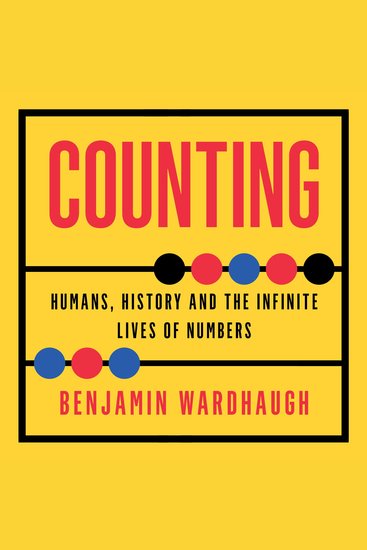
  • Counting: Humans History and the Infinite Lives of Numbers - cover

    Counting: Humans History and the...

    Benjamin Wardhaugh

    • 0
    • 0
    • 0
    WHAT DOES IT MEAN TO COUNT? WHY ARE HUMANS THE ONLY SPECIES ON EARTH THAT CAN DO IT? WHERE DID COUNTING COME FROM? HOW HAS IT SHAPED SOCIETIES ALONG THE WAY? AND WHY DOES IT MATTER? 
    Counting is an innovative, erudite, world-wrapping journey through humanity’s marvellous ability to impose numbers on things. Acclaimed historian and mathematician Benjamin Wardhaugh draws on stories from the Stone Age to cyberspace in pursuit of the elusive, fascinating, endlessly diverse history of human counting. 
    Starting with the roots of counting in human brains, bodies and environments, Wardhaugh tours us around the world and through time while exploring the different flavours of counting that have developed over millennia. We meet the makers of bead necklaces in ancient South Africa, the inventors of writing in the world ’ s first metropolis, and the ‘counter culture’ of classical Athens. We see counting used – and changed – by Indian scholars, Chinese peasants and Papuan shopkeepers; we meet the distinctive numerate agendas of Mayan kings, US governments and Korean vloggers. 
    Weaving these stories together, Wardhaugh shows how cultures have shaped counting, and how counting has shaped culture, in a rich tapestry spanning thousands of years. This is the vast story of human attempts to find some order in an unruly world; or, perhaps, to impose on a reluctant world the order that humans find within themselves. It is a history as wide, deep and tangled as that of humanity itself 
    This best non-fiction book by Wardhaugh is a deep dive into the philosophy and technology behind counting. His teaching style and comprehensive study of mathematics make this book a standout in its genre. 
    For fans of David Spiegelhalter (The Art of Uncertainty), Cat Bohannon (Eve), Rory Stewart (The Marches), Anne Applebaum (Autocracy, Inc), and Peter Frankopan (The New Silk Roads). 
    HarperCollins 2024
    Voir livre
  • OCD - Understanding and Handling Compulsive Behavior - cover

    OCD - Understanding and Handling...

    Dave Rodan

    • 0
    • 0
    • 0
    Study what Obsessive Compulsive Disorder is and how to deal with it the best way.  
    Obsessive Compulsive Disorder (OCD) can be a strong disorder and the tendencies pertaining to it can be challenging to manage, but if we learn to comprehend what it means, what the symptoms are, and what its main roots are, we will be better at handling the effects of it. Furthermore, symptoms can be treated and people who have it, can be cured. In this book, the author gives his audience some valuable insights as to how to do that.  
    You will listen to:The most usual symptoms of Obsessive Compulsive Disorder.The explanation and description of OCD.Biological, mental, and environmental causes.More about treatments, medication, and solutionsBrain science and neural background information about the disorder.Ways to handle those who show symptoms of OCD, whether they are kids or adults.And much more! 
    So don’t wait and start listening immediately! Buy this audiobook now!
    Voir livre
  • Starting a World War: The History of the Events and Battles that Began World War I and World War II - cover

    Starting a World War: The...

    Editors Charles River

    • 0
    • 0
    • 0
    By the 20th century, warfare was nothing new to the European powers, especially when it came to fighting each other. Conflicts had been a mainstay on the European continent for over two millennia. Even after the Napoleonic wars had enveloped Europe in large scale war for nearly 20 years in the 19th century, the Europeans’ imperialism continued unabated. It would take the devastation of World War I to shock Europe and jolt the world’s superpowers out of their imperialistic tendencies.  
    	With Europe anticipating a potential war, all that was missing was a conflagration. That would start in 1908, when Austria-Hungary annexed Bosnia-Herzegovina in the Balkan Peninsula, drawing it into dispute with Russia. Moreover, this upset neighboring Serbia, which was an independent nation. From 1912-1913, a conflict was fought in the Balkans between the Balkan League and the Ottoman Empire, resulting in the weakening of the Ottoman Turks. After the First Balkan War, a second was fought months later between members of the Balkan League itself. The final straw came June 28, 1914, when a Serbian assassinated Archduke Franz Ferdinand, the heir to the throne of Austria-Hungary, in Sarajevo, Bosnia.   
    The Munich Agreement is widely reviled today and is held up as the epitome of appeasement, but historians still debate its effects on the Second World War, as well as Neville Chamberlain's character and motivations. Some believe the attempted appeasement of Nazi Germany hastened, or even caused, the mayhem occupying the next seven years. Others believe that the pact merely failed to alter war's inevitable arrival in either direction.  
    Of course, as most people now know, the invasion of Poland was merely the preface to the Nazi blitzkrieg of most of Western Europe, which would include Denmark, Belgium, and France by the summer of 1940
    Voir livre