Rejoignez-nous pour un voyage dans le monde des livres!
Ajouter ce livre à l'électronique
Grey
Ecrivez un nouveau commentaire Default profile 50px
Grey
Abonnez-vous pour lire le livre complet ou lisez les premières pages gratuitement!
All characters reduced
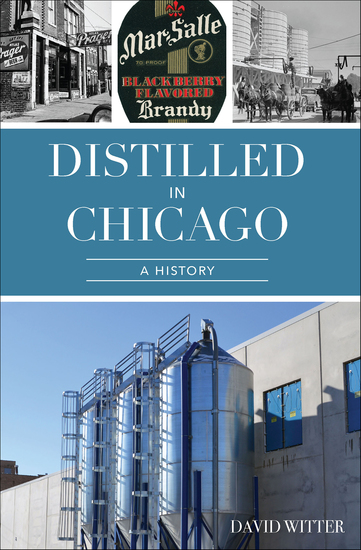
Distilled in Chicago - A History - cover

Distilled in Chicago - A History

David Witter

Maison d'édition: The History Press

  • 0
  • 0
  • 0

Synopsis

From the mash in pioneer stills to the Malört in a hipster's shot glass , David Witter explores how liquor has influenced nearly two centuries of Chicago's existence.Follow the trickle of alcohol through Chicago's history, starting with the town's first three permanent businesses: The Wolf, Green Tree and Eagle Exchange Taverns. Stir together stories from the Peoria Whiskey Trust and the Temperance Movement. The cocktails that lubricated the Levee District may have set up Chicago's first gangsters, but Prohibition-era bootleggers would change the city's identity forever. Post-Prohibition alcohol helped to create vast fortunes for Chicago based families and corporations, and the new Millennium saw KOVAL usher in a new era small and craft distilleries throughout Chicagoland. Sample a spirited history of the Windy City.
Disponible depuis: 31/10/2022.
Longueur d'impression: 130 pages.

D'autres livres qui pourraient vous intéresser

  • Chief Energy Officer- the #newCEO - How High-Performing Leaders Manage People Pressure and Profit to Build Thriving Organizations - cover

    Chief Energy Officer- the...

    Suzy Siegle

    • 0
    • 0
    • 0
    What is leadership energy? How important is energy for leaders? 
    The role of the #newCEO is less about being an executive and more about being the organization's Chief Energy Officer. 
    This book explains why energy is the secret sauce for leaders, and how the right type of energy elevates culture, communication and organizational success. 
    And the best part? You don't have to be in the "C-Suite" to be your organization's Chief Energy Officer!
    Voir livre
  • Khalsa Raj De Usraia - Shere Punjab - cover

    Khalsa Raj De Usraia - Shere Punjab

    Baba Prem Singh Hoti Mardaan

    • 0
    • 0
    • 0
    Khalsa Raj De Usraia by Baba Prem Singh Hoti Mardan 
    Khalsa Raj De Usraia is a book written by the prominent Sikh historian Baba Prem Singh Hoti Mardan. This book chronicles the lives of great warriors, philanthropists, and selfless supporters who dedicated their lives to the establishment and growth of the Khalsa Raj. 
    Khalsa Raj De Usraia can be ordered worldwide through Sikh political books.
    Voir livre
  • Rare Recording of Neville Goddard A - Volume 2 - cover

    Rare Recording of Neville...

    Neville Goddard

    • 0
    • 0
    • 0
    Neville Goddard (February 19, 1905 – October 1, 1972) was born in St. Michael, Barbados, and came to the US in 1922 to study drama and dance. While touring with his dance company in England he developed an interest in metaphysics. After his return to New York he gave up the entertainment industry to devote his full attention to the study of spiritual and mystical matters. While living in Los Angeles in the 1950s, he gave a series of talks on television and radio. In his lectures and books Neville dealt with what he called "The Law" and "The Promise," which relate to the method of creating one's physical reality through imagining. The following recording is from a 1968 lecture.
    Voir livre
  • How to Make Money - An Ancient Guide to Wealth Management (series: Ancient Wisdom for Modern Readers) - cover

    How to Make Money - An Ancient...

    PLINY

    • 0
    • 0
    • 0
    Ancient Romans liked money. But how did they make a living and sometimes even become rich? The Roman economy was dominated by agriculture, but it was surprisingly modern in many ways: the Romans had companies with CEOs, shareholders, and detailed contracts regulated by meticulous laws; systems of banking and taxation; and a wide range of occupations, from merchant and doctor to architect and teacher. The Romans also enjoyed a relatively open society, where some could start from the bottom, work, invest, and grow rich. How to Make Money gathers a wide variety of ancient writings that show how Romans thought about, made, invested, spent, lost, and gave away money. 


    The Roman elite idealized farming and service to the state but treated many other occupations with suspicion or contempt, from money lending to wage labor. But whatever their attitudes, pecunia made the Roman world go round. In the Satyricon, Trimalchio brags about his wealth. Seneca accumulated a fortune—but taught that money can't buy happiness. Eumachia inherited a brick factory from her father, married well, and turned to philanthropy after she was widowed. How to Make Money also takes up some of the most troubling aspects of the Roman economy, slavery and prostitution, which the elite deemed unrespectable but often profited from.
    Voir livre
  • Addiction Becomes Normal - On the Late-Modern American Subject - cover

    Addiction Becomes Normal - On...

    Jaeyoon Park

    • 0
    • 0
    • 0
    Addiction is now seen as an ordinary feature of human nature, an idea that introduces new doubts about the meaning of our desires. 
      
    Over the last forty years, a variety of developments in American science, politics, and culture have reimagined addiction in their own ways, but they share an important understanding: increasingly, addiction is described as normal, the natural result of a body that has been exposed to potent stimuli. This shift in thinking suggests that addiction is a condition latent in all of us, a common response to a society rich in thrills. 
      
    In Addiction Becomes Normal, Jaeyoon Park provides a history and critical analysis of the normalization of addiction in late-modern American society. By exploring addiction science, diagnostic manuals, judicial reform, and public health policy, he shows how seeing addiction as normal has flourished in recent decades and is supported throughout cultural life in the United States by the language of wellness, psychotherapy, and more. Building on Michel Foucault’s depiction of the human figure, Park argues that this shift reflects the emergence of a new American subject, one formed by the accretion of experiences. This view of the human subject challenges the idea that our compulsions reflect our characters, wills, or spirits. For if addiction is an extreme but ordinary attachment, and if compulsive consumption resembles healthy behavior, then desire is no longer an expression of the soul so much as the pursuit of a past reward. A perceptive work of recent history and political theory, Addiction Becomes Normal raises new questions about what it means to be human in America today.
    Voir livre
  • Episode 5 - Economics of India - cover

    Episode 5 - Economics of India

    Anjum Sharma

    • 0
    • 0
    • 0
    Covid brought the world economy to the ground in a jiffy. The fastest decline in the last few decades was seen in the year 2020. Millions of people lost their jobs. India was also no exception to this. In this episode, find out how India's economy was and what efforts were made to recover from the dip.
    Voir livre