¡Acompáñanos a viajar por el mundo de los libros!
Añadir este libro a la estantería
Grey
Escribe un nuevo comentario Default profile 50px
Grey
Suscríbete para leer el libro completo o lee las primeras páginas gratis.
All characters reduced
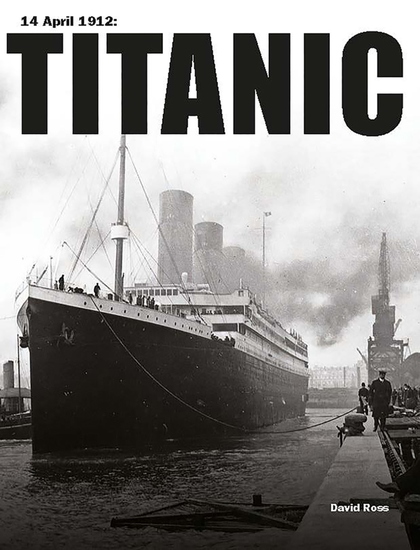
Titanic - 14 April 1912 - cover

Titanic - 14 April 1912

David Ross

Editorial: Amber Books Ltd

  • 0
  • 0
  • 0

Sinopsis

On 14 April 1912, less than a week into a transatlantic trip from Southampton to New York, the largest luxury cruise liner in the world struck an iceberg off the coast of Labrador, causing the hull to buckle. The massive 50,000 ton ship hailed as ‘unsinkable’ was soon slipping into the cold Atlantic Ocean, the crew and passengers scrambling to launch lifeboats before being sucked into the deep. Of the 2,224 passengers and crew aboard, more than 1,500 died, making the sinking one of the deadliest for a single ship up to that time. The sinking has captured the public imagination ever since, in part because of the scale of the tragedy, but also because the ship represented in microcosm Edwardian society, with the super-rich sharing the vessel with poor migrants seeking a new life in North America. Other factors, such as why there were only enough lifeboats to hold half the passengers, also caused controversy and led to changes in maritime safety. In later years many survivors told their stories to the press, and Titanic celebrates these accounts. A final chapter examines the shipwreck today, which has been visited underwater by explorers, scientists and film-makers, and many artifacts recovered as the old liner steadily disintegrates. Titanic offers a compact, insightful photographic history of the sinking and its aftermath in 180 authentic photographs.
Disponible desde: 08/11/2023.
Longitud de impresión: 224 páginas.

Otros libros que te pueden interesar

  • Human All Too Human - Reflections on Humanity Morality and Progress - cover

    Human All Too Human -...

    Friedrich Nietzsche, Tim Zengerink

    • 0
    • 0
    • 0
    What drives humanity toward progress? How do morality and tradition shape our understanding of life? Can we truly free ourselves from inherited beliefs and live authentically? 
    Human, All Too Human is Friedrich Nietzsche’s bold exploration of the human condition and the forces that define our moral, intellectual, and social existence. Through sharp aphorisms and thought-provoking reflections, Nietzsche challenges readers to question their deeply held assumptions and embrace the freedom of independent thought. 
    This modern translation simplifies Nietzsche’s profound ideas while preserving their depth, offering practical wisdom for navigating the complexities of today’s world. 
    What You’ll Discover: 
    - The Origins of Morality – Explore the cultural, historical, and psychological roots of moral values. 
    - The Nature of Progress and Freedom – Understand the tension between tradition and innovation, and discover how to cultivate personal independence. 
    - Reflections on Society and Culture – Examine how societal norms and expectations shape human behavior and decision-making. 
    - Philosophy for Self-Discovery – Learn how to think critically, challenge conventional wisdom, and embrace personal growth. 
    This adaptation retains the brilliance and nuance of Nietzsche’s original work while making it approachable for modern readers. Human, All Too Human is a guide to understanding the complexity of human nature and unlocking the potential for growth and transformation in everyday life. 
    Imagine gaining clarity on the forces that shape your thoughts and actions, discovering the courage to think independently, and embracing the journey of becoming your truest self. For over a century, Human, All Too Human has inspired those seeking deeper understanding and personal freedom. 
    Begin your exploration of morality, progress, and self-discovery today. Get your copy now and transform the way you think about life, society, and yourself.
    Ver libro
  • College for Free Today - Discover Different Ways You Can Go to College For Free Learn About Scholarships Financial Aids and Many More! - cover

    College for Free Today -...

    Jon Ghadery

    • 0
    • 0
    • 0
    College for Free Today: Discover Different Ways You Can Go to College For Free. Learn About Scholarships, Financial Aids and Many More! 
    When I worked in the financial aid department of one career based college I would sit down face to face with potential students and their families. I have seen first hand, time and time again, while a private college education can cost tens of thousands of dollars, anyone with a little ingenuity and a lot of self motivation and confidence can get their college education at a drastically reduced price and in many cases even for free. 
    This audiobook will teach you different ways and strategies on how you can get a college education virtually free. Learn how different scholarships and aids work and how you can apply for them. 
    This audiobook will cover the following topics: 
    - The First Twelve Years 
    - Fast Web and Other Scholarship Websites 
    - More Scholarship Websites 
    - Maintain Your Financial Aid By Being a Dedicated Student 
    - Reap the Benefits of College Work Study and Student Worker Programs 
    - Free Education As a Company Benefit 
    - After Graduation 
    - Free College is Possible If You Think Outside the Box 
    - Partial List of Career-Focused College 
    - And many more! 
    There are literally thousands of philanthropic organizations as well as private parties who are ready and willing to give financial aid to students who show even the slightest degree of commitment and drive. To learn more, scroll up and click “add to cart” now!
    Ver libro
  • At Your Command - Complete and Original Edition - cover

    At Your Command - Complete and...

    Neville Goddard, Mitch Horowitz

    • 0
    • 0
    • 0
    Commands, to be effective, must be short and to the point: the greatest command ever recorded is found in the few simple words, “And God said, ‘Let there be light.’”Experience a complete understanding of mystical teacher Neville Goddard’s method for using the true nature of your imaginative powers of creativity as he succinctly lays out his ideas in this, his first full-length book, written in 1939. It is idealist philosophy taken to its razor-edge, argued with Neville’s typically jewel-like precision. Neville, one of the most remarkable mystical thinkers of the past century, discloses his extraordinary and testable claim that your awakened imagination is God Itself. In more than ten books and thousands of lectures, Neville expanded on that one core prin¬ciple. “The only God,” he told audiences, “is your own wonderful human imagination.”A compelling presence at metaphysical churches, spiritual centers and auditoriums, Neville was not widely known during his lifetime, but today his books and lectures have attained new popularity as a new generation is discovering and testing Neville's core principle: imagining creates reality.This edition includes a new Introduction by PEN Award-winning historian, Mitch Horowitz.
    Ver libro
  • The Body Keeps the Score - cover

    The Body Keeps the Score

    Bessel van der Kolk

    • 0
    • 0
    • 0
    This work provides a concise synthesis of the key insights and analysis from The Body Keeps the Score. It is an independent summary, not the original book, and has no affiliation with or endorsement from the original publication. Created for readers who want a clear, thought-provoking overview, it distills the central themes and ideas while preserving the depth and relevance of the work. 
    This book explores how trauma is stored not just in memory, but in the body itself, shaping emotions, behavior, and physical health long after the original experience has passed. It shows how awareness, nervous system regulation, and mind–body approaches can help release deeply held patterns, restore safety, and support genuine healing beyond talk alone.
    Ver libro
  • France’s Most Famous Palaces: The History and Legacy of Versailles the Louvre and the Tuileries - cover

    France’s Most Famous Palaces:...

    Editors Charles River

    • 0
    • 0
    • 0
    For the French, and those who study their history, Versailles is a symbol of, as Charles Dickens once put it, “the best of times…the worst of times.” It was here that the Sun King, Louis XIV, built a palace worthy of a great nation during a time when peace was, at best, short-lived. It was at Versailles that Russian Tsar Peter the Great studied the palace’s architecture and gardens so that he could recreate them in his home country. Indeed, the greatest minds and artistic geniuses of the later stages of the Renaissance came to Versailles to build and paint, and it was here that Madame de Pompadour and her successor, Madame du Barry, used their wit and beauty to charm a king into doing their bidding. 
    	France, like all European countries, has had its fair share of palaces over time, but none suffered the rise and fall of fortune like the Tuileries. Built by a widow with a flair for architecture, it grew for more than a decade, along with the royal family that it housed. Then, during the French Revolution, it fell from grace with that family and even became a sight of execution, its famous gardens providing the background for the infamous guillotine.  
    	The Louvre's very name conjures up scenes of art and elegance, and of long halls filled with beauty and people strolling through them whispering quietly among themselves about the glories they are witnessing. Even those who have never been to the Louvre know some of its most prized possessions, from ancient statues to Leonardo Da Vinci’s “Mona Lisa”. As the world’s largest museum, the Louvre is unquestionably the cultural highpoint of Paris, a city that has long been considered the cultural center of Europe. 
    Ver libro
  • Home Bird - a bittersweet and funny novel based on the author's experience in foster care - cover

    Home Bird - a bittersweet and...

    Fran Hill

    • 1
    • 5
    • 3
    'This has all of Fran's trademark quick wit and black humour' Gráinne Murphy'Funny, warm and very moving' Lucinda Hawksley'Fran writes with such humour and humanity, it was an absolute tonic' Victoria Mackenzie 
    1979. Jackie Chadwick is 17 and living in a supported bedsit. She's still close to her foster parents and friends with (aka unofficial minder for) Amanda, their irresponsible daughter, but she’s enjoying her independence – until a fire leaves her temporarily homeless. Jackie’s dad, widower and recovering alcoholic Dave, has just been released from prison and sees this as his chance to make amends. He offers her his spare room – but can their relationship survive him going back on the booze and the arrival of his gin-loving lady friend and her errant son? As things go from bad to worse, Jackie has to decide how many chances you give someone who keeps letting you down. 
    Bittersweet and funny, Home Bird draws on Fran Hill's own experiences as a teenager in foster care. 
    'Deliciously nostalgic, brilliantly funny' Frances Quinn'I loved Home Bird. Fran drew me in to that world' Jane Ions'A jewel of a book. Fran Hill can do what other authors spend a lifetime trying to achieve: disarm you in a sentence' Deborah Jenkins'The story is ultimately upbeat… the lightness of touch has real depth' Anthony Ferner'Like a perfectly risen souffle made with dangerously volatile ingredients, Jackie’s story of dashed hopes, disappointment, optimism and resilience gripped me from the first line and wouldn’t let me go' Ruth Leigh'Filled with nostalgia and insightful humanity, the reader will laugh aloud and weep with emotion... a beautiful book' Linda Hill, The People's Friend'A treat for the reader... a brilliantly written novel' Anne Cater, Mature Times
    Ver libro