Rejoignez-nous pour un voyage dans le monde des livres!
Ajouter ce livre à l'électronique
Grey
Ecrivez un nouveau commentaire Default profile 50px
Grey
Abonnez-vous pour lire le livre complet ou lisez les premières pages gratuitement!
All characters reduced
Greek Mythology: A Deeper Look at Classical Greek Lore and Myth (Explore the Myths of the Gods Titans Heroes and Monsters of Ancient Greece) - cover

Greek Mythology: A Deeper Look at Classical Greek Lore and Myth (Explore the Myths of the Gods Titans Heroes and Monsters of Ancient Greece)

David Nations

Maison d'édition: Griffeth Mark

  • 0
  • 0
  • 0

Synopsis

Greek Mythology is the body of myths and teachings that belong to the ancient Greeks, concerning their gods and heroes, the nature of the world, and the origins and significance of their own cult and ritual practices. It was a part of the religion in ancient Greece. The Greeks were polytheistic in their religious beliefs. Polytheistic means they believed in and worshiped many different gods. Modern scholars refer to and study the myths in an attempt to shed light on the religious and political institutions of Ancient Greece and its civilization, and to gain understanding of the nature of myth-making itself.Inside these pages, you’ll . . .Sail with Odysseus as he navigates through the straits of Messina with a terrifying monster on each side, intent only on killing him and his crew.Witness Lamia’s world turned upside down as she loses her kingdom, her children and her humanity.Journey with Bellerophon as he battles the Chimera and becomes the hero that he was destined to be.Take flight with Icarus and Daedalus as they escape their confinement and the Cretan navy.Follow Medusa as she loses faith in the gods and becomes the monster she so adamantly wished to protect her people from.It blends fun with education, ensuring each story becomes an adventure that sparks curiosity.With accessible language for ages 6-12 and age-appropriate content, every story is easy to grasp and exciting to explore. Whether your child is a budding myth enthusiast or just loves a good read, Lessons from Greek Mythology for Kids promises to fascinate, educate, and inspire!
Disponible depuis: 26/05/2025.
Longueur d'impression: 110 pages.

D'autres livres qui pourraient vous intéresser

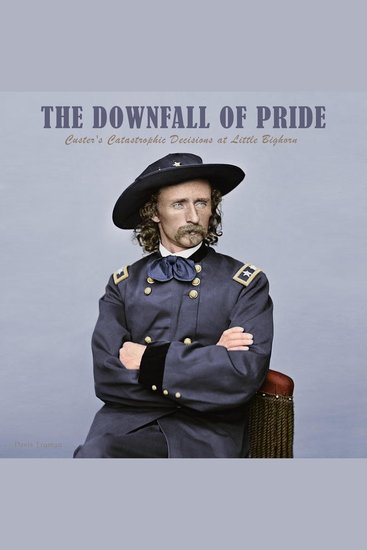
  • The Downfall of Pride - Custer's Catastrophic Decisions at Little Bighorn - cover

    The Downfall of Pride - Custer's...

    Davis Truman

    • 0
    • 0
    • 0
    Step into the tumultuous heart of one of America's most infamous military disasters with *The Downfall of Pride: Custer's Catastrophic Decisions at Little Bighorn*. This gripping and meticulously researched account unveils the tragic miscalculations and hubris that led to General George Armstrong Custer's dramatic downfall at the Battle of Little Bighorn. 
    Explore how Custer's unyielding arrogance and strategic blunders set the stage for his ultimate defeat. Delve into the psychological and tactical errors that transformed his confidence into a fatal flaw. Experience the chaos of June 25, 1876, through vivid, on-the-ground descriptions and personal accounts from both Custer's troops and Native American warriors. Discover how decisions made during intense pressure led to one of the most significant confrontations in American history. 
    *The Downfall of Pride* is more than just a historical account; it's a compelling exploration of leadership, ego, and the devastating consequences of underestimating your opponents. Perfect for history buffs, military enthusiasts, and anyone fascinated by the complexities of human nature, this book offers a profound look at how pride and misjudgment can lead to ruin. Dive into this riveting tale of ambition, failure, and the relentless quest for redemption in one of history's most defining battles.
    Voir livre
  • The Parenthood Dilemma - Procreation in the Age of Uncertainty - cover

    The Parenthood Dilemma -...

    Gina Rushton

    • 0
    • 0
    • 0
    Should we become parents? This timeless question forces us to reckon with who we are and what we love and fear most in ourselves, in our relationships, and in the world as it is now and as it will be. When Gina Rushton admitted she had little time left to make the decision for herself, the magnitude of the choice overwhelmed her. Her search for her own “yes” or “no” only uncovered more questions to be answered. How do we clearly consider creating a new life on a planet facing catastrophic climate change? How do we reassess the gender roles we have been assigned at birth and by society? How do we balance ascending careers with declining fertility? How do we know if we’ve found the right co-parent, or if we want to go it alone, or if we don’t want to do it at all? To seek clarity on these questions, Rushton spoke to doctors, sociologists, economists, and ethicists, as well as parents and childless people of all ages and from around the world. Here, she explores and presents policies, data, and case studies from people who have made this decision—one way or the other—and shows how the process can be revelatory in discovering who we are as individuals. Drawing on the depth of knowledge afforded by her body of work as an award-winning journalist on the abortion beat, Rushton wrote the book that she needed, and we all need, to stop a panicked internal monologue and start a genuine dialogue about what we want from our lives and why.
    Voir livre
  • Sadists - World War II Torturers Generals and Cruel Nazi Scientists - cover

    Sadists - World War II Torturers...

    Kelly Mass

    • 0
    • 0
    • 0
    This is a combo of several books, which are: 
    1: Josef Mengele - Fiction books have been written about him. Documentaries have revealed the horrors he executed on innocent victims in concentration camps in Poland. Meet Dr. Josef Mengele, a man with a twisted mind who had no compassion for the subjects he experimented on. His methods were cruel. His conclusions were inconclusive, and his sadism hardly knew any boundaries. 
    2: Adolf Eichmann - You thought Adolf Hitler was bad. Well, someone who was less fortunate with power and control but equally sadistic was one of his slightly lower officers: Adolf Eichmann, the man who was in charge of many of the Holocaust deportations. In this book, you will learn more about the life of Eichmann, someone who had been slowly getting used to the idea that supposedly, the Jews were inferior and were allegedly a problem for the German civilization. 
    3: Paul Goebbels - There are doers and there are preachers. The people who were executing orders or abusing people in World War 2 wouldn’t have been able to commit any atrocities if the country hadn’t warmed up to an inhumane narrative. That’s where propaganda came in. Propaganda has long been part of various countries and societies to make the population believe something, and to find culprits, create feelings of animosity, and glorify local leaders or military campaigns. 
    4: Rudolf Hoess - We’ve all had our humble beginnings, and we seemed so innocent as children. However, for some people, given their childhood and circumstances, and then the political or war-driven environment they face, it goes completely wrong. Such was the case for Rudolf Hoess, a cruel, murderous Nazi commander who had been brainwashed by the system that justified his aid in exterminating millions of Jews.
    Voir livre
  • What We Owe the Future - cover

    What We Owe the Future

    William MacAskill

    • 0
    • 0
    • 0
    An Oxford philosopher makes the case for “longtermism”—that positively influencing the long-term future is a key moral priority of our time 
     
    The fate of the world is in our hands. Humanity’s written history spans only five thousand years. Our yet-unwritten future could last for millions more—or it could end tomorrow. Astonishing numbers of people could lead lives of great happiness or unimaginable suffering, or never live at all, depending on what we choose to do today. 
      
    In What We Owe The Future, philosopher William MacAskill argues for longtermism, that idea that positively influencing the distant future is a key moral priority of our time. From this perspective, it’s not enough to reverse climate change or avert the next pandemic. We must ensure that civilization would rebound if it collapsed; counter the end of moral progress; and prepare for a planet where the smartest beings are digital, not human. 
      
    If we put humanity’s course to right, our grandchildren’s grandchildren will thrive, knowing we did everything we could to give them a world full of justice, hope, and beauty.
    Voir livre
  • The History of D-Day - The Greatest Air Land and Sea Operation of World War II - cover

    The History of D-Day - The...

    History Retold

    • 0
    • 0
    • 0
    Discover the untold stories of one of the most pivotal moments in history with our second book about D-Day. This compelling read includes: 
      
    • Advancement up the beach 
    • Assaulting the bluffs 
    • The heroic efforts of the Pointe du Hoc Rangers 
    • Inland Advancement 
    • The end of D-Day 
      
    Order your copy today and experience the unforgettable journey through one of the most important moments in human history. Get your book and witness the bravery and sacrifice of the soldiers who fought on the beaches of Normandy. 
    Voir livre
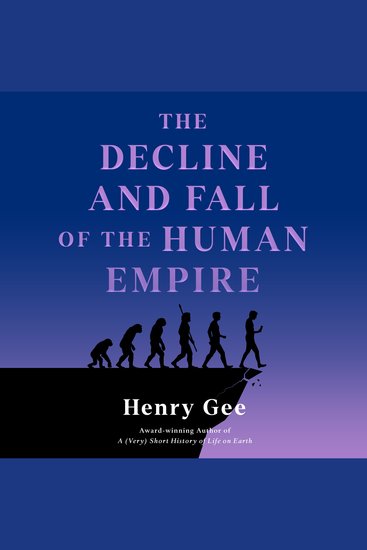
  • The Decline and Fall of the Human Empire - Why Our Species Is on the Edge of Extinction - cover

    The Decline and Fall of the...

    Henry Gee

    • 0
    • 0
    • 0
    "Henry Gee presents a pithy, fascinating account of the stages of biological evolution. ... a meditative and friendly listening experience. —AudioFile on A (Very) Short History of Life on EarthWritten and read by the award-winning author of A (Very) Short History of Life on Earth: a history of humanity on the brink of decline.A Next Big Idea Club Must-Read SelectionWe are living through a period that is unique in human history. For the first time in more than ten thousand years, the rate of human population growth is slowing down. In the middle of this century population growth will stop, and the number of people on Earth will start to decline—fast. In this provocative book, award-winning science writer Henry Gee offers a concise, brilliantly-told history of our species—and argues that we are on a rapid, one-way trip to extinction. The Decline and Fall of the Human Empire narrates the dramatic rise of humanity, how a scattered range of small groups across several continents eventually inbred, interacted, fought, established stable communities and food supplies, and began the process of dominating the planet. The human story is relatively brief—the oldest fossils of H. Sapiens date to approximately 300,000 years ago—yet the spread of our species has been unstoppable…until recently. As Gee demonstrates, our population has peaked, and is declining; our environment is becoming inimical to human life in many locations; our core resources of water, arable land, and air are diminishing; and new diseases, simmering conflicts, and ambiguous technologies threaten our collective health. Can we still change our course? Or is our own extinction inevitable?There could be a way out, but the launch window is narrow.Unless Homo sapiens establishes successful colonies in space within the next two centuries, our species is likely to stay earthbound and will have vanished entirely within another ten thousand years, bringing the seven-million-year story of the human lineage to an end.With assured narration, dramatic stories, and his signature sprightly humor, Henry Gee envisions new opportunities for the future of humanity—a future that will reward facing challenges with ingenuity, foresight, and cooperation.A Macmillan Audio production from St. Martin’s Press.
    Voir livre