Begleiten Sie uns auf eine literarische Weltreise!
Buch zum Bücherregal hinzufügen
Grey
Einen neuen Kommentar schreiben Default profile 50px
Grey
Jetzt das ganze Buch im Abo oder die ersten Seiten gratis lesen!
All characters reduced
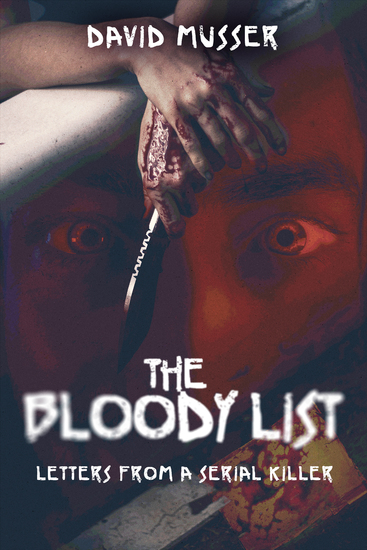
The Bloody List - Letters from a Serial Killer - cover

The Bloody List - Letters from a Serial Killer

David Musser

Verlag: Next Chapter

  • 0
  • 0
  • 0

Beschreibung

Charlie was once a loving family man with hope and a future. But when he loses his family in a tragic accident, grief drives him down a dark path.
 
After he finds "The Bloody List", a grim record of every person who ever wronged him, Charlie is determined to make each person on the list pay for what they've done. With each carefully planned act of vengeance, Charlie writes letters to Detective Martinez, the one person who just might understand his twisted sense of justice.
 
As his sanity begins to fade, Charlie's journey takes him through eerie small towns and haunted lives, one step at a time towards his final conclusion.
 
This book contains graphic sex, BDSM-related content and violent scenes, and is not suitable for readers under the age of 18.
Verfügbar seit: 08.10.2024.
Drucklänge: 168 Seiten.
Weitere Bücher, die Sie mögen werden

  • These Walls Still Talk - A Get Haunted Tale - cover

    These Walls Still Talk - A Get...

    Brian Paone

    • 0
    • 0
    • 0
    When Hannah visits a haunted prison, what will she find in the deadly small hours? 
    Hannah is driven to right her wrongs. After a drunken 21st birthday dare left her with a shadow figure always around, the now-sober 28-year-old resolves to return to the scene of the crime. Determined to give back an eerie stolen piece of possessed fabric, she attends a phantom-hunting event with her best friend Christian, run by Get Haunted, at the Missouri State Penitentiary … to spend the night. 
    Going from one creepy location to another in the dark hours, Hannah watches Christian experience increasingly spine-chilling incidents one after the other. And when she can’t remember where the object belongs and tries one last cell, a vengeful specter refuses to let them leave … 
    She may have walked in … but will she walk back out with her life? 
    Intent on crafting a perfectly authentic and scary setting, author Brian Paone spent eight weeks writing this ghost-hunt-gone-wrong story from empty cells inside the Missouri State Penitentiary. And as he takes us to where his imagination ran wild while typing in the pitch blackness of night, fans of the genre will soon discover that same hair-raising thrill. 
    These Walls Still Talk is a deliciously macabre horror novel. If you like characters to root for, ghoulish goosebumps, and insidious intentions, you’ll love Brian Paone’s frightful venture. 
    Buy These Walls Still Talk today to hear the whispers of those left behind!
    Zum Buch
  • The Charleston Witch - A Short Horror Story - cover

    The Charleston Witch - A Short...

    Michael van der Voort

    • 0
    • 0
    • 0
    Sometimes, when you hear that a place has been “abandoned,” it is important to ask, “abandoned by whom?” Of course, “abandoned” is already a very loaded word to use. It suggests a place that isn't just empty, desolate or lonely, but a place that for some reason has deliberately been made that way. A place intentionally cut off, knowingly and purposely shunned in an attempt to erase that place from memory.It is important then, to ask not only ‘who’ abandoned such a place, but also ‘why?’Particularly because the word ‘abandoned’ often means more than its few syllables convey. Often it is used as a shield. A way to not tell a story. Either because it is an embarrassing topic or because it is a memory that a person or people have chosen to put behind them...
    Zum Buch
  • The Squaw - A gruesome tale inspired by Edgar Allan Poe - cover

    The Squaw - A gruesome tale...

    Bram Stoker

    • 0
    • 0
    • 0
    Abraham Stoker was born in Dublin, Ireland on the 8th of November 1847, the third of seven children.  
     
    His early years were plagued with such ill-health that he was unable to start school until the age of seven.  He turned the long periods of recovery into an opportunity for thinking and said “I was naturally thoughtful, and the leisure of long illness gave opportunity for many thoughts which were fruitful according to their kind in later years”.  
     
    Strikingly at Trinity College, Dublin his health had returned with such vigour that he was named their University Athlete whilst also achieving a BA in Mathematics with honours.  
     
    At this time his interest in theatre became a job offer to be the Dublin Evening Mail’s theatre critic, co-owned by Sheridan Le Fanu.  He now began to also write short stories and in 1872 ‘The Crystal Cup’ was published.  An interest in art developed and he co-founded the Dublin Sketching Club.  
     
    In 1878 came marriage to Florence Balcombe.  She had formerly been courted by Stoker’s acquaintance, Oscar Wilde.  The marriage produced one child.   
     
    Stoker had some years before reviewed Henry Irving’s Hamlet and had dined with him.  That friendship now resulted in a proposal from Irving to move to London and to manage his Lyceum Theatre.  His numerous commercial innovations ensured both he and the theatre thrived.  Irving would also often take Stoker with him when he toured abroad. 
     
    Despite this busy life Stoker continued to write and these works paved the way for his most famous creation, published in 1897, ‘Dracula’.  It is rightly recognised as one of the greatest horror novels of all time and although not the first with a theme of Vampires, it is undoubtedly the most well-known. 
     
    Stoker also wrote poetry and many excellent short stories and continued to write novels and other works throughout his career. 
     
    Politically Stoker supported Home Rule, though only by peaceful means.  He was also keen on following scientific trends particularly in medicine. 
     
    In 1902 his tenure at the Lyceum Theatre ended and although he continued to write his health was deteriorating, mainly due to a series of debilitating strokes. 
     
    Bram Stoker died on the 20th April 1912, in Pimlico, London.  He was 64.
    Zum Buch
  • Young Goodman Brown - cover

    Young Goodman Brown

    Nathaniel Hawthorne

    • 0
    • 0
    • 0
    Delve into the dark and mysterious world of "Young Goodman Brown" by Nathaniel Hawthorne, now available as an enthralling audiobook. In this haunting tale, listeners will accompany the young Puritan Goodman Brown on a journey through the New England wilderness, where he encounters sinister forces and confronts the darkness lurking within his own soul. 
    As the story unfolds, listeners will be drawn into a web of suspense and intrigue, as Goodman Brown grapples with temptation, doubt, and the nature of sin. With its rich symbolism and atmospheric prose, "Young Goodman Brown" explores timeless themes of morality, hypocrisy, and the human capacity for both good and evil. 
    Perfect for fans of Gothic literature and psychological horror, this audiobook delivers a chilling performance that will keep listeners on the edge of their seats until the very end. Whether you're a longtime admirer of Hawthorne's work or new to the genre, "Young Goodman Brown" promises to captivate and unsettle. 
    So, if you're ready to experience a journey into the heart of darkness, start listening to "Young Goodman Brown" today and immerse yourself in the haunting beauty of Nathaniel Hawthorne's classic tale. Start Listening to "Young Goodman Brown" today!
    Zum Buch
  • A Northanger Abbey Double Feature - The Castle of Wolfenbach by Eliza Parsons & The Necromancer by Lawrence Flammenberg - cover

    A Northanger Abbey Double...

    Eliza Parsons

    • 0
    • 0
    • 0
    A woman visits a haunted castle, and two friends share tales of the supernatural in these two gothic novels featured in Jane Austen’s Northanger Abbey. In Jane Austen’s Northanger Abbey, the main character, Catherine, receives a reading list of gothic novels. Once thought to be fabricated by Austen, these novels were rediscovered in the 1920s and are now referred to as the “Northanger Horrid Novels.” Two of the Northanger Horrid Novels, The Castle of Wolfenbach and The Necromancer, are presented here as A Northanger Double Feature.  With hidden identities, damsels in distress, creepy castles, and villainous Counts, The Castle of Wolfenbach (1793) is a showcase for the gothic genre. The story follows the beautiful Matilda as she escapes unwanted advances, braves the haunted castle, and attempts to find safety, and maybe even love, all while being pursued by her murderous uncle. The Castle of Wolfenbach is Eliza Parsons’s most famous novel and an important foundational work in the gothic genre. The Necromancer (1794) is by far the strangest of the Northanger Horrid Novels. The story begins with two friends, Herman and Hellfried, passing a stormy night by exchanging supernatural stories. The weirdness continues to unfold through a series of letters. The work is an example of the gothic genre’s use of framing narratives surrounding first person accounts from multiple characters. The Necromancer takes this trope to staggering heights by nesting multiple narratives inside each other. The resulting stories are a bizarre collection of violence and supernatural shenanigans centered around the mysterious Valkert, who is rumored to have returned from the dead.  Both of these stories are amazing examples of early gothic works and can be enjoyed as such for fans of the genre or read as a companion to Austen’s Northanger Abbey.
    Zum Buch
  • A Terrible Beauty - cover

    A Terrible Beauty

    Nancy Baker

    • 0
    • 0
    • 0
    A classic fairy tale gets a horrifying, adult twist, in this suspenseful romance by the author of The Night Inside. Twenty years ago, Simon Donovan, an antiquities scholar, wronged Sidonie Moreau, his former research assistant—and she has not forgotten. Threatening to expose him, she demands he come to her remote mansion in the mountainous north to repay his debt. But she wasn’t expecting his son, Matthew, a struggling painter, to take his place. Matthew is intrigued by the mysterious Sidonie, but when she reveals what she wants, he is horrified: his blood, willingly given. No harm will come to him if he refuses, and his days leave him free to paint as he pleases, but each night she must ask and he must answer. Trapped by the vast wilderness all around them, Matthew has no choice but to submit to her terms. Although he vows to never surrender to Sidonie, Matthew cannot ignore her smile, her charm, or the sorrow in her eyes. Grappling with secrets within his heart, tempted by desire and despair, he knows one night he just might say yes . . .Praise for A Terrible Beauty “A polished and enchanting tale. . . . It is, in a word, breathtaking.” —Ottawa Citizen “Baker’s prose is lush and sensual . . . she has a real gift for making the fantastic seem plausible and investing the mundane with eerie significance.” —Sunday Sun (Toronto) “A Terrible Beauty is modern Canadian Gothic. . . . Nancy Baker shows her mastery of the form—the mysterious letter, the journey into the wilderness, the shadows that hide from the flickering firelight—and her real affection for a good ol’ fashioned vampire yarn.” —Telegraph-Journal “Baker’s narrative is seductive and compelling. Like Rice, she transcends the horror genre.” —The Province “Don’t hold your breath waiting for Disney to film this very adult and erotic version of Beauty and the Beast.” —Winnipeg Free Press
    Zum Buch