Unisciti a noi in un viaggio nel mondo dei libri!
Aggiungi questo libro allo scaffale
Grey
Scrivi un nuovo commento Default profile 50px
Grey
Iscriviti per leggere l'intero libro o leggi le prime pagine gratuitamente!
All characters reduced
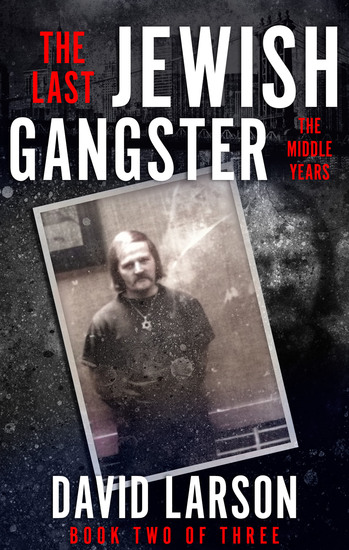
The Last Jewish Gangster: The Middle Years - cover

The Last Jewish Gangster: The Middle Years

David Larson

Casa editrice: WildBlue Press

  • 0
  • 0
  • 0

Sinossi

The second installment of this saga of gangland lore follows gregarious gangster, Michael Hardy, further down his twisted criminal path. The Last Jewish Gangster, The Middle Years, starts in 1968 with Hardy sentenced to twelve years in the world’s most dangerous prison in Mexico after taking the rap for his mother’s counterfeiting scheme, hoping to have finally earned her love and respect. Once he’s released from prison, Hardy returns to Brooklyn and tries to go straight, but drifts back into a world of crime. He gets Sammy “the Bull” Gravano to join his crew to pull major heists like kidnapping drug lords for million-dollar ransoms, and robbing cop bag men. To evade the law, he goes to Europe and ends up in Israel where he works on a Kibbutz, touching the hem of his Jewish heritage. Hardy devolves further into a gangster’s life when he returns to Brooklyn, running a finger of the Mob’s Five-Fingers International Car Theft Ring, participating in a stolen airline ticket scam, and doing fourteen hits for the Mob, still hoping his mother will take notice. When she gets busted for the car theft ring, she turns him in to reduce her time. Crushed by his mother’s callous self-interest, Hardy ends up cutting a deal with Rudy Giuliani to nab a dirty cop to reduce his time and negotiate his place in the witness protection program. Relocating to LA under an alias, it doesn’t take long for Hardy to land a gig as muscle for a Hollywood studio and meet his future wife, a sex worker who stole from his mother. The lines between love and revenge begin to blur.
Disponibile da: 16/08/2022.
Lunghezza di stampa: 372 pagine.

Altri libri che potrebbero interessarti

  • Blood of The Samurai - The Legendary Battles - cover

    Blood of The Samurai - The...

    Jon White

    • 0
    • 0
    • 0
    The samurai way of life is guided by three core values - loyalty, honor, and respect. These principles are more than just words; they are the basis of a strict code of conduct that governs every aspect of a samurai's life. Loyalty is the foundation of the samurai's relationship with their lord. It is not just blind obedience but an unwavering sense of duty and honor that compels them to protect their lord at all costs. This bond is unbreakable and lasts beyond death. Honor is earned through acts of bravery and selflessness on the battlefield and maintained through strict adherence to the Bushido code. A samurai's reputation is built on their honor, and they will go to great lengths to protect it, even if it means sacrificing their own life.Respect is the currency of the samurai world, earned through martial prowess and deeds of valor. A respected samurai is a force to be reckoned with, their reputation preceding them wherever they go. Respect must be earned through actions demonstrating the samurai's worthiness of admiration and awe.For a Samurai, these values are not just aspirations but a way of life that defines who they are and what they stand for. With these guiding principles, a samurai is a skilled swordsman with a moral compass. Through the practice of these principles, the samurai become legends, their names remembered and revered for generations to come.
    Mostra libro
  • Julian of Norwich: The Showings - Uncovering the Face of the Feminine in Revelations of Divine Love - cover

    Julian of Norwich: The Showings...

    Mirabai Starr

    • 0
    • 0
    • 0
    "As a major fan and promoter of Julian of Norwich, whom I call 'my favorite mystic', it is genuinely exciting to find such a faithful but freeing translation of Julian's long-lost Showings. Now they are no longer lost—for anyone!" —Fr. Richard Rohr, O.F.M., Center for Action and ContemplationIn this contemporary translation of one of the most beloved and influential mystical texts of all time, Julian of Norwich: The Showings brings the message and spirituality of this 14th-century mystic to 21st-century readers. Revelations of Divine Love, the first book published in English attributed to a woman, is also included.Julian of Norwich, a contemporary of Geoffrey Chaucer, was an English anchoress in East Anglia. At the age of 30, suffering from a severe illness and believing she was on her deathbed, Julian had a series of intense visions of Jesus, which she recorded and then expanded on later in her life. In her visions, God was not angry and wrathful. Instead, the three properties of God were presented as life, love, and light, and all of His creation was good, including his servant, man. In Julian's version, man is not to blame for his sin; sin is something that he must experience and overcome in his spiritual journey with God.Her message for today's readers is simply this:She reveals the feminine face of the Divine and reminds us to see God there.All our failings are an opportunity to learn and grow; they should be honored, but not dwelled upon.God's love has nothing to do with love and retribution and everything to do with love and compassion.In spite of all appearances, all is well. This book contains some of the most profound spiritual writing ever written and remains a perennial favorite among Christians.This book was previously published as The Showings of Julian of Norwich. This new edition includes a foreword by Richard Rohr, author of Falling Upwards.
    Mostra libro
  • Inspiration An - From their pens to your ears genius in every story - cover

    Inspiration An - From their pens...

    George Gissing

    • 0
    • 0
    • 0
    George Robert Gissing was born on November 22nd, 1857 in Wakefield, Yorkshire.  
    He was educated at Back Lane School in Wakefield. Gissing loved school. He was enthusiastic with a thirst for learning and always diligent.  By the age of ten he was reading Dickens, a lifelong hero. 
    In 1872 Gissing won a scholarship to Owens College. Whilst there Gissing worked hard but remained solitary. Unfortunately, he had run short of funds and stole from his fellow students. He was arrested, prosecuted, found guilty, expelled and sentenced to a month's hard labour in 1876. 
    On release he decided to start over.  In September 1876 he travelled to the United States. Here he wrote short stories for the Chicago Tribune and other newspapers. On his return home he was ready for novels. 
    Gissing self-published his first novel but it failed to sell.  His second was acquired but never published. His writing career was static.  Something had to change.  And it did. 
    By 1884 The Unclassed was published.  Now everything he wrote was published. Both Isabel Claren-don and Demos appeared in 1886. He mined the lives of the working class as diligently as any capitalist. 
    In 1889 Gissing used the proceeds from the sale of The Nether World to go to Italy. This trip formed the basis for his 1890 work The Emancipated. 
    Gissing's works began to command higher payments. New Grub Street (1891) brought a fee of £250.  
    Short stories followed and in 1895, three novellas were published; Eve's Ransom, The Paying Guest and Sleeping Fires. Gissing was careful to keep up with the changing attitudes of his audience.  
    Unfortunately, he was also diagnosed as suffering from emphysema. The last years of his life were spent as a semi-invalid in France but he continued to write. 1899; The Crown of Life. Our Friend the Charlatan appeared in 1901, followed two years later by The Private Papers of Henry Ryecroft. 
    George Robert Gissing died aged 46 on December 28th, 1903 after catching a chill on a winter walk.
    Mostra libro
  • Stanford Tuck - Hero of the Battle of Britain: The Life of the Great Fighter Ace - cover

    Stanford Tuck - Hero of the...

    Helen Doe

    • 0
    • 0
    • 0
    The first full reappraisal of one of Britain's great fighter aces, this book examines the truth behind Tuck's 1956 biography, Fly for Your Life. It looks at the evidence behind the myths, checks out some of the exaggerated stories and reveals the real Stanford Tuck. In January 1942 Bob Tuck was the top-scoring British fighter ace with an official score of twenty-nine enemy aircraft destroyed. During the Battle of Britain his legendary prowess grew and he was posted to command a leaderless and demoralized squadron, this time flying Hurricanes. He continued to prove he was an outstanding fighter ace, gaining the rare distinction of three DFCs and then the DSO for his leadership. He was shot down over France in January 1942. In January 1944 however, around twenty POWs, including Tuck, were purged to a new camp. Still determined to escape, Tuck and a Polish officer took a risky chance and made their way east to Russian forces and thence to England. This book reveals a more complex man than the one-dimensional hero of the previous biography. Post war, he became good friends with the Luftwaffe ace, Adolf Galland, and was a key advisor with him on the film Battle of Britain, and, often made many media appearances. His health suffered in later years from the impact of his war service and his imprisonment and he died aged seventy in 1987.
    Mostra libro
  • Social Activists - Peaceful Protestors and Famous Resistance Figures - cover

    Social Activists - Peaceful...

    Kelly Mass

    • 0
    • 0
    • 0
    The following three topics will be covered in this book: 
    Martin Luther King - From 1955 till his assassination in 1968, Martin Luther King Jr. was an American Baptist clergyman and activist who ended up being the most identifiable voice and leader in the American civil liberties movement. King used nonviolence and civil disobedience to advance civil liberties, inspired by his Christian convictions and Mahatma Gandhi's tranquil work. He was the child of Martin Luther King Sr., an early civil liberties leader and clergyman. King marched for black people's right to vote, desegregation, labor rights, and other fundamental civil liberties, and he led them. 
    Mahatma Gandhi - Mohandas Karamchand Gandhi was an Indian attorney, anti-colonial patriot, and political ethicist who used nonviolent resistance to lead the triumphant struggle for India's independence from British rule, motivating civil liberties and liberty movements around the globe. The epithet Mahtm (which means "great-souled" or "age-old" in Sanskrit) was at first appointed to him in South Africa in the year 1914 and is now used all across the world. Gandhi was born into a Hindu family in seaside Gujarat and studied law at the Inner Temple in London. In the year 1893, he came to South Africa to represent an Indian business owner in a case after 2 years in India, where he was not able to establish a rewarding law practice. 
    Mother Teresa - Mother Mary Teresa Bojaxhiu, typically referred to as Saint Teresa of Calcutta in the Catholic Church, was an Albanian-Indian Roman Catholic nun and missionary. She was born in Skopje (today the capital of North Macedonia), which was then part of the Ottoman Empire's Kosovo Vilayet. After eighteen years in Skopje, she went to Ireland and ultimately to India, where she spent the remainder of her life.
    Mostra libro
  • The Great Refusal - A New Vision of Resistance - cover

    The Great Refusal - A New Vision...

    Casey Gerald

    • 0
    • 0
    • 0
    In the tradition of Ta-Nehisi Coates’ Between the World and Me, bell hook’s All About Love, and even James Baldwin’s The Fire Next Time, comes a groundbreaking blend of personal and political commentary from acclaimed memoirist Casey Gerald, offering an iconoclastic reframe of resistance and rebellion to meet the current moment and remake the world on our terms. In 2019, 400 years after the first Africans were stolen and brought to American shores for enslavement, Casey Gerald made a bold and controversial proclamation on national television: “We’ve been given strategies to make it in this country, to endure this land… but there’s another very important tradition that each person has the right and opportunity and perhaps, at this very urgent moment, the responsibility to reclaim, and that is the strategy of flight, of escape.” His interviewer, Michel Martin, asked, “Where are we going?”The Great Refusal is the answer to Martin’s apt question. In a short yet powerful volume, Gerald maps the path forward, calling on the works of Black luminaries, writers, and activists, as well as his own experience stepping back from the limelight and reassessing our current strategies of resistance and endurance. He implores us to tend to our inner resources and restrengthen our own worlds. Much resistance, he argues, is an inherent dialogue with the oppressor, playing on their battlefield, a defense to their offensive. (He is a former football star, after all.) Now, again, we find ourselves on the shorelines of destruction. The strategies we’ve been taught – assimilation, respectability politics, meritocracy – are stalling out or degrading us further. What would rebellion look like if we stepped out of this cycle and imagined a different world, one on our terms? Marginalized Americans are in a gridlock fight for dignity in a system that is hellbent on never granting it. It’s time we understood our power, our peace, and our needs, and built them on our own instead of begging for scraps. Gerald offer’s a way — one that saved him, just as it once saved his forebears: the great refusal.
    Mostra libro