Rejoignez-nous pour un voyage dans le monde des livres!
Ajouter ce livre à l'électronique
Grey
Ecrivez un nouveau commentaire Default profile 50px
Grey
Abonnez-vous pour lire le livre complet ou lisez les premières pages gratuitement!
All characters reduced
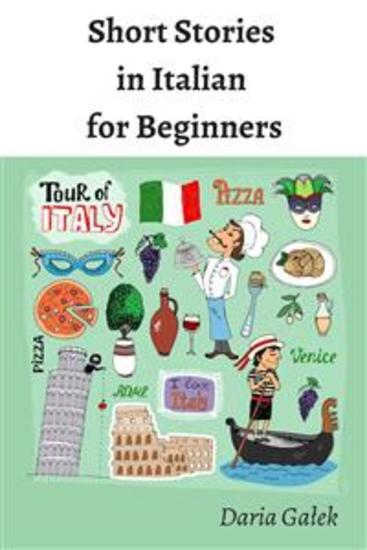
Short Stories in Italian for Beginners - cover

Short Stories in Italian for Beginners

Daria Gałek

Maison d'édition: Pearnet

  • 0
  • 0
  • 0

Synopsis

Are you ready to immerse yourself in the captivating world of Italian language and culture? This unique collection of 20 easy-to-read short stories is specially crafted for novice Italian learners like you! Each story is thoughtfully written in simple language, featuring relatable characters and everyday scenarios, making it the perfect stepping stone for those just beginning their Italian journey.
 
Unlock the Power of Immersive Learning:
• Engaging Stories: Delve into delightful narratives that will transport you to various Italian-speaking regions, enhancing your language and cultural awareness.
• Vocabulary Boost: Each story is accompanied by a handy vocabulary list to help you master essential Italian words and phrases with ease.
• Interactive Exercises: Test your understanding and reinforce your learning with thought-provoking exercises that cater to all learning styles.
 
Take Your Italian Skills to the Next Level: Whether you are a complete beginner or seeking to level up your language proficiency, 'Short Stories in Italian for Beginners' offers an enriching learning experience. Join countless learners who have already benefited from this invaluable resource, and embark on a journey that will boost your reading and listening comprehension skills while having fun!
 
Start your language adventure today and unlock the doors to a world of opportunities with 'Short Stories in Italian for Beginners.' Grab your copy now and immerse yourself in the beauty of Italian language and culture!"
Disponible depuis: 06/08/2023.

D'autres livres qui pourraient vous intéresser

  • Self Reliance - cover

    Self Reliance

    Ralph Waldo Emerson

    • 0
    • 0
    • 0
    When Ralph Waldo Emerson published his seminal essay on self-reliance in 1841, the United States was still reeling from the effects of a calamitous financial collapse four years earlier.
    
    His positive vision for the power of individualism and personal responsibility was issued in a climate of panic and uncertainty, at a time when the values of society and humanity were shifting. Emerson's call to independence remains as relevant and energizing as ever.
    Voir livre
  • The Brexit Referendum - The UK's EU Departure - cover

    The Brexit Referendum - The UK's...

    Nova Ashford

    • 0
    • 0
    • 0
    The Brexit referendum, which took place on June 23, 2016, marked a pivotal moment in the history of the United Kingdom and its relationship with the European Union. The decision to leave the EU, known as Brexit, came after years of mounting debate and growing division within British society and politics. The referendum was the result of a long-standing debate over the UK’s membership in the European Union, with political, economic, and cultural tensions playing a central role in shaping the outcome. 
    The road to Brexit began long before the referendum vote. The United Kingdom joined the European Economic Community (EEC) in 1973, a precursor to the European Union, and since then, the nation’s relationship with the organization has been fraught with disagreement. Euroscepticism, or skepticism about the benefits of EU membership, had been steadily rising, particularly among certain political groups and sections of the public. Critics of the EU argued that membership undermined national sovereignty and that the UK was bound by regulations and policies that did not align with its interests. This sentiment was exacerbated by issues such as immigration, trade regulations, and the financial burden of contributing to the EU budget. 
    In the years leading up to the referendum, the political landscape of the UK began to shift. The rise of UKIP (the United Kingdom Independence Party), led by Nigel Farage, brought the issue of EU membership into sharper focus. UKIP’s success in the 2014 European Parliament elections, where it emerged as the largest UK party, put pressure on the Conservative Party to address the growing concerns over the EU. Prime Minister David Cameron, seeking to quell dissent within his own party and avoid a potential electoral challenge from UKIP, promised a referendum on EU membership in 2013. This pledge set the stage for the referendum that would ultimately decide the UK’s fate within the EU.
    Voir livre
  • The Reformation 1495-1553 - The Thinkers That Changed Christianity - cover

    The Reformation 1495-1553 - The...

    Martin Luther, Phillip...

    • 0
    • 0
    • 0
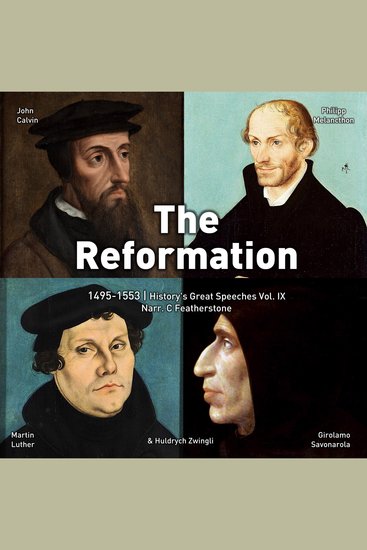
    Martin Luther and John Calvin are household names, where people have little knowledge of them besides their vast impact on Christian thought and culture. It is surprising how closely their language and concerns reflect modern times.  
    Martin Luther was a rabble-rousing man of the people, filled with invective and the emotional force of connecting with humanity rather than culture or wealth.  
    John Calvin’s sardonic sense of humour permeates a constant barrage of mythbusting that would do a modern-day fact checker proud. 
    Three less well-known writers round out the collection. Zwingli, Melancthon and Savonarola all preach with a force befitting true Christians fighting against the vast powers of a Catholic church that was the most powerful entity in Europe, and had consolidated a wide range of practices that broke the people away from an experience of divinity. 
    Savonarola speaks with the voice of a travelling preacher, a man of the people whose voice matched that of Eugene Debs. Zwingli spoke with a proud nationalism and pride that was wounded by the use of foreign armies, when the land could provide for all its citizens if managed correctly. Melancthon is an academic, providing a point-by-point deconstruction of the Pope’s claimed powers in ways that were irrefutable even for the Jesuit strains that held the Catholic Church’s intellectual force. 
    Just as with the liberation fighters, socialists, and anarchists of previous volumes, these historical figures lived under great threat, attacking vast forces with little more than courage and the certainty of their beliefs. They stand as the bridge over the cultural change between the middle ages and the renaissance.
    Voir livre
  • Fortress Britain 1940 - Britain’s Unsung and Secret Defences on Land Sea and in the Air - cover

    Fortress Britain 1940 -...

    Andrew Chatterton

    • 0
    • 0
    • 0
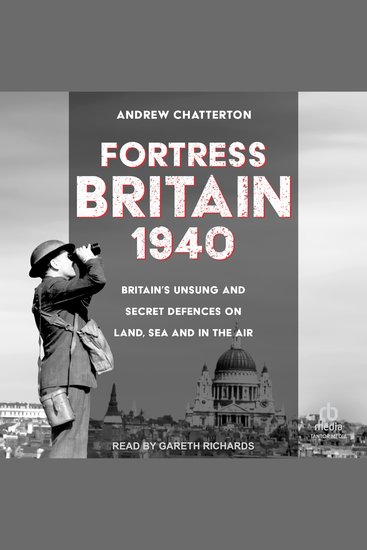
    Alone, unprepared, and weak. These are generally the words used to describe Britain's position in 1940, part of a narrative that has been built up ever since the end of World War II. However, the reality is very different. On land, sea, and in the air, Britain was prepared. It had the most powerful navy in the world; the RAF was relatively strong, but more importantly, was operating as part of a plan and a joined-up group system that was in reality never in any real danger of being defeated; even the post-Dunkirk British Army was better armed than the post-war narrative tells us. These forces were backed up by the Home Guard, and thousands of men and women in secret roles ready to help fight the invasion of the country. Even if all of this had gone wrong and the Nazis had defeated Britain militarily then a separate, highly secret civilian group were ready to become active only after the occupation had started. 


    One word associated more than any other during this period of the Second World War is 'alone'—Churchill played upon this in his speeches but in 1940, Britain had a hugely powerful empire. Although in many cases this support was thousands of miles away, the Empire and other Allies would have played a huge role had the Germans had invaded, one that has been overlooked in many accounts.
    Voir livre
  • The Timeline of Intelligent Life on Earth - From Millions of Years Ago To the Present - cover

    The Timeline of Intelligent Life...

    Martin K. Ettington

    • 0
    • 0
    • 0
    I’m fascinated with Ancient History because there are continuous new discoveries which push back the dawn of civilization by thousands of years. In the last couple of decades, the discoveries at Gobekli Tepe in eastern Turkey pushed back man-made structures to the time period of 9,000-11,000 B.C. Thousands of years before the next know civilizations existed. 
    This book includes my research on ancient sites around the world, underground structures, giants, the destruction of civilization about 10,500 B.C., the real Atlantis, and out of place objects which can be millions of years old. 
    Yes-I’m saying intelligent life has existed on Earth that long, and since humanity and even primates don’t exist in those times at all, aliens must have lived on the Earth at that time. 
    There are three parts to this book: 
    Part One - Millions of Years Ago 
    This includes stories of aliens existing on Earth in our history, and many out of place objects made by intelligent beings, and the fossil record which provides supporting evidence that intelligent life did exist at those times. 
    Part Two - The Unknown Civilizations of Man 
    Here we have evidence of structures built by man but way before any accepted records that civilization or man made constructions existed. Some of these things may go back 100,000 years ago. 
    Part Three – Post Ice Age Civilizations 
    This part includes evidence that the Younger Dryas event was actually comets striking the Earth which caused major disasters and probably the destruction of civilizations about 10,500 B.C. 
    My intention is that this timeline will provide a skeleton of mankind and intelligent life’s early history on Earth which can be filled in overtime to become much more detailed and prove the truth of this point of view to skeptics worldwide. 
     
    Voir livre
  • Ethics of Liberty The: Book Summary & Analysis - cover

    Ethics of Liberty The: Book...

    Briefly Summaries

    • 0
    • 0
    • 0
    This is a concise summary and analysis of The Ethics of Liberty, by Murray N. Rothbard.
    It is not the original book and is not affiliated with or endorsed by 
    Murray N. Rothbard.
    Ideal those seeking a quick and insightful overview.
     
    The Ethics of Liberty is a groundbreaking exploration of natural law and its application to a free society. This incisive work presents a compelling framework for understanding individual rights, justice, and the role of government. From foundational principles to practical considerations, it argues for a society built on voluntary cooperation and personal freedom. Through rigorous logic and historical analysis, the book challenges prevailing political ideologies and offers a bold vision for a world where liberty reigns supreme.
    Voir livre