

Begleiten Sie uns auf eine literarische Weltreise!
Buch zum Bücherregal hinzufügen
Grey
Einen neuen Kommentar schreiben Default profile 50px
Grey
Jetzt das ganze Buch im Abo oder die ersten Seiten gratis lesen!
All characters reduced
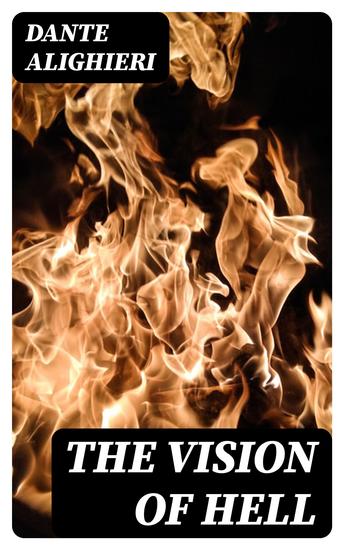
The vision of hell - By Dante Alighieri Translated by Rev Henry Francis Cary MA and illustrated with the seventy-five designs of Gustave Doré - cover

The vision of hell - By Dante Alighieri Translated by Rev Henry Francis Cary MA and illustrated with the seventy-five designs of Gustave Doré

Dante Alighieri

Übersetzer Henry Francis Cary

Verlag: DigiCat

  • 0
  • 0
  • 0

Beschreibung

Dante Alighieri's "The Vision of Hell"—more commonly known as the first part of "The Divine Comedy"—is an unparalleled exploration of the moral landscape of the human soul. Through rich, allegorical verses and vivid imagery, Dante guides readers through the nine circles of Hell, each representing different sins and their consequential everlasting punishments. Written in the early 14th century during a pivotal time of philosophical and theological inquiry, this seminal work employs the terza rima rhyme scheme, a hallmark of Dante's innovative literary style, weaving together personal experience with profound moral and spiritual contemplation. Dante's background as a poet, politician, and philosopher in Florence profoundly influenced his writing. His exile from Florence ignited a deep reflection on justice, redemption, and the human condition, themes that permeate "The Vision of Hell." The text serves as a cautionary tale infused with Dante's unique merging of classical mythology and Christian theology, ultimately seeking to illuminate the path to personal and societal morality amidst the tumult of his era. Readers are wholeheartedly encouraged to delve into "The Vision of Hell" not only as a foundational work of Italian literature but as an enduring examination of ethical dilemmas still relevant today. Dante's masterful narrative invites reflection on the nature of sin, justice, and redemption, making it essential reading for those seeking a deeper understanding of the human experience.
Verfügbar seit: 16.09.2022.
Drucklänge: 133 Seiten.

Weitere Bücher, die Sie mögen werden

  • The 1 & The 0 - Binary - cover

    The 1 & The 0 - Binary

    Mike Blake

    • 0
    • 0
    • 0
    The One (1) and the Zero (0). Binary:About the intrinsic use of computer code down to Binary base level.They're all around us now, computers. In our heads with social media, and the internet is now part of our dna (so to speak).All fed by the 1's & the 0's !https://www.amazon.com/dp/B07GRC3428*MORE POEMS by the Author:https://www.amazon.com/-/e/B00SG40RM8To contact the Author: Please add me Mike Miko on Facebook & then message me, thanks.https://www.facebook.com/mike.cco1 I will then contact the Author your behalf.or on Twitter: miko_1_dollar ~ Tumblr : ccobes ~ Instagram: wild_poetrys   //  wild.poetry.websTikTok: @wild_poetrysWebsite: www.wild-poetry.comFacebook: WOW https://www.facebook.com/wow.fact
    Zum Buch
  • Vivienne - cover

    Vivienne

    Rachel Lawson

    • 0
    • 0
    • 0
    originally written as separate poems for contests on allpoetry.com I tacked them together to make this epic the story in verse of the Life and Death of Vivienne and the Reaper is part of the story.
    Zum Buch
  • Poetry Book Society Spring 2024 Bulletin - cover

    Poetry Book Society Spring 2024...

    Alice Kate Mullen

    • 0
    • 0
    • 0
    The quarterly poetry magazine of the Poetry Book Society, founded by T.S. Eliot, featuring poems and exclusive interviews from Victoria Kennefick, Isabel Galleymore, Gillian Clarke, Rachel Mann, Jane Hirshfield, Rosa Campbell, Bunny Lang, and Maria Stepanova.
    Zum Buch
  • Southern Fried Shakespeare - A Dramatic Musical Comedy Experience - cover

    Southern Fried Shakespeare - A...

    Robert James

    • 0
    • 0
    • 0
    Welcome y'all! This project was created for those who think they don't like Shakespeare. It is a completely unsanctioned and unconventional interpretation of some of the works of William Shakespeare. If you are a purist be forewarned! I have always been fascinated with the written works of Shakespeare since I was a child trying to decipher the giant volume of his works I discovered in my father's library. I knew it was important historically but the language had me often running to a dictionary in those pre-Google days. Understanding a live performance was an equally challenging task as the British accents combined with the lambic pentameter rhythm left me struggling to understand the meaning. But once you figure what he's saying you realized these timeless stories of dysfunctional families and political intrigue are just as relevant today as 400 years ago. Every actor in training experiences the works of William Shakespeare to some degree. While memorizing lines I would try various characters and accents. For Richard III's famous opening monologue I settled on a genteel aristocrat from the Southern United States. I shared with my instructor and after some initial eye rolls he had to admit it was easier to understand. Eventually I created a one man show around the idea and wrote original songs that I believe express the emotion and underlying intentions of the pieces. And of course what's a variety show without an MC or two. In this case two squabbling siblings Auntie Bella and her twin brother Beauregard to bring a small respite to the drama. During the COVID pandemic I decided to record an audio version of the show. I hope you enjoy my family of misfits as much as I did creating them. But hey, to thine own taste be true. Cousin Willy must have had a sense of humor to write some of this stuff!
    Zum Buch
  • The Divine Comedy Paradise - cover

    The Divine Comedy Paradise

    Dante Alighieri

    • 0
    • 0
    • 0
    Paradiso (Italian: [paraˈdiːzo]; Italian for "Paradise" or "Heaven") is the third and final part of Dante's Divine Comedy, following the Inferno and the Purgatorio. It is an allegory telling of Dante's journey through Heaven, guided by Beatrice, who symbolises theology. In the poem, Paradise is depicted as a series of concentric spheres surrounding the Earth, consisting of the Moon, Mercury, Venus, the Sun, Mars, Jupiter, Saturn, the Fixed Stars, the Primum Mobile and finally, the Empyrean. It was written in the early 14th century. Allegorically, the poem represents the soul's ascent to God.While the structures of the Inferno and Purgatorio were based around different classifications of sin, the structure of the Paradiso is based on the four cardinal virtues (Prudence, Justice, Temperance, and Fortitude) and the three theological virtues (Faith, Hope, and Charity).
    Zum Buch
  • Idyll - cover

    Idyll

    Matt Hartley

    • 0
    • 0
    • 0
    Tempers are fraying in the scorching heat as a rural village is overwhelmed by noise, cars and day trippers… Scratch the surface and you'll find danger bubbling away.
    Matt Hartley's captivating short play Idyll was first presented as an open-air production by Pentabus Theatre Company in 2021.
    Zum Buch
