Rejoignez-nous pour un voyage dans le monde des livres!
Ajouter ce livre à l'électronique
Grey
Ecrivez un nouveau commentaire Default profile 50px
Grey
Abonnez-vous pour lire le livre complet ou lisez les premières pages gratuitement!
All characters reduced
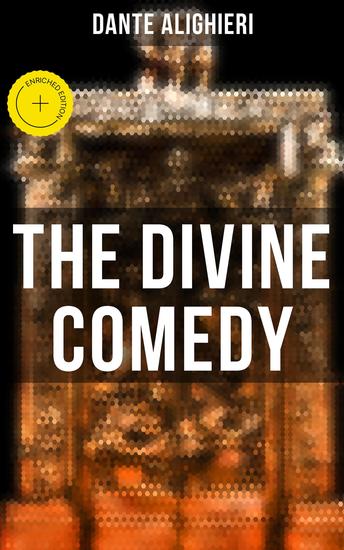
The Divine Comedy - Enriched edition - cover

The Divine Comedy - Enriched edition

Dante Alighieri

Traducteur Charles Eliot Norton

Maison d'édition: Musaicum Books

  • 0
  • 0
  • 0

Synopsis

Dante Alighieri's 'The Divine Comedy' is a literary masterpiece that follows the poet's journey through Hell, Purgatory, and Paradise. Written in the early 14th century, this epic poem is considered a seminal work of Italian literature and a defining piece of the medieval period. The vivid descriptions of each realm, intricate use of symbolism, and moral undertones make this work a complex and rich exploration of the afterlife. Alighieri's use of terza rima adds a musical quality to the text, enhancing its poetic beauty and making it a compelling read for those interested in allegorical storytelling and theological themes.

In this enriched edition, we have carefully created added value for your reading experience:
- A succinct Introduction situates the work's timeless appeal and themes.
- The Synopsis outlines the central plot, highlighting key developments without spoiling critical twists.
- A detailed Historical Context immerses you in the era's events and influences that shaped the writing.
- An Author Biography reveals milestones in the author's life, illuminating the personal insights behind the text.
- A thorough Analysis dissects symbols, motifs, and character arcs to unearth underlying meanings.
- Reflection questions prompt you to engage personally with the work's messages, connecting them to modern life.
- Hand‐picked Memorable Quotes shine a spotlight on moments of literary brilliance.
- Interactive footnotes clarify unusual references, historical allusions, and archaic phrases for an effortless, more informed read.
Disponible depuis: 21/12/2018.
Longueur d'impression: 495 pages.


D'autres livres qui pourraient vous intéresser

  • FREEDOM: The Authorized Universal Capitalist ltd Economic Structure - cover

    FREEDOM: The Authorized...

    Olson Twain, Ruby Tai

    • 0
    • 0
    • 0
    The nature of money as gates and letters revealed gives light to the nations of humankind to find in troubled times a historic luxury and modern necessity in the FML FIREs: these are the first constitutional centers of foundation money law governance and the prize of digital revolution. Through the architectures in the top layer of the double blue ON/E Divide, Intel-Modernized Governance from each city center in vertical international parallel selects for the lettered gates of economic FREEDOM and systemically discriminates against and shuts down the old capitalist unlimited extremist forms lettered as DEATH. Free artists, the Rolling service, Experts, Élites, Developers, Officers and Managers are the chosen occupational categories in the foundation money law range. Each HOME Medallion bank card that is encoded to FREEDOM is recognized by our constitutional conscience in the FML FIREs as constitutionally fit to transact. Each nation is redeemed with a capitalist ltd olympic spirit infused economy. As we no longer merely pay taxes to the discretion of full grey governments, the contingent capitalist excesses fall away and the suite of necessarily capitalist ltd institutions and businesses emerge. Prior to the digital revolution, the foundation money law was ungovernable and thus irrelevant: though now from each city central FML FIRE, Intel-Modernized Governance center-checks every Medallion Bank Card in transaction. The eyes behind the FML FIRE, in three charismatic forms, see through the top layer of the double blue ON/E Divide, travelling the speed of light to protect both the three and national class ruling structure from trespass and the first freedom of every man to earn and build HOME Wealth from trespass. It is finally with our HOME Patriot Medallions’ support that the ON/E Divide vertical boundary is built between the capitalist ltd economy that lives above and the five occupational evils that die below. 
    Voir livre
  • The 1960's - A Decade of Change Revolution Resistance and Reform - cover

    The 1960's - A Decade of Change...

    Harry Montgomery

    • 0
    • 0
    • 0
    The 1960s opened with a sense of cautious optimism in America. Following the stability of the postwar 1950s, the country was on the brink of transformation. The seeds of change were being planted by a young and increasingly restless population. The rise of youth culture signaled a break from the conservatism of their parents’ generation. Young people began questioning authority, traditional values, and the social norms that had shaped American life for decades. Television became a powerful force in shaping ideas, music spread messages of rebellion, and college campuses buzzed with debates over justice and freedom. Teenagers and young adults embraced new forms of expression, setting the stage for a cultural revolution. 
    At the heart of this evolving decade was the civil rights movement, which had already begun stirring in the 1950s. In the early years of the sixties, the push for racial justice gained momentum, marked by nonviolent protests, sit-ins, and mass marches. African Americans, particularly in the South, fought against systemic racism and demanded equal treatment under the law. Martin Luther King Jr. became a prominent voice during this time, advocating for civil disobedience and peaceful protest. As the movement grew, so did the urgency for legislation that would challenge segregation and discrimination. The activism of this period began to awaken a broader consciousness about social injustice, laying the groundwork for other rights movements to follow. 
    On the global stage, the Cold War continued to cast a long shadow over American life. The rivalry between the United States and the Soviet Union defined much of the political atmosphere. The threat of nuclear conflict loomed, and the government’s efforts to contain communism influenced both foreign and domestic policy.
    Voir livre
  • Artaxiad Dynasty The: The History and Legacy of the Ancient Armenian Kingdom that Fought the Romans - cover

    Artaxiad Dynasty The: The...

    Editors Charles River

    • 0
    • 0
    • 0
    One general tied to the Seleucid Empire was Artaxias, who founded the Artaxiad dynasty and managed to unite various Armenian regions under his rule and establish a strong central government, which enabled him to wage successful military campaigns against neighbouring powers. Artaxias I the Pious also built the capital city of Artaxata, which became a cultural and economic centre for the Armenian people. The succeeding kings of the Artaxiad dynasty continued to expand the territory of Greater Armenia, which at its height, stretched from the Black Sea to the Caspian Sea and from the Caucasus Mountains to the Mediterranean Sea. 
    During the reign of the Artaxiad dynasty, Armenia became a hub of trade and commerce, connecting the Silk Road and the Mediterranean world. The Armenian kings encouraged the development of agriculture, commerce, and arts, and the kingdom became renowned for its skilled artisans, writers, and philosophers. Of course, given its central location, the dynasty also faced numerous challenges, including repeated invasions by the Roman and Parthian empires, internal conflicts, and economic hardships. The dynasty’s resilience and adaptability enabled it to survive for nearly two centuries, leaving behind a rich cultural and political legacy that has endured in the region, even as its historical memory was overshadowed by its more powerful neighbors. 
    Today, the Artaxiad dynasty remains an integral part of the Armenian identity, and its influence can be found in Armenian art, literature, music, and architecture. Perhaps just as importantly, the dynasty continues to inspire Armenian patriotism to this day. Many literary works have been written about the kings of the Artaxiad dynasty, including novels, plays, and poems, and many operas have been written about the most powerful king of the dynasty, Tigran II the Great (Tigranes II), including one written by the famed composer Antonia Vivaldi, Tigrane.
    Voir livre
  • A Rare Recording of President Dwight D Eisenhower's 1961 Military-Industrial Complex Speech - cover

    A Rare Recording of President...

    President Dwight D. Eisenhower

    • 0
    • 0
    • 0
    On January 17, 1961, President Dwight Eisenhower delivered his political farewell to the American people on national television from the Oval Office of the White House. Those who expected the military leader and hero of World War II to depart his Presidency with a nostalgic, "old soldier" speech like Gen. Douglas MacArthur's, were surprised at his strong warnings about the dangers of the "military-industrial complex." As President of the United States for two terms, Eisenhower had slowed the push for increased defense spending despite pressure to build more military equipment during the Cold War’s arms race. Nonetheless, the American military services and the defense industry had expanded a great deal in the 1950s. Eisenhower thought this growth was needed to counter the Soviet Union, but it confounded him. Though he did not say so explicitly, his standing as a military leader helped give him the credibility to stand up to the pressures of this new, powerful interest group. He eventually described it as a necessary evil. The following is a transcript of the speech: 
     
    "Good Evening My Fellow Americans: 
     
    First, I should like to express my gratitude to the radio and television networks for the opportunities they have given me over the years to bring reports and messages to our nation. My special thanks go to them for the opportunity of addressing you this evening. 
     
    Three days from now, after half a century in the service of our country, I shall lay down the responsibilities of office as, in traditional and solemn ceremony, the authority of the Presidency is vested in my successor. 
     
    This evening I come to you with a message of leave-taking and farewell, and to share a few final thoughts with you, my countrymen. 
     
    Like every other citizen, I wish the new President, and all who will labor with him, Godspeed. I pray that the coming years will be blessed with peace and prosperity for all...
    Voir livre
  • Notable Figures in Canadian History: Unveiling the Extraordinary Lives and Impact of Canada’s Most Prominent Historical Icons - cover

    Notable Figures in Canadian...

    Ahoy Publications

    • 0
    • 0
    • 0
    Follow in the footsteps of Canadian historical icons and discover their inspiring stories that changed the world! 
    Fascinating excerpts from their work are included. 
    Inside, you will find a biography section for each figure, the challenges they faced, and stories of how they overcame them. 
    You will discover significant events that shaped them and the political and social background at the time. 
    Here’s what you can find inside:Founding Father – Canada’s founding father and how he united the country.Famous Expeditions – Stories of Canadian explorers and their famous expeditions.Strong Canadian Women – Strong women who fought for social justice and equality.Canadian Nature Warriors – Environmental advocates and their conservation efforts.Canadian Military Leaders – Military leaders who played big roles during the First World War.Canada’s Victory – Notable figures who fought for Canada and led to its victory.Canadian Inventors – Famous inventors and their contributions to the world.Canadian Culture – Literary figures and their impact on Canadian culture and literature.Politics in Canada – Political figures who ushered Canada into the 20th century.Hockey – Hockey legends and how they influenced the game. 
    This audiobook introduces you to Canadian history through the lives of its most influential figures. It will take you on a journey back in time to witness all the events that impacted the country. 
    What are you waiting for? Scroll to the top of the page and click the “BUY NOW” button to grab your copy right away!
    Voir livre
  • Khalsa Butt Na Manne Koi Part- 2 - (ਖਾਲਸਾ ਬੁੱਤ ਨਾ ਮਾਨੌ ਕੋਇ -2) - cover

    Khalsa Butt Na Manne Koi Part- 2...

    Edited by: Parmjeet Singh Gazi,...

    • 0
    • 0
    • 0
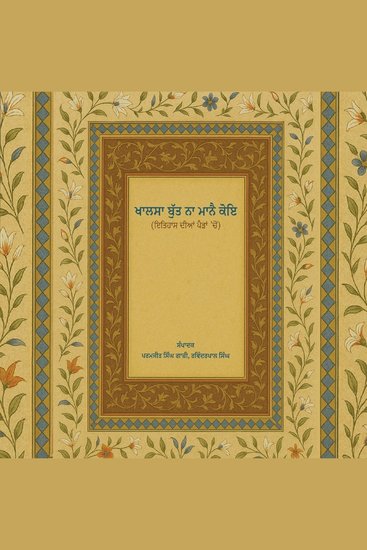
    Book: Khalsa Butt Na Manne Koi Part-2 
    Edited By: Parmjeet Singh Gazi, Ravinderpal Singh 
    Khalsa But Na Maane Koi Part- 2 is a thoughtful and important book that explains why idol worship is not allowed in Sikhism. The book includes a collection of articles written by different Sikh writers and scholars. These articles talk about how Sikh history, teachings of the Gurus, and Gurbani clearly say that Sikhs should not use statues or pictures for worship. 
    Khalsa But Na Maane Koi Part- 2 gives answers to new ideas that try to bring idol worship into the Sikh community. The writers use strong examples from Sikh scriptures and history to explain why such practices go against Sikh beliefs. The book is edited by Parmjeet Singh Gazi and Ravinderpal Singh, who have carefully chosen articles that are full of useful information and references. 
    The main message of this book is to stay true to Sikh values and to avoid any practice that changes the original path shown by the Gurus. The book helps readers understand the difference between true Sikh practice and ideas that have come from outside.If you want to learn more about Sikh beliefs or understand why idol worship is not part of Sikhism, this book is a great book to read. It is simple, clear, and based on facts. Get your copy and reconnect with the true teachings of Sikhism.
    Voir livre