Rejoignez-nous pour un voyage dans le monde des livres!
Ajouter ce livre à l'électronique
Grey
Ecrivez un nouveau commentaire Default profile 50px
Grey
Abonnez-vous pour lire le livre complet ou lisez les premières pages gratuitement!
All characters reduced
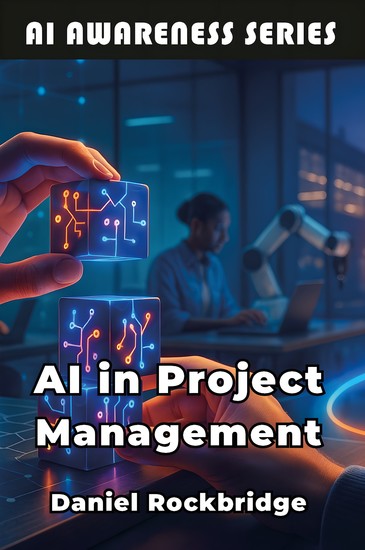
AI in Project Management - Building More Successful Projects Through AI and Data-Driven Insights - cover

AI in Project Management - Building More Successful Projects Through AI and Data-Driven Insights

Daniel Rockbridge

Maison d'édition: Publishdrive

  • 0
  • 0
  • 0

Synopsis

Transform Your Project Management Practice with the Power of AI
 
Artificial intelligence is revolutionizing how projects are planned, executed, and delivered. This comprehensive guide shows you how to harness AI’s transformative potential while maintaining the human leadership that drives project success.
 
Inside, you’ll discover:
 
Practical AI tools and techniques for every project phase—from automated planning and predictive risk analysis to intelligent resource allocation and real-time monitoring
 
Real-world strategies for integrating AI into existing methodologies, whether you follow traditional, agile, or hybrid approaches
 
Framework for building an AI-ready culture that embraces innovation while managing change effectively across your organization
 
Critical governance and risk management practices to ensure responsible AI adoption that maintains ethical standards and regulatory compliance
 
Future-focused insights on emerging trends, evolving standards, and the path toward autonomous project management systems
 
Drawing from current industry practices and proven implementations, this book bridges the gap between AI’s theoretical potential and practical application. You’ll learn not just what AI can do, but how to implement it successfully within your specific project environment.
 
Whether you’re a project manager seeking to enhance your capabilities, a PMO leader driving organizational transformation, or a professional preparing for the future of work, this book provides the knowledge and tools you need to thrive in the age of AI-augmented project management.
Disponible depuis: 10/09/2025.
Longueur d'impression: 146 pages.

D'autres livres qui pourraient vous intéresser

  • From 1960 to 2060 The History Of The Internet Bits and Bobs and Beyond - cover

    From 1960 to 2060 The History Of...

    Gustavo Morale

    • 0
    • 0
    • 0
    Embark on an enlightening journey through the digital age with Gustavo Morale's "The History of the Internet, bits and bobs and beyond." Born under the vibrant skies of São Paulo, Brazil, in 1981, Gustavo, affectionately known as Gut, has lived parallel to the rapid evolution of the Internet. This book is his first, blending a deep-rooted fascination with digital technology with personal anecdotes and historical facts, offering readers a unique perspective on the Internet's transformative journey from 1960 to a speculative 2060. 
    Gustavo's narrative weaves through the dawn of connectivity, the digital revolutions of successive decades, and ventures into the future with forecasts on augmented reality, brain-computer interfaces, and beyond. Through 31 meticulously crafted chapters, readers are treated to a comprehensive chronicle that spans a full century, marked by in-depth research, personal insights, and a seamless integration of technological, cultural, and economic narratives. 
    This book targets tech enthusiasts, historians, cultural analysts, futurists, and general readers alike, promising educational insights, inspirational stories, and a glimpse into future technological advancements. Gustavo offers a narrative rich in analytical depth and warmth, bridging the gap between technical intricacies and the personal stories that give the Internet life. "The History of the Internet, bits and bobs and beyond" is an essential read for anyone seeking to understand the forces that have shaped our digital world and those that will continue to define our future. 
    Join Gustavo Morale on this immersive journey through time, exploring the intricate tapestry of the digital age.
    Voir livre
  • Key Security Concepts that all CISOs Should Know-Cyber Guardians - A CISO’s Guide to Protecting the Digital World - cover

    Key Security Concepts that all...

    MSA Zachery S. Mitcham

    • 0
    • 0
    • 0
    "Cyber Guardians: A CISO’s Guide to Protecting the Digital World" is a crucial resource for Chief Information Security Officers (CISOs) navigating today's dynamic digital landscape. Authored by experts, it offers a comprehensive roadmap for mastering cybersecurity leadership. From strategic planning to team building, it covers every aspect of securing enterprises against evolving cyber threats. Readers learn to implement the CIA Triad for optimal security, embrace the Zero Trust model, and identify emerging threats like AI-driven attacks and social engineering. Compliance and crisis management are also addressed, alongside insights into the future of cybersecurity, including quantum computing and IoT. This book empowers CISOs to not only safeguard digital assets but also foster a robust security culture for the future.
    Voir livre
  • Pharmacology - Drugs and Their Power: The Study of Medicine and Chemicals - cover

    Pharmacology - Drugs and Their...

    Mike Crawford

    • 0
    • 0
    • 0
    The study of pharmacology has a rich and complex history that dates back thousands of years. Ancient civilizations relied on plants, minerals, and animal-derived substances to treat various ailments, laying the foundation for modern drug development. The evolution of pharmacology is a testament to human ingenuity and the ongoing quest for medical advancement. 
    In early human societies, medicine was largely based on trial and error. Traditional healers and shamans experimented with natural substances to alleviate pain, heal wounds, and cure diseases. Ancient Egyptian, Chinese, and Greek civilizations made significant contributions to early pharmacology by documenting medicinal plants and their effects. The Ebers Papyrus, an Egyptian medical text from around 1550 BCE, provides one of the earliest records of pharmacological knowledge, listing hundreds of remedies derived from herbs and minerals. Similarly, the works of Hippocrates and Dioscorides in ancient Greece emphasized the importance of observation and classification in medicine. 
    The transition from natural remedies to synthesized drugs gained momentum during the Renaissance and Enlightenment periods. With the development of the scientific method, researchers began isolating active compounds from plants and studying their effects in controlled settings. The 19th century saw groundbreaking discoveries, such as the isolation of morphine from opium and the synthesis of aspirin. These advancements paved the way for the pharmaceutical industry, leading to the development of more effective and standardized treatments.
    Voir livre
  • A Christian's Guide to Planet Earth - Why It Matters and How to Care for It - cover

    A Christian's Guide to Planet...

    Betsy Painter

    • 0
    • 0
    • 0
    From conservation to protecting endangered species to sustainable living, A Christian's Guide to Planet Earth offers a faith-based framework for viewing our responsibility to the natural world as well as practical, biblical ways we can care for the magnificent creation around us. 
    Drawing on science and Scripture, this hope-filled and accessible guide helps us navigate questions about caring for and respecting God's world. With a focus on real-life solutions, this book explores answers to questions such as:What does the Bible say about food shortages, forests, and pollution?How can we make ethical choices about what we eat and what we wear?Why is reducing our carbon footprint a way of loving others?What do animals tell us about God's design for the earth?What simple choices can we make to help recover God's beauty in creation? 
    A Christian's Guide to Planet Earth highlights the inherent grandeur of the natural world, stirring our hearts to care about the wild and wondrous things God has made. Each chapter concludes with practical tips on how to become better stewards of the Earth, including how to support efforts that make a positive difference in the world. 
    A Christian's Guide to Planet Earth is ideal for:Anyone who wants to make a difference for the planet but doesn't know where to startPeople interested in how stewardship of the water, air, land, and gardens relates to serving God and our neighborBible studies and church small groupsHomeschooling families and networksAnyone who loves God's beauty in naturePeople with questions about how changes to our earth affect the planet and our lives 
    Equal parts philosophical and practical, this guide provides us a deeper understanding of God's love for His creation and the delightful, God-given privilege we have to enjoy it and care for it well. 
    Accompanying infographics are available in the audiobook companion PDF download.
    Voir livre
  • Summary and Interpretation of Reality Transurfing - cover

    Summary and Interpretation of...

    Bootsy Greenwood

    • 0
    • 0
    • 0
    This book was created to summarize the concepts and ideas of the full series of Reality Transurfing Books Steps I-V written by Vadim Zeland. This book was written by the original audiobook narrator to distill the concepts into their simplest form so that you can effectively apply the techniques immediately. 
    The principles in this book are meant to help guide you back to yourself and toward a better understanding of your own authenticity while helping you to understand what it is you really want and equipping you with the tools to accomplish your most cherished goals.
    Voir livre
  • Structure of Scientific Revolutions The: Book Summary & Analysis - cover

    Structure of Scientific...

    Briefly Summaries

    • 0
    • 0
    • 0
    This is a concise summary and analysis of The Structure of Scientific Revolutions, by Thomas Kuhn. It is not the original book and is not affiliated with or endorsed by Thomas Kuhn. Ideal for those seeking a quick and insightful overview.
     
    This groundbreaking work challenges the traditional understanding of scientific progress, introducing the concept of paradigm shifts—fundamental changes in the way scientific communities perceive and interpret the world. It argues that scientific revolutions do not occur gradually but through periods of crisis and transformation, where existing frameworks are replaced by new, incommensurable paradigms. This influential study reshapes how we think about knowledge, progress, and the history of science.
    Voir livre