Rejoignez-nous pour un voyage dans le monde des livres!
Ajouter ce livre à l'électronique
Grey
Ecrivez un nouveau commentaire Default profile 50px
Grey
Abonnez-vous pour lire le livre complet ou lisez les premières pages gratuitement!
All characters reduced
Warfare Rewired - The New Frontlines of AI Finance and Global Conflict - cover

Warfare Rewired - The New Frontlines of AI Finance and Global Conflict

Daniel R. Morgan

Maison d'édition: Velvet Ink Press

  • 0
  • 0
  • 0

Synopsis

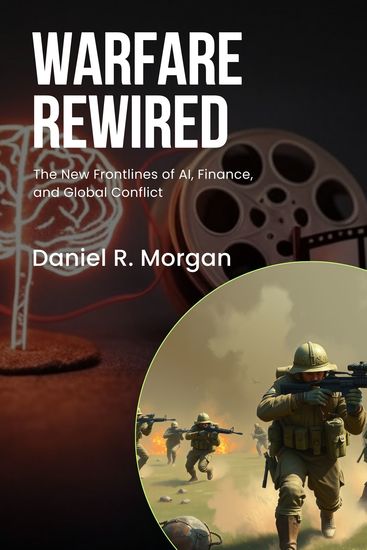
From cybernetic dominance to battlefield documentaries and financial brinkmanship, Warfare Rewired explores the most urgent frontlines shaping modern conflict. This trio of investigative works dives deep into the shifting terrain of warfare—where code, currency, and culture converge in unpredictable ways.
 
In AGI Wars, readers are immersed in the accelerating race for artificial general intelligence. The stakes? Not just supremacy in innovation, but control over future battlefields where decisions are automated and power is algorithmic. This is not science fiction—it’s the blueprint of tomorrow's warfare.
 
Flirting with Financial Oblivion reveals the hidden landmines beneath global markets. When governments gamble with risk and volatility becomes a political weapon, economic collapse becomes a new form of conflict—one waged not with tanks, but through inflation, debt, and collapse.
 
Finally, Cinematic Chronicles of the Iraq War transports us to a different kind of theater: the screen. These cinematic stories reveal the personal, political, and strategic layers of war, as interpreted through film. This is where narrative shapes memory—and memory influences policy.
 
Together, these books redefine what it means to be “at war” in the 21st century. Whether you’re drawn to AI ethics, geopolitical instability, or the hidden mechanics of financial collapse, this collection offers a high-stakes tour through the invisible battlefields of our time.
Disponible depuis: 14/08/2025.
Longueur d'impression: 710 pages.
D'autres livres qui pourraient vous intéresser

  • The Rise of Isis - The Formation and Impact of the Islamic State in the 21st Century - cover

    The Rise of Isis - The Formation...

    Fredrich Hazelton

    • 0
    • 0
    • 0
    The rise of the Islamic State of Iraq and Syria (ISIS) stands as one of the most significant and alarming phenomena of the 21st century. Emerging from the chaos of regional conflicts and geopolitical missteps, ISIS transformed from a little-known insurgent group into a global threat that captured the world’s attention. At its height, ISIS declared a self-styled caliphate, controlling vast territories across Iraq and Syria, and wielded its influence far beyond the Middle East. Through acts of brutality, strategic propaganda, and a sophisticated recruitment network, the group redefined the face of modern terrorism.  
      
    The story of ISIS is not one of sudden emergence but rather a culmination of decades of historical, political, and social factors. Its rise cannot be fully understood without examining the regional instability created by the Iraq War, the Arab Spring uprisings, and the Syrian Civil War. These events set the stage for the group’s ascent, enabling it to exploit power vacuums, sectarian divisions, and state failures. The role of key figures, such as Abu Musab al-Zarqawi and Abu Bakr al-Baghdadi, was pivotal in shaping the group’s ideology, operations, and global ambitions.  
      
    Equally crucial to understanding ISIS’s impact is its approach to governance and control. The group operated as more than a terrorist organization—it functioned as a quasi-state, establishing administrative systems, levying taxes, and providing services to populations under its rule. Its brutality, however, served as both a tool of fear and a declaration of its unyielding vision, attracting supporters and horrifying opponents. Through propaganda disseminated across digital platforms, ISIS extended its reach to every corner of the globe, inspiring attacks in cities far removed from its territorial base. 
    Voir livre
  • Democratic Citizenship - A Continuous Approach to Proportionality in Political Participation - cover

    Democratic Citizenship - A...

    Gayatri kumari

    • 0
    • 0
    • 0
    Democratic Citizenship: A Continuous Approach to Proportionality in Political ParticipationIntroduction 
    Democratic citizenship is a fundamental concept that underpins the functioning of democratic societies. It encompasses the rights, responsibilities, and active participation of individuals in political and civic life. One of the critical aspects of democratic citizenship is ensuring proportionality in political participation, which means that all segments of society have an equal opportunity to engage in the political process. This continuous approach to proportionality is essential for maintaining a healthy, inclusive, and representative democracy.The Importance of Proportionality in Political Participation 
    Proportionality in political participation ensures that diverse voices and perspectives are heard and represented in the decision-making process. This inclusivity is vital for several reasons:Legitimacy and Trust:When political participation is proportional, the decisions made by elected officials are more likely to reflect the will of the people. This enhances the legitimacy of the government and fosters trust among citizens.Social Cohesion:Proportional political participation helps to bridge social divides by giving marginalized and minority groups a platform to express their concerns and contribute to policy-making. This can lead to greater social cohesion and reduced conflict.Innovation and Problem-Solving:Diverse participation brings a range of perspectives and ideas to the table, which can lead to more innovative solutions to societal problems.Challenges to Proportional Political Participation
    Voir livre
  • Hate and Reconciliation - Approaches to Fostering Relationships between People and Peace - cover

    Hate and Reconciliation -...

    Guido Cuyvers

    • 0
    • 0
    • 0
    Hatred is human and current. It is an intrinsic part of what can happen between people. Personal experiences can lead people to hate someone. In society and even on a global level, hatred is again and again the motor of misunderstanding and often also of violence between people. Sometimes hate smolders almost unconsciously; at other times he is furious and serves as a flag for serious violence. 


    Hatred has many faces and seems omnipresent, that much is clear. The term "Erida complex," after the Greek goddess of hate, symbolizes the common and deeply rooted nature of hatred. After examining the nature of hate, this book focuses a wide-angle lens on its many faces, in individuals and groups as well as peoples. Facing the negativity of hatred, this book presents constructive approaches to fostering relationships between people and peace.
    Voir livre
  • Competing for the Global South - Asia and the Quest for Leadership in a Multipolar World - cover

    Competing for the Global South -...

    Filippo Fasulo, Nicola Missaglia

    • 0
    • 0
    • 0
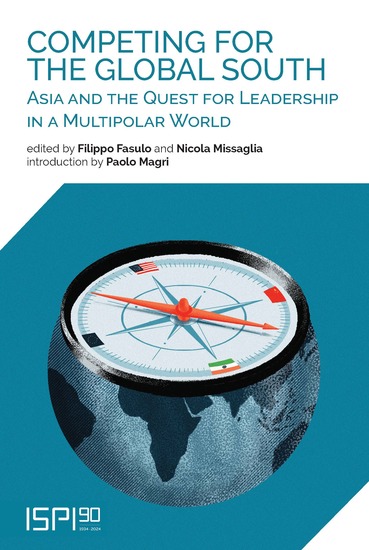
    As the world transitions into a multipolar era, an increasing number of nations are challenging Western dominance and reshaping the global order. Central to this shift is the rise of the Global South, led by Asia's powerhouses – India and China. These two nations, each offering distinct governance, development, and security models, are in a growing competition for influence. Countries across the Global South are advocating for a more equitable international system, demanding debt restructuring, climate action, and solutions to emerging security challenges. What strategies will India and China propose to address these demands? And how will their rivalry shape the future of the Global South as a unified force on the world stage?
    Voir livre
  • Why Governments Get It Wrong - And How They Can Get It Right - cover

    Why Governments Get It Wrong -...

    Dennis C. Grube

    • 0
    • 0
    • 0
    'This humane, accessible and lucid work will enlighten any voter, and remind any would-be – or currently serving – politician of the pitfalls to avoid' - TLSBarely a week goes by without another government U-turn and with the cost of living crisis and rising mortgage rates we really need those in charge to get it right. In this timely book Cambridge Professor Dennis C. Grube explores the pitfalls, failures and successes of those in power around the world.'A must-read' - Sebastian Payne'Convincing' - David Lammy MPWe live in an era when we really need governments to be effective – the economy, our health and the future of the planet are at stake – but so often they can seem clueless, and their decisions leave us confused. With insight and wit, Grube explains how governments can improve their decision-making and by examining fascinating case studies he highlights the key factors that make for effective government. With the stakes higher than ever before, this original and important book is an essential read for any concerned citizen who wants to understand why governments make the wrong decisions and, crucially, what can be done about it.‘Highly original and very entertaining' - Gavin Esler'There is a real gap for this book' - Isabel Hardman
    Voir livre
  • On the Cannibals - cover

    On the Cannibals

    Michel de Montagrie

    • 0
    • 0
    • 0
    'I am not sorry we note the barbarous horror of cannibalism, but grieved that, prying so narrowly into their faults, we are so blinded in ours.'
    
    First translated into English in 1603, 'On the Cannibals' is an essay reflecting on a remarkable trip to Brazil which Michel de Montaigne undertook at the end of the sixteenth century.
    
    A study into the customs and practices of indigenous peoples in the Americas, Montaigne delves into the concept of 'civilisation', contrasting the behaviour of so-called 'barbarians' with Western society. He challenges the idea that European values are superior, understanding the practices of the Tupinambá people and arguing that the horrors inflicted by the soldiers of Portugal on their enemies at the time are – in many ways – far worse. It remains a persuasive and compelling argument for cultural relativism. This audiobook edition is expertly narrated by Malk Williams.
    Michael de Montaigne (1533 – 1592) was a French philosopher and writer, and a significant figure in the French Renaissance. He is widely known for popularising the essay, amalgamating anecdotes with memoir and intellect. He has been a huge influence on several Western writers, including William Shakespeare.
    Voir livre