Begleiten Sie uns auf eine literarische Weltreise!
Buch zum Bücherregal hinzufügen
Grey
Einen neuen Kommentar schreiben Default profile 50px
Grey
Jetzt das ganze Buch im Abo oder die ersten Seiten gratis lesen!
All characters reduced
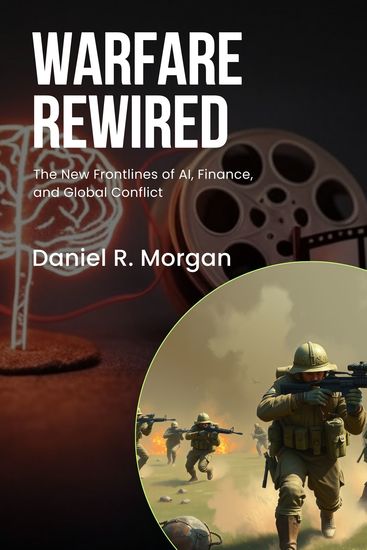
Warfare Rewired - The New Frontlines of AI Finance and Global Conflict - cover

Warfare Rewired - The New Frontlines of AI Finance and Global Conflict

Daniel R. Morgan

Verlag: Velvet Ink Press

  • 0
  • 0
  • 0

Beschreibung

From cybernetic dominance to battlefield documentaries and financial brinkmanship, Warfare Rewired explores the most urgent frontlines shaping modern conflict. This trio of investigative works dives deep into the shifting terrain of warfare—where code, currency, and culture converge in unpredictable ways.
 
In AGI Wars, readers are immersed in the accelerating race for artificial general intelligence. The stakes? Not just supremacy in innovation, but control over future battlefields where decisions are automated and power is algorithmic. This is not science fiction—it’s the blueprint of tomorrow's warfare.
 
Flirting with Financial Oblivion reveals the hidden landmines beneath global markets. When governments gamble with risk and volatility becomes a political weapon, economic collapse becomes a new form of conflict—one waged not with tanks, but through inflation, debt, and collapse.
 
Finally, Cinematic Chronicles of the Iraq War transports us to a different kind of theater: the screen. These cinematic stories reveal the personal, political, and strategic layers of war, as interpreted through film. This is where narrative shapes memory—and memory influences policy.
 
Together, these books redefine what it means to be “at war” in the 21st century. Whether you’re drawn to AI ethics, geopolitical instability, or the hidden mechanics of financial collapse, this collection offers a high-stakes tour through the invisible battlefields of our time.
Verfügbar seit: 14.08.2025.
Drucklänge: 710 Seiten.
Weitere Bücher, die Sie mögen werden

  • My Whirlwind Lives - Navigating Decades of Storms - cover

    My Whirlwind Lives - Navigating...

    Dee Knight

    • 0
    • 0
    • 0
    Our recent storms didn't start in 2020 or 2016. They started decades ago in the 1960s - a whirlwind of threatened nuclear catastrophe, then police dogs and rednecks terrorizing civil rights marchers down south, then Vietnamese children fleeing from napalm flames. Then draft notices to go to Vietnam to "fight commies." 
    A small town boy started by supporting rightist Goldwater against the "peace candidate" Johnson, but rapidly changed in the face of the civil rights and anti-war movements, and started a quest that hasn't ended yet. 
    This book tells Dee Knight's story of "waking up" to the truth about the US war in Vietnam, then refusing the draft and going to Canada where he lived for six years. It relates the years-long campaign for amnesty, in which Knight was a leader. After war resisters won a partial amnesty, Knight continued campaigning against US wars up to the present day. 
    There are chapters on: 
    The political storms of 1968 
    Exile life in Canada 
    The years-long campaign for universal unconditional amnesty 
    Antiwar veterans and active duty soldiers and sailors, including the sanctuary movement 
    Witnessing Portugal's "Carnation Revolution" of 1975 
    Living and working in Sandinista Nicaragua 
    Socialism and the Green New Deal 
    "Messages from the Future" 
    Reflections on the Pandemic 
    The Battle to Expand and Protect Democracy 
    Appendices on Vietnam's victory in 1975, and on the reality of life and politics in China
    Zum Buch
  • Summary of Edward Bernays’s Propaganda - cover

    Summary of Edward Bernays’s...

    Falcon Press

    • 0
    • 0
    • 0
    Buy now to get the main key ideas from Edward Bernays’s Propaganda 
      
    People talk about “propaganda” all the time. Although the word seems to have negative connotations, whether it is good or bad depends entirely on the cause behind it and the correctness of the information it carries. 
    In Propaganda (1928), Edward Bernays explores the structure of systems that control the public mind and public opinion, and examines how propaganda affects all political and social practices. He explains how people are controlled by hidden governments that try to achieve public acceptance of certain concepts. Bernays also attempts to establish the role of intelligent propaganda in society.
    Zum Buch
  • The Communist Manifesto - cover

    The Communist Manifesto

    Karl Marx, Friedrich Engels

    • 0
    • 0
    • 0
    "The Communist Manifesto," co-authored by Karl Marx and Friedrich Engels in 1848, is a profound critique of capitalism and a blueprint for a new social order, communism. It argues that the proletariat, or working class, will lead the revolution against the capitalist system's inherent class inequalities. 
    Spanning four sections, the manifesto traces class struggles, critiques the bourgeoisie, reviews socialist and communist literature, and examines the position of communists relative to opposition parties. 
    In reading this key political tract, remember it is a product of its time. Yet its discourse on wealth, power, and economic disparity remains relevant today. This timeless work invites us to critically examine our society, offering crucial insights into socio-political ideologies shaping our world.
    Zum Buch
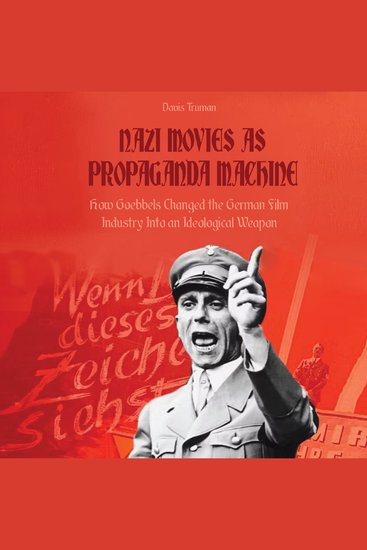
  • NAZI MOVIES AS PROPAGANDA MACHINE - How Goebbels Changed the German Film Industry Into an Ideological Weapon - cover

    NAZI MOVIES AS PROPAGANDA...

    Davis Truman

    • 0
    • 0
    • 0
    The German film industry transformed from a collection of independent studios into a division of the Nazi Party between 1933 and 1945. German film became a crucial component of the Nazi campaign to ideologically indoctrinate the German populace as part of the Ministry for Popular Enlightenment and Propaganda, led by Joseph Goebbels. However, the business kept up its prior commercial practices and made movies aimed at paying German consumers. Even though Goebbels worked hard to turn German cinema into an ideological weapon, the theater served as a popular consumer marketplace, and the various film tastes of German moviegoers continued to affect the kinds of films made. Therefore, filmmaking in Nazi Germany was influenced by popular taste and Goebbels' ideological objectives. 
    This book will look at several movies that demonstrate Goebbel's evolving propaganda objectives and the changing preferences of the German audience for movies during the Nazi era. Box office statistics from the years before and after the start of World War II offer unique insight into German film consumption and serve to highlight the extent to which the general public supported the war in Germany.
    Zum Buch
  • Struggle Makes Us Human - Learning from Movements for Socialism - cover

    Struggle Makes Us Human -...

    Vijay Prashad

    • 0
    • 0
    • 0
    An incisive and inspiring call to look beyond capitalism to chart a road map for a planet ravaged by pandemics, climate crisis, and wars. 


    Prompted by trenchant questions by international solidarity organizer Frank Barat, renowned author and activist Vijay Prashad shows that the path toward hope and liberation lies in looking closely at myriad, under covered struggles being waged all across the world by workers in countries such as India, Kenya, Peru, Tunisia, and Argentina. A marvelously global but grassroots perspective. 


    Prashad also examines pressing topics such as debt cancellation, a wealth tax, austerity, the pandemic, the arms industry, the climate crisis, socialism, working-class social movements and much more.
    Zum Buch
  • Corporations Are Not People - Reclaiming Democracy from Big Money and Global Corporations (2nd Edition) - cover

    Corporations Are Not People -...

    Jeffrey D. Clements, Bill Myers

    • 0
    • 0
    • 0
    A revised and updated edition of the definitive guide to overturning Citizens United. 


    Since the Supreme Court's Citizens United ruling that the rights of things—money and corporations—matter more than the rights of people, America has faced a crisis of democracy. In this timely and thoroughly updated second edition, Jeff Clements describes the strange history of this bizarre ruling, its ongoing destructive effects, and the growing movement to reverse it. 


    He includes a new chapter, "Do Something!," showing how—state by state and community by community—Americans are using creative strategies and tools to renew democracy and curb unbalanced corporate power. Since the first edition, sixteen states, one-hundred-sixty members of Congress, and five hundred cities and towns have called for a constitutional amendment to overturn Citizens United, and the list is growing. This is a fight we can win! 


    "More relevant than ever, this updated edition of Corporations Are Not People chronicles the remarkably vibrant, nationwide grassroots movement to 'get money out and voters in.' " —Katrina vanden Heuvel, Editor and Publisher, The Nation
    Zum Buch