Rejoignez-nous pour un voyage dans le monde des livres!
Ajouter ce livre à l'électronique
Grey
Ecrivez un nouveau commentaire Default profile 50px
Grey
Abonnez-vous pour lire le livre complet ou lisez les premières pages gratuitement!
All characters reduced
Robinson Crusoe - cover

Robinson Crusoe

Daniel Defoe, Pocket Classic

Maison d'édition: Pocket Classic

  • 0
  • 0
  • 0

Synopsis

The Life and Strange Surprising Adventures of Robinson Crusoe (of York, Mariner Who lived Eight and Twenty Years all alone in an un-inhabited Island on the Coast of America, near the Mouth of the Great River of Oroonoque; Having been cast on Shore by Shipwreck, where in all the Men perished but Himself. With An Account how he was at last as strangely deliver'd by Pyrates) is a novel by Daniel Defoe, first published in 1719 and sometimes regarded as the first novel in English. The book is a fictional autobiography of the title character, an English castaway who spends 28 years on a remote tropical island near Venezuela, encountering Native Americans, captives, and mutineers before being rescued. This device, presenting an account of supposedly factual events, is known as a "false document" and gives a realistic frame story.Robinson Crusoe
Disponible depuis: 27/08/2022.
Longueur d'impression: 300 pages.

D'autres livres qui pourraient vous intéresser

  • A Capitalist - From their pens to your ears genius in every story - cover

    A Capitalist - From their pens...

    George Gissing

    • 0
    • 0
    • 0
    George Robert Gissing was born on November 22nd, 1857 in Wakefield, Yorkshire.  
    He was educated at Back Lane School in Wakefield. Gissing loved school. He was enthusiastic with a thirst for learning and always diligent.  By the age of ten he was reading Dickens, a lifelong hero. 
    In 1872 Gissing won a scholarship to Owens College. Whilst there Gissing worked hard but remained solitary. Unfortunately, he had run short of funds and stole from his fellow students. He was arrested, prosecuted, found guilty, expelled and sentenced to a month's hard labour in 1876. 
    On release he decided to start over.  In September 1876 he travelled to the United States. Here he wrote short stories for the Chicago Tribune and other newspapers. On his return home he was ready for novels. 
    Gissing self-published his first novel but it failed to sell.  His second was acquired but never published. His writing career was static.  Something had to change.  And it did. 
    By 1884 The Unclassed was published.  Now everything he wrote was published. Both Isabel Clarendon and Demos appeared in 1886. He mined the lives of the working class as diligently as any capitalist. 
    In 1889 Gissing used the proceeds from the sale of The Nether World to go to Italy. This trip formed the basis for his 1890 work The Emancipated. 
    Gissing's works began to command higher payments. New Grub Street (1891) brought a fee of £250.  
    Short stories followed and in 1895, three novellas were published; Eve's Ransom, The Paying Guest and Sleeping Fires. Gissing was careful to keep up with the changing attitudes of his audience.  
    Unfortunately, he was also diagnosed as suffering from emphysema. The last years of his life were spent as a semi-invalid in France but he continued to write. 1899; The Crown of Life. Our Friend the Charlatan appeared in 1901, followed two years later by The Private Papers of Henry Ryecroft. 
    George Robert Gissing died aged 46 on December 28th, 1903 after catching a chill on a winter walk.
    Voir livre
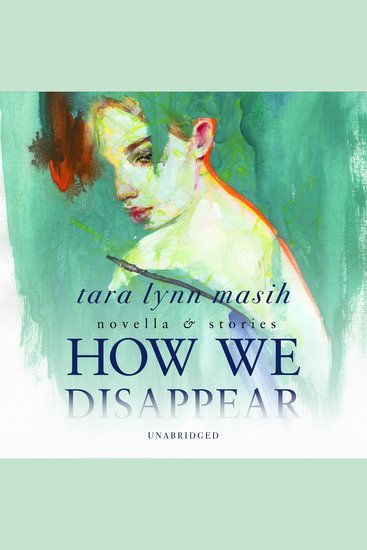
  • How We Disappear - Novella & Stories - cover

    How We Disappear - Novella &...

    Tara Lynn Masih

    • 0
    • 0
    • 0
    In How We Disappear, award-winning author Tara Lynn Masih offers listeners transporting and compelling stories of those taken, those missing, and those neither here nor gone—runaways, exiles, wanderers, ghosts, even the elusive Dame Agatha Christie. 
    From the remote Siberian taiga to the harsh American frontier, from rural Long Island to postwar Belgium, Masih’s characters are diverse in identity and circumstance, defying the burden of erasure by disappearing into or emerging from physical and emotional landscapes. 
    Described as “masterful” and as “striking and resonant” (Publishers Weekly), Masih’s fiction, crossing boundaries between historical and contemporary, sparks with awareness that nothing and no one is ever gone for good—and that the wilderness is never quite behind us.
    Voir livre
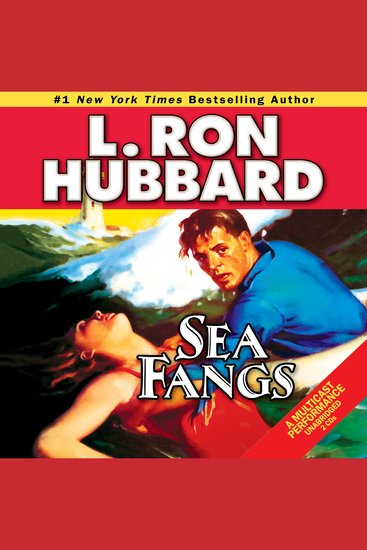
  • Sea Fangs - cover

    Sea Fangs

    L. Ron Hubbard

    • 0
    • 0
    • 0
    Bob Sherman signs on the crew of the yacht Bonito with hopes of revenge. And he'll need every ounce of his strength to overcome the forces arrayed against him now — hurricanes, corruption, pirates... and the man who stole everything he valued in life. But as he's about to discover, there's one force more powerful and dangerous than the sea itself... the force of a beautiful woman's love. The winds howl, the gunfire cracks, and the intrigue stirs as the audio version of Sea Fangs puts you in the eye of the storm.
    Voir livre
  • 2 B R 0 2 B (version 2) & The Big Trip Up Yonder (version 5) - cover

    2 B R 0 2 B (version 2) & The...

    Kurt Vonnegut

    • 0
    • 0
    • 0
    These two stories by Kurt Vonnegut were written over a decade apart but they are definitely connected. The Big Trip Up Yonder, published in Galaxy Science Fiction January 1954 is a comical yet scary description of what over population was going to do to society after aging was conquered and a simple daily dose of "anti-gerosone" would keep you forever the same age. Would Gramps EVER take 'That Big Trip Up Yonder', or would his hordes of descendants be stuck with him forever in a tiny apartment!? 2 B R 0 2 B, published in Worlds of If, January 1962 takes this basic situation many years into the future and a solution has been found. The population of the US has dropped from 80 billion to 40 million. Not what everyone would call a pretty solution, or the best solution, but nevertheless a solution to the population problem. I believe this is the type of story it is best to listen to, not describe, so enjoy. (Summary by Phil Chenevert)
    Voir livre
  • The Listener - A Novel - cover

    The Listener - A Novel

    Taylor Caldwell

    • 0
    • 0
    • 0
    A parade of people in need of solace find a mysterious sympathizer, in this uniquely moving classic by a New York Times bestselling author. 


    They come day and night to confess their troubles to an anonymous listener positioned behind a curtain. Could it be a priest, a psychiatrist, a friend, or a judge? Each person draws a different conclusion. From a businessman who feels betrayed by someone he trusted, to a society woman with contempt for her husband, to a scientist troubled by what his work has wrought, the visitors' situations vary widely as they struggle with grief, denial, prejudice, and fear. But in this small sanctuary, there are no office hours, the listener is always listening, and the visitors' lives are forever changed. 


    This inspiring and inventive work of fiction comes from the award-winning author of Captains and the Kings, Testimony of Two Men, and many other bestsellers.
    Voir livre
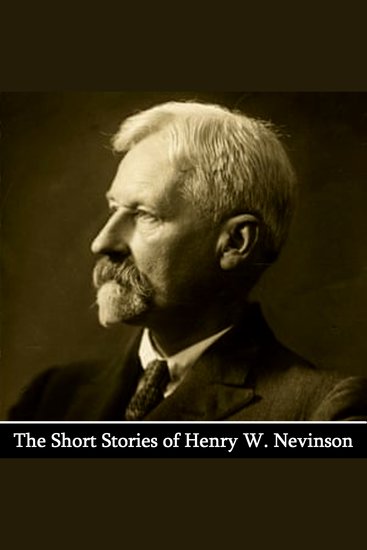
  • The Short Stories of Henry W Nevison - Though more famous for exposing slavery as a journalist was also a talented story writer - cover

    The Short Stories of Henry W...

    Henry W Nevinson

    • 0
    • 0
    • 0
    Henry Woodd Nevinson was born on October 11th, 1856. 
    Nevinson was schooled at Shrewsbury School and at Christ Church, Oxford. John Ruskin influenced his time at Oxford. Fascinated by German Culture he spent some time at Jena before publishing, in 1884, Herder & His times, a study on Johnann Gottfried Herder. 
    In 1897 he became the Daily Chronicle's reporter for the Greco-Turkish War. He was also noted for his reporting on the Second Boer War. 
    During the 1880s Nevinson had attached his politics to Socialism and by 1889 had joined the Social Democratic Federation. 
    In 1904, he was hired by Harper's Monthly Magazine to report on a supposed trade in slaves from Angola to the cocoa plantations of São Tomé. He produced evidence of people being trafficked to settle debts or seized by Portuguese agents and taken in shackles to the coastal towns. Once there he wrote that Portuguese officials "freed" them and continued the charade by declaring they were now voluntary workers who agreed to go to São Tomé for five years. Despite severe ill health he continued to follow the slaves to São Tomé. He found plantation conditions so appalling that one in five workers died each year. His account was serialised from August 1905 and then published as ‘A Modern Slavery’ in 1906. 
    He was also a suffragist, being one of the founders in 1907 of the Men's League for Women's Suffrage. 
    In 1914 he co-founded the Friends' Ambulance Unit and later in World War I, as a war correspondent, was wounded during the infamous Gallipoli campaign. 
    E. M. Forster described Nevinson's book, ‘More Changes, More Chances’ in 1925 as "exciting", and that "He has brought to the soil of his adoption something that transcends party-generosity, recklessness, a belief in conscience joined to a mistrust of principles". 
    A committed Socialist Nevinson could see, during the 20s and 30s, the foundations of a titanic struggle began to gather its forces. He would later state "I detest the cruel systems of persecution and suppression now existing under Hitler in Germany, Mussolini in Italy and Stalin in Russia". 
    Nevinson married Margaret Wynne Jones and, after her death in 1933, he married his long-time lover, and fellow suffragist, Evelyn Sharp. 
    Henry W. Nevinson died on November 9th, 1941. 
     
    01 - Henry W. Nevinson. A Short Story Volume - An Introduction 
    02 - St George of Rochester by Henry W. Nevinson 
    03 - The Aristocrat of Labour by Henry W. Nevinson
    Voir livre