Begleiten Sie uns auf eine literarische Weltreise!
Buch zum Bücherregal hinzufügen
Grey
Einen neuen Kommentar schreiben Default profile 50px
Grey
Jetzt das ganze Buch im Abo oder die ersten Seiten gratis lesen!
All characters reduced
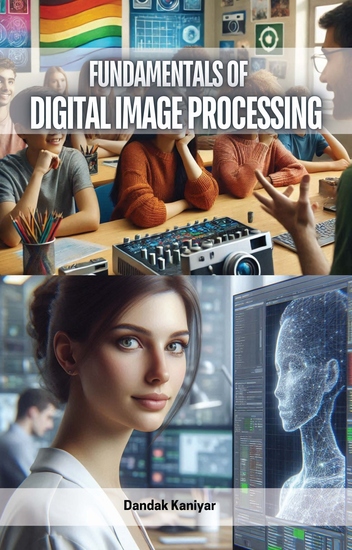
Fundamentals of Digital Image Processing - cover

Fundamentals of Digital Image Processing

Dandak Kaniyar

Verlag: Educohack Press

  • 0
  • 0
  • 0

Beschreibung

"Fundamentals of Digital Image Processing" is a comprehensive guide that delves into the intricacies of manipulating and analyzing digital images. We provide a thorough exploration of fundamental concepts, techniques, and applications in digital image processing. Catering to both beginners and seasoned professionals, the content spans a wide spectrum.
Starting with the basics, we introduce core principles of digital image representation, pixel operations, and color models. We then progress into advanced topics such as image enhancement, filtering, and transformation, offering a deep understanding of the algorithms involved.
The book covers image segmentation, a crucial aspect of image analysis, discussing various segmentation techniques and their applications in fields like medical imaging, computer vision, and pattern recognition. We also address the evolving field of image compression, highlighting methods to reduce image size without compromising essential information.
One notable strength is our practical approach, integrating theory with hands-on examples and real-world applications. We equip readers with tools to implement image processing algorithms using popular programming languages and software. Case studies illustrate digital image processing's impact in diverse fields, including medicine, remote sensing, and multimedia.
"Fundamentals of Digital Image Processing" is an indispensable resource for academics, researchers, and practitioners, offering theoretical knowledge and practical insights.
Verfügbar seit: 20.02.2025.
Drucklänge: 265 Seiten.

Weitere Bücher, die Sie mögen werden

  • Destruction of 17th Century London The: The History of the City’s Fire and Plague in 1666 - cover

    Destruction of 17th Century...

    Charles River Editors

    • 0
    • 0
    • 0
    In the mid-17th century, the heart of England fell victim to the mother of all epidemic catastrophes. The city of London was a ghost town, deserted by those who knew better than to hang around in a breeding ground that offered near-certain doom. Those who were confined within the city's borders had to make do with what they had, and the pitifully low morale seemed appropriate; the reek of rot and decomposition pervaded the air day in and day out, while corpses, young and old, riddled with strange swellings and blackened boils, littered the streets. For Londoners, to say it was hell would be an understatement.  
    With some bad luck and bad timing, a potential disaster awaited the city, and that finally came in September 1666. As it turned out, the Great Fire of London was so bad that one author who studied the blaze described it as “the perfect fire,” referring to the convergence in the largest city in England of spark, wood and wind in such a way that no one could stop the fire or even fight it effectively. John Evelyn, who had warned of the potential for a devastating fire given the layout of the city, noted that people seemed so stunned by the scope of the fire that they didn’t know what to do: “The conflagration was so universal, and the people so astonished, that from the beginning, I know not by what despondency or fate, they hardly stirred to quench it, so that there was nothing heard or seen but crying out and lamentation, running about like distracted creatures without at all attempting to save even their goods, such a strange consternation there was upon them.” 
    While the fire quickly spread throughout the heart of the city, the only thing that saved London’s suburbs was an ancient wall built around the city to keep the enemies of Rome out, not the fire in.  . By the time it was finished, most of the city’s homes and churches lay in ashes, and nearly 90% of the city’s citizens were left homeless.
    Zum Buch
  • Data as a Product - How to Provide the Data That the Company Needs - cover

    Data as a Product - How to...

    Brian Murray

    • 0
    • 0
    • 0
    Gain a broader understanding of data as a product. 
    Have you ever wondered what a data product is? 
    Were you interested in knowing their use in our daily life? 
    Have you ever wondered how data can change and benefit our daily life when used as a product? 
    “Data as a Product” is a book that explores the concept of data as a valuable and marketable commodity. The book discusses how data can be collected, analyzed, and used to create new products and services and the ethical considerations that come with monetizing data. 
    The book delves into how companies use data to innovate and drive growth through case studies and real-world examples. It also examines the role of data in shaping industries and markets and the potential consequences of using data in irresponsible or unethical ways. 
    In this book, you will:Discover and take a deep dive into the world of data as a productUnderstand the basics of basic data needs of a business, and then dive into advanced techniquesDiscover gathering and cleaning dataLearn about storing and accessing dataMaster transforming and enriching dataUnderstand visualizing and presenting dataLearn how to create a data governance frameworkDiscover data security and privacyAnd finally, learn about the improvements and innovations in data products. 
    “Data as a Product” is a comprehensive and thought-provoking exploration of the world of data and its increasing importance in the modern economy. It is a must-read for anyone interested in the intersection of data, business, and technology. 
    Click the “add to cart” button now and dive deep into the data world.
    Zum Buch
  • Social Engineering for Beginners - Strategies Tactics and Ethical Boundaries for Mastering Social Engineering - cover

    Social Engineering for Beginners...

    Daniel Greene

    • 0
    • 0
    • 0
    In the ever-evolving landscape of cybersecurity, where technology meets the human element, "Social Engineering for Beginners" serves as your indispensable guide to understanding, navigating, and defending against one of the most potent threats in the digital age. 
    Unveiling the secrets behind the subtle dance of influence, this book delves into the psychology of human behavior, laying bare the cognitive biases and heuristics that make individuals susceptible to manipulation. From historical perspectives to the contemporary battleground of cyberspace, the narrative unfolds, illustrating the evolution of social engineering and its pervasive impact on our interconnected world. 
    Explore the pillars of social engineering — from the intricacies of pretexting and the deceptive allure of phishing to the art of impersonation. Learn the craft of reconnaissance and information gathering, leveraging the power of open-source intelligence and the goldmine that is social media to craft comprehensive profiles for targeted exploits. 
    Within these pages, discover the art of building trust and rapport, unraveling the techniques that enable the manipulation of human trust in technology. Whether it's exploiting cognitive load or utilizing social media for precise attacks, this book arms you with the knowledge to recognize and defend against these insidious tactics. 
    "Social Engineering for Beginners" is your passport to a comprehensive understanding of this dynamic field — a journey that combines technical expertise with ethical consciousness in the relentless pursuit of securing the human element. Whether you're a cybersecurity professional, a business leader, or a concerned individual navigating the digital realm, this book is your indispensable companion in the ongoing battle for cybersecurity. 
      
     
    Zum Buch
  • Biomimetics - How Lessons from Nature can Transform Technology - cover

    Biomimetics - How Lessons from...

    Brian Clegg

    • 0
    • 0
    • 0
    An exploration of the transformative ways in which nature has inspired the technological advancement of humankind.
    
    Biomimetics literally means emulating biology - and in a broader sense the term covers technological advances where the original inspiration came from nature. The Earth is a vast laboratory where the mechanisms of natural selection have enabled evolutionary solutions to be developed to a wide range of problems.
    
    In this new title in the Hot Science series, science writer Brian Clegg looks at how humans have piggybacked on natural experimentation, redeploying a solution to create things that make our lives easier. He looks at how the hooks on burdock seeds inspired the creation of Velcro, how the stickiness of the feet of geckos and frogs has been used to create gripping surfaces, such as tyre treads, and how even the most basic optical enhancement in the form of spectacles is itself a form of biomimetics.
    Zum Buch
  • Death Glitch - How Techno-Solutionism Fails Us in This Life and Beyond - cover

    Death Glitch - How...

    Tamara Kneese

    • 0
    • 0
    • 0
    An accessible yet erudite deep dive into how platforms are remaking experiences of death 


    Since the internet's earliest days, people have died and mourned online. In quiet corners of past iterations of the web, the dead linger. But attempts at preserving the data of the dead are often ill-fated, for websites and devices decay and die, just as people do. Death disrupts technologists' plans for platforms. It reveals how digital production is always collaborative, undermining the entrepreneurial platform economy and highlighting the flaws of techno-solutionism. 


    Big Tech has authority not only over people's lives but over their experiences of death as well. Ordinary users and workers, though, advocate for changes to tech companies' policies around death. Drawing on internet histories along with interviews with founders of digital afterlife startups, caretakers of illness blogs, and transhumanist tinkerers, the technology scholar Tamara Kneese takes listeners on a vibrant tour of the ways that platforms and people work together to care for digital remains. What happens when commercial platforms encounter the messiness of mortality?
    Zum Buch
  • Human-Computer Interaction for Beginners - Mastering the Art of User-Centered Design An Advanced Guide to Human-Computer Interaction - cover

    Human-Computer Interaction for...

    James Ferry

    • 0
    • 0
    • 0
    "Human-Computer Interaction for Beginners: A Beginner's Guide to Designing User-Friendly Interfaces" is the ultimate introductory guide for anyone eager to dive into the world of HCI. This comprehensive book demystifies the principles and practices of designing intuitive and efficient interfaces that bridge the gap between humans and technology. 
    Whether you're a novice designer, a budding developer, or simply curious about the field, this guide provides clear, accessible explanations of key concepts, methodologies, and tools used in HCI. You'll explore the foundations of user-centered design, learn how to create wireframes and prototypes, and understand the importance of usability testing. 
    Packed with practical examples, step-by-step instructions, and insightful tips, "Human-Computer Interaction for Beginners" equips you with the knowledge and skills needed to create engaging, user-friendly digital experiences. Start your journey into the fascinating world of HCI and discover how to make technology work seamlessly for people. 
     
    Zum Buch