Begleiten Sie uns auf eine literarische Weltreise!
Buch zum Bücherregal hinzufügen
Grey
Einen neuen Kommentar schreiben Default profile 50px
Grey
Jetzt das ganze Buch im Abo oder die ersten Seiten gratis lesen!
All characters reduced
Cognitive Development - A Guide to Piagetian Psychology - cover

Cognitive Development - A Guide to Piagetian Psychology

Dan Biscayne

Verlag: Publishdrive

  • 0
  • 0
  • 0

Beschreibung

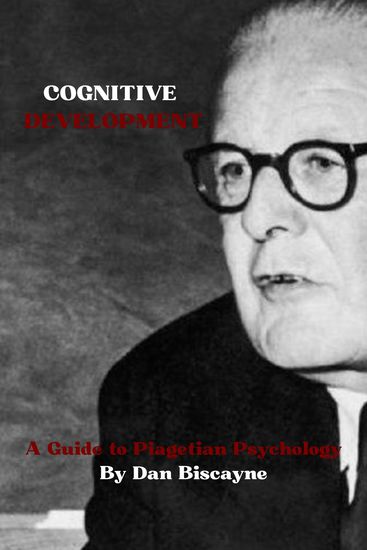
The journey of understanding human cognition is as intricate as it is fascinating. Cognitive development—the process through which individuals acquire, organize, and refine knowledge—has long been a central focus within psychology, education, and neuroscience. This book embarks on an exploration of the psychological theories that have shaped our comprehension of how thinking evolves from infancy through adulthood.
 
The concept of cognitive development is not merely about the accumulation of facts or skills but encompasses the transformation of how we perceive, reason, remember, and solve problems. It invites us to consider how children transition from reflexive responses to sophisticated, abstract thought. Over the past century, pioneering theorists have laid the groundwork for this understanding, offering frameworks that illuminate the stages and mechanisms underpinning cognitive growth.
 
Jean Piaget’s groundbreaking theory introduced the idea of development as an active, constructive process where learners build mental models of the world through interaction and experience. His stages—sensorimotor, preoperational, concrete operational, and formal operational—continue to influence education and developmental psychology profoundly. However, cognitive development theory has expanded well beyond Piaget, incorporating insights from Lev Vygotsky, whose sociocultural perspective emphasized the role of social interaction and language in cognitive growth, as well as information-processing approaches that liken the mind to a complex computer system.
 
This book aims to provide a comprehensive yet accessible synthesis of these theories, weaving together historical context, core concepts, and contemporary research. It explores how cognitive development unfolds, the factors that influence it, and its implications for education, parenting, and mental health. By doing so, it aspires to bridge the gap between theory and practice, offering readers not only knowledge but also practical insight into nurturing cognitive growth.
 
In an era where understanding the human mind is more crucial than ever—from fostering early childhood development to addressing lifelong learning challenges—this volume offers a timely and vital contribution. It invites scholars, educators, students, and curious minds alike to engage deeply with the processes that shape human thought and to appreciate the dynamic, ever-evolving nature of cognition.
Verfügbar seit: 02.09.2025.
Drucklänge: 244 Seiten.


Weitere Bücher, die Sie mögen werden

  • Discovering Peace: How Violence Has Faded Through Time - Elevate your understanding with our audiobook on how violence has faded over time - cover

    Discovering Peace: How Violence...

    Ethan Drayton

    • 0
    • 0
    • 0
    Discovering Peace: How Violence Has Faded Through Time   
    ⭐⭐ Simplified Audio Guide ⭐⭐   
    Looking to deepen your understanding of how humanity has moved towards peace instead of conflict? 
    Seeking a comprehensive guide that covers all the elements leading to the embrace of peace over time? 
    Your search ends here! 
    This guide serves as your definitive companion for exploring the evolution of peace, applying historical insights, and engaging in thought-provoking analysis. With this, you're set for a journey of enlightenment. 
    Updated to reflect the latest insights into humanity's shift towards peace. 
    Key features of this enriched guide:   
    - Profound insights about humanity's embrace of peace over conflict 
    - Detailed explanation of how societies have turned away from violence 
    - Effective strategies for understanding and discussing these historical trends 
    Our guide distinguishes itself through comprehensive coverage, which is essential for your in-depth understanding. Concepts aren't merely skimmed; they are delved into with precision. 
    Please note that this guide is not affiliated with any official entity and is purely an independent resource for your benefit. 
    Designed with a clear structure and easy-to-understand language, our guide on Discovering Peace ensures smooth transitions between topics. Say goodbye to dense jargon and welcome clear, precise, and technically accurate content. 
    So, why wait? Click the BUY NOW button, secure your guide, and begin your journey to understanding how humanity has embraced peace over conflict!
    Zum Buch
  • Gettysburg Campaign The: The History and Legacy of the Civil War’s Most Famous Campaign - cover

    Gettysburg Campaign The: The...

    Editors Charles River

    • 0
    • 0
    • 0
    “The failure to crush the Federal army in Pennsylvania in 1863, in the opinion of almost all of the officers of the Army of Northern Virginia, can be expressed in five words: the absence of the cavalry.” – Confederate General Henry Heth 
    Without question, the most famous battle of the American Civil War took place outside of the small town of Gettysburg, Pennsylvania, which happened to be a transportation hub, serving as the center of a wheel with several roads leading out to other Pennsylvanian towns. From July 1-3, Robert E. Lee’s Confederate Army of Northern Virginia tried everything in its power to decisively defeat George Meade’s Union Army of the Potomac, unleashing ferocious assaults that inflicted nearly 50,000 casualties in all. 
    Day 1 of the battle would have been one of the 25 biggest battles of the Civil War itself, and it ended with a tactical Confederate victory. But over the next two days, Lee would try and fail to dislodge the Union army with attacks on both of its flanks during the second day and Pickett’s Charge on the third and final day. Meade’s stout defense held, barely, repulsing each attempted assault, handing the Union a desperately needed victory that ended up being one of the Civil War’s turning points. 
    After the South had lost the war, the importance of Gettysburg as one of the “high tide” marks of the Confederacy became apparent to everyone, making the battle all the more important in the years after it had been fought. While former Confederate generals cast about for scapegoats, with various officers pointing fingers at Robert E. Lee, James Longstreet, and James Stuart, historians and avid Civil War fans became obsessed with studying and analyzing all the command decisions and army movements during the entire campaign. Despite the saturation of coverage, Americans refuse to grow tired of visiting the battlefield and reliving the biggest battle fought in North America.
    Zum Buch
  • The Ravine - A Family a Photograph a Holocaust Massacre Revealed - cover

    The Ravine - A Family a...

    Anonym

    • 0
    • 0
    • 0
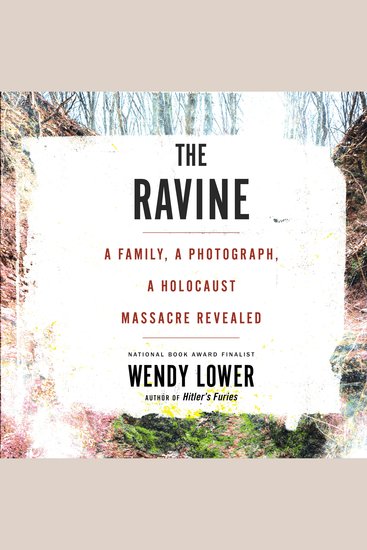
    A single photograph—an exceptionally rare “action shot” documenting the horrific final moment of the murder of a family—drives a riveting process of discovery for a gifted Holocaust scholarIn 2009, the acclaimed author of Hitler’s Furies was shown a photograph just brought to the United States Holocaust Memorial Museum. The documentation of the Holocaust is vast, but there are virtually no images of a Jewish family at the actual moment of murder, in this case by German officials and Ukrainian collaborators. A Ukrainian shooter’s rifle is inches from a woman's head, obscured in a cloud of smoke. She is bending forward, holding the hand of a barefooted little boy. And—only one of the shocking revelations of Wendy Lower’s brilliant ten-year investigation of this image—the shins of another child, slipping from the woman’s lap.   Wendy Lower’s forensic and archival detective work—in Ukraine, Germany, Slovakia, Israel, and the United States—recovers astonishing layers of detail concerning the open-air massacres in Ukraine. The identities of mother and children, of the killers—and, remarkably, of the Slovakian photographer who openly took the image, as a secret act of resistance—are dramatically uncovered. Finally, in the hands of this brilliant exceptional scholar, a single image unlocks a new understanding of the place of the family unit in the ideology of Nazi genocide.         
    Zum Buch
  • ADHD Organization and Cleaning: From Overwhelmed to Organized: Declutter Your Space Simplify Your Life and Finally Feel in Control Without Burning Out - cover

    ADHD Organization and Cleaning:...

    Laura Bennett

    • 0
    • 0
    • 0
    **PDF of Book Included** 
    If you've always wanted a clutter-free, organized home but feel overwhelmed by the chaos of ADHD, then keep reading… 
    Are you sick and tired of feeling like your space is constantly out of control? 
    Have you tried countless organizing methods but nothing seems to stick for more than a few days? 
    Do you finally want to say goodbye to the shame and frustration of a messy home and discover a system that actually works for your ADHD brain? 
    If so, then you've come to the right place. 
    You see, creating an organized, clutter-free space doesn't have to be an impossible dream for those with ADHD. 
    Even if you've tried and failed with traditional organizing methods in the past. 
    In fact, it's easier than you think. 
    You can transform your chaotic space into an organized oasis without burning out or feeling overwhelmed. 
    Here's just a tiny fraction of what you'll discover:The 7 ADHD-friendly decluttering techniques that actually workWhy perfectionism is sabotaging your organizing efforts – and how to overcome it5 harmful myths about ADHD and organization that are holding you backHow to save hours each week with simple ADHD-optimized routinesA cool trick used by successful ADHD entrepreneurs to maintain order in their lives and businesses…and much, much more! 
    Take a second to imagine how you'll feel once you're finally in control of your space, and how your family and friends will react when they see your beautifully organized home. 
    And if you have a burning desire to conquer clutter and finally feel in control of your environment, then scroll up and click "add to cart".
    Zum Buch
  • Spies and Lies - How China's Greatest Covert Operations Fooled the World - cover

    Spies and Lies - How China's...

    Alex Joske

    • 0
    • 0
    • 0
    Spies and Lies a groundbreaking exposé of elite influence operations by China's little-known Ministry of State Security. Revealing for the first time how the Chinese Communist Party has tasked its spies to deceive the world, it challenges the conventional account of China's past, present, and future. 


    Mere years ago, Western governments chose to cooperate with China in the hope that it would liberalize, setting aside concerns about human rights abuses, totalitarian ambitions, and espionage. But the axiom of China's 'peaceful rise' has been fundamentally challenged by the Chinese Communist Party's authoritarian behavior under Xi Jinping. How did we get it wrong for so long? 


    Spies and Lies pierces the Ministry of State Security's walls of secrecy and reveals how agents of the Chinese Communist Party have spent decades manipulating the West's attitudes—from an Australian prime minister to the US Congress, prominent think tanks, and the FBI—about China's rise. Through interviews with defectors and intelligence officers, classified Chinese intelligence documents, and original investigations, the book unmasks dozens of active Chinese intelligence officers along with global MSS fronts, including travel agencies, writers' associations, publishing houses, alumni associations, newspapers, a Buddhist temple, a record company, and charities.
    Zum Buch
  • Psychological Coercion - Using Psychological Persuasion to Force Compliance - cover

    Psychological Coercion - Using...

    Cito Harder

    • 0
    • 0
    • 0
    Psychological coercion is a powerful and often insidious form of manipulation designed to force an individual to act against their will or better judgment. It involves the use of mental and emotional tactics to instill fear, guilt, or pressure, making the person feel compelled to comply with demands or expectations. While it does not rely on physical force, the impact of psychological coercion can be just as damaging, if not more so, as it leaves lasting emotional scars that can affect an individual’s sense of self-worth, autonomy, and mental health. 
    At its core, psychological coercion undermines a person’s ability to make decisions freely. It exploits their vulnerabilities—whether emotional, psychological, or social—in order to gain control or influence their behavior. This form of coercion can take many different shapes, including threats, isolation, intimidation, manipulation, or subtle forms of pressure. While the methods may vary, the common thread is the intentional use of mental and emotional tactics to manipulate or control another person’s actions. 
    Psychological coercion is distinct from other forms of persuasion because it involves the use of power and control to manipulate an individual into compliance. In many cases, the person being coerced may not even recognize the pressure being applied to them. This is due to the subtlety with which coercion often operates—it can take place in everyday interactions, with the perpetrator using psychological manipulation in a way that may seem harmless or even caring at first. Over time, however, the individual being manipulated becomes increasingly susceptible to the influence of the coercer, often leading to a loss of personal agency and a sense of powerlessness.
    Zum Buch