Rejoignez-nous pour un voyage dans le monde des livres!
Ajouter ce livre à l'électronique
Grey
Ecrivez un nouveau commentaire Default profile 50px
Grey
Abonnez-vous pour lire le livre complet ou lisez les premières pages gratuitement!
All characters reduced
Linux Distro Super Ringan Super Stabil Untuk Penggunaan Harian & Infrastruktur Penting Edisi Bahasa Inggris - cover

Linux Distro Super Ringan Super Stabil Untuk Penggunaan Harian & Infrastruktur Penting Edisi Bahasa Inggris

Cyber Jannah Sakura

Maison d'édition: Cyber Jannah Sakura Studio

  • 0
  • 0
  • 0

Synopsis

Mengenal Berbagai Sistem Operasi Opensource Linux Distro Yang Super Ringan Dan Super Stabil Untuk Penggunaan Harian Dan Infrastruktur Penting Edisi Bahasa Inggris

The history of Linux distro development dates back to 1991 when Linus Torvalds, a Finnish computer science student, released the first version of the Linux kernel. This open-source operating system quickly gained popularity due to its flexibility and the collaborative efforts of developers worldwide.

In the early years, various Linux distributions emerged, including Slackware, Debian, and Red Hat. These distributions aimed to package the Linux kernel along with other software components to provide a complete operating system experience.

Over time, more distributions like Ubuntu, Fedora, and Arch Linux were created, each catering to different user needs. Today, Linux distros continue to evolve, offering a diverse range of features, stability, and customization options.

A stable Linux distribution is a reliable and consistent operating system that is suitable for both daily life and critical environments. It provides a solid foundation for various tasks without frequent crashes or disruptions.

For daily life, a stable Linux distro should offer a user-friendly interface, a wide range of software applications, and seamless compatibility with hardware devices. It should prioritize ease of use, regular updates, and a strong community support system.
Disponible depuis: 20/10/2024.

D'autres livres qui pourraient vous intéresser

  • Bring Me Back Home New Orleans - N A - cover

    Bring Me Back Home New Orleans -...

    Asia Briana Brown

    • 0
    • 0
    • 0
    “Dear New Orleans, I miss you. Crescent City, I love you.” On August 29, 2005, Hurricane Katrina devastated a number of homes and communities, scattering families as they sought refuge. Bring Me Back Home, New Orleans, is a Katrina survivor’s story of loss told through poetry, a reflection on home, and an ode to New Orleans.
    Voir livre
  • The Swedish Famine of 1867-1869 - A Nordic Tragedy - cover

    The Swedish Famine of 1867-1869...

    Sarah Willards

    • 0
    • 0
    • 0
    In the years leading up to the Swedish Famine of 1867–1869, the Kingdom of Sweden stood at a crossroads between tradition and transformation. The mid-19th century was a period of great change, with emerging industrialization in urban areas clashing with the deep-rooted agrarian lifestyle that still defined the countryside. A vast majority of Swedes lived in rural regions, relying heavily on subsistence farming and small-scale agriculture. This dependence on crop yields, particularly barley, rye, and potatoes, made the rural population extremely vulnerable to climatic changes and poor harvests. 
    Despite some gradual modernization efforts, Sweden’s agricultural systems remained underdeveloped and highly sensitive to weather conditions. Farming techniques were largely traditional, and the infrastructure for food storage and distribution was limited. There was little to cushion communities in the event of failed crops. In a nation where most people lived off what they could grow or trade locally, a single bad season could spell hardship. Several parts of the country had endured minor food shortages in prior decades, but none on the scale that would soon descend upon the nation. 
    Adding to this vulnerability were the unusual weather patterns beginning to emerge in the mid-1860s. Winters grew colder and longer, and summers were often too short or too wet for successful harvesting. These anomalies were not yet fully understood at the time, and meteorological science was in its infancy. Farmers, used to working in rhythm with the natural seasons, found themselves unprepared for the climatic disruptions that lay ahead. The winter of 1867 would prove to be particularly devastating, marking the beginning of a three-year catastrophe.
    Voir livre
  • His Side - Men Speak Out on Dating Marriage and Life in America - cover

    His Side - Men Speak Out on...

    PhD Helen Smith

    • 0
    • 0
    • 0
    Men don't tell you what they really think, but they tell psychologist Helen Smith—and she tells you.James Brown said that it's a man's world. That was then. Today, men are living in a female-centered society that shares and pervades their lives whether they realize it or not. Our modern culture views dating, marriage, and domestic life almost exclusively through women's eyes and voices; men are simply seen as objects that women can order or reject by swiping on a dating app. Men's needs and feelings are left out of the equation, or seen as downright undeserved. From the COVID Karens who scold those without masks to the den mothers who run society and the workplace, men are inundated with messages that the male point of view is unwelcome and unheard.His Side brings previously silenced straight male perspectives to light with in-person interviews by psychologist and men's rights advocate Helen Smith, author of Men on Strike. These interviews are first-person accounts of how young, middle-aged, and older men experience dating apps, marriage, and work while living in a world that no longer values masculine traits and desires. It is a psychological and political look into the mind of the modern male—terrain that is rarely explored in our female-centered society.
    Voir livre
  • Thoughts for the Times of War and Death - cover

    Thoughts for the Times of War...

    Sigmund Freud

    • 0
    • 0
    • 0
    In this insightful essay Sigmund Freud delves into the psychological roots of war, the nature of human aggression, and the profound impact of death on society.
    
    Written during the tumultuous years of World War I, Freud explores how conflict shapes the psyche and why humanity is drawn to violence despite the consequences.
    Voir livre
  • History Of Poland Between 1933-1945 - Holocaust In Auschwitz & Genocide Of The European Jews - cover

    History Of Poland Between...

    HISTORY FOREVER

    • 0
    • 0
    • 0
    ★ Do you want to discover the History of Poland? ★ 
    If your answer is yes, get this book now! 
    ★ BUY THIS BOOK NOW AND DISCOVER MORE ABUOT POLAND  TODAY! ★ 
    In this book you will discover; 
    ·       The Invasion of Poland 
    ·       The Nazi Extermination Plan 
    ·       Deportation trains Auschwitz 
    ·       Auschwitz Gas Chambers Locations 
    ·       Auschwitz Gas Chambers Process 
    ·       Building I G Farben Monowitz 
    ·       The plan for bombing raid on Auschwitz 
    ·       Holocaust History in Poland - Introduction 
    ·       Holocaust History in Poland - Law and Justice 
    ·       Holocaust distortion in Poland 
    ·       Poles saved the Jews 
      
    ★ BUY THIS BOOK NOW AND DISCOVER MORE ABUOT POLAND TODAY! ★ 
      
    Voir livre
  • The Unification of Germany - The History of the Merge of Germany with Prussia - cover

    The Unification of Germany - The...

    Kelly Mass

    • 0
    • 0
    • 0
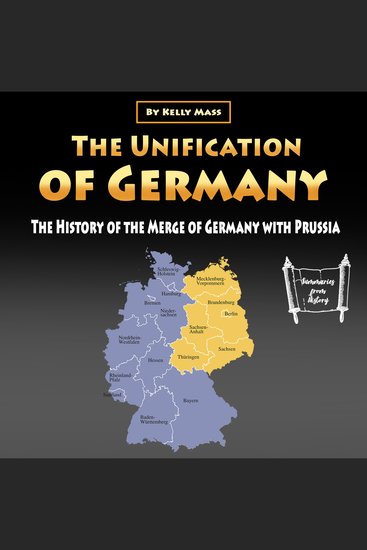
    The Unification of Germany had a significant impact on the whole country, the empire, and the decades after that. It was the inauguration for Germany into the 20th century, and the dreaded World War I and World War II that were partially consequences of that unification. 
    On January 18th, 1871, in the Palace of Versailles in France, Germany was lawfully merged into the German Empire, a Prussia-dominated country state with federal components. Throughout the Franco-Prussian War, princes of German countries assembled there to declare King Wilhelm I of Prussia Emperor of the German Empire. 
    The Treaty of Verdun in 843 developed a confederated kingdom of German princedoms that had existed for over 1,000 years. Even so, till 1800, there was no development of a German country identity, owing to the independent nature of baronial states; most occupants of the Holy Roman Empire, beyond those straight governed by the emperor, determined themselves mainly with their prince, instead of with the Empire as a whole. Kleinstaaterei, or "small-statery," happened called a result of this practice. Improvements in transport and interactions brought these areas closer together by the nineteenth century. 
    Today, you can learn more about what made this unification so special, and how it led to other events in history.
    Voir livre