Rejoignez-nous pour un voyage dans le monde des livres!
Ajouter ce livre à l'électronique
Grey
Ecrivez un nouveau commentaire Default profile 50px
Grey
Abonnez-vous pour lire le livre complet ou lisez les premières pages gratuitement!
All characters reduced
The Reign of Tiberius Out of the First Six Annals of Tacitus - With His Account of Germany and Life of Agricola - cover

The Reign of Tiberius Out of the First Six Annals of Tacitus - With His Account of Germany and Life of Agricola

Cornelius Tacitus

Traducteur Thomas Gordon

Maison d'édition: DigiCat

  • 0
  • 0
  • 0

Synopsis

In 'The Reign of Tiberius, Out of the First Six Annals of Tacitus,' Cornelius Tacitus intricately examines the complexities of political power during the reign of Tiberius, highlighting the interplay between morality and governance in ancient Rome. Tacitus employs a fragmented but eloquent narrative style, characterized by piercing insights and a rich vocabulary that evokes the turbulent atmosphere of his subject's era. This work serves as a crucial part of Tacitus's larger historical narrative, reflecting the moral decay and political stratagems that defined the Julio-Claudian dynasty, while also engaging with broader themes of tyranny and the struggle for personal integrity amidst corruption. Tacitus, a senator and historian of Rome, lived through the very political machinations he describes, providing him with unique insights into the dynamics of power and governance. His background as both a public official and an observer of Roman life imbues his writing with authenticity and depth. Tacitus's critical perspective, shaped by the tumultuous socio-political landscape of his times, allows readers to appreciate the profound implications of Tiberius's rule. Recommended for historians, classicists, and general readers alike, this compelling examination of Tiberius offers a nuanced understanding of Imperial Rome's complexities. Readers will find themselves drawn into the intricate web of ambition, betrayal, and the moral dilemmas faced by those in power, marking this work as an essential contribution to the study of Roman history.
Disponible depuis: 04/09/2022.
Longueur d'impression: 270 pages.

D'autres livres qui pourraient vous intéresser

  • The Weather Man - :Overcoming and Managing The Storms Of Life - cover

    The Weather Man - :Overcoming...

    Terrell J Brown

    • 0
    • 0
    • 0
    Terrell J. Brown’s The Weather Man examines the fragile harmony between internal and external factors that form our lives, utilizing the metaphor of weather to depict the emotional and psychological crises we endure. As the protagonist struggles with self-doubt, prior trauma, and societal expectations, they must manage the unpredictability of their inner world and the turmoil around them. The path to stability is not easy—it involves deep self-awareness, confrontation with difficult facts, and the bravery to reorient one’s internal compass. Through vivid narrative and profound contemplation, Brown demonstrates that even in life’s most turbulent situations, tenacity and faith may provide the calm required to survive the storm.
    Voir livre
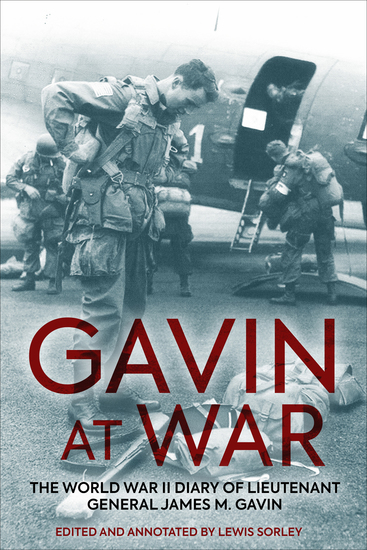
  • Gavin at War - The World War II Diary of Lieutenant General James M Gavin - cover

    Gavin at War - The World War II...

    Lewis Sorley

    • 0
    • 0
    • 0
    “Gavin at War provides a lively self-portrait. His diary is especially notable for its skeptical assessments of his comrades and his Army.” — The New York TimesWinner, 2022 Army Historical Foundation Distinguished Writing Awards, Journals, Memoirs, and Letters"General Gavin was a very brave man who had great faith in his men. The battle or the weather never stopped him from going to check the troops. He would go in the rain or snow. If the battle was severe, he would crawl from foxhole to foxhole to talk to his men to let them know he was with them. Words cannot explain the love and pride I had for General Gavin."—Walter Woods, World War II aide to General Gavin  Lieutenant General James Gavin, commander of the 82nd Airborne Division during WWII, is one of the best-known figures of the war. Beginning as the commander of the 505th Parachute Combat Team that spearheaded the American assault on Sicily in July 1943, Gavin advanced to division command and finally command of US forces in Berlin. Throughout this time he kept a wartime diary that starts in April 1943, as the unit was preparing to go to northern Africa, and continues through to his final entry on 1 September 1945 during the occupation of Berlin.  During the war years, Gavin came into close contact with virtually all the leading airborne commanders and many others who would advance to the top levels of Army leadership. His diary includes observations on fellow military and political leaders such as General Dwight Eisenhower and the British Field Marshal Montgomery, army operations, and the general's personal life. Gavin was an officer who led by example: on four combat jumps—into Sicily, at Salerno, then Normandy and the Netherlands—he was the first man out the door. Two Distinguished Service Crosses, two Silver Stars, and the Purple Heart rewarded his service.  For decades, Gavin kept the existence of the journal a secret; the general's family discovered it among his belongings after his death. Editor Lewis "Bob" Sorley has worked closely with the Gavin family and the Army Heritage Center to prepare the diary for publication. His edited and annotated version includes a prologue and epilogue to frame the entries within the wider scope of the general's life.
    Voir livre
  • Brahma Vishnu Shiva - The Yogic Trinity With The Brama Samhita - cover

    Brahma Vishnu Shiva - The Yogic...

    Sripad Jaganantha Das

    • 0
    • 0
    • 0
    Brahma is the controller of nature in the mode of passion; he is the engineer who creates the universe. Every universe has its Brahma, who appears as the first created being in it. Although Brahma is usually in the category of the jiva soul, he is designated an avatar (incarnation) of Krishna because he is especially empowered with Krishna’s own creative potency. Using the ingredients furnished by Krishna and following Krishna’s blueprints, Brahma constructs the material universe, and then he begets the offspring, called Prajapatis, whose descendants populate all the planets. 
     
    Vishnu, who controls nature in the mode of goodness and sustains the creation, is directly the Supreme Lord. In the spiritual kingdom of God, where everything is everlasting, the quality of goodness exists without either passion or ignorance. Therefore it is appropriate that Vishnu personally controls this quality even in the material world, where it becomes bracketed by ignorance and passion. 
      
    Shiva, the lord of the mode of ignorance, devastates the universe at the end by his wild, all-annihilating dance. Shiva is a personal expansion of Krishna, not a jiva. Yet, because he comes into intimate contact with the quality of ignorance and with matter (which is innately ignorant), you cannot receive the same spiritual restoration by worshiping him that you do by worshiping Krishna or Vishnu. Shiva is therefore given his own category, shiva-tattva. Learn all about the sacred trinity of yogic lore. 
     
    The Sri Brama-samhita is a collection of prayers by Brahma at the beginning of material creation after the Supreme Person Krishna gave Brahma a divine vision of the spiritual world. Brama, in his amazement, speaks volumes of divinely inspired praise before beginning his work of creation. Sri Chaitanya Mahaprabhu acquired the Fifth Chapter of the Brama-Samhita from the Adi-Keshava temple in South India. 
    Voir livre
  • ADHD Women & Relationships - Empower Your Growth Master Relationships Nurture Emotional Bonds and Executive Functioning Skills as a Woman Thriving with ADHD - cover

    ADHD Women & Relationships -...

    Ivy Castillo

    • 0
    • 0
    • 0
    Do you leave conversations thinking, “Why did that go so wrong?” and then blame yourself? 
    If you’re a woman with ADHD, it’s not that you’re “too much” or “not enough.” Your brain is wired differently and once you understand how that shows up in your relationships, everything changes. 
    ADHD Women & Relationships is a practical, compassionate guide to help you:Stop self-blame by spotting the real ADHD patterns in your relationshipsCommunicate more clearly with partners, family, friends, and coworkersSet boundaries without guilt so you’re not always people-pleasing or burning outFeel closer and safer in your romantic and platonic relationshipsShow up as the mum/friend/partner you want to be—ADHD and all 
    You don’t need to become a different person. You just need tools that actually work for your ADHD brain. 
    Grab a copy of ADHD Women & Relationships today to start creating calmer, kinder, more connected relationships—starting with the one you have with yourself.
    Voir livre
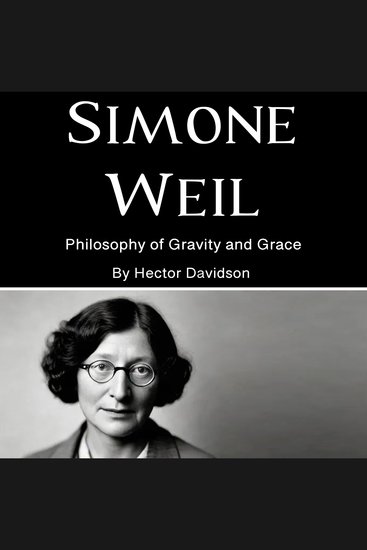
  • Simone Weil - Philosophy of Gravity and Grace - cover

    Simone Weil - Philosophy of...

    Hector Davidson

    • 0
    • 0
    • 0
    Simone Weil (1909–1943) stands as one of the most profound and unique thinkers of the 20th century, whose philosophy blends the intellectual rigor of traditional philosophy with the depth of mysticism, spirituality, and social activism. Despite her relatively short life, Weil’s work has had a lasting impact on diverse fields, including philosophy, theology, politics, and social theory. Her exploration of the concepts of gravity and grace forms the core of her intellectual legacy, offering a powerful lens through which to understand human suffering, freedom, and the potential for spiritual transformation. 
    At the heart of Weil’s philosophy is the concept of gravity, a metaphor she uses to describe the pull of the material world, which she believes leads to the oppression and suffering of individuals. Gravity represents the forces of self-centeredness, alienation, and the weight of human desires, which trap individuals in their own limitations and separation from the divine. It is the force that binds human beings to their own egos, making them blind to the higher truths of existence. 
    In stark contrast, grace in Weil’s thought is the force that can liberate individuals from the constraints of gravity. Unlike gravity, grace is not something humans can control or earn through effort. It is a divine gift that transcends human will and brings about a spiritual awakening. Grace enables individuals to experience a higher level of freedom—freedom from the self and from the oppression of the material world. For Weil, grace is central to human existence, as it offers the possibility of redemption and spiritual transformation.
    Voir livre
  • Big Questions of Philosophy The: Book Summary & Analysis - cover

    Big Questions of Philosophy The:...

    Briefly Summaries

    • 0
    • 0
    • 0
    This is a concise summary and analysis of ,The Big Questions of Philosophy by 
    David Edmonds.
     
    It is not the original book and is not affiliated with or endorsed by David Edmonds.
    Ideal those seeking a quick and insightful overview.
     
    Delve into life's most profound questions with clarity and wit in The Big Questions of Philosophy. This thought-provoking exploration tackles timeless issues such as morality, free will, the nature of consciousness, and the existence of God. Blending ancient wisdom with contemporary insights, the book provides accessible explanations of complex philosophical ideas, inviting readers to engage with the fundamental questions that shape human understanding and experience.
    Voir livre