Begleiten Sie uns auf eine literarische Weltreise!
Buch zum Bücherregal hinzufügen
Grey
Einen neuen Kommentar schreiben Default profile 50px
Grey
Jetzt das ganze Buch im Abo oder die ersten Seiten gratis lesen!
All characters reduced
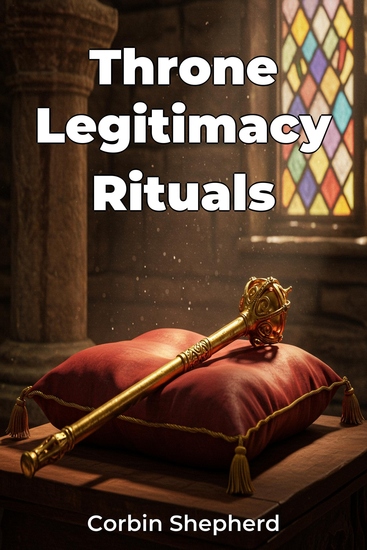
Throne Legitimacy Rituals - cover

Throne Legitimacy Rituals

Corbin Shepherd

Übersetzer A AI

Verlag: Publifye

  • 0
  • 0
  • 0

Beschreibung

Throne Legitimacy Rituals explores how ancient and medieval rulers established and maintained their power. It argues that legitimacy wasn't a static right, but a dynamic narrative constructed through public rituals, claims of noble bloodline, and assertions of divine favor. Consider, for example, coronations, which were carefully staged events designed to project power and reinforce the ruler's image. Similarly, royal genealogies were meticulously managed to solidify dynastic succession, emphasizing the importance of bloodline logic in legitimizing rule.

 
The book is divided into three sections that analyze public rituals, bloodline logic, and divine associations, showing how these elements interacted and evolved over time. By examining chronicles, legal codes, and archaeological findings, Throne Legitimacy Rituals provides a comprehensive analysis of how legitimacy was constructed and maintained. It offers a framework for understanding how rulers throughout history have sought to legitimize their authority.
Verfügbar seit: 03.05.2025.
Drucklänge: 56 Seiten.

Weitere Bücher, die Sie mögen werden

  • End of the Civil War The: The History of the Battles and Events that Destroyed the Confederacy and Finished the War Between the States - cover

    End of the Civil War The: The...

    Editors Charles River

    • 0
    • 0
    • 0
    Americans have long been fascinated by the Civil War, marveling at the size of the battles, the leadership of the generals, and the courage of the soldiers. Since the war's start over 150 years ago, the battles have been subjected to endless debate among historians and the generals themselves. The Civil War was the deadliest conflict in American history, and had the two sides realized it would take 4 years and inflict over a million casualties, it might not have been fought. Since it did, however, historians and history buffs alike have been studying and analyzing the biggest battles ever since. 
    By the close of 1864, Abraham Lincoln had been reelected, the Union army had taken Nashville from General Hood, and Sherman had concluded his total war, “slash-and-burn” march of destruction to Savannah, Georgia, offering it as a Christmas present to Lincoln. Nevertheless, with everything seemingly falling to pieces, the South still held out hope of some sort of miracle, and Davis even attempted to send a peace delegation to meet with Lincoln in the early months of 1865. To most observers, the South was clearly reaching its end, but Davis had no intention of quitting the war. Even while he was fleeing, he attempted to order Confederate generals in the field to keep fighting. On April 9, 1865, Lee formally surrendered his weary army to Grant at Appomattox. Appomattox is frequently cited as the end of the Civil War, but there still remained several Confederate armies across the country, mostly under the command of General Joseph E. Johnston, the same commander who arrived with reinforcements by rail during the First Battle of Bull Run and gave the South hope with victory in the first major battle. 
    On April 26, 1865, Johnston defied Davis’s orders and surrendered all of his forces to General Sherman, and over the next month, the remaining Confederate forces would surrender or quit.
    Zum Buch
  • Janissaries and Sipahi The: The History of the Elite Infantry and Cavalry that Fueled the Ottoman Empire’s Expansion - cover

    Janissaries and Sipahi The: The...

    Editors Charles River

    • 0
    • 0
    • 0
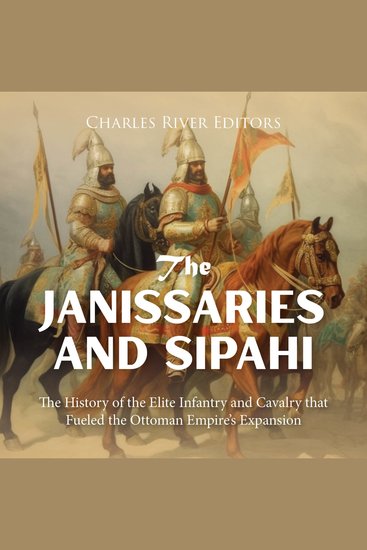
    In terms of geopolitics, perhaps the most seminal event of the Middle Ages was the successful Ottoman siege of Constantinople in 1453. The city had been an imperial capital as far back as the 4th century, when Constantine the Great shifted the power center of the Roman Empire there, effectively establishing two almost equally powerful halves of antiquity’s greatest empire. Constantinople would continue to serve as the capital of the Byzantine Empire even after the Western half of the Roman Empire collapsed in the late 5th century. Naturally, the Ottoman Empire would also use Constantinople as the capital of its empire after their conquest effectively ended the Byzantine Empire, and thanks to its strategic location, it has been a trading center for years and remains one today under the Turkish name of Istanbul.  
    	In the wake of taking Constantinople, the Ottoman Empire would spend the next few centuries expanding its size, power, and influence, bumping up against Eastern Europe and becoming one of the world’s most important geopolitical players. It was a rise that would not truly start to wane until the 19th century. 
    Among those who were responsible for the projection of Ottoman power, few deserve as much credit as the Janissaries. Established by Murad I, the Janissaries became an elite infantry force that was loyal only to the sultan. Their mission was to protect only him and in battles they were always the closest to him, forming a human shield.  
    Civilizations across the steppes and the Middle East relied heavily on cavalry, and the Sipahi were elite cavalry units during medieval times for a couple of powers. That said, they were a massive contributor to the success of Ottoman warfare, and during good times for the empire, the Sipahi were rewarded, to the extent that they became their own social class, much like the Janissaries. 
    Zum Buch
  • The Nurse’s Naughty Tease - Lesbian First Time Sex - cover

    The Nurse’s Naughty Tease -...

    Laura Vixen

    • 0
    • 1
    • 0
    A visit to the new college nurse provides an unexpected delight for Julia when she sees a curvy figure in a tight, white uniform. It brings a fantasy to life and her interest doesn’t go unnoticed. An invite to Miss Lopez’s room that very evening is one she isn’t about to turn down and it gets her under the control of a teasing nurse who likes to play.  
    Zum Buch
  • Bagavad Gita in Tamil - Chapter 9 - cover

    Bagavad Gita in Tamil - Chapter 9

    Viyasar

    • 0
    • 0
    • 0
    The Bhagavad Gita is a 700-verse Hindu scripture embedded within the epic Mahabharata, depicting a dialogue between Arjuna and Krishna on the battlefield of Kurukshetra. Arjuna, facing his relatives in battle, experiences despair and a crisis of conscience. Krishna, his charioteer and an avatar of Vishnu, provides philosophical and spiritual guidance, addressing themes of duty (dharma), action (karma), devotion (bhakti), and knowledge (jnana). The Gita explores the nature of the self, the divine, and humanity's place in the world, offering paths to liberation and spiritual fulfillment. 
    Zum Buch
  • Making Words Stick: A Four-Step Instructional Routine to Power Up Orthographic Mapping - cover

    Making Words Stick: A Four-Step...

    Molly Ness, Katie Pace Miles

    • 0
    • 0
    • 0
    The average reader instantly recognizes 30,000 to 70,000 words-with no need to sound them out. How does that happen? Through a process called orthographic mapping. This audiobook explains the process by which readers embed words into their long-term memories, and the instruction necessary to help K-5 students do just that. Teachers will learn how to connect decoding, encoding, and meaning through a four-step, research-based, classroom-tested routine that accelerates students' abilities to lift words off the page and capture them in reading and writing.
    Zum Buch
  • The Prophet - cover

    The Prophet

    Kahlil Gibran

    • 0
    • 0
    • 0
    This audiobook is narrated by an AI Voice.   
    The Prophet — Audiobook 
    "No man can reveal to you aught but that which already lies half asleep in the dawning of your knowledge." 
    First published in 1923, The Prophet by Kahlil Gibran is one of the most beloved and enduring works of world literature — translated into over 100 languages and never once out of print. 
    Consisting of 26 prose poetry fables, the book speaks through the voice of a prophet on the deepest themes of human life — love, children, freedom, sorrow, beauty, and death. 
    "You are the bows from which your children as living arrows are sent forth." "What is evil but good tortured by its own hunger and thirst?" "Self is a sea boundless and measureless." 
    A Production Crafted with Care 
    This audiobook breathes life into Gibran's timeless words through a carefully crafted cast of voices. Almustafa and the narrator speak in American English, while the citizens of Orphalese — the ploughman, the merchant, the judge, the priestess, the scholar, the astronomer, and more — are voiced in British English, giving each figure their own distinct warmth and character. Every line has been reviewed by human editors to ensure a smooth listening experience. 
    Tip for the impatient listener: Chapters 1 and 28 are slightly longer than the rest — feel free to begin at Chapter 2 and circle back.
    Zum Buch