Rejoignez-nous pour un voyage dans le monde des livres!
Ajouter ce livre à l'électronique
Grey
Ecrivez un nouveau commentaire Default profile 50px
Grey
Abonnez-vous pour lire le livre complet ou lisez les premières pages gratuitement!
All characters reduced
Census Inclusion Effects - cover

Census Inclusion Effects

Corbin Shepherd

Traducteur A AI

Maison d'édition: Publifye

  • 0
  • 0
  • 0

Synopsis

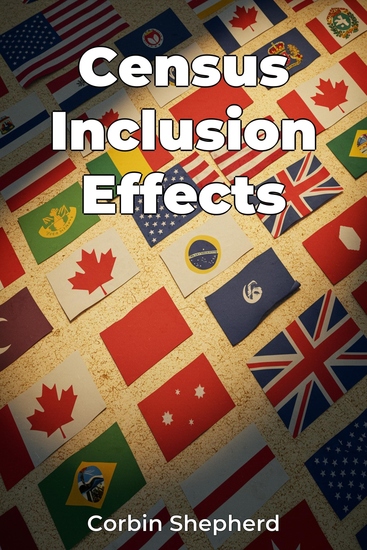
Census Inclusion Effects explores the implications of incorporating sexual orientation and gender identity (SOGI) questions into national census forms. Focusing on the United States, the United Kingdom, and Canada, the book delves into both the statistical and socio-political ramifications of collecting SOGI data. A key insight is that while such data is invaluable for addressing inequalities affecting marginalized communities and allocating resources effectively, it also raises significant concerns about data privacy and the potential for misuse.

 
The book examines the historical context of census taking and the evolution of demographic data collection. It highlights debates surrounding SOGI data collection, weighing the benefits of informed social policy against the risks to individual privacy. For example, while Canada includes SOGI questions, generating data for policy, the US has seen limited inclusion in specific surveys. By comparing these approaches, the book identifies best practices for responsible and effective SOGI data collection.

 
Structured to provide a comprehensive understanding, the book first introduces a theoretical framework, then analyzes methodologies, and finally offers policy recommendations. Drawing from government reports, statistical datasets, and interviews, it uniquely combines quantitative analysis with qualitative insights, making it a valuable resource for policymakers, researchers, and LGBTQ+ advocates alike.
Disponible depuis: 07/04/2025.
Longueur d'impression: 92 pages.
D'autres livres qui pourraient vous intéresser

  • Shadow War Between the States The: The History of Union and Confederate Intelligence Operations during the Civil War - cover

    Shadow War Between the States...

    Charles River Editors

    • 0
    • 0
    • 0
    In September 1862, the Union had no intelligence service worthy of the name. It had detectives, scouts, scattered networks of informants, balloons, signal flags, and a great deal of luck, but the federal government did not have a coordinated system, to the extent that military commanders did not know enemy troop strength. By the end of the war, the Union would be running the most sophisticated intelligence operations in American history to that point. The government eventually forged an integrated, all-source, professional service that fed the commanding generals daily reports on enemy strength, disposition, morale, and intent. The Union also successfully maintained a network of spies inside the Confederate capital that intercepted enemy signal traffic; read Southern newspapers, and used escaped slaves as sources of intelligence. 
    It was not until 1988, when two career intelligence officers named William A. Tidwell and David Winfred Gaddy and a Lincoln assassination scholar named James O. Hall published Come Retribution: The Confederate Secret Service and the Assassination of Lincoln, that the full scope of Confederate covert operations began to come into focus. The picture that emerged from surviving documents, financial records, pension files, and the kind of careful inference that professional intelligence analysts bring to fragmentary evidence, was startling in its ambition and in its implications. The Confederate Secret Service, it turned out, had been playing a longer and more sophisticated game than anyone had previously understood. In fact, Confederate intelligence operations had begun during the first weeks of the war, and in the autumn of 1864, they were on the verge of planning an operation that, had it succeeded, might have changed the outcome of the conflict entirely.
    Voir livre
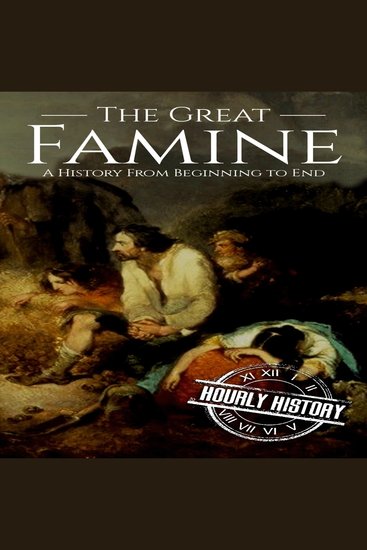
  • The Great Famine - A History from Beginning to End - cover

    The Great Famine - A History...

    Hourly History

    • 0
    • 0
    • 0
    The Great Famine which afflicted Ireland from 1845 to 1849 was one of the most catastrophic events in Europe during the nineteenth century. More than one-quarter of the population of Ireland died of starvation or associated disease, or were forced to emigrate. Ireland after the famine was a completely different country in many ways. 
    The direct causes of the famine are simple to understand—a large part of the population of Ireland, mainly the poorest families, had become completely dependent on the potato as a source of food. In 1845, the blight appeared, a disease which affected the potato crop. Successive failures of the potato crop in Ireland led to more than one million people dying as a direct result. 
    What is less easy to understand is why this famine was confined to Ireland and why the British government did not do more to help. The potato blight affected parts of Great Britain and other countries in Europe, but nowhere else did it lead to famine. For much of the famine, food continued to be exported from Ireland, and at its height, there was food stored in warehouses which could have been used to alleviate the suffering of the starving—that it was not represents at the very least a complete failure of understanding on the part of the British government. 
    The Great Famine left a legacy of distrust and animosity between large segments of the population of Ireland and Great Britain, and this in part led to the movements which finally produced Irish independence. The famine also left a deep impression on the psyche of the people of Eire, and even today, Ireland remains at the forefront of international famine relief. 
    This is the story of the Irish Potato Famine.
    Voir livre
  • The 90s Leftovers - Gen X Immigrant Love Story - cover

    The 90s Leftovers - Gen X...

    Inta Halvorsen

    • 0
    • 0
    • 0
    How do you find yourself after spending a lifetime learning to hide? 
    At fifty, Linda has met every expectation. She navigated the complex maze of immigration, worked hard to blend in, and raised a family in the American Midwest. With an empty nest forcing her to look inward, Linda must unearth the emotional archaeology of her past. 
    The 90s Leftovers is a moving Gen X immigrant story about second chances in love, deep emotional healing, and the quiet courage it takes to start over. Set against a nostalgic backdrop of alternative rock, this midlife reinvention audio novella proves that true authenticity isn't a return to who you were, but a fierce unlearning of the survival strategies forced upon you. 
    Discover where her story began decades earlier in the prequel companion audiobook, A Day in the Life of a Soviet Schoolgirl.
    Voir livre
  • A Rare Recording of US Senator Huey P Long Delivering His 1935 "St Vitus Dance Government" Speech - cover

    A Rare Recording of US Senator...

    Senator Huey P. Long

    • 0
    • 0
    • 0
    Huey Pierce Long Jr. (August 30, 1893 - September 10, 1935), nicknamed "The Kingfish", was an American politician who served as the 40th governor of Louisiana from 1928 to 1932 and as a United States senator from 1932 until his assassination in 1935. He was a left-wing populist member of the Democratic Party and rose to national prominence during the Great Depression for his vocal criticism of President Franklin D. Roosevelt and his New Deal, which Long deemed insufficiently radical. The following recording is of Long’s 1935 radio broadcast speech, The St. Vitus Dance Government.
    Voir livre
  • The Shadow Work Workbook - A Life-Changing Guide to Integrate Your Shadow Self Release Emotional Blocks and Heal Your Inner Child - cover

    The Shadow Work Workbook - A...

    Rachel Porter

    • 0
    • 0
    • 0
    How come you’ve done so much inner work and still feel stuck without much progress?Most probably, you haven’t looked at your.. SHADOW. 
    You haven’t looked at and built the most important relationship in your life (yet): The relationship with yourself. 
    Hello, beautiful being! You want to do Shadow Work but you don't know how or where to start? You came to the right place. 
    How can you know if your shadow is affecting your life? 
    - You're feeling that you have to shift between identities & masks, hold yourself back to "belong" 
    - You attract the same patterns over & over again and don't know why or how to stop it 
    - Anytime you're trying to take action toward your dream you doubt yourself or expect the worst 
    - You have trouble communicating and expressing your emotions to other people 
    - You get easily triggered by other people - their actions (or inaction) or comments 
    - You're feeling invisible, unheard or misunderstood by other people 
    You haven’t looked at and built the most important relationship in your life (yet).. The relationship with yourself 
    Here's a little sneak preview of what you’ll get: 
    - The Seven Steps to Creating Lasting Change 
    - The Power of Thoughts and Beliefs 
    - Identifying Your Subconscious Beliefs 
    - How to Change Your Limited Beliefs 
    - Understanding and Overcoming Trauma 
    - Decoding the Subconscious 
    - Understanding Your Dreams 
    - Getting to Know Your Triggers and Healing Them 
    - The 3-2-1 Method 
    - The Mirror Technique 
    - Meeting Your Inner Adult and Inner Child 
    - Realigning with your Authentic Self 
    - Learning to Structure Your Goals 
    - Finding Your Life Purpose 
    - How to Determine Your Attachment StyleStart your healing journey & free your shadow
    Voir livre
  • Socially Psyched: A Short Book Breaking Down Over a Dozen of the Most Important Findings in Social Psychology - cover

    Socially Psyched: A Short Book...

    Bo Bennett PhD

    • 0
    • 0
    • 0
    This is a collection of what I feel are some of the most important social/cognitive psychology experiments, studies, demonstrations, biases, and systematic reviews, presented in an entertaining way while adhering to academic standards. 
     
    I have always been fascinated by how our behaviors, cognition (thoughts), and affect (how we feel) are greatly dependent upon our social environment and our imperfect brains. I find it fascinating--perhaps because I am an American who was raised in the typical American cultural environment where I learned that what we consider "the self" consists of some magic "soul" that defines who we are—our behaviors (including choices and decisions), our cognition (including thoughts and beliefs), and our feelings. This could not be further from the truth. "We" are a result of an often incomprehensible interaction between biology and environment where some traits are more greatly influenced by social factors than others. Who we are is a result of social forces—the influence of other people and the human-created systems in which we operate. We can ignore this fact, maintain an illusion of control, or face reality and learn how to navigate this world and come out on top—personally, professionally, and financially. I choose the latter. 
     
    My name is Bo Bennett, and I hold a PhD in social psychology with a passion for this subject. While this book is not about me, my interpretations and commentary do make up most of the sections of each entry based on the content written by the original authors of the research or other sources—each of which will be cited when used. 
    Enjoy this short book! 
     
    Bo Bennett, PhD
    Voir livre