Rejoignez-nous pour un voyage dans le monde des livres!
Ajouter ce livre à l'électronique
Grey
Ecrivez un nouveau commentaire Default profile 50px
Grey
Abonnez-vous pour lire le livre complet ou lisez les premières pages gratuitement!
All characters reduced
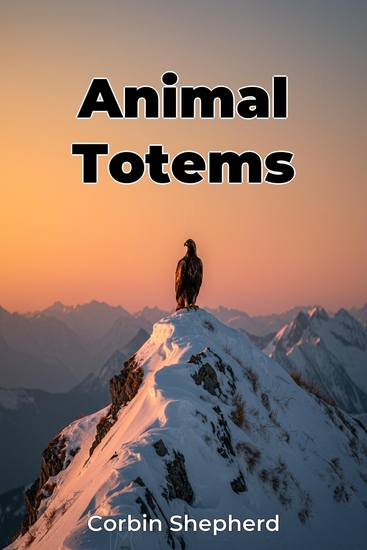
Animal Totems - cover

Animal Totems

Corbin Shepherd

Traducteur A AI

Maison d'édition: Publifye

  • 0
  • 0
  • 0

Synopsis

Animal Totems explores the profound connections between animals and tribal identities in indigenous cultures worldwide. The book argues that animal totems are not arbitrary symbols but reflect deep ecological knowledge, social values, and spiritual beliefs that shape cultural identity and environmental stewardship. For example, certain animals become totems based on their perceived characteristics and their role in the local ecosystem, thereby influencing social organization and cultural practices.

 
The book approaches its subject through ethnographical studies, historical accounts, and oral traditions. It begins by explaining foundational concepts like totemism and animism, then examines case studies from North America, Australia, Africa, and South America, focusing on animals like the bear, eagle, kangaroo, and jaguar. These case studies highlight the cultural significance of these animals.

 
The book concludes by analyzing modern challenges facing these traditions, such as globalization and environmental degradation. Ultimately, Animal Totems provides valuable insights into cultural preservation, cross-cultural understanding, and sustainable development. It emphasizes the dynamic nature of these traditions and their contemporary relevance, offering an innovative perspective on human-animal relationships.
Disponible depuis: 06/05/2025.
Longueur d'impression: 63 pages.

D'autres livres qui pourraient vous intéresser

  • What Is Art? - cover

    What Is Art?

    Leo Tolstoy

    • 0
    • 0
    • 0
    What Is Art? by Leo Tolstoy is a bold and uncompromising exploration of the true purpose and moral responsibility of artistic creation. First published in 1897, this influential work of philosophical criticism challenges conventional definitions of beauty and confronts the cultural assumptions that shape our understanding of art. With clarity, passion, and moral urgency, Tolstoy presents a radical rethinking of what art is—and what it ought to be.
    
    Rejecting the idea that art exists merely for pleasure or aesthetic refinement, Tolstoy argues that genuine art is a means of sincere emotional communication between individuals. According to him, art's highest calling is to unite humanity by transmitting authentic feelings that promote compassion, moral growth, and spiritual awareness. Works that fail to communicate universal human experience, he contends, serve only elite tastes and perpetuate social division.
    
    Throughout the book, Tolstoy critiques established artistic traditions, questioning the value placed on complexity, exclusivity, and technical virtuosity. He examines literature, music, painting, and theater, evaluating them not by their fame or sophistication, but by their capacity to convey heartfelt emotion accessible to all people. His analysis extends to many celebrated artists of his time, sparking controversy with his candid assessments and fearless criticism.
    
    At the heart of What Is Art? lies Tolstoy's conviction that art must be ethically grounded. For him, creativity is inseparable from morality. Art that encourages vanity, indulgence, or empty entertainment falls short of its true mission. Instead, he envisions art as a force capable of fostering empathy, strengthening communal bonds, and guiding society toward higher ideals.
    
    More than a theoretical treatise, this work reflects Tolstoy's own spiritual journey and his broader philosophical concerns about faith, social inequality, and human responsibility. His arguments are provocative and deeply personal, inviting readers to reconsider not only what they value in art, but why they value it.
    
    Challenging, thought-provoking, and intensely sincere, What Is Art? remains a cornerstone of aesthetic philosophy. Its questions continue to resonate in contemporary debates about culture, creativity, and the role of artists in society. Through this powerful examination, Tolstoy compels readers to look beyond surface beauty and to seek art that speaks truthfully to the shared human experience.
    Voir livre
  • Hippias Major - What Is Beauty? – Plato’s Dialogue on Aesthetics and the Search for Universal Truth - cover

    Hippias Major - What Is Beauty?...

    Plato, Tim Zengerink

    • 0
    • 0
    • 0
    What if beauty isn’t just what we see—but a reflection of deeper truth? 
    In Hippias Major, Plato invites us into one of philosophy’s earliest investigations into aesthetics. Socrates questions the sophist Hippias on the definition of beauty, leading to a challenging and often humorous journey through false starts, flawed logic, and unexpected insights. 
    This modern translation delivers Plato’s wit and wisdom in accessible, engaging language, making the search for beauty as relevant today as it was in ancient Greece. 
    What you'll discover inside: 
    •	A Timeless Dialogue on Beauty – Socrates seeks a definition that transcends physical appearance 
    •	Plato’s Foundations of Aesthetics – Understand the roots of Western thought on art and form 
    •	A Sharp Critique of Superficial Wisdom – Watch Socrates expose hollow definitions of truth and beauty 
    •	A Modern, Thoughtful Translation – Designed to resonate with today’s listener while preserving Plato’s philosophical depth 
    Uncover the essence of beauty with Socrates as your guide—and see how the search for the ideal can reshape how we see the world.
    Voir livre
  • Decline in Reading - How to Reverse the Trend - cover

    Decline in Reading - How to...

    Brian Yang

    • 0
    • 0
    • 0
    In a world where screens dominate children's attention, "Decline in Reading: How to Reverse the Trend" by Brian Yang is a rallying cry for parents, educators, and community leaders alike. This insightful book delves into the shocking statistics of declining reading habits among youth and the profound implications for their future. Yang passionately argues that reading is not merely a skill—it's a gateway to knowledge, empathy, and opportunity. With actionable strategies and inspiring anecdotes, he reveals how we can cultivate a love for reading in children, ensuring they thrive academically and socially. Don't let the joy of reading fade away; grab your copy today and become part of the solution!
    Voir livre
  • Side Hustle Safety Net - How Vulnerable Workers Survive Precarious Times - cover

    Side Hustle Safety Net - How...

    Alexandrea J. Ravenelle

    • 0
    • 0
    • 0
    The first major study of how the pandemic affected gig workers—a sociological exploration that reads like a novel. 


    This is the story of what the most vulnerable wage earners—gig workers, restaurant staff, early-career creatives, and minimum-wage laborers—do when the economy suddenly collapses. In Side Hustle Safety Net, Alexandrea J. Ravenelle builds on interviews with nearly two hundred gig-based and precarious workers, conducted during the height of the pandemic, to uncover the unique challenges they faced in unprecedented times. 


    This book looks at both the officially unemployed and the "forgotten jobless"—a digital-era demographic that turned to side hustles—and reveals how they fared. CARES Act assistance allowed some to change careers, start businesses, perhaps transform their lives. However, gig workers and those involved in "polyemployment" found themselves at the mercy of outdated unemployment systems, vulnerable to scams, and attempting dubious survival strategies. Ultimately, Side Hustle Safety Net argues that the rise of the gig economy, partnered with underemployment and economic instability, has increased worker precarity with disastrous consequences.
    Voir livre
  • Homo Sapiens - cover

    Homo Sapiens

    Introbooks Team

    • 0
    • 0
    • 0
    Around 13.5 billion years ago, energy, time, matter and space had come to be known as the phenomenon of the Big Bang. The theory of the fundamental features of the universe is referred to as physics. Around 30,000 years when these features had appeared, energy along with matter had started the coalescing into various complex structures referred to as the atoms. These then combined themselves into bigger molecules. The theory of atoms along with molecules as well as its interaction is referred to as the chemistry. Some 3.8 billion years before, on some planet known as the Earth, several molecules had combined to result in some large and well-defined structures known as the organisms. The theory of the organisms is referred to as biology. 
    Around 70,000 years before, the organisms which belonged to the group homo sapiens had started forming even larger and elaborative structures known as the cultures. The development of these cultures is known as history.
    Voir livre
  • The Falklands War - A Captivating Guide to the Clash Between Argentina and the United Kingdom Over the Falkland Islands - cover

    The Falklands War - A...

    Captivating History

    • 0
    • 0
    • 0
    The Falklands War: Britain's Unexpected Battle for a Remote Island Chain
    
    Why did two countries end up fighting over a group of islands barely anyone had heard of?
    
    In 1982, Argentina invaded the Falkland Islands, kicking off a short but intense war with Britain that caught the world off guard. On the surface, it looked like a small territorial dispute, but behind it were years of colonial history, clashing national identities, and rising political pressure on both sides.
    
    This book looks closely at how it all happened: what led to the invasion, how Britain responded so quickly, and why the Falklands became such a symbolic flashpoint for both nations. It's a detailed, balanced look at a war that wasn't supposed to happen, and how it changed the people and countries involved.
    
     Inside, you'll learn about: 
    
    - The long and complicated backstory of who really "owned" the Falklands. 
    - What pushed Argentina's military leaders to launch an attack? 
    - How the British response helped shape the country's modern identity. 
    - What the islanders themselves thought, and why their voices mattered. 
    - The political and military fallout that lasted long after the shooting stopped. 
    - And much, much more! 
     
    This isn't just a timeline of events, it's a deeper look at what the war meant and why it still matters today.
    
    Click Add to Cart now to explore one of the most unexpected and revealing conflicts of the late 20th century.
    Voir livre