Begleiten Sie uns auf eine literarische Weltreise!
Buch zum Bücherregal hinzufügen
Grey
Einen neuen Kommentar schreiben Default profile 50px
Grey
Jetzt das ganze Buch im Abo oder die ersten Seiten gratis lesen!
All characters reduced
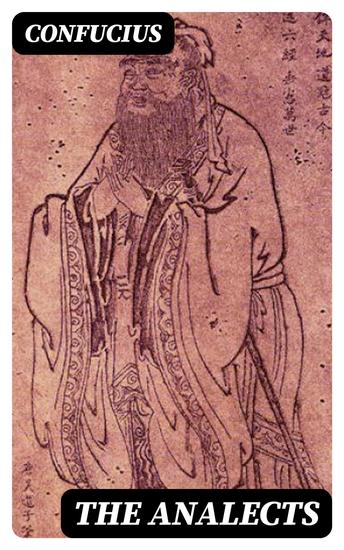
The Analects - Enriched edition - cover

The Analects - Enriched edition

Confucius

Verlag: DigiCat

  • 0
  • 0
  • 0

Beschreibung

The Analects, a collection of sayings and ideas attributed to Confucius, offers profound insights into the ethics and philosophy of this ancient sage. Rooted in the context of the Eastern Zhou Dynasty, the text is written in a conversational style, interspersed with dialogues and reflections that illuminate the core tenets of Confucian thought, such as filial piety, moral integrity, and the importance of virtuous leadership. Its literary simplicity belies the depth of its philosophical inquiry, making it both accessible and richly layered for multiple interpretations across centuries. Confucius, born in 551 BCE in what is now Shandong Province, emerged as a pivotal figure in Chinese history, advocating for a system of ethics rooted in pragmatism and humanity. His life was marked by a dedication to education and the cultivation of moral virtues, heavily influenced by the tumultuous political landscape of his time. This backdrop inspired him to compile his thoughts on governance, morality, and social harmony, which are timelessly relevant to both individual conduct and societal structure. For anyone interested in ethics, philosophy, or the foundations of Eastern thought, The Analects is an indispensable text. Its teachings not only resonate within the framework of Confucianism but also offer universal reflections on human nature and interpersonal relationships. Readers will find this work both enlightening and transformative, providing essential insights that remain relevant in contemporary discussions.

In this enriched edition, we have carefully created added value for your reading experience:
- A succinct Introduction situates the work's timeless appeal and themes.
- The Synopsis outlines the central plot, highlighting key developments without spoiling critical twists.
- A detailed Historical Context immerses you in the era's events and influences that shaped the writing.
- An Author Biography reveals milestones in the author's life, illuminating the personal insights behind the text.
- A thorough Analysis dissects symbols, motifs, and character arcs to unearth underlying meanings.
- Reflection questions prompt you to engage personally with the work's messages, connecting them to modern life.
- Hand‐picked Memorable Quotes shine a spotlight on moments of literary brilliance.
- Interactive footnotes clarify unusual references, historical allusions, and archaic phrases for an effortless, more informed read.
Verfügbar seit: 25.05.2022.
Drucklänge: 140 Seiten.
Weitere Bücher, die Sie mögen werden

  • My Personal Holocaust - Triumphing over the Devastation of Trauma Based Mind Control - cover

    My Personal Holocaust -...

    Carolyn Sherrow

    • 0
    • 0
    • 0
    A Journey from Darkness to Light 
    Carolyn Sherrow’s early life was marred by the darkness of ritual abuse and mind control. Yet, through the power of God’s relentless love, she found the strength to rise above her past. 
    In My Personal Holocaust, Sherrow describes her profound journey of faith, healing, and redemption. 
    In this deeply personal account, she shares how a dissociative disorder once bound her in fear but 
    ultimately led her closer to God. With the support of compassionate counselors and divine guidance, 
    she embarked on a path of spiritual and emotional restoration. 
    Her powerful story reminds us that with God, no wound is too deep to heal. 
    • Witness God’s miraculous healing in the midst of unimaginable pain. 
    • Learn how yielding to God’s gentle guidance can lead to profound transformation. 
    • Discover the importance of faith, prayer, and perseverance in the journey to wholeness. 
    Join Sherrow on this transformative journey—her story may help you rewrite your own. CAROLYN SHERROW practiced medicine as a physician assistant for twenty-three years. She has been published in the Pentecostal Evangel magazine, Chicken Soup for the Soul, and Bethany House anthologies. 
    A lifelong Colorado resident, Sherrow enjoys her flower and vegetable gardens.
    Zum Buch
  • Boss - Richard J Daley of Chicago - cover

    Boss - Richard J Daley of Chicago

    Mike Royko

    • 0
    • 0
    • 0
    In the turbulent world of Chicago politics, Boss dives deep into the captivating life and legacy of Richard J. Daley, the influential politician and mastermind behind the city's Democratic Party machine. 


    Mike Royko's scathing and meticulously researched account follows Richard J. Daley's rise to power, from his inauspicious youth on Chicago's South Side through his rapid climb to the seat of power as the city's mayor. 


    This engrossing biography brings to life the most powerful political figure of his time. With witty insight and unwavering honesty, Royko unveils Daley's controversial tactics, his laissez-faire policy toward corruption, and his unprecedented influence as a "kingmaker." From milestone achievements to cardinal sins, this eye-opening biography paints a vivid portrait of Daley, making Boss a must-listen for history buffs, political enthusiasts, and anyone fascinated by the inner workings of power. 


    Uncover the secrets and the undeniable legacy of the last of the backroom Caesars in this compelling portrait of politics and power. 


    This new edition includes an introduction in which the author reflects on Daley's death and the future of Chicago.
    Zum Buch
  • Laws - cover

    Laws

    Plato

    • 0
    • 0
    • 0
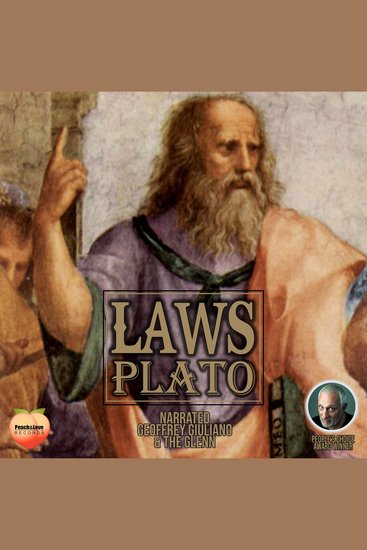
    Laws is Plato's last and longest dialogue. It is generally agreed that Plato wrote this dialogue as an older man, having failed in his effort in Syracuse on the island of Sicily to guide a tyrant's rule, instead having been thrown in prison 
     
    The Classical Greek philosopher Plato was instrumental in the development of Western philosophy and science. Plato was born to an aristocratic family and was well-educated. He founded the Academy, one of the first institutions of higher learning, around 385 BC. Plato was highly influenced by his teacher, Socrates. Socrates was condemned to death after being accused of corrupting his young followers. After Socrates' death, Plato recorded several dialogues detailing what he remembered from Socrates' teachings and interactions with others. Almost everything known about Socrates comes from Plato's dialogues. Plato's writings have been revised and interpreted by a variety of publishers.
    Zum Buch
  • Leadership in Turbulent Times - cover

    Leadership in Turbulent Times

    Introbooks Team

    • 0
    • 0
    • 0
    Turbulent times occur due to crises, which can happen at any time and in any organisation. Even if the firm is doing well today, it does not eradicate the possibility of the firm being thrown into trouble in the nearest future. No one can predict the future. While leaders of a company are enjoying the good times, they should equally consider the possibility of turbulent times; as a result, they should prepare for eventualities. They should get themselves ready for those times that crisis will be the order of the day. No one wishes for crises, but the crisis does not come by wishing for them; they come a random and the causes can be internal or external.  
    Preparing ahead of time can prevent the problems of under preparation for crises. A company and its management should understand how to manage crises situations when such arise. The leaders in a company should be visionary enough to get them set for any problem that may arise.
    Zum Buch
  • Spirit Voices - The Mysteries and Magic of North Asian Shamanism - cover

    Spirit Voices - The Mysteries...

    David J. Shi

    • 0
    • 0
    • 0
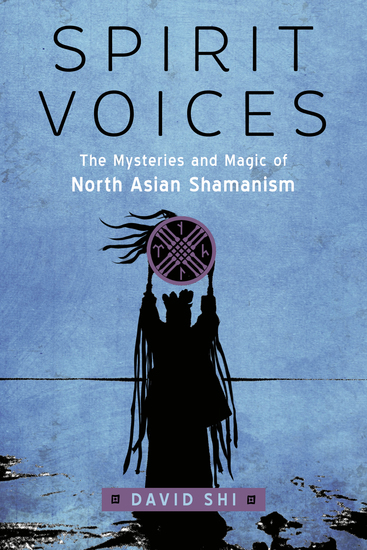
    Provides a clear and accessible guide to the many different North Asian shamanic traditions, past and present.What is shamanism? Where is it from? How does one become a shaman? What are the requirements to become one? Anthropologists tell us that the word shaman derives from the Tungus language and traditions, but few people understand the full scope of what that means. In his groundbreaking book, Spirit Voices, David Shi answers all these questions and more.Drawing upon his own ancestral traditions, Shi explores the history and practice of shamanism. He guides readers through what may be the unfamiliar landscapes of North Asia—the place where shamanism was born—as well as the largely hidden and unfamiliar traditions of Turkic, Mongolic, and Tungus shamanism, exploring the subtle and unique aspects of each tradition. Shi provides a clear and accessible guide that explores the many different North Asian shamanic traditions.So, what exactly is shamanism? David Shi suggests that the most accurate definition derives from shamanologist Nicholas Breeze Wood, who writes, “A shaman is someone chosen by the spirits [typically at or before birth] and who can go into a controlled and repeatable deliberate trance state, during which they A) experience ‘spirit flight,’ where they go to the spirit worlds and meet spirits, who they either fight with, negotiate with, or trick, in order to create change in this physical world, or B) are often taken over/possessed by the spirits (normally ancestral shaman spirits, or local land spirits) while in this physical world—the spirits using the shaman’s voice and body to heal, or give advice to members of the shaman’s community. Without the spirits and their blessing, a shaman cannot exist or function. Without the trance state, it is not shamanism.”Featuring history, firsthand experiential reports, mythology, and folklore, Spirit Voices explores the spirits, spirituality, tools, and practices of true shamanism, past and present. Shi also provides practical information for those readers seeking to implement shamanic practices, including those that are appropriate to noninitiates and outsiders to the culture. As the author points out, “the purpose of shamanism can be summed up in two words: coexistence and balance—coexistence with our spirits and our communities, and the balance that must be preserved between all of us and within ourselves.”
    Zum Buch
  • Korean Made Easy - Beginner - Volume 2 of 3 - cover

    Korean Made Easy - Beginner -...

    Lingo Wave

    • 0
    • 0
    • 0
    We broke our new series on learning Korean down into different learning stages. Start with the "Lower Beginner" books followed by the "Beginner" and "Upper Beginner" books. Next, progress to the "Intermediate" series, then test and reinforce your knowledge with the "Conversations" series. 
    This audiobook is divided into units.While it provides different learning patterns and accommodates various needs, this audiobook focuses on helping you improve your ability to understand, speak, and memorise Korean. 
    In Unit 1 you will hear Korean decoded with each syllable spoken very slowly and clearly with repetition. Immediately before each sentence is spoken, you will hear the translation, so you will always understand what is being said. 
    Unit 2 focuses solely on increasing your listening ability, which will improve your abilities to engage in dialogue with a native Korean speaker. This chapter requires you to listen very carefully to nuances in the language. 
    By Unit 3 you will already notice progress in your abilities to speak and understand Korean. The spoken translation is followed by two repetitions in Korean at a completely natural speed. While you are learning to process naturally spoken Korean, Units 3 and 4 will help you memorise new vocabulary and full sentences. 
    In Unit 5 you can test yourself on how much you have learned. If you are having difficulties, we suggest you revisit the listening, speaking, or memorisation section of Units 1, 2 3 or 4, according to what you need more help with. 
    Topics covered in this book: 
    1. Asking about family 
    2. Asking about relationship status 
    3. Expressing frequency 
    4. Talking about spare time activities and hobbies 
    5. Using quantifiers/determiners 
    6. Talking about preference 
    7. Talking about abilities 
    8. Talking about location of places 
    9. Describing appearance 
    10. Talking about personality 
    ...
    Zum Buch