Begleiten Sie uns auf eine literarische Weltreise!
Buch zum Bücherregal hinzufügen
Grey
Einen neuen Kommentar schreiben Default profile 50px
Grey
Jetzt das ganze Buch im Abo oder die ersten Seiten gratis lesen!
All characters reduced
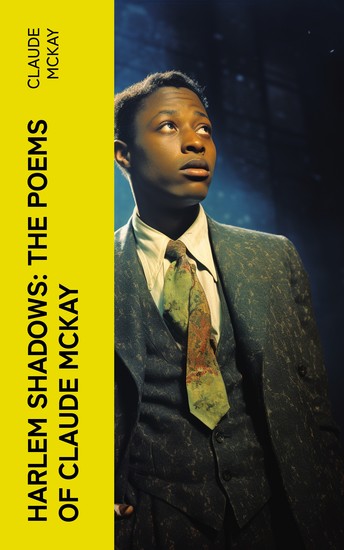
Harlem Shadows: The Poems of Claude McKay - cover

Harlem Shadows: The Poems of Claude McKay

Claude McKay

Verlag: e-artnow

  • 0
  • 0
  • 0

Beschreibung

McKay's 1922 poetry collection, Harlem Shadows, was among the first books published during the Harlem Renaissance and his novel Home To Harlem was a watershed contribution to its fiction. Festus Claudius "Claude" McKay OJ was a Jamaican-American writer and poet. He was a central figure in the Harlem Renaissance.
Verfügbar seit: 09.12.2023.
Drucklänge: 32 Seiten.

Weitere Bücher, die Sie mögen werden

  • Sunshine Sketches of a Little Town - Including a Biography of Stephen Leacock by Peter Gilchrist McArthur - cover

    Sunshine Sketches of a Little...

    Stephen Butler Leacock, Peter...

    • 0
    • 0
    • 0
    This annotated edition of "Sunshine Sketches of a Little Town" includes: 
    A biography of Stephen Leacock By Peter Gilchrist McArthur (1923). 
    "Sunshine Sketches of a Little Town" is considered to be the masterpiece of Stephen Leacock. Originally published in 1912, it is a set of tales occurring in the fictional hamlet of Mariposa, on the shores of Lake Wissanotti. Many of the characters in the stories are patterned on locals of Orillia, Ontario. The stories are  gems of Canadian small town folklore. Leacock brings the quirks, eccentricities and flaws of these everyday people to life in the most humorous way. Every corner of Mariposa has a story to tell! 
    Quoting Leacock: "Mariposa is not a real town. On the contrary, it is about seventy or eighty of them. You may find them all the way from Lake Superior to the sea, with the same square streets and the same maple trees and the same churches and hotels."
    Zum Buch
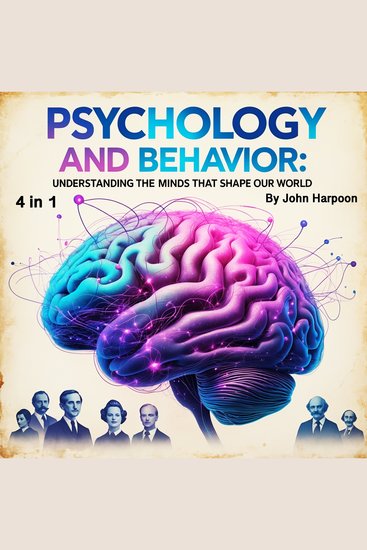
  • Psychology and Behavior - Understanding the Minds that Shape Our World (4 in 1) - cover

    Psychology and Behavior -...

    John Harpoon

    • 0
    • 0
    • 0
    This book contains the following 4 titles: 
    - Decoding Animal Minds: The question of whether animals possess consciousness has intrigued philosophers, scientists, and animal lovers for centuries. Consciousness, often described as the awareness of one's thoughts, feelings, and surroundings, is a concept that has been challenging to define, even in humans. When applied to animals, the puzzle becomes even more complex, as humans must contend with species whose mental processes are vastly different, yet still intriguing. 
    - The World's Youngest Criminal Genius: In the annals of crime, there are few figures as captivating or as puzzling as Michael McCrudden, often dubbed "The World's Youngest Criminal Genius." This title, given by the media and sensationalized through various reports, paints a picture of a brilliant, almost calculating young mind who orchestrated elaborate criminal schemes before reaching adulthood. But who was Michael McCrudden really, and what drove him to the heights of criminality at such a tender age? 
    - The Story of Drugs: Throughout human history, substances have shaped the course of civilizations, influencing not only individual lives but entire societies. From the sacred plants used in ancient religious rituals to the drugs that sparked global trade and conflict, substances have been at the center of some of the most transformative events in human history. 
    - The Most Bizarre Cult Ever: The Pythagorean Cult, founded by the ancient Greek philosopher and mathematician Pythagoras, stands as one of the most mysterious and intriguing movements in history. Emerging in the 6th century BCE, it blended religious, philosophical, and scientific ideals into a unique and complex system that shaped the intellectual landscape of ancient Greece. At the heart of the cult was the figure of Pythagoras, revered as a divine being by his followers.
    Zum Buch
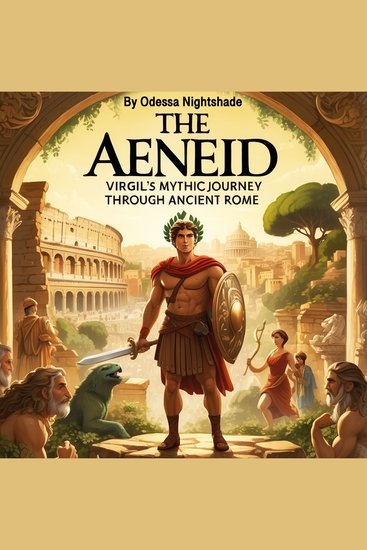
  • The Aeneid - Virgil's Mythic Journey through Ancient Rome - cover

    The Aeneid - Virgil's Mythic...

    Odessa Nightshade

    • 0
    • 0
    • 0
    The Aeneid stands as one of the most influential literary works of the ancient world, a masterpiece that shaped Rome’s cultural and political identity. Written by the poet Virgil between 29 and 19 BCE, this epic tells the story of Aeneas, a Trojan hero destined to lay the foundations for what would become Rome. Blending myth, history, and divine intervention, Virgil crafted a narrative that not only honored Rome’s past but also justified its imperial destiny. Commissioned during the reign of Augustus, The Aeneid served as both a patriotic epic and a moral guide, emphasizing duty, sacrifice, and perseverance.  
      
    At its core, The Aeneid explores Rome’s divine origins through the trials and triumphs of Aeneas. His journey mirrors the struggles of Rome itself—facing adversity, enduring loss, and ultimately fulfilling a grand destiny. Unlike Homer’s heroes, Aeneas is driven by pietas, a sense of duty to the gods, his people, and his future nation. This concept of duty over personal desire defines him, setting him apart from figures like Achilles, who is ruled by rage, or Odysseus, who relies on cunning. Through Aeneas, Virgil presents an ideal Roman leader—one who sacrifices personal happiness for the greater good.  
      
    The themes of fate and duty play a central role in The Aeneid, reinforcing the idea that Rome’s supremacy was preordained by the gods. From the moment Aeneas flees Troy, his path is guided by prophecy. Though he faces obstacles—such as the wrath of Juno, the temptations of love, and the horrors of war—his unwavering commitment to his destiny ensures that he prevails. Virgil uses this theme to legitimize Augustus’ rule, portraying Rome’s rise as part of a divine plan rather than mere political ambition. 
    Zum Buch

  • Yes Ma'am - The Secret Life of Royal Servants - cover

    Yes Ma'am - The Secret Life of...

    Tom Quinn

    • 0
    • 0
    • 0
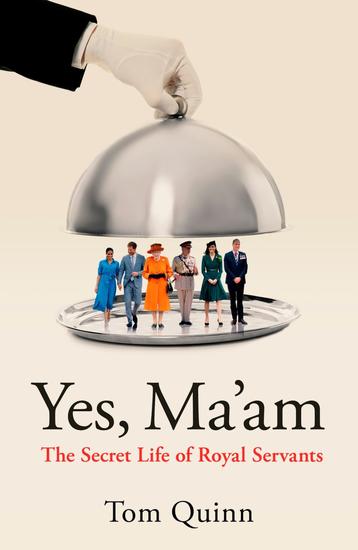
    What really makes the royal family tick?
    It's a question that royal watchers have pondered for as long as the monarchy has existed. And who better to ask than the army of servants and staff past and present who feed and clothe the royals, organise their days, polish their shoes, carry the deer and pheasants they shoot and even put the toothpaste on their toothbrushes?
    From medieval times, when the Groom of the Stool oversaw the monarch's lavatorial exploits, and courtiers accompanied the king and queen to bed on their wedding night and made bawdy remarks until ushered out of the room, below-stairs staff have had a unique insight into the lives of their royal masters.
    In this lively and colourful history, royal expert Tom Quinn goes behind palace doors to give a compelling glimpse of Britain's royals, ancient and modern. Here you will find the tales of the equerry who threatened to throw Queen Victoria out of her own stables, the junior footman who had to change his name on the orders of the queen, and the lady in waiting who, with Prince Philip's mother Princess Alice, regularly set fire to her rooms at Buckingham Palace.
    Perhaps most intriguing of all, we see, through the eyes of serving and recently retired staff, how today's royals live – including how the relationship between Meghan and Harry and William and Kate started with high hopes and descended into bitterness and anger.
    Zum Buch
  • Trying - A Memoir - cover

    Trying - A Memoir

    Chloé Caldwell

    • 0
    • 0
    • 0
    “Chloé Caldwell’s 2014 novella Women, about a woman falling in love with another woman for the first time, became a queer cult classic. In Trying, the writer again uses the fragmentary form, candor, and wit to study ‘the brain of someone trying to get pregnant.’ … When another form of grief suddenly bursts into her life, it ultimately signals a rebirth.”—Jasmine Vojdani, Vulture 
      
    If you’re writing about your life in real time, are you inherently fucked? 
      
    Over the years that Chloé Caldwell had been married and hoping to conceive a child, she’d read everything she could find on infertility. But no memoir or message board reflected her experience; for one thing, most stories ended with in vitro fertilization, a baby, or both. She wanted to offer something different. 
      
    Caldwell began a book. She imagined a selective journal about her experience coping with stasis and uncertainty. Is it time to quit coffee, find a new acupuncturist, get another blood test? Her questions extended to her job at a clothing boutique and to her teaching and writing practice. Why do people love equating publishing books with giving birth? What is the right amount of money to spend on pants or fertility treatments? How much trying is enough? She ignored the sense that something else in her life was wrong that was not on the page … until she extracted a confession from her husband. 
      
    Broken by betrayal but freed from domesticity, Caldwell felt reawakened, to long-buried desires, to her queer identity, to pleasure and possibility. She kept writing, making sense of her new reality as it took shape. With the candor, irreverence, and heart that have made Caldwell’s work beloved, Trying intimately captures a self in a continuous process of becoming—and the mysterious ways that writing informs that process.  
    Zum Buch
  • Hunting Buffalo with Bent Nails - cover

    Hunting Buffalo with Bent Nails

    Lawrence Block

    • 0
    • 0
    • 0
    While he is probably best known as a novelist and short-story writer, Lawrence Block has produced a rich trove of nonfiction over the course of a sixty-year career. 


    Over the years, Block has written extensively for magazines and periodicals. Generally Speaking collects his philatelic columns from Linn's Stamp News, while his extensive observations of crime fiction, along with personal glimpses of some of its foremost practitioners, have won wide acclaim in book form as The Crime of Our Lives. Hunting Buffalo With Bent Nails is what he's got left over. 


    The title piece, originally published in American Heritage, recounts the ongoing adventure Block and his wife undertook, crisscrossing the United States and parts of Canada in their quixotic and exotic quest to find every "village, hamlet, and wide place in the road named Buffalo." Other travel tales share space with a remembrance of his mother, odes to New York, a disquisition on pen names and book tours, and, well, no end of bent nails not worth straightening. Where else will you find "Raymond Chandler and the Brasher Doubloon," an assessment of that compelling writer from a numismatic standpoint? Where else can you hear about Block's collection of old subway cars? Highly recommended.
    Zum Buch