Begleiten Sie uns auf eine literarische Weltreise!
Buch zum Bücherregal hinzufügen
Grey
Einen neuen Kommentar schreiben Default profile 50px
Grey
Jetzt das ganze Buch im Abo oder die ersten Seiten gratis lesen!
All characters reduced
Children's Corner by Debussy - critical edition - suite for piano - cover

Children's Corner by Debussy - critical edition - suite for piano

Claude Debussy

Verlag: Fortepiano Publishing

  • 0
  • 0
  • 0

Beschreibung

Explore the enchantment of Claude Debussy's compositions with this critical edition of "Children's Corner" Expertly edited by Ellis Monroe, this edition brings a fresh perspective to Debussy's beloved suite, ensuring precision and depth in interpretation. Designed for pianists and music enthusiasts alike, this book delves into the nuances of each piece, providing insightful annotations. From the playful "Doctor Gradus ad Parnassum" to the delicate "The Snow is Dancing," experience Debussy's masterful evocation of childhood with clarity and scholarly rigor. Perfect for students, educators, and professional musicians seeking to deepen their understanding of one of the 20th century's most influential composers.

Unlock the full potential of Debussy's vision and elevate your piano repertoire. Download your copy today and begin your journey through the delightful world of 'Children's Corner'!
Verfügbar seit: 27.04.2024.

Weitere Bücher, die Sie mögen werden

  • Actor's Guide To Boston-Accented English An - Master the Accent of the American Northeast - cover

    Actor's Guide To Boston-Accented...

    Oscar Stanley

    • 0
    • 0
    • 0
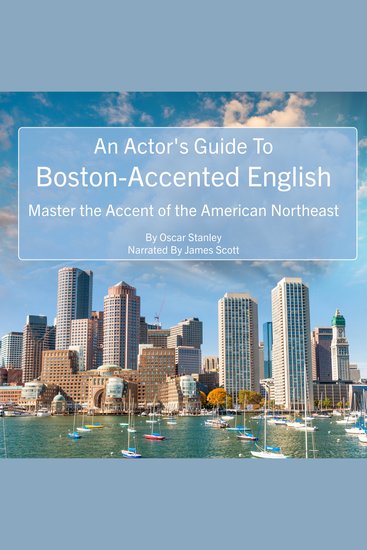
    Master the iconic Boston accent with this immersive audiobook guide! Dive into the rich linguistic heritage of New England’s most distinctive dialect, from the famous R-dropping ("pahk the cah") to the Broad-A phenomenon ("dahnce," "bahth"). Perfect for actors, voice artists, or language enthusiasts, this resource breaks down the accent’s nuances, including the Irish influence, vowel centralization, and neighborhood variations like the North End’s melodic lilt or Southie’s gritty edge.


    Learn through targeted drills—practice intrusive Rs ("vanilla-r-ice"), consonant cluster reductions ("coass" for coasts), and local slang like "wicked," "bubblah," and "frappe." Study real-world examples from classic films (Good Will Hunting, The Departed) to refine your cadence. Whether you’re prepping for a role, mastering dialects, or just love Boston’s cultural vibe, this guide delivers authentic pronunciation, historical context, and practical exercises to sound like a true local.


    Ideal for actors, linguists, and travelers, it’s your key to unlocking one of America’s most recognizable accents. Listen, repeat, and perfect the rhythm of Boston speech—from Harvard Yard to Dorchester—with expert guidance. Start speaking like a Beantown native today!
    Zum Buch
  • Manifesto for the Revitalisation of Cities - A Solution to Portugal's Housing Crisis - cover

    Manifesto for the Revitalisation...

    Miguel Rebelo

    • 0
    • 0
    • 0
    The housing crisis in Portugal serves to illustrate a problem that has implications beyond the borders of the country, shedding light on challenges that are faced by major European and global cities. The rise in housing prices, driven by real estate speculation, the growth of tourism and the influx of foreign investment, has made it increasingly challenging for many in the population, especially the middle and lower classes, to access home ownership or renting. 
    The digitalisation of work has opened the possibility for highly qualified professionals to consider where they would like to live, regardless of the physical location of their job. Cities like Lisbon and Porto have become increasingly attractive destinations, offering a good quality of life combined with a range of professional opportunities. Nevertheless, this phenomenon has placed additional strain on the real estate market, leading to rising prices and the displacement of residents to the outskirts. 
    The housing policies that have been adopted thus far have not been as effective as might have been hoped, and in some cases may even have had the opposite effect. It seems that measures such as strict rent control, poorly targeted subsidies and the massive construction of new housing without proper urban and infrastructural planning have not solved the problem, and in some cases may have made it worse. Perhaps it would be beneficial to reconsider these approaches, acknowledging their shortcomings and adapting them to reflect the current situation. 
    It may be worth considering rehabilitating vacant buildings as a viable and sustainable solution. By restoring existing buildings, we can explore ways to increase the supply of affordable housing, revitalise run-down urban areas and preserve historical and cultural heritage to promote more inclusive and sustainable cities.
    Zum Buch
  • The Road to Riverdance - cover

    The Road to Riverdance

    Bill Whelan

    • 0
    • 0
    • 0
    Riverdance exploded across the stage at Dublin's Point Theatre one spring evening in 1994 during a seven-minute interval of the Eurovision Song Contest hosted by Ireland. It was a watershed moment in the cultural history of a country embracing the future, a confident leap into world music grounded in the footfall of the choreographed kick-line. It was a moment forty-five years in the making for its composer.
    In this tenderly unfurled memoir Bill Whelan rehearses a lifetime of unconscious preparation as step by step he revisits his past, from with his Barrington Street home in 1950s Limerick, to the forcing ground of University College Dublin and the Law Library during the 1960s, to his attic studio in Ranelagh. Along the way the reader is introduced to people and places in the immersive world of fellow musicians, artists and producers, friends and collaborators, embracing the spectrum of Irish music as it broke boundaries, entering the global slipstream of the 1980s and 1990s. As art and commerce fused, dramas and contending personalities come to view behind the arras of stage, screen and recording desk.
    Whelan pays tribute to a parade of those who formed his world. He describes the warmth and sustenance of his Limerick childhood, his parents and Denise Quinn, won through assiduous courtship; the McCourts and Jesuit fathers of his early days, the breakthrough with a tempestuous Richard Harris who summoned him to London; Danny Doyle, Shay Healy, Dickie Rock, Planxty, The Dubliners and Stockton's Wing, Noel Pearson, Seán Ó Riada; working with Jimmy Webb, Leon Uris, The Corrs, Paul McGuinness, Moya Doherty, John McColgan, Jean Butler and Michael Flatley.
    Written with wry, inimitable Irish humour and insight, Bill Whelan's self deprecation allows us to to see the players in all their glory, vulnerability and idiosyncracy. This fascinating work reveals the nuts, bolts, sheer effort and serendipities that formed the road to Riverdance in his reinvention of the Irish tradition for a modern age. As the show went on to perform to millions worldwide, Whelan was honoured with a 1997 Grammy Award when Riverdance was named the 'Best Musical Show Album.' Richly detailed and illustrated, The Road to Riverdance forms an enduring repository of memory for all concerned with the performing arts.
    Zum Buch

  • From Pessimism to Promise - Lessons from the Global South on Designing Inclusive Tech - cover

    From Pessimism to Promise -...

    Payal Arora, Charles Hayes

    • 0
    • 0
    • 0
    When it comes to tech, the mainstream headlines are bleak: Algorithms control and oppress. AI will destroy democracy and our social fabric, and possibly even drive us to extinction. While legitimate concerns drive these fears, we need to equally account for the fact that tech affords young people something incredibly valuable—a rare space for self-actualization. In From Pessimism to Promise, award-winning author Payal Arora explains that, outside the West, where most of the world's youth reside, there is a significant different outlook on tech: in fact, there is a contagion of optimism toward all things digital. These users, especially those in marginalized contexts, are full of hope for new tech. 


    Drawing on field insights in diverse global contexts such as Brazil, India, and Bangladesh, Arora describes what drives Gen Z to embrace new technologies. From Pessimism to Promise discusses the shift to relationally-driven approaches to design; how to create "algorithms of aspiration"; how to reimagine the digital space for sex, pleasure, and care; and, what we can learn from feminist digital activists and women's collectives in the Global South on shared digital provenance and value, as well as indigenous approaches to sustainability, that challenges sacred ideas on degrowth, circular economy, and the doughnut economy.
    Zum Buch
  • Exploring Contemporary Craft - History Theory and Critical Writing - cover

    Exploring Contemporary Craft -...

    Jean Johnson

    • 0
    • 0
    • 0
    The craft of craft, the art of craft - here in Canada we're just starting to really talk about these things. In March 1999, Jean Johnson, who runs Toronto's Craft Studio at Harbourfront Centre, organized a wildly successful symposium on the state of craft in Canada. Curators, writers, critics, academics and craftspeople spoke about all aspects of craft: history, practice, theory, criticism. Taken together, these papers create a clear picture of the vibrant crafts scene in Canada.
       
    The symposium was a groundbreaking event, a first in Canada, offering to the crafts community a new depth of consideration. The book, too, is a Canadian first, and it will allow a dialogue about the academic side of the craft movement to continue.
       
    Each of the book's three sections, History, Theory and Critical Writing, contains a keynote paper and essays by experts in each field, including Mark Kingwell writing 'On Style,' Blake Gopnik on 'Reviewing Craft Exhibitions for the Art Pages,' and Robin Metcalfe addressing 'Teacup Readings: Contextualizing Craft in the Art Gallery.'
    Zum Buch
  • The Customer Is Always Wrong - An Unhinged Guide to Everything That Sucks About Work (from an Angry Retail Guy) - cover

    The Customer Is Always Wrong -...

    Scott Seiss

    • 0
    • 0
    • 0
    Read by the author. 
    Give the gift of funny to anyone in your life (maybe even yourself!) who could use a dose of irreverent humor about why work stinks. 
    Customers want you to magically produce something from the back room. Bosses schedule you on your day off. Corporate policies are mandated that make zero practical sense. Sound familiar? 
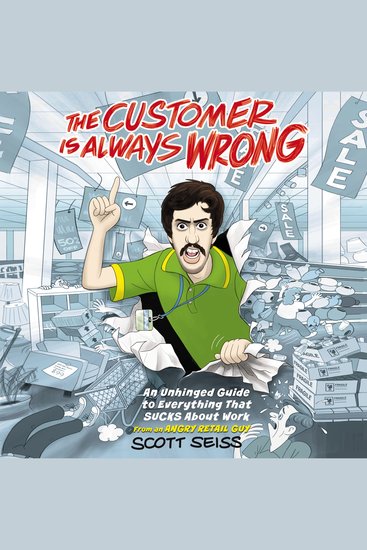
    If you've ever worked in customer service (or any job, really), you know that everyone else—the customer, the boss, the company—is always right, and never the employee. Well, lucky for you, the "Angry Retail Guy" is more furious—and funnier—than ever in this hilariously unhinged guide to all the things we wish we could say out loud at work . . . without getting fired. In The Customer Is Always Wrong, you'll laugh (and maybe cry) at this rant-filled, illustrated attack on all the frustrating things that suck about work. 
    Expanding on the ire-filled, laugh-out-loud viral videos that have made him a (whispered) workplace name, Scott Seiss joyfully eviscerates not only overbearing customers but every annoying aspect of work like purposeless job interview questions, debatable brand values, and the walking human trainwrecks that are our bosses. Scott guides you all the way from first applying to the job, to inevitably gritting your teeth and smiling on your last day when that one manager you despise says, “Come back and visit us!” 
    The Customer Is Always Wrong is for anyone who:Is tired of their "raise" being as close as scientifically possible to 0 percentWants to tell their boss that not even the self-checkout machines want to work hereIs prepared to tell the next customer who asks to see the manager that the manager has no idea what's going on eitherCalls in sick whenever their PTO request is deniedBelieves entering a store five minutes before it closes should be illegalExplains, on a weekly basis, why someone can't use a coupon that expired 17 years agoIs physically repulsed by the phrase, "At this company, we're a family. . . ." 
      
    This tongue-in-cheek commiseration for workers will make you laugh out loud at the things that drive you crazy in the workplace. With Scott's signature rants, funny anecdotes, and absurd musings, this book celebrates and empowers underpaid and overworked employees with an uproarious ode to what we really think about our jobs and the customers that come with them (except the ones who read this book, of course). 
    Comics and graphics can be found in the audiobook companion PDF download. 
     
    Zum Buch