Junte-se a nós em uma viagem ao mundo dos livros!
Adicionar este livro à prateleira
Grey
Deixe um novo comentário Default profile 50px
Grey
Assine para ler o livro completo ou leia as primeiras páginas de graça!
All characters reduced
Parnassus on Wheels - cover
LER

Parnassus on Wheels

Christopher Morley

Editora: Passerino

  • 0
  • 0
  • 0

Sinopse

Parnassus on Wheels is a novel by Christopher Morley, first published in 1917. It tells the charming story of Helen McGill, a middle-aged woman living on a farm, who decides to change her life by purchasing a traveling book wagon from a man named Roger Mifflin.
Mifflin is a quirky bookseller who wants to sell his "Parnassus," a horse-drawn wagon full of books, and retire to write. Helen takes over the business, embarking on an adventure that leads her to discover the joys of books, independence, and new horizons.

Christopher Morley (1890–1957) was an American writer, poet, essayist, and literary critic known for his wit, humor, and deep love of books. He was a prolific author who wrote novels, essays, poetry, and plays, and his work often celebrated the joy of reading, literature, and the quirky aspects of everyday life.
Disponível desde: 23/09/2024.

Outros livros que poderiam interessá-lo

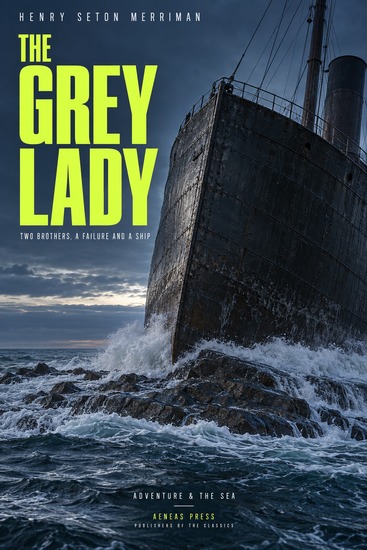
  • The Grey Lady - Two Brothers a Failure and a Ship - cover

    The Grey Lady - Two Brothers a...

    Henry Seton Merriman

    • 0
    • 0
    • 0
    A Grey Lady of the sea, a Corsican coast, an English girl with money and the men arranging her life around it. Merriman was Hugh Stowell Scott, a Lloyd's underwriter who used a pen name so the City would not learn he wrote novels, and died at forty-one; he travelled where he set his books, and the Mediterranean here is a working sea, not a holiday. Fifty-eight plates of coastal painting, from Constable to Bonington, track the working sea Merriman's characters sail.
    Ver livro
  • Reminiscences of a stock operator - cover

    Reminiscences of a stock operator

    Edwin Lefèvre

    • 0
    • 0
    • 0
    I WENT TO WORK when I was just out of grammar school. I got a job as quotation-board boy in a stock-brokerage office. I was quick at figures. At school I did three years of arithmetic in one. I was particularly good at mental arithmetic. As quotation-board boy I posted the numbers on the big board in the customers' room. One of the customers usually sat by the ticker and called out the prices. They couldn't come too fast for me. I have always remembered figures. No trouble at all. There were plenty of other employes in that office. Of course I made friends with the other fellows, but the work I did, if the market was active, kept me too busy from ten A.M. to three P.M. to let me do much talking. I don't care for it, anyhow, during business hours.
    Ver livro
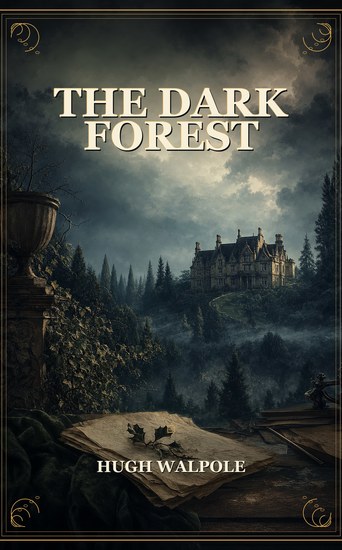
  • The Dark Forest - cover

    The Dark Forest

    Hugh Walpole

    • 0
    • 0
    • 0
    We rely on your support to help us keep producing beautiful, free, and unrestricted editions of literature for the digital age. Will you support our efforts with a donation ? John Durward and John Trenchard are two Englishmen who join a company of Russian doctors, nurses, and orderlies working on the Russian side of the Eastern Front at the height of World War I. Durward, the primary narrator, is a detached and seemingly objective observer of events; his friend Trenchard is a dreamy, clumsy, and naive man whose fiancee, Marie Ivanova, is serving alongside him as a nurse. The narrative follows the unlikely group as they are embedded in the Front, treating casualties and cholera victims while dodging shellings and enemy ambushes. At first the group seems to get along well enough, until Semyonov, a dark, charismatic, hyper-masculine doctor in their company, sets his romantic sights on Ivanova. As the medics desperately try to fulfill their duty among the brutal backdrop of the war, their intricate relationships become the centerpiece of a complex emotional narrative that winds through the dark forest, a symbol of the confusing shadows that can lie between even two people bonded by wartime. Walpole served in the Russian Red Cross on the Russian-Austrian front during World War I, and his real-life experiences are reflected in the narrative. On its publication The Dark Forest was called "the best picture of life in a field-ambulance on the Eastern Front that has yet been written" by the Saturday Review , and it was popular enough for Walpole to write a sequel, The Secret City , which went on to win the James Tait Black Memorial Prize for Fiction .
    Ver livro
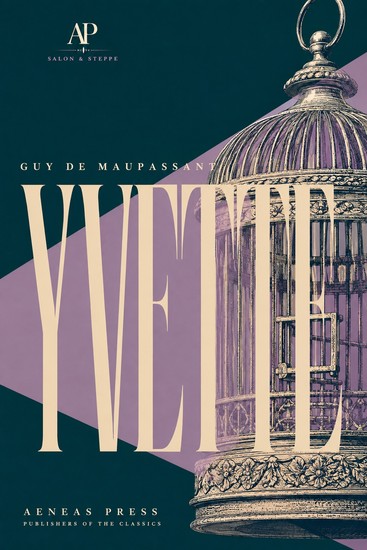
  • Yvette - A Novel of the Paris Demi-Monde - cover

    Yvette - A Novel of the Paris...

    Guy de Maupassant

    • 0
    • 0
    • 0
    A young man pursues Yvette, the beautiful daughter of a Marquise whose salon is not quite what it appears — and discovers, slightly before she does, exactly what her mother is and what that makes her. Flaubert was Maupassant's mother's friend and made him rewrite for seven years before allowing him to publish; this long story is his cruellest about innocence, and the cruelty is in the reader's foreknowledge. Fifty-seven plates of painting by Renoir and Manet, among others, capture the parks, parlours and performers of the Paris that Yvette moves through.
    Ver livro
  • Great Expectations - A Blacksmith's Boy and His Secret Benefactor - cover

    Great Expectations - A...

    Charles Dickens

    • 0
    • 0
    • 0
    A boy is frightened into feeding an escaped convict on the Kent marshes, is later summoned to play in a house where the clocks stopped at twenty to nine, and in due course comes into money from a source he is forbidden to ask about. Dickens wrote it weekly to rescue a failing magazine, and changed the ending after Bulwer-Lytton read the proofs and objected. It is the most tightly built of his mature novels. Ninety-nine plates, among them Constable's views of Salisbury Cathedral and the Kent watermill at Flatford, carry the marsh country, the river, and the roads of the novel in paint.
    Ver livro
  • On Ghosts - cover

    On Ghosts

    Mary Shelley

    • 0
    • 0
    • 0
    Why do ghost stories continue to frighten us even when reason tells us not to believe?
    
    In On Ghosts, Mary Shelley turns her attention to one of humanity's oldest fascinations: the possibility that the dead may somehow remain among the living. Blending reflection, anecdote, imagination, and curiosity, Shelley considers why supernatural stories possess such extraordinary power over the mind.
    
    Rather than offering a conventional fictional ghost story, this fascinating piece explores belief, skepticism, fear, memory, and the mysterious experiences that resist easy explanation. Shelley's thoughtful approach makes the work especially compelling for readers interested in Gothic literature, supernatural folklore, nineteenth-century ideas, and the psychology of fear.
    
    From the author of Frankenstein comes an intriguing glimpse into the cultural world that helped shape Gothic and supernatural literature.
    Enter Mary Shelley's shadowy meditation on ghosts and discover why the unknown continues to haunt the imagination.
    Ver livro