Rejoignez-nous pour un voyage dans le monde des livres!
Ajouter ce livre à l'électronique
Grey
Ecrivez un nouveau commentaire Default profile 50px
Grey
Abonnez-vous pour lire le livre complet ou lisez les premières pages gratuitement!
All characters reduced
Naval Submarines - cover

Naval Submarines

Christopher Miller

Traducteur A AI

Maison d'édition: Publifye

  • 0
  • 0
  • 0

Synopsis

"Naval Submarines" explores the captivating history of underwater warfare, from rudimentary submersibles to today's advanced nuclear submarines. The book highlights how the submarine evolved from a marginal weapon into a critical element of naval power projection, significantly impacting naval strategy and international relations. Early submarines, for example, were initially viewed with skepticism, but their potential for stealth attacks and intelligence gathering gradually reshaped naval doctrine.

 
Another key aspect explored is the technological race, with advancements like diesel-electric propulsion and nuclear power revolutionizing submarine capabilities. The book traces the evolution of submarines through key historical periods, including their roles in both World Wars and the Cold War's nuclear standoff. It examines how submarines have been used in anti-surface warfare, anti-submarine warfare, and nuclear deterrence.

 
The narrative unfolds systematically, starting with early submarine designs and progressing through technological breakthroughs and strategic shifts. It emphasizes the interplay between technological innovation and evolving military strategies, offering a comprehensive understanding of the submarine's impact on naval history and modern naval operations.
Disponible depuis: 29/03/2025.
Longueur d'impression: 70 pages.


D'autres livres qui pourraient vous intéresser

  • Forgiveness - An Alternative Account - cover

    Forgiveness - An Alternative...

    Matthew Ichihashi Potts

    • 0
    • 0
    • 0
    A deeply researched and poignant reflection on the practice of forgiveness in an unforgiving world 


    In this sensitive and probing book, Matthew Ichihashi Potts explores the complex moral terrain of forgiveness, which he claims has too often served as a salve to the conscience of power rather than as an instrument of healing or justice. Though forgiveness is often linked with reconciliation or the abatement of anger, Potts resists these associations, asserting instead that forgiveness is simply the refusal of retaliatory violence through practices of penitence and grief. It is an act of mourning irrevocable wrong, of refusing the false promises of violent redemption, and of living in and with the losses we cannot recover. 


    Drawing on novels by Kazuo Ishiguro, Marilynne Robinson, Louise Erdrich, and Toni Morrison, and on texts from the early Christian to the postmodern era, Potts diagnoses the real dangers of forgiveness yet insists upon its enduring promise. Sensitive to the twenty-first-century realities of economic inequality, colonial devastation, and racial strife, and considering the role of forgiveness in the New Testament, the Christian tradition, philosophy, and contemporary literature, this book heralds the arrival of a new and creative theological voice.
    Voir livre
  • Criminal Investigation: a Practical Handbook for Magistrates Police Officers and Lawyers Volume 1 - cover

    Criminal Investigation: a...

    Hans Gross

    • 0
    • 0
    • 0
    Reputedly inspired by the Sherlock Holmes stories, Austrian criminal jurist and examining magistrate Hans Gross wrote the first handbook on criminal investigation. This treatise covers everything from the qualities of a good investigating officer and how to utilize various experts, to tactics employed by criminals, how to analyze footprints and blood stains, and ways that criminals perpetrate crimes. Some of the remarks relate directly to India, such as disguising one's caste.Volume 1 (of 3) consists of Part 1 of the 4 parts in the work. - Summary by TriciaG
    Voir livre
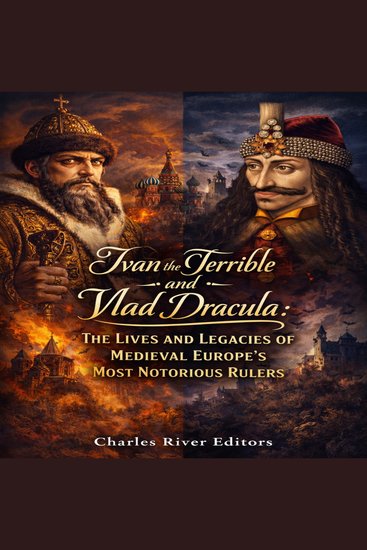
  • Ivan the Terrible and Vlad Dracula: The Lives and Legacies of Medieval Europe’s Most Notorious Rulers - cover

    Ivan the Terrible and Vlad...

    Charles River Editors

    • 0
    • 0
    • 0
    Many medieval figures are somewhat shrouded in mystery, due to the scarcity of available sources and to the difficulties posed by the interpretation of historical narratives dating from this period. And even when there is enough documented evidence to put together a sufficiently coherent biographical account, other sources and accounts may emerge that flagrantly contradict the already established and generally accepted historical narrative. 
    Nowhere is this more evident than in the legacy of Vlad III Dracula, whom history has recorded as one of the most notorious and bloodthirsty tyrants of the 15th century. In addition to lending the name Dracula to Bram Stoker’s famous vampire, Vlad is known around the world by the cognomen Vlad the Impaler, due to his reputation for impaling thousands of his enemies. Vlad was reputed to be such a tyrant that his reputation and stories of his deeds spread across Germany and the rest of Europe during his lifetime. Naturally, trying to determine who Vlad was and what he was really like has been made more complex by the subsequent fame he achieved in Europe and beyond, beginning with the dissemination of the German and Slavic 15th century narratives that aided in the construction of a diabolical, mythical-like figure that has been passed down throughout history to today.  
    While certain factual aspects regarding Ivan IV’s reign can certainly be deduced from the primary sources that have withstood the test of time, the majority of accounts dating from the 16th century and after must be evaluated critically and read in light of certain traditions and ideas that circulated in the region regarding the model ruler and the tyrant. Naturally, this makes it hard for contemporary audiences to determine whether Ivan IV was worthy of the epithet “Groznyi” (“the Terrible”), but that heavily influenced the way in which Ivan IV was perceived and subsequently depicted in historiography.
    Voir livre
  • Erich Hartmann: The Life and Legacy of the Luftwaffe’s Top Fighter Ace during World War II - cover

    Erich Hartmann: The Life and...

    Editors Charles River

    • 0
    • 0
    • 0
    The Third Reich's Luftwaffe began World War II with significant advantages over other European air forces, playing a critical role in the German war machine's swift, powerful advance. By war's end, however, the Luftwaffe had been decimated by combat losses and crippled by poor decisions at the highest levels of military decision-making, and it proved unable to challenge Allied air superiority despite a last-minute upsurge in German aircraft production. 
    Few people personified the advancements and abilities of the Luftwaffe like Erich Hartmann, the most successful ace in the history of warfare. His records are made all the more remarkable by the fact that he came late to the Second World War. It had already been underway for more than three years when, on October 14, 1942, at the furthest extremity of Germany’s advance into Russia, he strapped himself into the cockpit of his Messerschmitt 109 for his first combat mission. Born in April 1922, he was still just 20, but he was certainly prepared and ready. He had been flying gliders since his early teens - including as a glider instructor with the Hitler Youth - and he received a pilot’s license for powered aircraft in 1937.  
    Over the course of the war, Hartmann was credited with shooting down 352 enemy aircraft, 345 of which were Russian and seven being American, making him the most successful combat fighter of all time. In fact, the number is so incredible that it has inevitably come under intense criticism and scrutiny over the years, with some suggesting outright that the figure is falsified, while others have pointed to the unique combat circumstances of the Russian front and suggested that aerial combat there was somehow easier.
    Voir livre
  • HUMANIFICATION of AI - Go Digital Stay Human - cover

    HUMANIFICATION of AI - Go...

    Christian Kromme

    • 0
    • 0
    • 0
    How Technology will Advance Humanity Towards a More Meaningful Future 
    Imagine being able to spot the next big trend, or being able to predict the next big wave of change. Imagine having a code that gives you the power to invent, predict or harness the next big technology. Humanification is going to help you unlock the DNA of innovation itself, so you can apply it to your life, your business and your community. 
    The story starts with a little girl, a terminal diagnosis and a ticking clock. Join the author as he searches for a cure. Along the way you will discover the seven powerful forces of innovation that are going to change everything in your world within your lifetime. Through a series of stories, research and personal insights, the author reveals how he came to see the world from a totally new perspective. 
    This new vantage point allowed him to uncover a unique wave pattern. Incredibly that wave pattern turned out to be a blueprint for just about every disruptive technology breakthrough. Christian Kromme also made another remarkable breakthrough. He discovered that our manmade technologies like AI  follows exactly the same evolutionary steps as life itself. 
    By reading this book you will learn to see how the world works at a biological level, a technological level, and a humanity level. You will come to understand how each level is linked, and that knowledge will reveal remarkable new insights into the future.   
    This is a truly remarkable book that no entrepreneur, leader or policy maker can afford to miss. This book shows how technology unites humanity into one big organism. This new insight will change the way you look at technology and its effect on us all us all forever.
    Voir livre
  • Russian History Through the Ages - Empire Enlightenment and the Road to Revolution - cover

    Russian History Through the Ages...

    History Retold

    • 0
    • 0
    • 0
    Dive into the enthralling world of Russia's past with the second book of our captivating series about Russian history. This mesmerizing book takes you on a journey through a pivotal era in Russian history, where empires expanded, new ideas flourished, and the seeds of revolution were sown. 
    Witness the grandeur and might of the Russian Empire as it reached new heights under visionary rulers like Catherine the Great and Peter the Great. Explore the impact of the Enlightenment on Russia's intellectual and cultural landscape, as the nation embraced new ideas and engaged with the wider world. 
    Experience the mounting social unrest and revolutionary fervor that would ultimately pave the way for the momentous events of the 20th century. Delve into the lives of influential figures like Alexander II and the Decembrists, whose actions and ideas would shape the course of Russian history. 
    "Russian History Through the Ages: Empire, Enlightenment, and the Road to Revolution 1700-1906" masterfully combines vivid storytelling with expert analysis, providing readers with a comprehensive and engaging account of this critical period in Russia's development. This accessible and informative book is perfect for history enthusiasts and newcomers alike. 
    Don't miss the opportunity to immerse yourself in the captivating tales of Russia's past. Order your copy Today! And dive into Russia’s thrilling past. 
    Voir livre