Join us on a literary world trip!
Add this book to bookshelf
Grey
Write a new comment Default profile 50px
Grey
Subscribe to read the full book or read the first pages for free!
All characters reduced
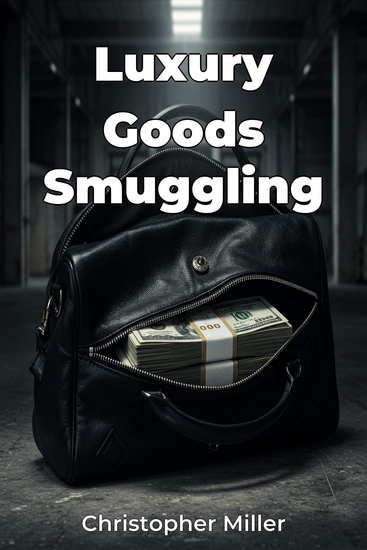
Luxury Goods Smuggling - cover

Luxury Goods Smuggling

Christopher Miller

Translator A AI

Publisher: Publifye

  • 0
  • 0
  • 0

Summary

Luxury Goods Smuggling unveils the dark side of high-end fashion, revealing how counterfeit luxury goods fuel organized crime. This isn't just about knock-off handbags; the book highlights the intricate connections between this illicit trade and serious crimes like money laundering and even terrorism. The pervasive nature of this economic crime poses significant threats to global security and economic stability.

 
The book meticulously examines the history and evolution of luxury goods counterfeiting, dissecting the economic principles that make it so profitable. It then progresses to explore the criminal organizations involved and the efforts of international law enforcement to combat these networks.

 
Through in-depth case studies, the author links counterfeit goods to major criminal enterprises, culminating in a discussion of brand protection strategies, stricter regulations, and ways to raise consumer awareness. This book uniquely blends true crime investigation with business analysis, offering valuable insights for business professionals, law enforcement, and anyone interested in the hidden world of global crime. By providing a clear, narrative-driven approach grounded in solid data, Luxury Goods Smuggling sheds light on the complex interplay of crime, economics, and global security within the luxury market.
Available since: 02/24/2025.
Print length: 76 pages.

Other books that might interest you

  • Psychopath Killers - Cold-Hearted Murderers Like Pablo Escobar and Edmund Kemper - cover

    Psychopath Killers -...

    Kelly Mass

    • 0
    • 0
    • 0
    This combo consists of two true crime books, which are: 
    Pablo Escobar - One of the big lords of the drug cartels in Colombia is Pablo Escobar, a criminal who became a leader and expanded his influence on organized crime throughout the North and South American continents. With billions in his bank account, in cash, and in other assents, it’s not easy to ignore his name and the power he gained. 
    In 1976, Escobar established the Medellín Cartel, which dispersed powder cocaine, and developed the first smuggling paths into the United States. In the 1982 Colombian parliamentary election, Escobar was chosen as an alternate member of the Chamber of Representatives as part of the Liberal Alternative movement. 
    Edmund Kemper - Initially diagnosed with paranoid schizophrenia, and after a separation of his parents, Edmund Kemper already showed his twisted mind at 15 years old, when he murdered both his grandparents, who were taking care of him. Whether through nature or nurture, this man didn’t show a promising future from the get-go. But perhaps nobody could have suspected the horrors he would inflict on his many victims later in his life. 
    Edmund Kemper, born in 1948, has become a notorious serial killer. He is known for having raped, mutilated, and murdered young women and especially hitchhikers. Being labelled with being a necrophile and a cannibal, his crimes have been exposed, partially by himself, and even though he has requested the death penalty, he is still locked up for life. 
    If this is not enough to pique your interest, then I don’t know what is. Hurry up and start reading or listening to this book.
    Show book
  • Risking Life for Death - Lessons for the Living from the Autopsy Table - cover

    Risking Life for Death - Lessons...

    Ryan Blumenthal

    • 0
    • 0
    • 0
    Every contact leaves a trace: a single strand of hair or a tiny droplet of blood can be the silent witness at a crime scene. 
    Locard’s Exchange Principle underpins all forensic science and holds that the perpetrator of a crime will bring something to the crime scene and leave with something from it. 
    Forensic experts use this principle daily to catch murderers and assailants. In Risking Life for Death, South African forensic pathologist Ryan Blumenthal offers a master class in this singular forensic technique based on real-life case studies. With more than twenty years’ experience in the field, Blumenthal explains how to look for clues and traces, and how what he does not find at autopsy is often more important than what he does find. In other words, the absence of evidence can sometimes be of greater value than the presence of evidence. 
    His account also highlights the dangers forensic pathologists are exposed to daily. As they try to unravel the puzzle of someone’s death, forensic pathologists often face life-threatening infections, toxic gases and the hazards associated with high-profile cases – in effect, risking their life to solve someone else’s death. 
    An understanding of Locard’s Exchange Principle can help you become a medical detective in your own life, can help you be a happier person and can even provide you with a better philosophy for growing older, Blumenthal argues.
    Show book
  • Hiding in Plain Sight - cover

    Hiding in Plain Sight

    Brian Brady

    • 0
    • 0
    • 0
    When a serial killer targets the North Beach neighborhood in San Francisco, the entire community must band together to help the homicide inspectors catch a killer or risk the tragedy that he will kill again. 
    Lucia is a good girl; she's an eighth grader at the local parish school who gets great grades, helps her parents around the house, and loves her siblings. As she waits after school, a stranger - hands laden - asks for help getting into his van. 
    Before she knows it, Lucia's shoved into the van, knocked unconscious, and she's never going home again. 
    After her mother reports her missing, Lucia's firefighter father, as well as other community members, manage to elevate her missing person's report all the way to the Homicide Bureau. 
    So begins a thrilling, edge-of-your-seat narrative of a community connected through more than just the streets they live on to catch a killer and bring a grieving family peace. 
    Two homicide teams, made up of Inspectors O'Neill and Donnelly and Inspectors Gibson and Sullivan, work against the clock and side-by-side with other agencies to bring the criminal down. 
    Chock-full of twists, turns, romance, murder, and community, hiding in plain sight is a can't miss mystery read for crime novel enthusiasts, San Francisco natives, and readers who love a good thriller. 
    Readers will feel immersed in the investigation as they struggle to solve the web of covered tracks alongside investigators. Feel the heart-pounding race against the clock as sands drain from the hourglass and the suspect gets farther away.
    Show book
  • Shadows in the Dark: The 12 Least Known Serial Killers and Their Unseen Horrors - cover

    Shadows in the Dark: The 12...

    Marcus Hale

    • 0
    • 0
    • 0
    Shadows in the Dark by Marcus Hale is a journey into the chilling stories of ten lesser-known serial killers who escaped the spotlight yet left a trail of terror and tragedy. With meticulous research and haunting detail, Hale uncovers the lives of these "hidden" killers—men and women who exploited society's blind spots, targeting the vulnerable while slipping through the cracks of justice. Each chapter reveals the unsettling truths behind killers like the "Silent Tormentor," a nurse who took lives rather than saving them, or the "Widowmaker," who preyed on elderly tenants for profit. 
    This book doesn't just recount their crimes; it examines how each managed to operate for years undetected, the societal failings that allowed them to evade capture, and the impact on families whose loved ones were forgotten by history. Through Shadows in the Dark, Marcus Hale provides a powerful, unflinching look at the underbelly of human nature, reminding readers that sometimes the most terrifying monsters are those we never see coming.
    Show book
  • How to Rob the Bank of England - Keith Cheeseman Reveals the True Story of Britain’s Biggest Ever Robbery - cover

    How to Rob the Bank of England -...

    Clifford Thurlow

    • 0
    • 0
    • 0
    On a sunny May morning in 1990, a bank courier strode out of the Bank of England and, minutes later, was robbed at knifepoint of 301 bearer bonds valued at £292 million. It was the biggest theft in British history. 
     
     
    The thing is... when Keith Cheeseman received a call from a disbarred lawyer connected to London's underworld and attended a meeting on the night of the robbery, he counted £427 million in bonds - £135 million more than the Bank of England had reported. 
     
     
    As Keith set out to launder the bonds, Scotland Yard and the FBI were always one step ahead in tracking them down. Over the next eighteen months, two gangland figures were shot dead and more than eighty people were arrested. Keith was the only man ever jailed for the crime. 
     
     
    Keith Cheeseman is the last of the old-time gangsters, a con man who detests violence, wears Savile Row suits and gold watches, and loves classic cars and good dining. He bought non-league Dunstable football club and signed Manchester United star George Best to play for the team. He knew the legendary Kray twins and killer Frankie Fraser once threatened to snuff him out him over a game of chess. 
     
    So what happened to the missing £135 million? 
     
    In this breathtaking adventure, featuring colourful characters from showbusiness alongside royalty, the IRA and even Pablo Escobar, Clifford Thurlow reveals Keith Cheeseman's incredible true story for the first time.
    Show book
  • The Corpsewood Manor Murders in North Georgia - cover

    The Corpsewood Manor Murders in...

    Amy Petulla

    • 0
    • 0
    • 0
    Author Amy Petulla uncovers the curious case that left two men dead and the incredible story still surrounded by controversy, speculation, and myth. 


    In 1982, Tony West and Avery Brock made a visit to notorious Corpsewood Manor under the pretense of a celebration. They brutally murdered their hosts. Dr. Charles Scudder and companion Joey Odom built the "castle in the woods" in the Trion forest after Scudder left his position as professor at Loyola. He brought with him twelve thousand doses of LSD. Rumors of drug use and Satanism swirled around the two men. Scudder even claimed to have summoned a demon to protect the estate. The murders set the stage for a trial vibrant with local lore.
    Show book