Rejoignez-nous pour un voyage dans le monde des livres!
Ajouter ce livre à l'électronique
Grey
Ecrivez un nouveau commentaire Default profile 50px
Grey
Abonnez-vous pour lire le livre complet ou lisez les premières pages gratuitement!
All characters reduced
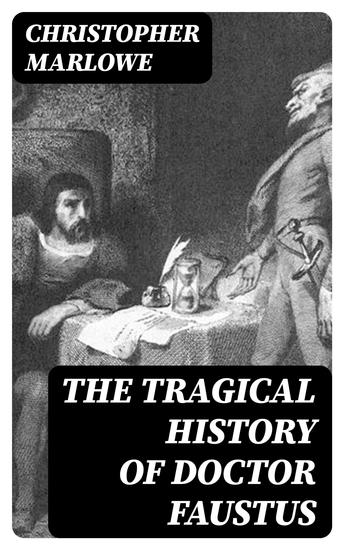
The Tragical History of Doctor Faustus - From the Quarto of 1604 - cover

The Tragical History of Doctor Faustus - From the Quarto of 1604

Christopher Marlowe

Maison d'édition: DigiCat

  • 0
  • 0
  • 0

Synopsis

Christopher Marlowe's 'The Tragical History of Doctor Faustus' is a volatile exploration of ambition, desire, and the human condition, wrapped in the rich literary fabric of the Elizabethan period. Written in blank verse, this tragic play delves into the life of Faustus, a scholar who, dissatisfied with the limits of human knowledge, makes a fateful pact with the devil, trading his soul for twenty-four years of magical powers. Marlowe's use of soliloquies and rhetorical flourishes imbues the text with a heavy sense of foreboding, as it poses fundamental questions about morality, knowledge, and the consequences of hubris, reflecting the Renaissance's changing attitudes towards religion and individuality. Christopher Marlowe, a contemporary and possible rival of Shakespeare, was a figure shrouded in mystery and controversy. His own life of excess and ambition, coupled with his scholarship in classical texts, greatly influenced his writing. Marlowe's relationship with the themes of rebellion and tragic heroism can be traced to his own tumultuous existence, marked by allegations of atheism and his brutal murder at a young age, suggesting that he was acutely aware of the fragile state of human ambition. Readers seeking a reflective and provocative engagement with the boundaries of knowledge and the supernatural will find 'Doctor Faustus' an essential text. Its layered characterizations and moral complexities resonate profoundly with contemporary audiences, inviting them to ponder the eternal struggle between aspiration and consequence. This timeless tale encourages readers to examine their own desires in the shadow of moral reckoning.
Disponible depuis: 15/09/2022.
Longueur d'impression: 52 pages.

D'autres livres qui pourraient vous intéresser

  • A Ballad of Death - A poetic examination of grief and lost love - cover

    A Ballad of Death - A poetic...

    Algernon Charles Swinburne

    • 0
    • 0
    • 0
    Algernon Charles Swinburne was born on April 5th, 1837, in London, into a wealthy Northumbrian family.  He was educated at Eton and at Balliol College, Oxford, but did not complete a degree.  
    In 1860 Swinburne published two verse dramas but achieved his first literary success in 1865 with Atalanta in Calydon, written in the form of classical Greek tragedy. The following year "Poems and Ballads" brought him instant notoriety. He was now identified with "indecent" themes and the precept of art for art's sake.  
    Although he produced much after this success in general his popularity and critical reputation declined. The most important qualities of Swinburne's work are an intense lyricism, his intricately extended and evocative imagery, metrical virtuosity, rich use of assonance and alliteration, and bold, complex rhythms.  
    Swinburne's physical appearance was small, frail, and plagued by several other oddities of physique and temperament. Throughout the 1860s and 1870s he drank excessively and was prone to accidents that often left him bruised, bloody, or unconscious. Until his forties he suffered intermittent physical collapses that necessitated removal to his parents' home while he recovered.  
    Throughout his career Swinburne also published literary criticism of great worth. His deep knowledge of world literatures contributed to a critical style rich in quotation, allusion, and comparison. He is particularly noted for discerning studies of Elizabethan dramatists and of many English and French poets and novelists. As well he was a noted essayist and wrote two novels. 
    In 1879, Swinburne's friend and literary agent, Theodore Watts-Dunton, intervened during a time when Swinburne was dangerously ill. Watts-Dunton isolated Swinburne at a suburban home in Putney and gradually weaned him from alcohol, former companions and many other habits as well.  
    Much of his poetry in this period may be inferior but some individual poems are exceptional; "By the North Sea," "Evening on the Broads," "A Nympholept," "The Lake of Gaube," and "Neap-Tide."  
    Swinburne lived another thirty years with Watts-Dunton. He denied Swinburne's friends access to him, controlled the poet's money, and restricted his activities. It is often quoted that 'he saved the man but killed the poet'.  
    Swinburne died on April 10th, 1909 at the age of seventy-two.
    Voir livre
  • Shed: Exploded View - cover

    Shed: Exploded View

    Phoebe Eclair-Powell

    • 0
    • 0
    • 0
    'There was a fork in her face. An actual fork. He dug a fork into her face. A fork stood on end in her cheek. A fork.'
    The smallest tremble. A smashed glass. The ripping apart of space and time.
    Three couples. Thirty years. Mothers and daughters. Lovers, partners, husbands and wives. Babies, teenagers, birthdays, holidays, honeymoons, fireworks, near-misses, rain. This is a play about all of it.
    A devastating and delicately woven piece about violence, love and loss, Phoebe Eclair-Powell's Shed: Exploded View won the 2019 Bruntwood Prize for Playwriting. Partly inspired by Cornelia Parker's stunning artwork Cold Dark Matter: An Exploded View, it was first performed at the Royal Exchange Theatre, Manchester, in 2024, directed by Atri Banerjee.
    Voir livre
  • Sweet Words of Life (Christian Inspiration) - cover

    Sweet Words of Life (Christian...

    Fimalia McNoll

    • 0
    • 0
    • 0
    I traveled the dirt road with no water in sight. 
    My lips parched and dry from the burning sun. 
    My feet cracked and rough, cut with sharp stones. 
    I had traveled this road many times. 
    I knew the trail, yet somehow this time 
    it seemed unfamiliar; 
    All around was desolation, bareness, and emptiness. 
    I was tired of the heat; I cried out to God 
    "Father please come rescue me." 
    He said, "I am right here." 
    He was just waiting for me to ask for help. 
    He gave me water for my thirst, 
    Food for my hungry soul, and he walked on with me. 
    I trust him more now, 
    I know I will never pass this way again.
    Voir livre
  • The Aerospace Professor - The Man and The Brand - cover

    The Aerospace Professor - The...

    Jeffery Battle

    • 0
    • 0
    • 0
    "We Cannot Rise Above, Until We Begin to Look Above" - Jeffery Battle, The Aerospace Professor 
    Experienced the life of the author Jeffery Battle, also known as The Aerospace Professor: The Man and The Brand. He is also the President and Chief Executive Officer (CEO) of Battle Enterprises, LLC and its subsidiary The Aerospace Professor Company. With a small amount of imagination, the sheer continuation of true-life experiences of The Aerospace Professor is similar to what a Tom Hanks character like Forrest Gump might go through. His autobiography and experiences from childhood to maturity, detail an incredible number of adverse circumstances and perceived setbacks while uncovering unlikely success stories despite the gravity of the events individually. 
    Witness the emotional, dynamic, and riveting journey throughout the development of his flagship aerospace advocacy business with philanthropic values. His direct and indirect associations served as sources of strength. Read more about The Aerospace Professor and Taraji P. Henson, Tuskegee Airman General Benjamin O. Davis, Jr., Congresswoman Shirley Chisholm, Golden Frinks, The U.S. Air Force, The Haliwa-Saponi Tribe, Brooke Simpson (The Voice), Representative John D. Hall, William Earl “Bootsy” Collins, Oprah Winfrey, John Mellencamp, and Charlie Wilson. Remember to always “Look Above.” 
    The mantra of The Aerospace Professor’s brand is “Look Above” which means that each day, we should continuously strive to perform at least a level higher than we originally intended. Be excited about every day in your life! Seek strength in all that motivates you and work towards not only doing your best, but doing your very best! Challenge yourself by questioning what “Look Above” means for you each day. Be flexible and adapt, seeking to eliminate failure as an option, and remember to always "Look Above". For more information, please visit our company website. 
    Voir livre
  • Princess Essex - cover

    Princess Essex

    Anne Odeke

    • 0
    • 0
    • 0
    'Shall I tell you a secret? Anyone can be a queen, but a real queen wears the crown, she doesn't let the crown wear her.'
    It's 1908. Southend-on-Sea, Essex. Princess Dinubolu of Senegal is about to enter the beauty contest at the iconic Kursaal, Europe's largest entertainment complex. Meet Princess Essex.
    But how exactly did she get here? And is she all that she seems?
    Anne Odeke's play Princess Essex is a riotous, satirical comedy based on the amazing true story of the first woman of colour to enter a beauty pageant in the UK. An inspiring account of bravery, beauty and belonging, it was first performed at Shakespeare's Globe, London, in 2024, directed by Robin Belfield and starring the playwright as the Princess.
    Voir livre
  • Meister Eckhart's Book of Darkness & Light - Meditations on the Path of the Wayless Way - cover

    Meister Eckhart's Book of...

    Meister Eckhart, Jon M. Sweeney,...

    • 0
    • 0
    • 0
    “Within each of us is a divine treasure, and if we hope to discover it we need to go deep into the heart of who we are.”—Meister Eckhart Meister Eckhart has been a huge influence on spirituality for more than 800  years, including to philosopher Arthur Schopenhauer, Eckhart Tolle, Richard Rohr, D. T. Suzuki, Rudolf Steiner, and Matthew Fox—all crediting Eckhart as being an important influence on their thought.   This book of Meister Eckhart meditations is for people seeking the “wayless way.” It is not for those looking for a simple path. Many people in our time still go looking for a straight path toward a defined goal, without detours, led by a guide who tells them what to do and what not to do. They would be uncomfortable with Meister Eckhart—a Christian mystic from the century of Rumi and Francis of Assisi—who said to “take leave of God for the sake of God.” And, “Learn not to love in order that you may learn to love.” And, “All things are equal and alike in God and are God.”   These fresh, stunning renderings of his writings in poetic form bring life to one of the great spiritual voices of any age. They reveal what it means to love God and find meaning in darkness. In a culture that craved light—and what culture does not?—Eckhart dared to imagine that the darkness is what matters most. Not darkness in general, but your darkness, because it is the one thing you know something about, and without facing your darkness, you’ll never know what it means to desire the light. You’ll never even imagine what light is about. Only when you are in the darkness, Meister says, do you have even the possibility of seeing the light.
    Voir livre