Begleiten Sie uns auf eine literarische Weltreise!
Buch zum Bücherregal hinzufügen
Grey
Einen neuen Kommentar schreiben Default profile 50px
Grey
Jetzt das ganze Buch im Abo oder die ersten Seiten gratis lesen!
All characters reduced
English Linguistics - cover

English Linguistics

Christian Mair

Verlag: Narr Francke Attempto Verlag

  • 0
  • 0
  • 0

Beschreibung

bachelor-wissen "English Linguistics" is a compact and easy-to-use introduction to English linguistics which
- is tailored to the needs of students of English at German, Austrian and Swiss universities
- contains graded exercises to motivate students to carry out independent research, and
- bridges the gap between linguistics and the literary and cultural-studies components of the typical BA in English Studies.
Bachelor-wissen "English Linguistics" goes beyond the usual introduction in offering accompanying web resources which provide additional material and multi-media illustration.

The new edition includes current theoretical approaches in the fields of sociolinguistics and World Englishes.
Verfügbar seit: 07.03.2022.
Drucklänge: 292 Seiten.

Weitere Bücher, die Sie mögen werden

  • Inconvenient Apocalypse An - Environmental Collapse Climate Crisis and the Fate of Humanity - cover

    Inconvenient Apocalypse An -...

    Wes Jackson, Robert Jensen

    • 0
    • 0
    • 0
    For decades, our world has understood that we are on the brink of an apocalypse—yet the only implemented solutions have been small and convenient, feel-good initiatives that avoid unpleasant truths about the root causes of our impending disaster. Wes Jackson and Robert Jensen argue that we must reconsider the origins of the consumption crisis and the challenges we face in creating a survivable future. Longstanding assumptions about economic growth and technological progress—the dream of a future of endless bounty—are no longer tenable. The climate crisis has already progressed beyond nondisruptive solutions. The end result will be apocalyptic; the only question now is how bad it will be. 


    Jackson and Jensen examine how geographic determinism shaped our past and led to today's social injustice, consumerist culture, and high-energy/high-technology dystopias. The solution requires addressing today's systemic failures and confronting human nature by recognizing the limits of our ability to predict how those failures will play out over time. Though these massive challenges can feel overwhelming, the coauthors weave a secular reading of theological concepts—the prophetic, the apocalyptic, a saving remnant, and grace—to chart a realistic path for humanity not only to survive our apocalypse but also to emerge with a renewed appreciation of the larger living world.
    Zum Buch
  • Summary: Range - Why Generalists Triumph in a Specialized World by David Epstein: Key Takeaways Summary & Analysis Included - cover

    Summary: Range - Why Generalists...

    Brooks Bryant

    • 0
    • 0
    • 0
    Disclaimer: This book is not the official, but a summary & it does not accompany the official. 
    Is specialization really the key to success? Our eye-opening summary of David Epstein's 'Range' challenges the status quo, arguing that in a world that's increasingly complex and interconnected, being a generalist is more advantageous than you think. Explore groundbreaking studies and real-life examples that prove why breadth of experience is as important as depth. 
    In this quick, illuminating read, we condense Epstein's revolutionary thesis into actionable insights that will make you rethink your career, your education, and the way you approach problem-solving. Discover why the most impactful inventors, business leaders, and thinkers are those who have a wide range of interests, skills, and experiences. 
    Shift your mindset from 'the earlier the specialization, the better' to embracing the untapped power of having a 'Range' of skills. Don't get left behind in an evolving world—expand your horizons with our essential summary.
    Zum Buch
  • The Uncollected Essays of Elizabeth Hardwick - cover

    The Uncollected Essays of...

    Elizabeth Hardwick, Alex Andriesse

    • 0
    • 0
    • 0
    Essays on music, art, pop culture, literature, and politics by the renowned essayist and observer of contemporary life, now collected together for the first time. 


    The Uncollected Essays of Elizabeth Hardwick is a companion collection to The Collected Essays, a book that proved a revelation of what, for many, had been an open secret: that Elizabeth Hardwick was one of the great American literary critics, and an extraordinary stylist in her own right. The thirty-five pieces that Alex Andriesse has gathered here—none previously featured in volumes of Hardwick's work—make it clear that her powers extended far beyond literary criticism, encompassing a vast range of subjects, from New York City to Faye Dunaway, from Wagner's Parsifal to Leonardo da Vinci's inventions, and from the pleasures of summertime to grits soufflé. In these often surprising, always well-wrought essays, we see Hardwick's passion for people and places, her politics, her thoughts on feminism, and her ability, especially from the 1970s on, to write well about seemingly anything.
    Zum Buch
  • Spain’s Explorers in the Age of Discovery - cover

    Spain’s Explorers in the Age of...

    Editors Charles River

    • 0
    • 0
    • 0
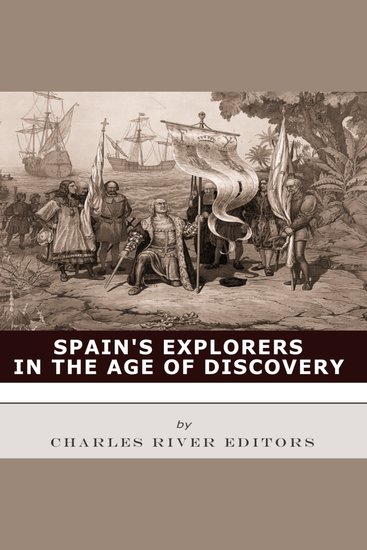
    The most seminal event of the last millennium might also be its most controversial. As schoolchildren have been taught for over 500 years, “In 1492 Columbus sailed the ocean blue.” In October of that year, the Italian Christopher Columbus immortalized himself by landing in the New World and beginning the process of European settlement in the Americas for Spain, bringing the Age of Exploration to a new hemisphere with him. Ironically, the Italian had led a Spanish expedition, in part because the Portugese rejected his offers in the belief that sailing west to Asia would take too long. 
    If Columbus and Cortés were the pioneers of Spain’s new global empire, Pizarro consolidated its immense power and riches, and his successes inspired a further generation to expand Spain’s dominions to unheard of dimensions. Furthermore, he participated in the forging of a new culture: like Cortés, he took an indigenous mistress with whom he had two mixed-race children, and yet the woman has none of the lasting fame of Cortés’s Doña Marina. With all of this in mind, it is again remarkable that Pizarro remains one of the less well-known and less written about of the explorers of his age. 
    Today Ferdinand Magellan is remembered as the first man to circumnavigate the globe, an ironic legacy given that he died half a world away from completing that journey. But though it ended catastrophically for Magellan and most of his crew, his expedition accomplished its objective, and in economic terms, the opening up of new trade routes with Asia was a more significant development than the conquest of the Americas for the Europeans of the early 16th century.
    Zum Buch
  • Clovis Culture The: The History and Legacy of the Prehistoric Paleoamericans - cover

    Clovis Culture The: The History...

    Editors Charles River

    • 0
    • 0
    • 0
    In popular media and culture, the Paleolithic era is often depicted as a time when humans were completely savage, spoke with little more than grunts, hit women over their heads with clubs and kidnapped them, and of course, everyone lived in caves. The reality is that the Paleolithic era was a time of great change when humans coalesced into groups and developed different technologies that helped them survive and ultimately thrive in harsh environments. Among the most important technologies developed by Paleolithic humans were those helping them hunt because, after all, the Paleolithic era was when humans lived as hunters and gatherers, so human survival and advancement were contingent upon developing better tools and weapons.  
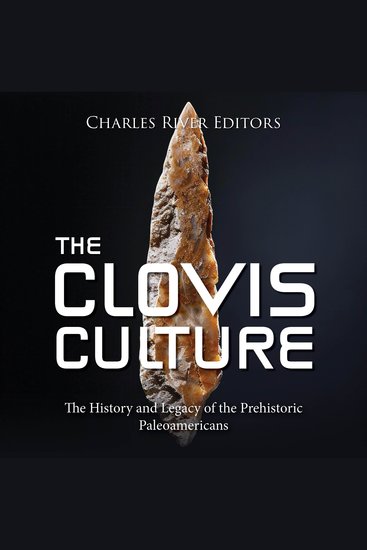
    Any examination of the Clovis culture begins with what is known. Archaeologists know the approximate chronological and geographic range of the Clovis culture, and they can identify what made the Clovis people unique. These were the projectile points the Clovis people made, setting them apart from most people that came before and after them, and it was those same tools that made them a successful people for such an extended period in the harsh climate of the Upper Paleolithic era (50,000 to 12,000 years ago). Scholars have also determined that the Clovis people were big game hunters, chasing and killing mammoths and other now-extinct animals across North America. The picture that has emerged of the Clovis people is one of an industrious, resourceful, and prolific people who became masters of the environment and North America for approximately 2,000 years. That being said, there is also much that is not known about the Clovis culture. For example, the Clovis people’s religious ideas, particularly about their views on an afterlife, remain a mystery. The lack of art at Clovis sites has also raised more questions, including if it was the result of a dearth of materials or societal norms and taboos.
    Zum Buch
  • April 1865: The Tumultuous History of the Confederacy’s Last Month - cover

    April 1865: The Tumultuous...

    Editors Charles River

    • 0
    • 0
    • 0
    By the close of 1864, Abraham Lincoln had been reelected, the Union army had taken Nashville from General Hood, and Sherman had concluded his total war, “slash-and-burn” march of destruction to Savannah, Georgia, offering it as a Christmas present to Lincoln. Nevertheless, with everything seemingly falling to pieces, the South still held out hope of some sort of miracle, and Davis even attempted to send a peace delegation to meet with Lincoln in the early months of 1865. On January 28, 1865 as Union General Ulysses S. Grant was continuing to lay siege to Lee’s army at Petersburg, Virginia, Davis sent three commissioners headed by Vice-President Stephens to initiate informal peace talks with Lincoln. By February 3, however, the talks, known as the Hampton Roads Conference, came to a stalemate as Lincoln would accept nothing less than total union, while Davis would only accept Southern independence.  
    	Even at that point, the South was clearly on its last legs. General George H. Thomas destroyed John Bell Hood’s Confederate army at the battles of Nashville and Franklin, leaving only two large Confederate armies still in the field. Lee's army was weakened by desertion, lack of supplies and casualties, and Joseph E. Johnston’s army could barely resist against Sherman’s army as it was advancing north toward Virginia.  
    	To most observers, the South was clearly reaching its end, but Davis had no intention of quitting the war. Even while he was fleeing, he attempted to order Confederate generals in the field to keep fighting. On April 9, 1865, Lee formally surrendered his weary army to Grant at Appomattox. Appomattox is frequently cited as the end of the Civil War, but there still remained several Confederate armies across the country, mostly under the command of General Joseph E. Johnston.
    Zum Buch