Begleiten Sie uns auf eine literarische Weltreise!
Buch zum Bücherregal hinzufügen
Grey
Einen neuen Kommentar schreiben Default profile 50px
Grey
Jetzt das ganze Buch im Abo oder die ersten Seiten gratis lesen!
All characters reduced
Waynflete - cover

Waynflete

Christabel R. Coleridge

Verlag: DigiCat

  • 0
  • 0
  • 0

Beschreibung

In "Waynflete," Christabel R. Coleridge unfolds a rich tapestry of narrative that intricately weaves together themes of faith, ambition, and the conflict between personal desire and societal expectations. Set against the backdrop of 15th-century England, Coleridge employs a lyrical prose style that captures the historical nuances of the era while offering deep psychological insights into her characters. The novel portrays the life and challenges of William Waynflete, the Bishop of Winchester, exploring the intricate relationship between the sacred and the secular, all within a vividly rendered historical context. Coleridge, known for her scholarly interests in Victorian literature and history, draws inspiration from her extensive research into historical figures and the socio-political dynamics of late medieval England. Her background in literature and history informs her ability to create a credible historical narrative, making Waynflete not just a work of fiction but also a compelling reflection on the morals and dilemmas faced by those in power. Coleridge's passion for elucidating the stories of lesser-known historical figures shines through in her portrayal of Waynflete's struggles and triumphs. I highly recommend "Waynflete" to readers who seek an engaging exploration of historical fiction enriched with literary depth and emotional resonance. Coleridge's insightful character development and evocative prose invite readers to ponder the complexities of human nature and the impact of historical legacies, making it a profound addition to the genre.
Verfügbar seit: 16.09.2022.
Drucklänge: 184 Seiten.

Weitere Bücher, die Sie mögen werden

  • The Expansionists - cover

    The Expansionists

    Vivian Stuart

    • 0
    • 1
    • 0
    The twenty-fourth, and final, book in the dramatic and intriguing story about the colonisation of Australia: a country made of blood, passion, and dreams.
     
    Finally the end has been reached as the Australians look towards the future.
     
    The Australians have reached a time of technological advance that features steam power of ships and auto mobiles becoming the preferable personal transportation for the wealthy Australians. Australia becomes Australia as we know it today.
    Zum Buch
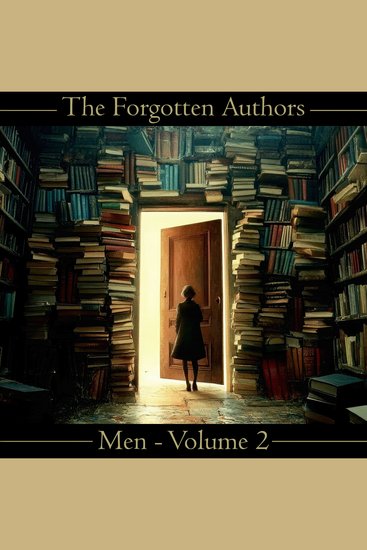
  • Forgotten Authors The - Men - Volume 2 - William E Burton to Richard Garnett - cover

    Forgotten Authors The - Men -...

    Clotilde Graves

    • 0
    • 0
    • 0
    Throughout the long centuries of human history is the want, and the need, to share information, to exchange ideas and for that knowledge and experience, for curiosity and learning, to be the basis of a civil society. 
    In literature the ambition is much narrower.  In order to be known, to be popular, you had to be published.  And for that people had to know you existed and your ideas worth reading.  Obviously for most of humanity’s time people couldn’t read and texts couldn’t be published in any great number. 
    In the 15th Century Gutenberg’s printing press began the revolution to address the second and by the 19th century had gathered pace with startling speed and mass distribution.  Education for the many was brought in to help people understand more of their world and, with new skills, how to have a better place within it.  Now, if the powers that owned the presses and means of distribution agreed an audience would now be able to avail themselves of your ideas, your printed words.  
    Sadly, in the thirst for the new, the recent and the past fell from sight, relegated to dark corners and dusty shelves.   
    But the printed word is rarely without someone, somewhere busying themselves through piles of papers and books rediscovering what a good story is, whatever its age. 
    In this volume we offer up a small selection of those talents whose time has now come again.
    Zum Buch
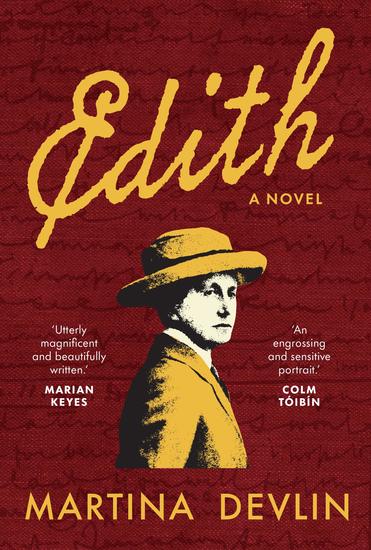
  • Edith - cover

    Edith

    Martina Devlin

    • 0
    • 0
    • 0
    Martina Devlin, an award-winning columnist for the Irish Independent and podcaster for Dublin City of Literature #CityofBooks, has delivered a new novel based on the life of Edith Somerville of 'Somerville and Ross' fame – authors of The Irish R.M.
    In this work, set during the turbulent period of Irish Independence 1921–22, Somerville finds herself at a crossroads. Her position as a member of the Ascendancy is perilous as she struggles to keep her family home, Drishane House in West Cork, while others are burned out. After years in a successful writing partnership with Violet Martin, Edith continues to write after her partner's death, comforted in the belief they continue to connect through automatic writing and séances.
    Against a backdrop of Civil War politics and lawlessness erupting across the country via IRA flying columns, people across Ireland are forced to consider where their loyalties lie.
    In Edith, Devlin limns a vivid historical context in this story of proto-feminist Edith Somerville courageously trying to keep home and heart in one piece.
    The story of Somerville and Ross is unique in the history of Irish women writers. Academic Shawn R. Mooney described these best-selling authors as 'undeniably New Women: single, educated and economically independent writers whose lives and literary collaboration were unique manifestations of late-nineteenth century feminist strivings toward political and sexual equality'. Devlin depicts Edith in the round, suffering from loss, striving for safety, and keeping hold of hope in this captivating narrative set in the early years of a nascent state — a triumph of ventriloquism rooted in a society on the cusp of change.
    Zum Buch
  • Tales of Empire - A Short Story Collection - Across the Imperial Landscape are tales of ghosts gods and the human spirit - cover

    Tales of Empire - A Short Story...

    Rudyard Kipling, Bithia Mary...

    • 0
    • 0
    • 0
    Empires have been a fact of life for many thousands of years in all corners of the globe.  Some have lasted a mere generation, others for a millennia.  Some have defenders that cite advancements and security but detractors rail at the imposition of one culture upon defeated societies for no greater reason than conquest. 
     
    In this volume we put together stories from a wide range of classic authors, including Rudyard Kipling, Joseph Conrad, Talbot Mundy, Letitia Elizabeth Landon, H Rider Haggard and many others to view the British Empire both from the inside as subjects and from the outside as writers through engrossing narratives.  These literary leviathans could observe, sample, question and report as part of an Empire upon which the sun never set and who’s morals were sometimes good, but often bad, as it bestrode the world as Imperial policeman and bully-in-chief grabbing the profits of others as it imposed a Pax Britannica that was in reality only of real benefit to the elite at home. 
     
    Times may have changed yet these stores offer a fascinating insight into the world as it was. 
     
    1 - Tales of Empire - A Short Story Collection - An Introduction 
    2 - The Man Who Would Be King - Part 1 by Rudyard Kipling 
    3 - The Man Who Would Be King - Part 2 by Rudyard Kipling 
    4 - Long Odds by H Rider Haggard 
    5 - The Indian Orphan. A Tale by Letitia Elizabeth Landon 
    6 - The Lagoon by Joseph Conrad 
    7 - Those Who Wait by Ethel Dell 
    8 - The Metropolitian Emigrant by John Galt 
    9 - His Unconquerable Enemy by W C Morrow 
    10 - The Soul of a Regiment by Talbot Mundy 
    11 - An Outcast of the People by Bithia Mary Croker 
    12 - The Spectre Bridegroom by William Hunt 
    13 - The Maltese Cat by Rudyard Kipling
    Zum Buch
  • Beneath the Marble Arch: Book summary & analysis - cover

    Beneath the Marble Arch: Book...

    Alexander Pike

    • 0
    • 0
    • 0
    This content is an independent and unofficial summary created for informational and educational purposes only. It is not affiliated with, authorized, approved, licensed, or endorsed by the original author or publisher. All rights to the original work belong to its respective copyright holders. This summary is not intended to substitute the original book, but to offer a concise overview and interpretation of its main ideas. 
     
    Beneath the grandeur of stone and tradition lies a world of secrets longing to be uncovered. Beneath the Marble Arch invites listeners into a richly woven tale of lost legacies, hidden truths, and the quiet resilience of those who dare to seek answers in the shadows of history. As past and present intertwine beneath an ancient monument, one discovery could change everything. Atmospheric, poignant, and filled with quiet intrigue, this captivating story reveals that sometimes the greatest treasures are hidden just beyond sight.
    Zum Buch
  • Survival: A Story of Friendship – Part 2 - cover

    Survival: A Story of Friendship...

    Alice Weil

    • 0
    • 0
    • 0
    Survival: A Story of Friendship – Part 2 is about the voyage Freddy and his mother, Helene, take to escape Europe and the ravages of World War II. After promising Sigmund on his deathbed that they would reunite the family in a peaceful and friendly country, they make their way via ship to Colombia, the country Nellie had made her home just as the Nazi movement in Germany was gaining momentum. After their safe arrival, Freddy is forced to look for work in order to support his mother and himself while adjusting to new surroundings at the same time. After some fortuitous, work-related encounters, Freddy decides to not only run his own lingerie business but produce the raw materials he needs himself. 
    This is the story of how someone who was unable to complete school or go to university, due to strictly unfortunate circumstances, had the vision and skills to found a company that would provide jobs and well-being. Thus giving back to the country that granted him what the German Nazi government had taken away from him: his nationality.
    Zum Buch