Rejoignez-nous pour un voyage dans le monde des livres!
Ajouter ce livre à l'électronique
Grey
Ecrivez un nouveau commentaire Default profile 50px
Grey
Abonnez-vous pour lire le livre complet ou lisez les premières pages gratuitement!
All characters reduced
The Yellow Wallpaper - cover

The Yellow Wallpaper

Charlotte Perkins Gilman

Maison d'édition: Edicions Perelló

  • 0
  • 0
  • 0

Synopsis

The Yellow Wallpaper (1892) recounts the experience of a woman subjected to a strict rest cure after a nervous crisis, confined to a room whose unsettling yellow wallpaper becomes the obsessive focus of her gaze. Isolated from intellectual activity and deprived of autonomy, the protagonist begins to perceive ambiguous shapes and presences within the wallpaper's patterns, as though they were coming to life.

Charlotte Perkins Gilman crafts a tale of mounting psychological tension that transcends mere horror to denounce female oppression and the constraints imposed by a patriarchal society. Suspended between Gothic fiction and clinical study of the mind, The Yellow Wallpaper is a brief yet powerful work that explores the fragility of sanity and the silent violence of confinement.
Disponible depuis: 24/02/2026.
Longueur d'impression: 40 pages.


D'autres livres qui pourraient vous intéresser

  • The Death of Justina - cover

    The Death of Justina

    John Cheever

    • 0
    • 0
    • 0
    Read by Meryl Streep 
    Here is one of twelve magnificent stories, originally part of The John Cheever Audio Collection, in which John Cheever celebrates—with unequaled grace and tenderness—the deepest feelings we have. 
    As Cheever writes in his preface, ""These stories seem at times to be stories of a long-lost world when the city of New York was still filled with a river light, when you heard the Benny Goodman quartets from a radio in the corner stationery store, and when almost everybody wore a hat.""
    Voir livre
  • Songs of Innocence and of Experience - cover

    Songs of Innocence and of...

    William Blake

    • 0
    • 0
    • 0
    Songs of Innocence and of Experience pairs luminous, childlike wonder with sharp, unsettling truth. In the first half, innocence speaks through images of lambs, children, and quiet faith in a world that feels gentle and protected. In the second, that vision cracks open—revealing a darker reality shaped by poverty, authority, and human suffering.
    
    Through deceptively simple poems and unforgettable images, the collection explores how joy and cruelty, hope and corruption, innocence and knowledge all exist side by side. The result is a powerful poetic conversation about what it means to grow up—and to truly see the world.
    William Blake was an English poet, painter, and printmaker whose visionary work blended poetry, art, and spiritual philosophy. Often considered ahead of his time, Blake created richly symbolic works that challenged social injustice and conventional religion. Songs of Innocence and of Experience, first published in 1794, is among his most celebrated creations and a cornerstone of English Romantic poetry.
    Voir livre
  • The Blue Hotel and Other Stories - cover

    The Blue Hotel and Other Stories

    Stephen Crane

    • 0
    • 0
    • 0
    Stephen Crane's "The Blue Hotel and Other Stories" immerses readers in a vivid exploration of the human psyche and the unpredictable forces of fate. Set against the backdrop of a bleak Nebraska winter, "The Blue Hotel" stands out as a compelling tale of paranoia, misunderstanding, and tragedy. Accompanied by other poignant narratives, Crane masterfully captures the essence of conflict, both internal and external, revealing the profound impact of our perceptions on our reality. A captivating collection that resonates with timeless truths.
    Voir livre
  • The Woman in the Corner - From their pens to your ears genius in every story - cover

    The Woman in the Corner - From...

    Gertrude Colman

    • 0
    • 0
    • 0
    The bookshelves of British literature are incredible collections that have gathered together centuries of very talented authors.  From these Isles their fame spread and whilst among their number many are now forgotten or neglected their talents endure.  Among them is the Suffragette Gertrude Colman.
    Voir livre
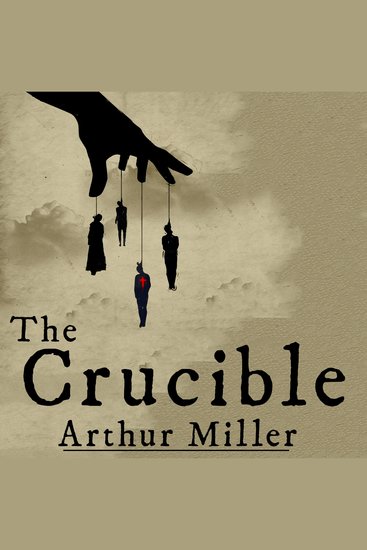
  • The Crucible - cover

    The Crucible

    Arthur Miller

    • 0
    • 0
    • 0
    The place is Salem, Massachusetts, in 1692, an enclave of rigid piety huddled on the edge of a wilderness. Its inhabitants believe unquestioningly in their own sanctity. But in Arthur Miller's edgy masterpiece, that very belief will have poisonous consequences when a vengeful teenager accuses a rival of witchcraft - and then when those accusations multiply to consume the entire village. About this author: Arthur Asher Miller was an American playwright and essayist. He was a prominent figure in American literature and cinema for more than 61 years, writing a wide variety of plays, including celebrated plays such as The Crucible, A View from the Bridge, All My Sons, and Death of a Salesman, which are still studied and performed worldwide. Miller was often in the public eye, most famously for refusing to give evidence against others to the House Un-American Activities Committee, being the recipient of the Pulitzer Prize for Drama among other awards, and for marrying Marilyn Monroe. At the time of his death, Miller was considered one of the greatest American playwrights.
    Voir livre
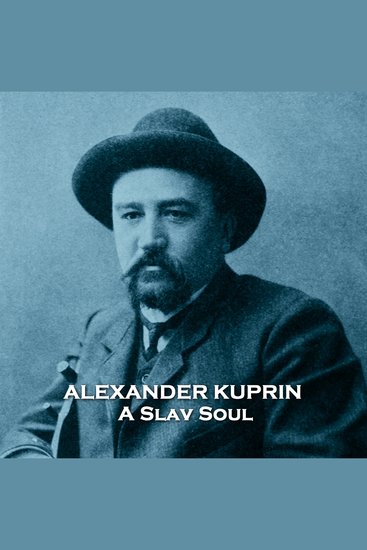
  • A Slav Soul - From their pens to your ears genius in every story - cover

    A Slav Soul - From their pens to...

    Alexander Kuprin

    • 0
    • 0
    • 0
    Alexander Kuprin was born in Narovchat, Penza in Russia on 7th September 1870. 
    At 3 his Father died and he and mother moved to Moscow. By 10 he was enrolled at the Second Moscow Military High School and there his interest in literature began. The Alexander Military Academy followed and two years later he was a sub-lieutenant and posted to an Infantry Regiment for a further four years. 
    Despite his duties he was a now a keen writer and published his first short story at this time. His military duties also garnered him experiences for his breakthrough work ‘The Duel’.  Leaving the military he left for Kiev to work for local newspapers.  He continued to publish both stories and novels and by 1901 he was in St Petersburg becoming part of a group that included Chekhov, Ivan Bunin, Maxim Gorky and Leonid Andreyev.  
    In the years that followed further controversial works and acclaim followed.  His comments on the regime meant he was also put under secret police surveillance.   
    As World War I erupted, Kuprin opened a military hospital but was then given command of an infantry company in Finland. He was soon discharged on grounds of ill health.  
    The October Revolution saw him praise Lenin, but he warned that the Bolsheviks threatened Russian culture and might cause further widespread suffering to the peasants.  As Civil War raged he took his family to Helsinki and then on to Paris. 
    Exile saw his talents decline further and his succumbing to alcoholism. He became lonely and withdrawn. The family's poverty increased his malaise.   
    In May 1937, the Kuprin’s returned to Moscow.  He now saw his work published but wrote almost nothing new.  In 1938 his health rapidly deteriorated.  Already suffering from a kidney problems and sclerosis, he had now developed cancer of the oesophagus.  
    Alexander Kuprin died on 25th August 1938.
    Voir livre