Rejoignez-nous pour un voyage dans le monde des livres!
Ajouter ce livre à l'électronique
Grey
Ecrivez un nouveau commentaire Default profile 50px
Grey
Abonnez-vous pour lire le livre complet ou lisez les premières pages gratuitement!
All characters reduced
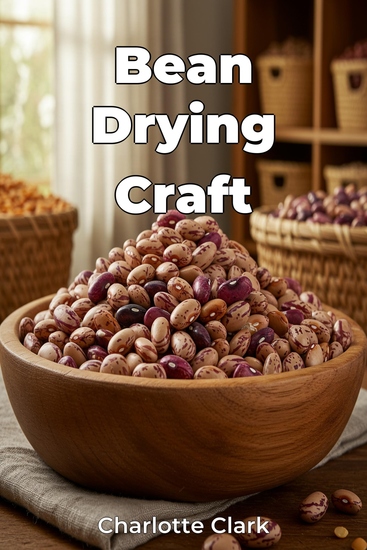
Bean Drying Craft - cover

Bean Drying Craft

Charlotte Clark

Traducteur A AI

Maison d'édition: Publifye

  • 0
  • 0
  • 0

Synopsis

Bean Drying Craft explores the traditional art of bean preservation, offering readers a path to greater food security and self-sufficiency. This book highlights the importance of home food preservation, detailing how bean drying addresses seasonal food shortages while promoting sustainable living. Readers will discover both time-honored and modern drying techniques to effectively preserve beans, a practice that extends back centuries.

 
The book begins with an introduction to the nutritional value of beans and then guides readers through various drying methods, from sun drying to using dehydrators. It emphasizes practical applications with recipes and tips for successful bean preservation, including optimal storage solutions and pest mitigation.

 
By consolidating data from agricultural research, historical accounts, and expert advice, Bean Drying Craft empowers home gardeners and homesteaders to confidently integrate bean drying into their lives.
Disponible depuis: 27/02/2025.
Longueur d'impression: 93 pages.

D'autres livres qui pourraient vous intéresser

  • Urban Transportation - Solutions for Sustainable Mobility - cover

    Urban Transportation - Solutions...

    Lyric Vale

    • 0
    • 0
    • 0
    Urban transportation plays a pivotal role in shaping the way cities function, impacting everything from daily commuting to the overall economic and environmental health of urban areas. In modern society, cities are becoming increasingly crowded, with more people migrating to urban centers in search of opportunities, better infrastructure, and access to services. As populations swell, urban transportation systems have struggled to keep pace with demand, leading to issues such as congestion, pollution, and inefficiency. 
    Historically, urban transportation has evolved in response to changing needs and technological advancements. Early cities relied on walking and horse-drawn carriages, but with the rise of industrialization, motorized transport took over. Streetcars, buses, and eventually cars became the main modes of transport in urban environments. However, as cities expanded and the number of vehicles grew, so did the problems associated with these systems. Traffic congestion became a daily reality in many metropolitan areas, with commuters spending hours stuck in traffic, wasting time, and burning fuel. 
    Environmental concerns further compounded the issue. The increasing number of vehicles on the road, many of which run on fossil fuels, has significantly contributed to air pollution, climate change, and the depletion of natural resources. As cities continue to grow, the challenge of balancing transportation needs with environmental sustainability has become more urgent. In response, there has been a global push to shift toward more sustainable, efficient, and inclusive transportation systems.
    Voir livre
  • Romaine Wasn't Built in a Day - The Delightful History of Food Language - cover

    Romaine Wasn't Built in a Day -...

    Judith Tschann

    • 0
    • 0
    • 0
    Discover how the food we love shapes the language we use in this sharp, laugh-out-loud story of the etymology of food words. All food has a story, reaching as far back into history as language itself. Throughout time, as languages followed and reflected the tides of civilizations, food language came to represent some of the highs and lows of how humans communicate: from the highbrow "Chateauneuf du Pape," which must be pronounced with a healthy dose of snootiness; to the giggle-inducing yet delicious "nun's farts" of Jamaica (also known as "beignets"); to the fascinating travels of the word "coffee" across centuries and continents, attesting to the undying and unifying allure this drink holds for us. From Spam to amuse-bouches, ciabatta to kombucha, Romaine Wasn’t Built in a Day reveals the delightful history and stories behind the words we use for the foods we love.   In Romaine Wasn’t Built in a Day, linguist Tschann takes us on a journey from the vineyards of Avignon to the shores of Tahiti to the port of Mocha on the Red Sea coast to explore the history of the history of the words we use for the food we eat. Chock full of linguistic did-you-knows and delectable trivia, this is your go-to gift for history buffs, crossword fiends, and Scrabble diehards. This is the surprising and sometimes hilarious history of food, told through the lens of the fascinating evolution of language. All food has a story, reaching as far back into history as language itself. Throughout time, as languages followed and reflected the tides of civilizations, food language came to represent some of the highs and lows of how humans communicate: from the highbrow "Chateauneuf du Pape," which must be pronounced with a healthy dose of snootiness; to the giggle-inducing yet delicious "nun's farts" of Jamaica (also known as "beignets"); to the fascinating travels of the word "coffee" across centuries and continents, attesting to the undying and unifying allure this drink holds for us. From Spam to amuse-bouches, ciabatta to kombucha, Romaine Wasn’t Built in a Day reveals the delightful history and stories behind the words we use for the foods we love.   In Romaine Wasn’t Built in a Day, linguist Tschann takes us on a journey from the vineyards of Avignon to the shores of Tahiti to the port of Mocha on the Red Sea coast to explore the history of the history of the words we use for the food we eat. Chock full of linguistic did-you-knows and delectable trivia, this is your go-to gift for history buffs, crossword fiends, and Scrabble diehards. This is the surprising and sometimes hilarious history of food, told through the lens of the fascinating evolution of language.
    Voir livre
  • Dog Care Guide - Essential Tips and Training for a Happy Healthy Dog - cover

    Dog Care Guide - Essential Tips...

    Phoenix Reyes

    • 0
    • 0
    • 0
    When you bring a dog into your home, understanding its needs and characteristics is essential for a long-lasting, healthy relationship. Proper dog care goes beyond feeding and grooming; it involves knowing your dog's behavior, health requirements, and how best to meet those needs. The way a dog interacts with its environment, the people around it, and other animals is often influenced by its breed, upbringing, and environment. This chapter delves into the importance of understanding your dog's unique traits and behaviors, ensuring that both you and your pet can enjoy a fulfilling life together. 
    One of the first steps in being a responsible dog owner is recognizing that not all dogs are the same. Each dog breed has its own set of physical, emotional, and behavioral characteristics that can affect how it behaves in various situations. For example, a high-energy dog like a Border Collie will have very different needs compared to a more laid-back breed like a Bulldog. Understanding the breed-specific traits of your dog is important for meeting its exercise, grooming, and training needs. This knowledge also helps you recognize certain behavioral tendencies, such as a working breed's instinct to herd or a toy breed's need for companionship and attention. 
    By identifying these traits early, you can avoid frustration when your dog exhibits certain behaviors. For instance, a dog that loves to chase small animals may need additional training and supervision during walks to prevent unwanted incidents. On the other hand, some breeds are naturally more independent and may need extra patience and time during training sessions. Understanding the breed traits allows you to create a lifestyle that accommodates your dog's needs, which fosters a happier, more balanced relationship.
    Voir livre
  • GLOBO ARTE APRIL 2022 ISSUE - AN art magazine for helping artist in their art career - cover

    GLOBO ARTE APRIL 2022 ISSUE - AN...

    Globo Arte team

    • 0
    • 0
    • 0
    Hi guys this is the APRIL 2022 Magazine issue, which contains artists interviews to inspire artists, and so much more to help the artist in their art career,it contains artist interviews, art-related topics articles and question of the month, step of the month and social media updates
    Voir livre
  • Pokemon - The Ultimate Trivia And Curious Facts Collection - cover

    Pokemon - The Ultimate Trivia...

    Trivia Hub

    • 0
    • 0
    • 0
    POKÉMON 
    THE ULTIMATE TRIVIA AND CURIOUS FACTS COLLECTION 
      
    CREATED BY TRIVIA HUB 
      
    The Pokémon franchise began with Pocket Monsters Red and Green in 1996. It features creatures called Pokémon that humans coexist with. Players take the role of a Pokémon Trainer, who explores the world, catches Pokémon, and battles. The franchise includes video games, anime, and trading cards. The name "Pokémon" is an abbreviation of "Pocket Monsters". The franchise's primary target audience is children aged 5 to 12, but it attracts people of all ages. The franchise was conceived by Satoshi Tajiri, who was inspired by his childhood hobby of collecting insects. As of January 2024, 1,025 Pokémon species have been introduced. 
      
    CURIOUS FACT SAMPLES: 
      
    The Pokémon franchise was created by Satoshi Tajiri, who as a child enjoyed collecting insects and other small creatures. This childhood hobby inspired the concept of catching and collecting Pokémon in the game.  
      
    The initial idea for Pokémon involved using the Game Boy's link cable to allow players to exchange creatures, an idea inspired by the random item appearances in the game Dragon Quest II. Tajiri realized the cable could be used for something other than competing.  
      
    Gashapon capsules, toy-filled capsules from vending machines, were also an inspiration for the way Pokémon are captured and stored. The idea of miniaturized creatures stored in capsules was influenced by the show Ultraseven.  
      
    The original name for Pokémon was going to be Capsule Monsters, but it could not be trademarked, leading to the name Pocket Monsters, which was eventually shortened to Pokémon. The word "capsule" could not be used in the trademark.
    Voir livre
  • Why You Should Go to Banff - cover

    Why You Should Go to Banff

    Mark Ferdinand

    • 0
    • 0
    • 0
    Banff is a mountain paradise like no other. Nestled in the heart of the Canadian Rockies, it’s a place of turquoise lakes, snow-dusted peaks, and alpine meadows that burst with wildflowers in summer. Whether blanketed in winter snow or glowing under the long days of summer, Banff’s natural beauty is breathtaking in every season. 
    Mark Ferdinand takes you into the heart of this spectacular national park: gazing across the emerald waters of Lake Louise, hiking to hidden waterfalls, spotting wildlife in pristine forests, and soaking in natural hot springs surrounded by mountain views. Whether you’re an adventurer, a nature lover, or simply someone seeking peace in the wilderness, Banff is a destination that will renew your spirit and stay with you forever.
    Voir livre