Begleiten Sie uns auf eine literarische Weltreise!
Buch zum Bücherregal hinzufügen
Grey
Einen neuen Kommentar schreiben Default profile 50px
Grey
Jetzt das ganze Buch im Abo oder die ersten Seiten gratis lesen!
All characters reduced
Villette - A Gothic Tale of Solitude Resilience and Unconventional Love - cover

Villette - A Gothic Tale of Solitude Resilience and Unconventional Love

Charlotte Brontë, Zenith Maple Leaf Press

Verlag: Zenith Maple Leaf Press

  • 0
  • 0
  • 0

Beschreibung

In a foreign city, a woman seeks independence—and finds herself caught between mystery and desire.
After suffering personal tragedy, Lucy Snowe leaves England for the cosmopolitan city of Villette in Belgium, where she takes a position at a girls' boarding school. Isolated and reserved, Lucy observes the intrigues, romances, and rivalries around her—until she is drawn into her own complex relationships, marked by restraint, longing, and self-discovery.

Blending gothic atmosphere, psychological depth, and sharp social commentary, Villette is Charlotte Brontë's most mature and enigmatic novel. Through Lucy's guarded yet passionate perspective, Brontë explores themes of identity, repression, gender roles, and the tension between duty and emotion.

"Her finest novel… a work of astonishing depth and subtlety."
– The Guardian

"A masterpiece of psychological realism and emotional restraint."
– The New York Times

✅ Why Readers Love It:
🏰 A richly atmospheric blend of gothic mystery and romantic realism

🧠 An intimate psychological portrait of a complex heroine

📚 A bold exploration of female independence in the Victorian era

🎯 Click 'Buy Now' to experience Charlotte Brontë's haunting and powerful story of solitude, self-reliance, and unspoken passion.
Verfügbar seit: 11.08.2025.
Drucklänge: 741 Seiten.

Weitere Bücher, die Sie mögen werden

  • Gusev - cover

    Gusev

    Anton Chekhov

    • 0
    • 0
    • 0
    "Gusev"  is an 1890 short story by Anton Chekhov.
    Several discharged soldiers return home from the Far East by ship. Confined to the hospital cabin, they are all apparently dying of consumption and seemingly indifferent to their condition. Among them are Gusev, a mild, racist, slightly dim man, and the mysterious Pavel Ivanovich, an ardent "protester" who often goes on diatribes (many of which Gusev either misunderstands or ignores) about his lifelong commitment to telling people "the truth to their faces". Ivanovich is proud of having riled every single person around him during his three years' service in the East, and thinks all the other men present are fools. He later reveals that he is the son of a priest and had to disguise himself as a peasant to buy his third-class ticket. One day, while Gusev is asleep, Pavel Ivanovich dies. One of the other soldiers, seeing that Gusev will also die shortly, helps him up to the ship's deck, where they look at the waves crashing into one another. Several days later, Gusev dies. His body is sewn into a sailcloth sack and weighted. After a short prayer, it is thrown into the ocean, where a shark bites at it. Up above, the ocean begins to reflect the colors of the sky, "...tender, joyous, passionate colours for which it is hard to find a name in human speech".
    Zum Buch
  • Supernatural Horror in Literature - cover

    Supernatural Horror in Literature

    H.P. Lovecraft

    • 0
    • 0
    • 0
    What makes a story truly terrifying? H. P. Lovecraft, the master of cosmic dread, gives you the answer.
    
    Supernatural Horror in Literature is not a story, but an essential work of literary criticism and history, written by the mind that defined modern horror. This comprehensive essay traces the evolution of the "weird tale" from the Gothic masters like Poe and Radcliffe to the modern fantasists, culminating in Lovecraft's own philosophy of cosmic horror.
    
    
    Dive into Lovecraft's incisive analysis of the genre's greatest practitioners, including Edgar Allan Poe, Ambrose Bierce, Henry James, and Arthur Machen. Discover his famous defense of the literature of absolute terror and his argument that the most potent fear is derived from humanity's deep-seated unease about its place in an infinite, unknowable cosmos. This book provides a key to understanding Lovecraft's entire fictional universe—the Cthulhu Mythos—and is required reading for any serious student or fan of the genre.
    
    Uncover the secrets of the supernatural. Click "Buy Now" to instantly download this definitive critical work and gain a new appreciation for the chilling history of horror.
    Zum Buch
  • Calling Things by Their Right Names (Unabridged) - cover

    Calling Things by Their Right...

    Booker T. Washington

    • 0
    • 0
    • 0
    Booker Taliaferro Washington (April 5, 1856 - November 14, 1915) was an American educator, author, orator, and adviser to several presidents of the United States. Between 1890 and 1915, Washington was the dominant leader in the African American community and of the contemporary black elite. Washington was from the last generation of black American leaders born into slavery and became the leading voice of the former slaves and their descendants. They were newly oppressed in the South by disenfranchisement and the Jim Crow discriminatory laws enacted in the post-Reconstruction Southern states in the late 19th and early 20th centuries.
    CALLING THINGS BY THEIR RIGHT NAMES: A few evenings ago I talked with you about the importance of learning to be simple, humble and child-like before going out into the world. You should remain in school until you get to the point where you feel that you do not know anything, where you feel that you are willing to learn from any one who can teach you.
    Zum Buch
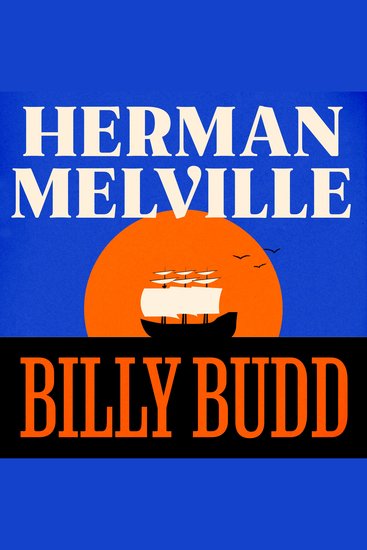
  • Billy Budd - cover

    Billy Budd

    Herman Melville

    • 0
    • 0
    • 0
    'Who in the rainbow can draw the line where the violet tint ends and the orange tint begins? Distinctly we see the difference of the colours, but where exactly does the one first blendingly enter into the other? So with sanity and insanity.'
    
    Sadly left unfinished by his death in 1891, Melville's novella Billy Budd is acclaimed by critics and quickly took its place in the literary canon.
    
    Billy Budd, a handsome sailor working on a British naval ship in the eighteenth century, is falsely accused of mutiny against the ship's captain by the master-at-arms, John Claggart. Billy, who unfortunately obtains a speech impediment, is overcome by the accusation and unable to verbally defend himself against Claggart's unfounded hate for him. Instead, he lashes out at Claggart, much to his own demise. An instant classic once published, Billy Budd is a tragic tale that has been adapted into film, plays and even an opera. This audiobook edition is narrated by the talented Christopher Ragland.
    Herman Melville (1819 – 1891) was a novelist and poet of the American Renaissance, best known for his works in adventure and travel writing, including Mody Dick (1851) and Typee (1846). His writing was met with mixed reviews by his contemporaries; it wasn't until the early twentieth century that he gained recognition for his literary genius.
    Zum Buch
  • On Some Technical Elements of Style in Literature (Unabridged) - cover

    On Some Technical Elements of...

    Robert Louis Stevenson

    • 0
    • 0
    • 0
    Robert Louis Stevenson was a Scottish novelist, essayist, poet and travel writer. Born and educated in Edinburgh, Stevenson suffered from serious bronchial trouble for much of his life, but continued to write prolifically and travel widely in defiance of his poor health. As a young man, he mixed in London literary circles, receiving encouragement from Andrew Lang, Edmund Gosse, Leslie Stephen and W. E. Henley, the last of whom may have provided the model for Long John Silver in Treasure Island.
    ON SOME TECHNICAL ELEMENTS OF STYLE IN LITERATURE: There is nothing more disenchanting to man than to be shown the springs and mechanism of any art.
    Zum Buch
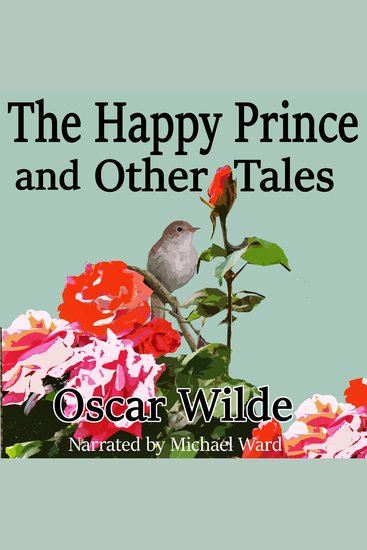
  • The Happy Prince and other Tales - cover

    The Happy Prince and other Tales

    Oscar Wilde

    • 0
    • 0
    • 0
    A collection of short stories by Oscar Wilde first published in May 1888. It contains the five stories: "The Happy Prince," "The Nightingale and the Rose," "The Selfish Giant," "The Devoted Friend," and "The Remarkable Rocket."  
    Narrated by Michael Ward
    Zum Buch