Rejoignez-nous pour un voyage dans le monde des livres!
Ajouter ce livre à l'électronique
Grey
Ecrivez un nouveau commentaire Default profile 50px
Grey
Abonnez-vous pour lire le livre complet ou lisez les premières pages gratuitement!
All characters reduced
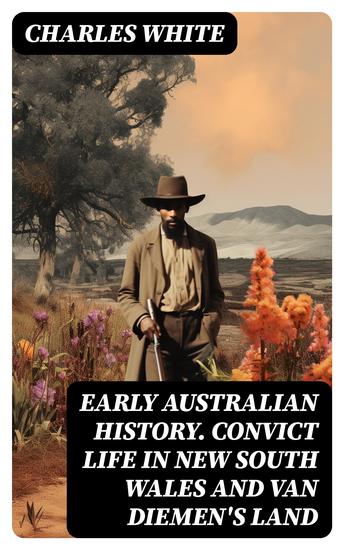
Early Australian History Convict Life in New South Wales and Van Diemen's Land - cover

Early Australian History Convict Life in New South Wales and Van Diemen's Land

Charles White

Maison d'édition: DigiCat

  • 0
  • 0
  • 0

Synopsis

In "Early Australian History: Convict Life in New South Wales and Van Diemen's Land," Charles White provides an intricate exploration of the convict era in Australia, meticulously charting the social, economic, and psychological impacts of transportation on both the convicts and the colonial society. White employs a scholarly yet accessible narrative style, intertwining historical facts with vivid personal accounts and primary sources, thus offering a multifaceted view of life in the penal colonies. This book not only serves as an essential chronicle of the period but also critiques the broader implications of colonialism and the evolution of Australian identity in the 19th century. Charles White, a historian with a profound interest in Australia's early colonial history, draws from extensive research and personal ties to the region to shed light on a largely overlooked chapter in Australian literature. His dedication stems from a desire to give voice to the convicts, who are often reduced to mere statistics in academic discussions, as well as to detail the harsh realities and complexities of their existence in a foreign land. This compelling book is a must-read for scholars, students, and general readers alike, as it enriches our understanding of Australia's penal heritage and the resilience of the human spirit. Through White's insightful analysis, readers are invited to engage with the foundational narratives of Australia and to reflect on the historical trajectories that shape contemporary society.
Disponible depuis: 21/11/2023.
Longueur d'impression: 539 pages.

D'autres livres qui pourraient vous intéresser

  • The Olive Branch from Palestine - cover

    The Olive Branch from Palestine

    Jerome M. Segal

    • 0
    • 0
    • 0
    The Olive Branch from Palestine provides a new narrative of the Palestinian effort to end the Israeli-Palestinian conflict and offers a bold plan for ending this conflict today, a proposal that focuses on Palestinian agency and the power of the Palestinians to bring about the two-state solution, even in the absence of a fully committed Israeli partner. In part 1, Jerome Segal provides an analytical and historical study of the 1988 Palestinian Declaration of Independence, a remarkable act of unilateral peacemaking through which the PLO accepted the legitimacy of the 1947 Partition Resolution and thereby redefined Palestinian nationalism. In part 2, he proposes a new strategy in which, outside of negotiations, the Palestinians would advance, in full detail, the end-of-claims/end-of-conflict peace plan they are prepared to sign, one that powerfully addresses the Palestinian refugee question and is supported by the refugees themselves yet does not undermine Israel as a Jewish-majority state. Extended Edition with Maps
    Voir livre
  • The Indonesian Famine of 1945-1946 - A Study in Post-War Disruption - cover

    The Indonesian Famine of...

    Sarah Willards

    • 0
    • 0
    • 0
    The conclusion of World War II marked a pivotal turning point in Indonesia’s history. As the Japanese forces surrendered in August 1945, the vacuum left behind in their wake exposed the fragility of colonial and wartime institutions. Indonesia, long under Dutch colonial rule and occupied by Japan since 1942, was suddenly thrust into a state of political and administrative chaos. The power void that followed the Japanese capitulation was quickly filled by nationalist fervor, culminating in the proclamation of Indonesian independence on August 17, 1945. However, the declaration did not result in immediate recognition or control. Instead, the country found itself caught between competing powers and clashing agendas. 
    The collapse of Japanese administrative structures left the newly proclaimed Republic of Indonesia struggling to assert its legitimacy. Republican leaders, including Sukarno and Mohammad Hatta, faced the monumental task of organizing a new government while also managing the fallout of war. Meanwhile, Dutch authorities, with Allied support, sought to re-establish their colonial presence. This led to violent confrontations and widespread instability, as various factions—including local militias, former Japanese-trained troops, and returning colonial forces—vied for control over towns, supply routes, and administrative posts. 
    The disintegration of centralized governance had far-reaching consequences. Essential services, including food distribution and public health, were severely disrupted. The chaos was further compounded by a breakdown in communication lines and transportation infrastructure, much of which had been damaged during the war or repurposed by occupying forces. With no clear authority in many regions, local leaders and grassroots organizations were left to manage crises as best they could, often with limited resources and no coordination.
    Voir livre
  • Empires and Kingdoms - The Rise and Fall of Medieval Powers (5 in 1) - cover

    Empires and Kingdoms - The Rise...

    Harris Ropes

    • 0
    • 0
    • 0
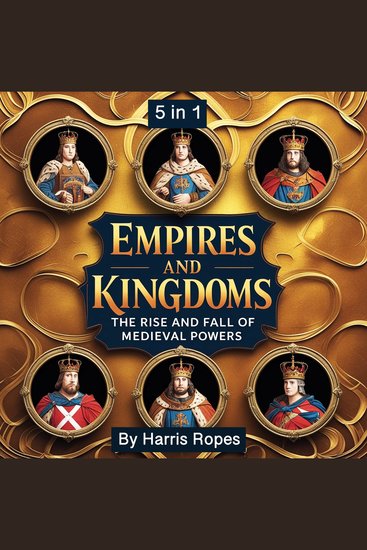
    This book traces the dramatic stories of five of the most influential empires in medieval and late antiquity, exploring how they rose to greatness, maintained control, and ultimately declined or transformed. 
    Begin with The Fall of Rome, the collapse that set the stage for the medieval world. Learn how internal strife, economic decay, and barbarian invasions led to the downfall of one of history’s greatest civilizations, creating a power vacuum that reshaped Europe. 
    Discover The Byzantine Empire, the eastern continuation of Rome, which blended Roman governance, Orthodox Christianity, and Greek culture to become a resilient power for over a thousand years. From Justinian’s legal reforms to the fall of Constantinople, its story is one of cultural brilliance and gradual decline. 
    Explore the fragmented yet enduring structure of The Holy Roman Empire, a complex patchwork of territories that struggled to balance local autonomy with imperial ambition. This section reveals the ongoing conflicts between emperors and popes, as well as the empire's role in shaping central Europe. 
    Witness the unstoppable rise of The Mongol Empire, the largest contiguous land empire in world history. Led by Genghis Khan and his successors, it connected East and West through conquest, terror, and unexpected cultural exchange. 
    Finally, delve into The Rise of the Ottoman Empire, a story of transformation from a frontier beylik into a formidable Islamic empire that would eventually absorb Byzantine lands and challenge Europe for centuries. 
    Together, these five empires showcase the complexity, ambition, and fragility of medieval powers—and how their legacies continue to influence the world today.
    Voir livre
  • Churchill's War - How Winston Churchill Led Britain through Its Darkest Hours - cover

    Churchill's War - How Winston...

    Sage Winters

    • 0
    • 0
    • 0
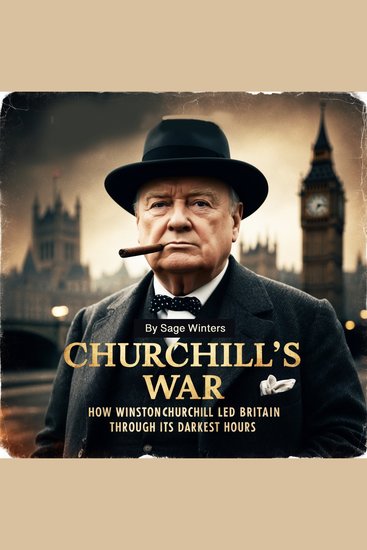
    Winston Churchill is remembered as one of history’s most formidable leaders, a man whose unwavering resolve and stirring oratory inspired a beleaguered nation to withstand its darkest hour. Rising to prominence during one of humanity’s most perilous times, Churchill’s leadership during World War II not only shaped the fate of Britain but left an indelible mark on the global landscape. His life and career encapsulate the qualities of resilience, vision, and adaptability that are crucial during moments of profound crisis.  
      
    Born into an aristocratic family in 1874, Churchill's early life was one of privilege, yet his path to greatness was anything but guaranteed. Despite academic struggles and initial failures, he demonstrated remarkable tenacity, carving out a career as a soldier, journalist, and eventually a politician. His varied experiences—whether charging on horseback in colonial campaigns or reporting from the frontlines—imbued him with a deep understanding of courage and strategy, traits that would serve him well in the years to come.  
      
    Churchill’s rise to the role of wartime Prime Minister was far from linear. By the late 1930s, his political career seemed to be in decline. His outspoken criticism of appeasement policies and his relentless warnings about Adolf Hitler’s ambitions rendered him an isolated figure, often dismissed as a relic of an earlier age. Yet, as Europe hurtled toward war, Churchill’s foresight and defiance became assets too valuable to ignore. In 1940, as Nazi Germany’s forces swept across the continent, Churchill was called upon to lead. 
    Voir livre
  • LIVING WITHOUT BLAMING YOURSELF - A Journey to Self-Acceptance to Free Yourself from Deep Guilt - cover

    LIVING WITHOUT BLAMING YOURSELF...

    Sophie Dimanth

    • 0
    • 0
    • 0
    Imagine a daily life free of the incessant pressure of guilt, where every thought is no longer a return to past mistakes, but an opening to a more peaceful future. This book is an introspective journey designed to help those who feel an invisible weight, an incessant self-criticism, to finally free themselves from this burden.  
    	This book proposes liberation from guilt and self-judgment, paving the way to lasting inner peace. You'll discover how to transform self-criticism into a benevolent and constructive force, cultivating a calmer, more understanding view of your journey. This guide will help you identify the deep-rooted sources of guilt and adopt an attitude of acceptance towards your imperfections and past mistakes. 
    	Through practical exercises and inspiring reflections, this book gives you the tools to shed emotional burdens and move towards a lighter, more harmonious life. By putting aside harsh judgments, you can find a new serenity, an inner space of freedom that will enable you to live fully and authentically. Whether you're seeking to overcome a persistent sense of guilt or simply to accept yourself better, this book will guide you step by step towards a gentler existence in tune with your deepest aspirations.
    Voir livre
  • Nietzsche's Jewish Problem - Between Anti-Semitism and Anti-Judaism - cover

    Nietzsche's Jewish Problem -...

    Robert C. Holub

    • 0
    • 0
    • 0
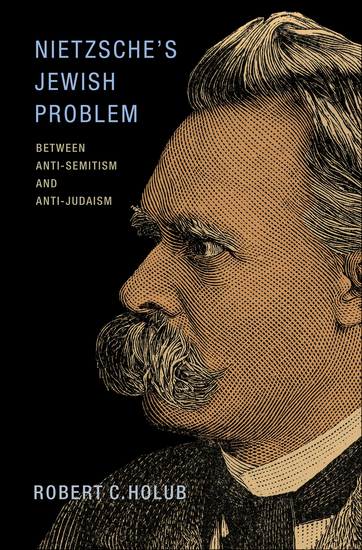
    The first comprehensive account of Nietzsche's views of Jews and JudaismFor more than a century, Nietzsche's views about Jews and Judaism have been subject to countless polemics. The Nazis infamously fashioned the philosopher as their anti-Semitic precursor, while in the past thirty years the pendulum has swung in the opposite direction. The increasingly popular view today is that Nietzsche was not only completely free of racist tendencies but also was a principled adversary of anti-Jewish thought. Nietzsche’s Jewish Problem offers a definitive reappraisal of the controversy, taking the full historical, intellectual, and biographical context into account. As Robert Holub shows, a careful consideration of all the evidence from Nietzsche’s published and unpublished writings and letters reveals that he harbored anti-Jewish prejudices throughout his life.Nietzsche’s Jewish Problem demonstrates how this is so despite the apparent paradox of the philosopher’s well-documented opposition to the crude political anti-Semitism of the Germany of his day. As Holub explains, Nietzsche’s "anti-anti-Semitism" was motivated more by distaste for vulgar nationalism than by any objection to anti-Jewish prejudice.A richly detailed account of a controversy that goes to the heart of Nietzsche’s reputation and reception, Nietzsche’s Jewish Problem will fascinate anyone interested in philosophy, intellectual history, or the history of anti-Semitism.
    Voir livre