Rejoignez-nous pour un voyage dans le monde des livres!
Ajouter ce livre à l'électronique
Grey
Ecrivez un nouveau commentaire Default profile 50px
Grey
Abonnez-vous pour lire le livre complet ou lisez les premières pages gratuitement!
All characters reduced
The Complete Harvard Classics 2022 Edition - ALL 71 Volumes - The Five Foot Shelf & The Shelf of Fiction - cover

The Complete Harvard Classics 2022 Edition - ALL 71 Volumes - The Five Foot Shelf & The Shelf of Fiction

Charles W. Eliot, Icarus

Maison d'édition: Icarsus

  • 0
  • 0
  • 0

Synopsis

( newly updated TOC )

The Harvard Universal Classics, originally known as Dr. Eliot's Five Foot Shelf, is a 51-volume anthology of classic works from world literature, compiled and edited by Harvard University president Charles W. Eliot and first published in 1909.

Eliot had stated in speeches that the elements of a liberal education could be obtained by spending 15 minutes a day reading from a collection of books that could fit on a five-foot shelf. (Originally he had said a three-foot shelf.) The publisher P. F. Collier and Son saw an opportunity and challenged Eliot to make good on this statement by selecting an appropriate collection of works, and the Harvard Classics was the result.

Eliot worked for one year with William A. Neilson, a professor of English; Eliot determined the works to be included and Neilson selected the specific editions and wrote introductory notes. Each volume had 400–450 pages, and the included texts are "so far as possible, entire works or complete segments of the world's written legacies." The collection was widely advertised by Collier and Son, in Collier's and elsewhere, with great success.

Eight years later Eliot added a further 20 volumes as a sub-collection titled 'The Harvard Classics Shelf of Fiction', offering some of the greatest novels and short stories of world literature. The exhaustive anthology of the 'The Harvard Classics' comprises every major literary figure, philosopher, religion, folklore and historical subject up to the twentieth century.

The Harvard Classics:
. 1: Franklin, Woolman & Penn
2: Plato, Epictetus & Marcus Aurelius
3: Bacon, Milton, Browne
4: John Milton
5: R. W. Emerson
6: Robert Burns
7: St Augustine & Thomas á Kempis
8: Nine Greek Dramas
9: Cicero and Pliny
10: The Wealth of Nations
11: The Origin of Species
12: Plutarchs
13: Æneid
14: Don Quixote
15: Bunyan & Walton
16: 1001 Nights
17: Folklore & Fable
18: Modern English Drama
19: Goethe & Marlowe
20: The Divine Comedy
21: I Promessi Sposi
22: The Odyssey
23: Two Years Before the Mast
24: Edmund Burke
25: J. S. Mill & T. Carlyle
26: Continental Drama
27 & 28: English & American Essays
29: The Voyage of the Beagle
30: Scientific Papers
31: The Autobiography of Benvenuto Cellini
32: Literary and Philosophical Essays
33: Voyages & Travels
34: French & English Philosophers
35: Chronicle and Romance
36: Machiavelli, Roper, More, Luther
37: Locke, Berkeley, Hume
38: Harvey, Jenner, Lister, Pasteur
39: Prologues
40–42: English Poetry
43: American Historical Documents
44 & 45: Sacred Writings
46 & 47: Elizabethan Drama
48: Blaise Pascal
49: Saga
50: Reader's Guide
51: Lectures
The Shelf of Fiction:
1 & 2: The History of Tom Jones
3: A Sentimental Journey & Pride and Prejudice
4: Guy Mannering
5 & 6: Vanity Fair
7 & 8: David Copperfield
9: The Mill on the Floss
10: Irving, Poe, Harte, Twain, Hale
11: The Portrait of a Lady
12: Notre Dame de Paris
13: Balzac, Sand, de Musset, Daudet, de Maupassant
14 & 15: Goethe, Keller, Storm, Fontane
16–19: Tolstoy, Dostoevsky, Turgenev
20: Valera, Bjørnson, Kielland
Disponible depuis: 08/08/2022.
Longueur d'impression: 40300 pages.

D'autres livres qui pourraient vous intéresser

  • The Shortest History of England - Empire and Division from the Anglo-Saxons to Brexit—A Retelling for Our Times - cover

    The Shortest History of England...

    James Hawes

    • 0
    • 0
    • 0
    England—begetter of parliaments and globe-spanning empires, star of beloved period dramas, and home of the House of Windsor—is not quite the stalwart island fortress that many of us imagine. Riven by an ancient fault line that predates even the Romans, its fate has ever been bound up with that of its neighbors; and for the past millennia, it has harbored a class system like nowhere else on Earth. 


    This bracing tour of the most powerful country in the United Kingdom reveals an England repeatedly invaded and constantly reinvented—yet always fractured by its very own Mason-Dixon Line. It carries us swiftly through centuries of conflict between Crown and Parliament (starring the Magna Carta), America's War of Independence, the rise and fall of empire, two World Wars, and England's break from the EU. We discover: why the American colonists of 1776 believed that they were the true Anglo-Saxons, how the British Empire was undermined from within, why Winston Churchill said the UK could only be saved by splitting up England itself, and how populism spawned Brexit and its "new elite." 


    The Shortest History of England brings all this and more to prescient life—offering the most direct, compelling route to understanding the country behind today's headlines.
    Voir livre
  • Evil Men - The History of Genocidal Dictators and Warlords - cover

    Evil Men - The History of...

    Kelly Mass

    • 0
    • 0
    • 0
    This book combo encompasses the following topics: 
    Pol Pot - Pol Pot was a Cambodian political leader and revolutionary who worked as Prime Minister of Democratic Kampuchea from 1975 till 1979. He was a key member of Cambodia's communist company, the Khmer Rouge, from 1963 to 1997, and acted as the General Secretary of the Communist Party of Kampuchea from 1963 to 1981. 
    Benito Mussolini - Ironically, when we think of fascism, we often look at someone as brutal and influential as Adolf Hitler, but the word “fascism” originated from Italian. The ideology that was carried out in the vicious Spanish War right before World War 2, and was embraced by Nazi Germany, was actually pushed and more or less invented by the Italians during a critical time in history when many changes were made, and when fear and uncertainty were all in the air. 
    Francisco Pizarro - Conquistadores (or Conquistadors) were the Spanish and Portuguese conquerors who invaded parts of the world that hadn’t been discovered by the Europeans before the 16th century. Some of these conquerors behaved fairly nice and respectful towards the local population in South America, Asia, Africa, and Central America. 
    Torquemada - The Spanish inquisition was nasty in the 15th century. I am glad we don’t live in those times anymore. We have our own problems to deal with here. But back then, in some countries, primarily the Catholic-dominated ones in Europe, being called a heretic, a witch, or a sinner meant business. It could mean the end of your life. And often, you had nothing to defend yourself with. 
    Robespierre - One of the most widely known figures of the Reign of terror was Maximilien François Marie Isidore de Robespierre, a French attorney and statesman. He promoted universal manhood suffrage and the removal of both clergy celibacy and oppression as a member of the Constituent Assembly and the Jacobin Club.
    Voir livre
  • Wet Lesbian Sexy Surprises - 6 Erotic Stories - cover

    Wet Lesbian Sexy Surprises - 6...

    Giselle Renarde

    • 0
    • 0
    • 0
    Pure liquid gold awaits you in "Wet Lesbian Sexy Surprises," a spicy anthology of six fetish stories that explore the intoxicating allure of women who share an erotic fixation. Each tale invites you into the world of BDSM as lesbians explore their deepest desires and succumb to the pull of undeniable attractions. 
    Indulge in tantalizing encounters between roommates, strangers, and committed couples. From the sizzling tension between a security guard and a woman stuck in an underground parking garage to the complex passion between a couple on vacation, these stories offer a mesmerizing glimpse into the world of lesbian romance and fetish exploration. 
    Sapphic sexuality fuses with the arts of domination and submission as "Wet Lesbian Sexy Surprises" beckons you to explore desperate desire in six stunning encounters.  
    Read by the author
    Voir livre
  • Movies under the Influence - cover

    Movies under the Influence

    Jocelyn Szczepaniak-Gillece

    • 0
    • 0
    • 0
    Movies under the Influence charts the entangled histories of moviegoing and mind-altering substances from early cinema through the psychedelic 1970s. Jocelyn Szczepaniak-Gillece examines how the parallel trajectories of these two aspects of American culture resulted in them being treated and regulated in similar ways. Rather than looking at drug use within film, she regards cinema and intoxicants as kindred experiences of immersion that have been subject to corresponding forces of ideology and power. 


    Szczepaniak-Gillece demonstrates how American movie theaters sought to cultivate a dual identity, presenting themselves as both a place of wholesome entertainment and a zone of illicit behavior. Movies under the Influence highlights the legislative, legal, and corporate powers that held sway over theaters, locating the convergence of moviegoing and drug use as a site of mediation and social control. 


    As much as substances and cinema are points where power intervenes, they are also settings of potential transcendence, and Movies under the Influence maintains this paradox as a necessary component of American film history. This book examines the relationship intoxicants suggest between mass media, spectatorship, and governmental regulation and provides a new angle from which to understand cinema's lasting role in evolving American culture.
    Voir livre
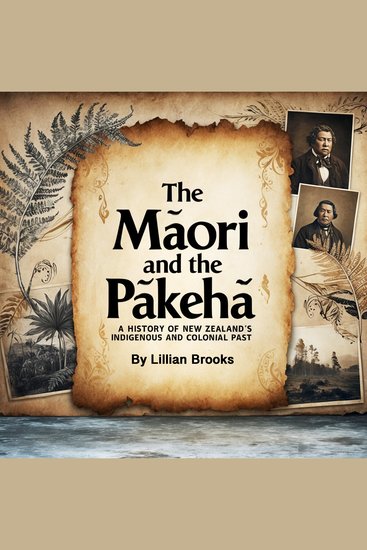
  • The Māori and the Pākehā - A History of New Zealand's Indigenous and Colonial Past - cover

    The Māori and the Pākehā - A...

    Lillian Brooks

    • 0
    • 0
    • 0
    The history of New Zealand is deeply shaped by the complex and evolving relationship between the Māori, the country’s Indigenous people, and the Pākehā, the European settlers who arrived in the 18th and 19th centuries. This history is one of resilience, conflict, adaptation, and, ultimately, an ongoing quest for reconciliation. Understanding this shared past is essential to appreciating modern New Zealand’s identity and the challenges that continue to shape its future. 
    The Māori, skilled navigators and settlers from Polynesia, developed a rich and sophisticated culture long before the arrival of Europeans. Their societal structures, traditions, and connection to the land formed the foundation of a thriving civilization. When Pākehā explorers and settlers arrived, they brought not only new technologies and trade but also new challenges. The introduction of muskets, Christianity, and foreign diseases altered the balance of power and drastically reshaped Māori society. 
    One of the most defining moments in New Zealand’s history was the signing of the Treaty of Waitangi in 1840. This agreement, meant to establish a partnership between Māori and the British Crown, instead became a source of lasting controversy due to differences in interpretation and breaches of its promises. In the decades that followed, land disputes, armed conflicts, and government policies led to the large-scale alienation of Māori land, significantly impacting Māori communities and their way of life.
    Voir livre
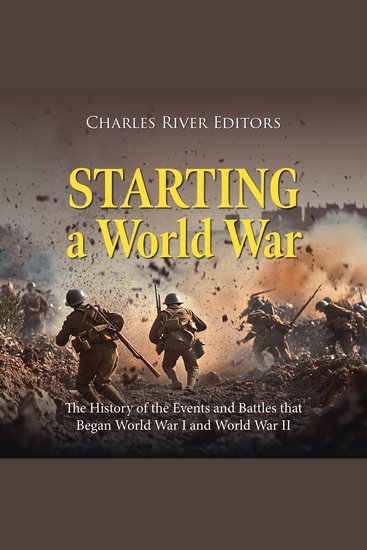
  • Starting a World War: The History of the Events and Battles that Began World War I and World War II - cover

    Starting a World War: The...

    Editors Charles River

    • 0
    • 0
    • 0
    By the 20th century, warfare was nothing new to the European powers, especially when it came to fighting each other. Conflicts had been a mainstay on the European continent for over two millennia. Even after the Napoleonic wars had enveloped Europe in large scale war for nearly 20 years in the 19th century, the Europeans’ imperialism continued unabated. It would take the devastation of World War I to shock Europe and jolt the world’s superpowers out of their imperialistic tendencies.  
    	With Europe anticipating a potential war, all that was missing was a conflagration. That would start in 1908, when Austria-Hungary annexed Bosnia-Herzegovina in the Balkan Peninsula, drawing it into dispute with Russia. Moreover, this upset neighboring Serbia, which was an independent nation. From 1912-1913, a conflict was fought in the Balkans between the Balkan League and the Ottoman Empire, resulting in the weakening of the Ottoman Turks. After the First Balkan War, a second was fought months later between members of the Balkan League itself. The final straw came June 28, 1914, when a Serbian assassinated Archduke Franz Ferdinand, the heir to the throne of Austria-Hungary, in Sarajevo, Bosnia.   
    The Munich Agreement is widely reviled today and is held up as the epitome of appeasement, but historians still debate its effects on the Second World War, as well as Neville Chamberlain's character and motivations. Some believe the attempted appeasement of Nazi Germany hastened, or even caused, the mayhem occupying the next seven years. Others believe that the pact merely failed to alter war's inevitable arrival in either direction.  
    Of course, as most people now know, the invasion of Poland was merely the preface to the Nazi blitzkrieg of most of Western Europe, which would include Denmark, Belgium, and France by the summer of 1940
    Voir livre