Join us on a literary world trip!
Add this book to bookshelf
Grey
Write a new comment Default profile 50px
Grey
Subscribe to read the full book or read the first pages for free!
All characters reduced
A Neglected Argument for the Reality of God - cover

A Neglected Argument for the Reality of God

Charles Sanders Peirce

Publisher: e-artnow

  • 0
  • 0
  • 0

Summary

This book is the sole theological essay written by the logician, scientist, and philosopher C. S. Peirce. It was published in 1908 and has drawn much attention from philosophers, clergy, and scientists since that time.
Available since: 12/06/2023.
Print length: 23 pages.

Other books that might interest you

  • Let This Radicalize You - Organizing and the Revolution of Reciprocal Care - cover

    Let This Radicalize You -...

    Mariame Kaba, Kelly Hayes

    • 0
    • 0
    • 0
    What fuels and sustains activism and organizing when it feels like our worlds are collapsing? Let This Radicalize You is a practical and imaginative resource for activists and organizers building power in an era of destabilization and catastrophe. 


    Longtime organizers and movement educators Mariame Kaba and Kelly Hayes examine some of the political lessons of the COVID-19 pandemic, including the convergence of mass protest and mass formations of mutual aid, and consider what this confluence of power can teach us about a future that will require mass acts of care, rescue, and defense, in the face of both state violence and environmental disaster. 


    The book is intended to aid and empower activists and organizers as they attempt to map their own journeys through the work of justice-making. It includes insights from a spectrum of experienced organizers, including Sharon Lungo, Carlos Saavedra, Ejeris Dixon, Barbara Ransby, and Ruth Wilson Gilmore about some of the difficult and joyous lessons they have learned in their work.
    Show book
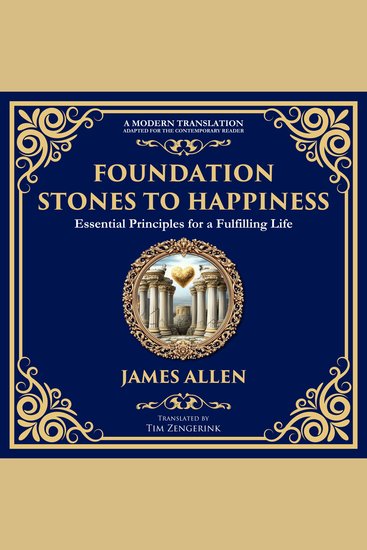
  • Foundation Stones to Happiness - Essential Principles for a Fulfilling Life - cover

    Foundation Stones to Happiness -...

    James Allen, Tim Zengerink

    • 0
    • 0
    • 0
    What if you could lay a rock-solid foundation for your well-being—one that remains unshaken by external ups and downs? 
    James Allen’s concise yet potent guide identifies core principles that lead to true happiness: right thought, unselfishness, faith, and more. Adapted for today’s reader, this text serves as a blueprint for constructing a fulfilling life from the inside out, reminding us that lasting joy begins with the choices we make in our hearts and minds. 
    What You’ll Discover in This Modern Translation: 
    - Key virtues that underpin genuine happiness 
    - The importance of self-examination and moral alignment 
    - How positive thinking transforms everyday reality 
    - Steps for building a life centered on purpose and inner peace 
    Imagine standing firmly on principles that support your well-being, enabling you to face life’s storms with unwavering confidence. James Allen equips you with building blocks for a rich, purpose-driven life. 
    Secure your foundation of happiness. Get your copy now and create a life that flourishes from the ground up.
    Show book
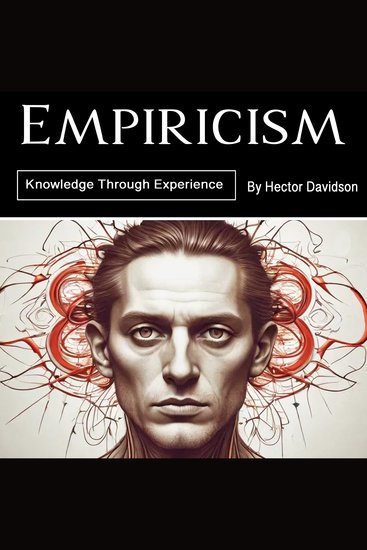
  • Empiricism - Knowledge Through Experience - cover

    Empiricism - Knowledge Through...

    Hector Davidson

    • 0
    • 0
    • 0
    Empiricism, as a philosophical doctrine, asserts that knowledge is primarily derived from sensory experience. This perspective contrasts sharply with rationalism, which emphasizes reason and innate knowledge. Empiricism has shaped our understanding of the world and influenced numerous fields, from the natural sciences to ethics and epistemology. The essence of empiricism lies in the conviction that the mind begins as a "blank slate" (tabula rasa) and that experience, rather than pre-existing ideas or concepts, forms the foundation of all knowledge. 
    At the heart of empiricist thought is the belief that all human knowledge starts with perception. We acquire information about the world through our senses—sight, hearing, touch, taste, and smell—which provide the raw data from which we form concepts and beliefs. For empiricists, knowledge is not something we discover internally, but something we gather from external reality. This view stands in contrast to the rationalist emphasis on a priori knowledge, which is independent of experience and accessible only through reason. 
    Empiricism's roots can be traced back to ancient philosophy, with early proponents like Aristotle, who argued that all knowledge comes from sensory observation. However, the modern development of empiricism is largely credited to three major figures: John Locke, George Berkeley, and David Hume. Locke introduced the idea of the mind as a tabula rasa, arguing that individuals are born without innate ideas and that all knowledge comes from experience. Berkeley took this further by suggesting that even the existence of the external world depends on perception, encapsulating the notion that "to be is to be perceived." Hume, the most radical empiricist of the three, questioned the very basis of causality and inductive reasoning, asserting that our beliefs in cause-and-effect relationships were not rationally justified but arose from habitual experience.
    Show book

  • A Rare Recording of Archibald Carey's 1952 GOP Convention Speech - cover

    A Rare Recording of Archibald...

    Archibald Carey

    • 0
    • 0
    • 0
    Archibald James Carey Jr. (February 29, 1908 - April 20, 1981) was an American lawyer, judge, politician, diplomat, and clergyman from the South Side of Chicago. He was elected as a city alderman and served for eight years. In 1957, he was appointed by President Dwight Eisenhower as chair of his committee on government employment policy, which worked to reduce racial discrimination. The following is a speech Carey gave at the 1952 Republican National Convention.
    Show book
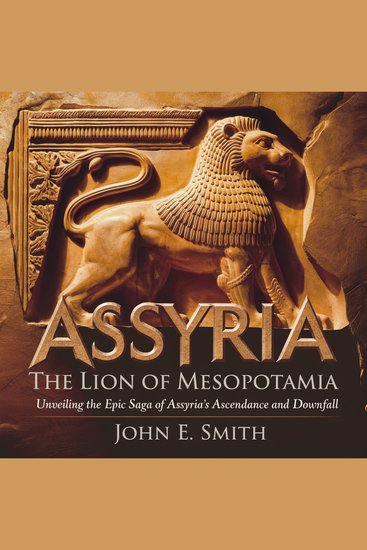
  • Lion of Mesopotamia The: Unveiling the Epic Saga of Assyria's Ascendance and Downfall - The Untold Story of the First Great Empire in History - cover

    Lion of Mesopotamia The:...

    John E. Smith

    • 0
    • 0
    • 0
    "The Lion of Mesopotamia: Unveiling the Epic Saga of Assyria's Ascendance and Downfall" is an enthralling journey through one of history’s most formidable empires. From the military conquests of Sargon II and Ashurbanipal to the grandeur of Nineveh and the vast trade networks that connected the ancient world, this audiobook unveils the triumphs and struggles of the Assyrian civilization. 
    Through meticulous research and engaging storytelling, historian John E. Smith brings the past to life, exploring not just the empire’s wars but also its art, governance, religion, and cultural innovations that shaped the ancient world. For history enthusiasts and lovers of epic storytelling alike, this audiobook is a must-listen, offering a captivating glimpse into the rise and fall of a forgotten superpower.
    Show book
  • The Epic - A Very Short Introduction - cover

    The Epic - A Very Short...

    Anthony Welch

    • 0
    • 0
    • 0
    The epic is an ancient and universal form of artistic expression. Storytellers around the globe have long told of heroes who are touched by greatness and gain lasting fame. 


    In this Very Short Introduction, Anthony Welch places the Western epic canon alongside traditional heroic poetry from Asia, Africa, and the Near East. Tracing shared themes and practices that unite the world's epic literature, Welch examines the roles that epic poets serve in society and how epic storytelling differs from other narrative forms. Ranging widely from Gilgamesh to Derek Walcotts Omeros, the author acquaints listeners with some of the world's greatest literary works and asks why the epic holds such power over our imaginations.
    Show book