Rejoignez-nous pour un voyage dans le monde des livres!
Ajouter ce livre à l'électronique
Grey
Ecrivez un nouveau commentaire Default profile 50px
Grey
Abonnez-vous pour lire le livre complet ou lisez les premières pages gratuitement!
All characters reduced
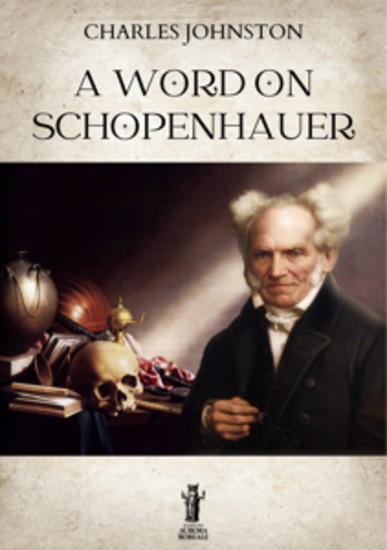
A Word on Schopenhauer - cover

A Word on Schopenhauer

Charles Johnston

Maison d'édition: Edizioni Aurora Boreale

  • 0
  • 0
  • 0

Synopsis

Charles Johnston (1867-1931) was an Irish writer, journalist, theosophist, linguist, naturalist, and Sanskrit scholar. Johnston He wrote numerous books on Indian philosophy, translating works from Sanskrit as well as on Theosophy. He was married to the niece of Madame Blavatsky and was involved in the development of the Theosophical Society in the United States.Johnston translated several works from Sanskrit and Russian. As an author, he devoted himself primarily to philosophical and theosophical topics, and wrote a great number and variety of articles and books, ranging from scholarly writings on scriptures to popular volumes of humor, travel, and history.The Johnston’s article A Word on Schopenhauer, which we propose to our readers today, was published in October 1904 in the Theosophical Forum.According to Johnston, the great achievement of Schopenhauer was the perception of the fact that an hypothetical outer something, a force that provoked the changing appearances, was not so hopelessly unknowable.
Disponible depuis: 06/03/2025.

D'autres livres qui pourraient vous intéresser

  • My Blue Book of Grammar for Class 5 - cover

    My Blue Book of Grammar for Class 5

    Meigha Rawat

    • 0
    • 0
    • 0
    A Grammar Series That Uses the Functional Approach
    
    KEY FEATURES 
    - Functional approach to grammar teaching, using exemplars to illustrate the usage before defining the structure and rules
    - Vocabulary taught through language-in-use to build the learners’ vocabulary through use rather than memorisation of rules
    - Contemporary topics to inculcate 21-century skills amongst learners
    - Use of literature to help learners understand how grammar is used in text
    - A comprehension section comprising texts from different genres so that learners may relate grammar to different types of works produced in English
    - Phonics in Grades 1 and 2 to teach the very basis of language
    - Uniquely stylised illustrations
    - Activities such as puzzles, crosswords, word grids and games to aid the facilitator in using the concept of ‘flipped classroom’
    - Periodic tests to help the learners self-assess the acquisition of concepts
    - Digital component to cater to a technology-driven classroom
    
    DESCRIPTION: 
    My Blue Book of Grammar is a course that has been conceptualized and designed keeping in mind the increasingly dynamic role of the English language in today’s world. Especially in our country, where English serves as the lingua franca, a grammar course has to offer not only an exposition of the pedagogy but also the exhibition of the utility of that pedagogy. The aim of a grammar series should be to encourage the development of competency amongst learners, even though their proficiency levels may vary. While the level of exposure to English of all learners may be different, a grammar series should aid in the development of a certain level of confidence amongst the learners, with the end result being that they are able to converse without hesitation in English. 
    
    WHAT WILL YOU LEARN
    - Understand grammar concepts
    - Learn how to use different vocabulary concepts taught through language-in-use 
    - Learn 21-century skills 
    - Develop deeper understanding of and appreciation for literature
    - Have clearer pronunciation through a better understanding of phonics
    
    WHO THIS BOOK IS FOR: 
    School students of Grades 5
    
    TABLE OF CONTENTS
    GRAMMAR
    1. Gerunds, Infinitives and Participles 
    2. Coordinating and Subordinating Conjunctions 
    3. Sentences, Clauses and Phrases 24
    4. Correlative Conjunctions
    5. Present Perfect Form 
    6. Present Perfect Continuous Form 
    7. Past Perfect Form 
    8. Past Perfect Continuous Form 
    9. Auxiliaries and Modals 
    10. Adjectives versus Adverbs 
    11. Semicolon 
    Test Paper 1 
    VOCABULARY
    12. Adjective–Noun Collocations 
    13. Question Tags 
    14. Prefixes – mis–, dis–, un–, in–, im–, non– 
    15. Alliteration 
    16. Using Which and That in Restrictive and Non-Restrictive Clauses 
    17. Similes and Metaphors 
    18. Dictionary Entries 
    19. Idioms 
    20. Using since, for and from 
    21. Phrasal Verbs
    Test Paper 2 
    WRITING
    22. Autobiography 
    23. Essay 
    24. Book Review – Be a Critic 
    25. Article 
    26. Newspaper Report 
    27. Message 
    28. Writing a Postcard 
    29. Letter to the Editor 
    30. Narrative 
    31. Writing a Story with an Alternate Ending 
    Test Paper 3 
    COMPREHENSION
    32. The Old Man and the Sea
    33. Hercule Poirot: The Detective with a Big Moustache 
    34. The Raven 
    35. Madhubani Painting: The Art that Subverts 
    Orange Global Olympiad – English Sample Paper
    Voir livre
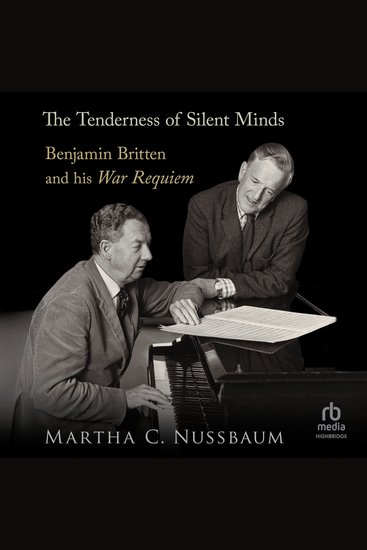
  • The Tenderness of Silent Minds - Benjamin Britten and his War Requiem - cover

    The Tenderness of Silent Minds -...

    Martha C. Nussbaum

    • 0
    • 0
    • 0
    The human body is the primary instrument of war, yet those waging war often confront soldiers' bodies in a detached or merely intellectual way. In The Tenderness of Silent Minds, Martha C. Nussbaum, a leading thinker on emotion, morality, and justice, conducts a pioneering study of Benjamin Britten's musical representations of the tender male body amidst the brutality of war, and their ability to transform consciousness by evoking potent, non-personal emotions. 


    Offering a reading of Britten's views about the value and beauty of the body that situates these in the context of his thirty-nine year partnership with his lover, the singer Peter Pears, and also surveying pacifist themes in works written both before and after War Requiem, Nussbaum presents a compelling framework for critically assessing Britten's oeuvre. Nussbaum engages with a remarkably wide range of Britten's works, examining his treatment of aggression and its roots in his collaborations with the poet W. H. Auden, offering readings of the value placed on the body in early partnerships with Britten's beloved and singer Peter Pears, and surveying pacifist themes in Britten's earlier works. The analysis throughout is enriched with perspectives from Britten's personal letters and thoughtful study of the social and political backdrop of fear and homophobic disgust in mid-twentieth century Britain.
    Voir livre
  • Human Is the New Vinyl - Why Human Creativity Still Wins in the AI Revolution - cover

    Human Is the New Vinyl - Why...

    Micah Voraritskul

    • 0
    • 0
    • 0
    Human Is the New Vinyl traces the arc from the printing press to generative AI and reveals how each wave of innovation reshapes what we create, how we connect, and what we decide is worth keeping. 
    When music went digital, everyone thought vinyl was gone for good. But people brought it back because they wanted something real — the texture, the ritual, the imperfection, the presence. Human creativity is having its vinyl moment right now. 
    As AI floods writing, music, art, voice acting, and education, the line between real and synthetic is blurring fast. This book explores what we gain from new tools, but also what we stand to lose if we let "easy" replace what makes us human. 
    With stories, cultural insight, and sharp reflection, Human Is the New Vinyl makes the case that the human voice — with all its texture, imperfection, and spirit — is still the most powerful force we have. 
    Narrated by the author, this audiobook is itself a statement about choosing human over artificial. 
    For creators, educators, technologists, and anyone asking: What do we stand to lose in the age of machine-made everything? 
    If you're still listening — this is for you. You're not alone. This is the sound of something real, rising again.
    Voir livre
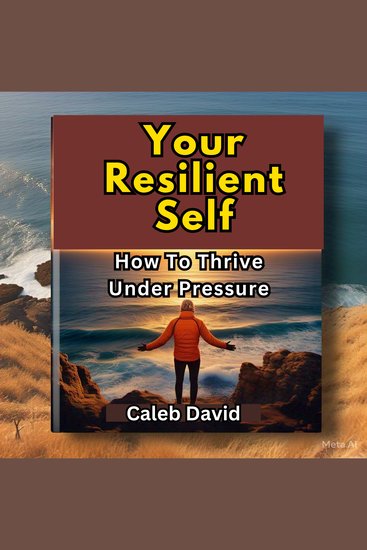
  • Your Resilient Self - How to Thrive Under Pressure - cover

    Your Resilient Self - How to...

    Caleb David

    • 0
    • 0
    • 0
    Life is full of challenges, unexpected setbacks, and moments of intense pressure. The question isn’t whether you’ll face adversity—it’s how you’ll respond when it comes. Your Resilient Self is your ultimate guide to developing the mental strength, emotional fortitude, and unshakable confidence needed to thrive, no matter what life throws your way. 
    Resilience isn’t just about surviving tough times—it’s about using them as stepping stones to become even stronger. In this book, you’ll discover how to transform challenges into opportunities, reframe failures as fuel for growth, and build a mindset that allows you to stay calm, focused, and empowered even in the most difficult situations.What You’ll Learn: 
    ✔ The Science of Resilience – Understand how your brain processes stress and how to train it for mental toughness. 
     ✔ Reframing Challenges – Learn to shift your perspective and see adversity as an opportunity for growth, not defeat. 
     ✔ Emotional Mastery – Develop techniques to control your reactions, reduce stress, and stay composed under pressure. 
     ✔ Building Mental Toughness – Train yourself to maintain confidence, clarity, and focus in high-stakes situations. 
     ✔ The Power of Grit and Perseverance – Unlock the secrets of those who push past limits and succeed despite obstacles. 
     ✔ Creating Resilient Habits – Daily practices that will strengthen your ability to bounce back from setbacks and keep moving forward. 
     ✔ Overcoming Fear and Self-Doubt – Break free from limiting beliefs that hold you back from reaching your full potential. 
    This book is for anyone who wants to build resilience—whether you’re facing personal struggles, career challenges, or simply want to develop a stronger, more adaptable mindset.
    Voir livre
  • A Rare Recording of Iva Toguri "Tokyo Rose" - cover

    A Rare Recording of Iva Toguri...

    "Tokyo Rose" Iva Toguri

    • 0
    • 0
    • 0
    The following are live recordings of Japanese-American Iva Toguri, of "Tokyo Rose" infamy. Tokyo Rose was a generic name given by Allied troops in the South Pacific during World War II to all female English-speaking radio broadcasters of Japanese propaganda. In fact, the name "Tokyo Rose" was never actually used by any Japanese broadcaster, but rather first appeared in U.S. newspapers in 1943 in the context of these radio programs. Toguri had traveled to Japan to tend to a sick aunt just prior to the attack on Pearl Harbor. Unable to leave the country when war began with the United States, unable to stay with her aunt's family as an American citizen, and unable to receive any aid from her parents who were placed in internment camps in Arizona, Toguri eventually accepted a job as a part-time typist at Radio Tokyo. She was quickly recruited as a broadcaster for the propagandist program The Zero Hour, under the moniker, Orphan Ann. The name Tokyo Rose ceased to be merely a symbol, however, during September 1945 when Toguri attempted to return to the United States. Toguri was arrested and imprisoned for a year in Japan by American authorities. She was subsequently freed, then arrested again two years later. After being returned to the US, Toguri was tried and convicted of one count of treason, in a trial fraught with integrity issues and dubious testimony. Toguri was eventually paroled from prison in 1956, and finally received a pardon from President Gerald Ford in 1977.
    Voir livre
  • Augustus - Biography of Octavian the First Roman Emperor - cover

    Augustus - Biography of Octavian...

    Kelly Mass

    • 0
    • 0
    • 0
    Caesar Augustus, originally known as Gaius Octavius, was the first Roman Emperor and one of the most transformative figures in world history. Born into an affluent plebeian family, he belonged to an ancient and influential equestrian branch of the gens Octavia. His path to power began under extraordinary circumstances. Following the assassination of his maternal great-uncle, Julius Caesar, in 44 BC, Octavius was named in Caesar's will as his adopted son and successor. This inheritance not only granted him the prestigious name of Caesar but also gave him control over Caesar’s vast estate and the loyalty of his legions. These legions played a pivotal role in his rise to power, securing his place as one of the most powerful individuals in Roman history. 
    In the aftermath of Caesar's assassination, the Roman Republic was plunged into chaos, and Octavius, together with Mark Antony and Marcus Lepidus, formed the Second Triumvirate to avenge Caesar's death and secure their political dominance. This alliance, however, was marred by internal strife and competing ambitions. After their victory over Caesar’s assassins at the Battle of Philippi in 42 BC, the Triumvirs divided the Republic’s territories among themselves. Yet, the unity that had characterized their alliance quickly began to erode, as their personal and political ambitions led to inevitable conflict. Lepidus was soon sidelined, and in 36 BC, Antony’s support began to wane, leading to the climactic Battle of Actium in 31 BC. The defeat of Antony, coupled with the subsequent suicide of both Antony and his ally Cleopatra, left Octavian as the undisputed ruler of Rome.
    Voir livre