Rejoignez-nous pour un voyage dans le monde des livres!
Ajouter ce livre à l'électronique
Grey
Ecrivez un nouveau commentaire Default profile 50px
Grey
Abonnez-vous pour lire le livre complet ou lisez les premières pages gratuitement!
All characters reduced
The Pirates Own Book - Narratives of the Most Celebrated Sea Robbers - cover

The Pirates Own Book - Narratives of the Most Celebrated Sea Robbers

Charles Ellms

Maison d'édition: Musaicum Books

  • 0
  • 0
  • 0

Synopsis

In 'The Pirates Own Book' by Charles Ellms, readers are taken on a thrilling journey through the lives and adventures of infamous pirates. The book is a combination of historical accounts and folklore, providing a comprehensive look into the piracy of the 17th and 18th centuries. Ellms' writing style is vivid and engaging, immersing readers in tales of treasure, swordfights, and daring escapades on the high seas. The book is a valuable resource for understanding the impact of piracy on maritime history and society at the time. Ellms skillfully weaves together facts and legends to create a compelling narrative that both entertains and informs. The Pirates Own Book is a must-read for history enthusiasts and anyone fascinated by the golden age of piracy. Charles Ellms' expertise in maritime history and his passion for storytelling shine through in this captivating account of the most notorious pirates of the past.
Disponible depuis: 04/01/2022.
Longueur d'impression: 333 pages.

D'autres livres qui pourraient vous intéresser

  • The Bible Told Them So - How Southern Evangelicals Fought to Preserve White Supremacy - cover

    The Bible Told Them So - How...

    J. Russell Hawkins

    • 0
    • 0
    • 0
    Why did southern white evangelical Christians resist the civil rights movement in the 1950s and 1960s? Simply put, they believed the Bible told them so. These white Christians entered the battle certain that God was on their side. Ultimately, the civil rights movement triumphed in the 1960s and fundamentally transformed American society. But this victory did little to change southern white evangelicals' theological commitment to segregation. Rather than abandoning their segregationist theology, white evangelicals turned their focus on institutions they still controlled and fought on. 


    Focusing on the case of South Carolina, The Bible Told Them So shows how, despite suffering defeat in the public sphere, white evangelicals continued to battle for their own institutions, preaching and practicing a segregationist Christianity they continued to believe reflected God's will. Increasingly caught in the tension between their sincere belief that God desired segregation and their reluctance to give voice to such ideas for fear of being perceived as bigoted or intolerant, by the late 1960s southern white evangelicals embraced the rhetoric of colorblindness and protection of the family as measures to maintain both segregation and respectable social standing. This strategy set southern white evangelicals on an alternative path for race relations in the decades ahead.
    Voir livre
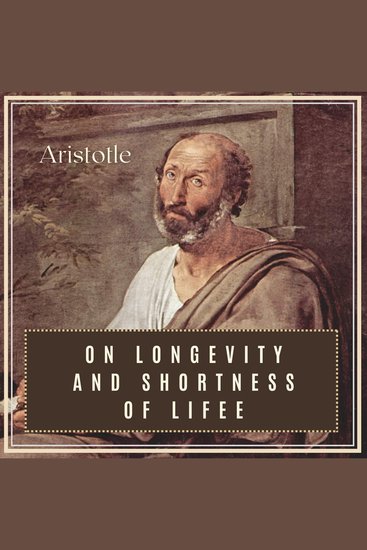
  • On Longevity and Shortness of Life - cover

    On Longevity and Shortness of Life

    Aristotle

    • 0
    • 0
    • 0
    Aristotle's On Longevity and Shortness of Life takes a holistic look at the factors that contribute to a long and healthy life. Aristotle examines the role of nature, habit, and reason in living a virtuous life. He argues that a good life is one that is in accordance with nature, and that living in accordance with nature is the key to a long and healthy life. Read in English, unabridged.
    Voir livre
  • Peter Singer - Ethics in the Modern World - cover

    Peter Singer - Ethics in the...

    Hector Davidson

    • 0
    • 0
    • 0
    Peter Singer is one of the most influential philosophers in contemporary ethics, known for his contributions to utilitarianism, animal rights, global poverty, bioethics, and environmental ethics. His ethical philosophy is grounded in the principle of utilitarianism, which holds that the right course of action is the one that produces the greatest overall happiness or well-being. Singer’s work is characterized by a practical, results-oriented approach, focusing on how ethical principles can be applied to real-world issues to alleviate suffering and promote well-being. His influential works, such as Animal Liberation and The Life You Can Save, challenge readers to consider the moral implications of their actions in a variety of contexts, from how they treat animals to how they engage with global poverty. 
    At the core of Singer’s ethical framework is the idea that all sentient beings, regardless of their species, deserve equal consideration. This principle of equal consideration of interests leads to his advocacy for the rights of animals, arguing that their capacity to suffer should give them moral consideration equal to that of humans. Singer’s call for animal liberation challenges the traditional view of animals as resources for human consumption and urges society to rethink its treatment of non-human creatures. 
    In addition to his work in animal ethics, Singer has profoundly impacted discussions on global poverty and humanitarian aid. Through his concept of effective altruism, he argues that individuals in affluent societies have a moral obligation to help those in extreme poverty. Using the famous “drowning child” analogy, Singer demonstrates that if we are morally obligated to save a child from drowning in a shallow pond, we should equally be compelled to help those suffering from poverty and preventable diseases, no matter the physical distance.
    Voir livre
  • Aurora: The Complete Sex Lesson - cover

    Aurora: The Complete Sex Lesson

    Kathrin Pissinger

    • 0
    • 0
    • 0
    A female domination story with a queer twist. 
    This is the complete collection of of all three parts of the Aurora series, which revolve around a couple of naughty students and an even naughtier professor. It contains casual lesbian and gay sex, teasing, female domination and public exhibitionism.
    Voir livre
  • The Comte de St Germain - The Secret of kings: A Monograph - cover

    The Comte de St Germain - The...

    Isabel Cooper-Oakley

    • 0
    • 0
    • 0
    The Comte de Saint Germain was a European courtier, with an interest in science and the arts. He achieved prominence in European high society of the mid-1700s. In order to deflect inquiries as to his origins, he would invent fantasies, such as that he was 500 years old, leading Voltaire to sarcastically dub him "The Wonderman".
    Voir livre
  • The Swift Conquest - Unraveling Hitler's Rapid Domination of Europe - cover

    The Swift Conquest - Unraveling...

    John Harpoon

    • 0
    • 0
    • 0
    The rise of Adolf Hitler and the Nazi Party did not occur in isolation but was the culmination of a confluence of societal, economic, and political factors. Post-World War I Germany was a nation in turmoil, grappling with humiliation, economic devastation, and political instability. The Treaty of Versailles, signed in 1919, placed the blame for the war squarely on Germany's shoulders, imposing severe reparations that crippled its economy. The German people, burdened by hyperinflation, unemployment, and poverty, became disillusioned with the democratic Weimar Republic, which they perceived as weak and ineffectual. 
    Amid this chaos, Hitler emerged as a figure of radical change. A decorated veteran of the First World War, Hitler initially joined the German Workers’ Party, a small and obscure nationalist group. With his fiery oratory skills and an unrelenting focus on propaganda, he quickly rose to prominence, transforming the group into the National Socialist German Workers' Party (NSDAP), or the Nazi Party. Hitler’s message was simple yet potent: he promised to restore Germany to greatness, overturn the Treaty of Versailles, and provide a scapegoat for the nation’s suffering—the Jewish people and other minorities. 
    By the early 1920s, Hitler had crafted a political doctrine that combined virulent nationalism, anti-Semitism, and a disdain for democracy. He also sought to exploit the populace’s fears of communism, which was gaining traction in Europe following the Bolshevik Revolution in Russia. The failed Beer Hall Putsch in 1923, an attempted coup in Munich, briefly landed Hitler in prison. However, this setback proved instrumental to his ideological development, as he used the time to dictate Mein Kampf, a manifesto outlining his vision for Germany’s future and the expansion of Lebensraum, or "living space," for the German people.
    Voir livre