Rejoignez-nous pour un voyage dans le monde des livres!
Ajouter ce livre à l'électronique
Grey
Ecrivez un nouveau commentaire Default profile 50px
Grey
Abonnez-vous pour lire le livre complet ou lisez les premières pages gratuitement!
All characters reduced
THE GREATEST DICKENS CLASSICS (Illustrated Edition) - Enriched edition - cover

THE GREATEST DICKENS CLASSICS (Illustrated Edition) - Enriched edition

Charles Dickens

Maison d'édition: DigiCat

  • 0
  • 0
  • 0

Synopsis

In "The Greatest Dickens Classics: Illustrated Edition," Charles Dickens presents an exquisite collection of his timeless narratives that delve into the complexities of 19th-century society. This beautifully illustrated volume encapsulates the essence of Dickens's mastery in blending rich character development with sharp social commentary. Renowned for his vivid prose and intricate plots, Dickens tackles themes of poverty, class disparity, and morality through works such as "A Tale of Two Cities" and "Great Expectations," offering readers a deep, immersive experience that reflects both the darkness and resilience of the human spirit. Charles Dickens, a luminary of Victorian literature, was profoundly influenced by his tumultuous childhood and experiences with social inequality. His formative years, marked by familial upheaval and financial hardship, inspired a lifelong commitment to addressing societal issues through his writing. This collection not only showcases his literary genius but also serves as a poignant reflection of the era he inhabited, revealing both the trials and tribulations of contemporary life. Recommended for both new readers and lifelong fans, this illustrated edition invites readers to explore the richness of Dickens's narrative artistry. With stunning visual elements accompanying his profound prose, it offers an engaging and enlightening portrayal of his most celebrated works, making it a valuable addition to any literary collection.

In this enriched edition, we have carefully created added value for your reading experience:
- An Introduction draws the threads together, discussing why these diverse authors and texts belong in one collection.
- Historical Context explores the cultural and intellectual currents that shaped these works, offering insight into the shared (or contrasting) eras that influenced each writer.
- A combined Synopsis (Selection) briefly outlines the key plots or arguments of the included pieces, helping readers grasp the anthology's overall scope without giving away essential twists.
- A collective Analysis highlights common themes, stylistic variations, and significant crossovers in tone and technique, tying together writers from different backgrounds.
- Reflection questions encourage readers to compare the different voices and perspectives within the collection, fostering a richer understanding of the overarching conversation.
Disponible depuis: 11/12/2023.
Longueur d'impression: 7697 pages.

D'autres livres qui pourraient vous intéresser

  • Political Ideals - cover

    Political Ideals

    Bertrand Russell

    • 0
    • 0
    • 0
    “Liberty demands self-government, but not the right to interfere with others.”“The object of education ought not to be to make all men think alike, but to make each think in the way which is the fullest expression of his own.”“You may kill an artist or a thinker, but you cannot acquire his art or his thought. You may put a man do death because he loves his fellow men, but you will not by so doing acquire the love which made his happiness.” ? Bertrand Russell, Political Ideals'Political Ideals' was written during the upheaval of World War One. It is, in many ways, a statement, of Russell's beliefs, a declaration of the ideas that influenced his thinking on the major events of the 20th century. In this sense, it is essential reading for every student of this great philosopher.
    Voir livre
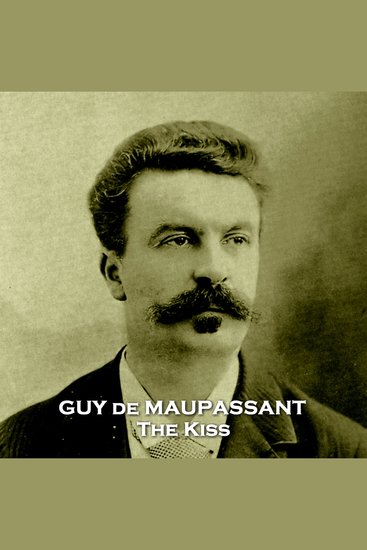
  • The Kiss - From their pens to your ears genius in every story - cover

    The Kiss - From their pens to...

    Guy de Maupassant

    • 0
    • 0
    • 0
    Henri René Albert Guy de Maupassant was born on August 5th, 1850 near Dieppe in France.  
    Maupassant’s early life was badly torn when at age 11 (his younger brother Hervé was then five) his mother, Laure, a headstrong and independent-minded woman, risked social disgrace in order to obtain a legal separation from her husband. 
    After the separation, Laure kept custody of her two boys. With the father now forcibly absent, Laure became the most influential and important figure in the young boy's life.   
    Maupassant’s education was such that he rebelled against religion and other societal norms but a developing friendship with Gustave Flaubert began to turn his mind towards creativity and writing. 
    After graduation he volunteered for the Franco-Prussian war. With its end he moved to Paris to work as a clerk in the Navy Department.  Gustave Flaubert now took him under his wing.  Acting as a literary guardian to him, he guided the eager Maupassant to debuts in journalism and literature.  For Maupassant these were exciting times and the awakening of his creative talents and ambitions. 
    In 1880 he published what is considered his first great work, ‘Boule de Suif’, (translated as as ‘Dumpling’, ‘Butterball’, ‘Ball of Fat’, or ‘Ball of Lard’) which met with a success that was both instant and overwhelming.  Flaubert at once acknowledged that it was ‘a masterpiece that will endure.’ Maupassant had used his talents and experiences in the war to create something unique.  
    This decade from 1880 to 1891 was to be the most pivotal of his career.  With an audience now made available by the success of ‘Boule de Suif’ Maupassant organised himself to work methodically and relentlessly to produce between two and four volumes of work a year.  The melding of his talents and business sense and the continual hunger of sources for his works made him wealthy. 
    In his later years he developed a desire for solitude, an obsession for self-preservation, and a fear of death as well as a paranoia of persecution caused by the syphilis he had contracted in his youth.  
    On January 2nd, 1892, Maupassant tried to commit suicide by cutting his throat.  Unsuccessful he was committed to the private asylum of Esprit Blanche at Passy, in Paris.  It was here on July 6th, 1893 that Henri René Albert Guy de Maupassant died at the age of only 42.
    Voir livre
  • After Many a Summer Dies the Swan - A Novel - cover

    After Many a Summer Dies the...

    Aldous Huxley

    • 0
    • 0
    • 0
    A Hollywood millionaire with a terror of death, whose personal physician happens to be working on a theory of longevity—these are the elements of Huxley's caustic and entertaining satire on man's desire to live indefinitely. 
     
    "A highly sensational plot that will keep astonishing you to practically the final sentence." —The New Yorker.
    Voir livre
  • Evening Guest An - From their pens to your ears genius in every story - cover

    Evening Guest An - From their...

    Alexander Kuprin

    • 0
    • 0
    • 0
    Alexander Kuprin was born in Narovchat, Penza in Russia on 7th September 1870. 
    At 3 his Father died and he and mother moved to Moscow. By 10 he was enrolled at the Second Moscow Military High School and there his interest in literature began. The Alexander Military Academy followed and two years later he was a sub-lieutenant and posted to an Infantry Regiment for a further four years. 
    Despite his duties he was a now a keen writer and published his first short story at this time. His military duties also garnered him experiences for his breakthrough work ‘The Duel’.  Leaving the military he left for Kiev to work for local newspapers.  He continued to publish both stories and novels and by 1901 he was in St Petersburg becoming part of a group that included Chekhov, Ivan Bunin, Maxim Gorky and Leonid Andreyev.  
    In the years that followed further controversial works and acclaim followed.  His comments on the regime meant he was also put under secret police surveillance.   
    As World War I erupted, Kuprin opened a military hospital but was then given command of an infantry company in Finland. He was soon discharged on grounds of ill health.  
    The October Revolution saw him praise Lenin, but he warned that the Bolsheviks threatened Russian culture and might cause further widespread suffering to the peasants.  As Civil War raged he took his family to Helsinki and then on to Paris. 
    Exile saw his talents decline further and his succumbing to alcoholism. He became lonely and withdrawn. The family's poverty increased his malaise.   
    In May 1937, the Kuprin’s returned to Moscow.  He now saw his work published but wrote almost nothing new.  In 1938 his health rapidly deteriorated.  Already suffering from a kidney problems and sclerosis, he had now developed cancer of the oesophagus.  
    Alexander Kuprin died on 25th August 1938.
    Voir livre
  • My Mortal Enemy - cover

    My Mortal Enemy

    Willa Cather

    • 0
    • 0
    • 0
    Myra Henshawe gave up her uncle's fortune for love. Having eloped with her husband, they embarked on a journey that can only be deemed as ordinary. As their lives play out, Myra begins to regret the decisions she had made in life, leading their marriage—and her health—to its demise. In this thought-provoking novel, Pulitzer Prize-winning author Willa Cather paints a picture of American normalcy riddled with life's regrets and scorned love.
    Voir livre
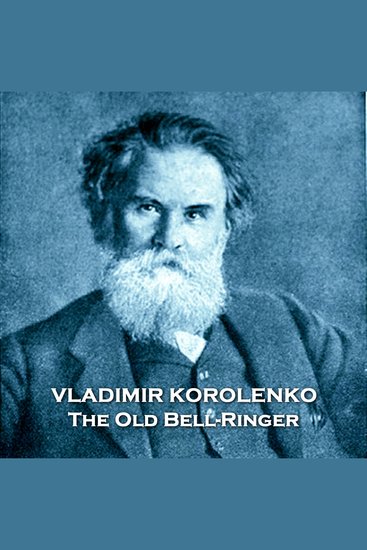
  • The Old Bell-Ringer - From their pens to your ears genius in every story - cover

    The Old Bell-Ringer - From their...

    Vladimir Korolenko

    • 0
    • 0
    • 0
    Vladimir Galaktionovich Korolenko was born in Zhytomyr, Ukraine, then part of the Russian Empire on 27th July 1853. 
    His father died when he was 13 and life was then often struck with bouts of poverty, which resulted in his education being somewhat erratic.   A spell in exile at 23 was followed by another as the politics of the times opposed his volatile but heart-felt passions. 
    Writing was also coming to the fore and in 1879 his debut short story telling of a young Narodnik searching for social and spiritual identity, was published. 
    In 1881, Korolenko refused to swear allegiance to the new Russian Tsar and was again exiled, this time much farther afield.  He spent the next three years doing manual work, but took time to study local customs and history.  These impressions in exile provided rich material for his writings. 
    In 1885 he was allowed to settle in Nizhny, where again he repeatedly questioned the authorities.  That same year ‘Makar's Dream’ established his literary reputation and was part of his first collection ‘Sketches and Stories’, the following year. 
    In the early 1890’s when famine struck Central Russia, he went to work on relief missions, collecting donations, supervising the delivery and distribution of food, opening 45 free canteens, all this while writing the graphic reports that would later be published as ‘In the Year of Famine’ in 1893. 
    By 1896 despite some psychological disorders, he was well regarded amongst Russian writers and was even a member of the Russian Academy of Sciences.  Throughout his writing career Korolenko was a staunch advocate of human rights, putting that sacred activity above what he called his 'part-time-writing'. 
    In the Revolutionary year of 1905, under his editorship, Russkoye Bogatstvo published the Manifest by the Petersburg Soviet of the Workers' deputies. Korolenko was now repeatedly harassed by the authorities, had his flat raided many times and materials confiscated. 
    As a lifetime opponent of Tsarism, he guardedly welcomed the Revolution of 1917.  Once the nature of Bolshevism was established, he soon started to criticize it. During the Russian Civil War that ensued, he condemned both the Red Terror and the White Terror.  
    Despite suffering from a progressive heart disorder, he collected food packages for children in famine-stricken Moscow and Petrograd as well as organised orphanages and shelters for the homeless.  
    Vladimir Korolenko died in Poltava, Ukraine, of the complications of pneumonia on 25th December 1921.  He was 68.
    Voir livre