Rejoignez-nous pour un voyage dans le monde des livres!
Ajouter ce livre à l'électronique
Grey
Ecrivez un nouveau commentaire Default profile 50px
Grey
Abonnez-vous pour lire le livre complet ou lisez les premières pages gratuitement!
All characters reduced
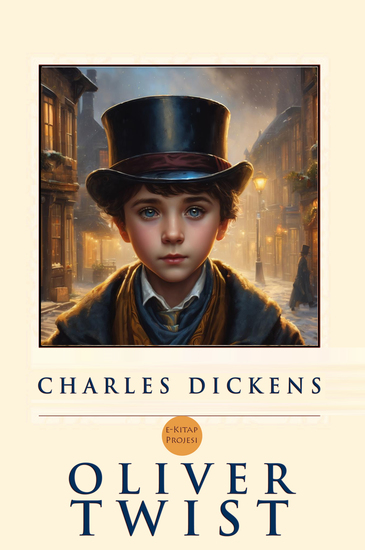
Oliver Twist - cover

Oliver Twist

Charles Dickens

Maison d'édition: E-Kitap Projesi & Cheapest Books

  • 0
  • 0
  • 0

Synopsis

Charles Dickens was born on 1812, in Portsea, England. His parents were middle-class, but they suffered financially as a result of living beyond their means. When Dickens was twelve years old, his family's dire straits forced him to quit school and work in a blacking factory, a place where shoe polish is made. Within weeks, his father was put in debtor's prison, where Dickens's mother and siblings eventually joined him. At this point, Dickens lived on his own and continued to work at the factory for several months. The horrific conditions in the factory haunted him for the rest of his life, as did the experience of temporary orphanhood. Apparently, Dickens never forgot the day when a more senior boy in the warehouse took it upon himself to instruct Dickens in how to do his work more efficiently. For Dickens, that instruction may have represented the first step toward his full integration into the misery and tedium of working-class life. The more senior boy's name was Bob Fagin. Dickens's residual resentment of him reached a fevered pitch in the characterization of the villain Fagin in Oliver Twist.

After inheriting some money, Dickens's father got out of prison and Charles returned to school. As a young adult, he worked as a law clerk and later as a journalist. His experience as a journalist kept him in close contact with the darker social conditions of the Industrial Revolution, and he grew disillusioned with the attempts of lawmakers to alleviate those conditions. A collection of semi-fictional sketches entitled Sketches by Boz earned him recognition as a writer. Dickens became famous and began to make money from his writing when he published his first novel, The Pickwick Papers, which was serialized in 1836 and published in book form the following year.

In 1837, the first installment of Oliver Twist appeared in the magazine Bentley's Miscellany, which Dickens was then editing. It was accompanied by illustrations by George Cruikshank, which still accompany many editions of the novel today. Even at this early date, some critics accused Dickens of writing too quickly and too prolifically, since he was paid by the word for his serialized novels. Yet the passion behind Oliver Twist, animated in part by Dickens's own childhood experiences and in part by his outrage at the living conditions of the poor that he had witnessed as a journalist, touched his contemporary readers. Greatly successful, the novel was a thinly veiled protest against the Poor Law of 1834.

In 1836, Dickens married Catherine Hogarth, but after twenty years of marriage and ten children, he fell in love with Ellen Ternan, an actress many years his junior. Soon after, Dickens and his wife separated, ending a long series of marital difficulties. Dickens remained a prolific writer to the end of his life, and his novels—among them Great Expectations, A Tale of Two Cities, A Christmas Carol, David Copperfield, and Bleak House—continued to earn critical and popular acclaim. He died of a stroke in 1870, at the age of 58, leaving The Mystery of Edwin Drood unfinished.

Oliver Twist opens with a bitter invective directed at the nineteenth-century English Poor Laws. These laws were a distorted manifestation of the Victorian middle class's emphasis on the virtues of hard work. England in the 1830s was rapidly undergoing a transformation from an agricultural, rural economy to an urban, industrial nation. The growing middle class had achieved an economic influence equal to, if not greater than, that of the British aristocracy.

In the 1830s, the middle class clamored for a share of political power with the landed gentry, bringing about a restructuring of the voting system. Parliament passed the Reform Act, which granted the right to vote to previously disenfranchised middle-class citizens. This desire gave rise to the Evangelical religious movement and inspired sweeping economic and political change.
Disponible depuis: 25/01/2024.
Longueur d'impression: 600 pages.
D'autres livres qui pourraient vous intéresser

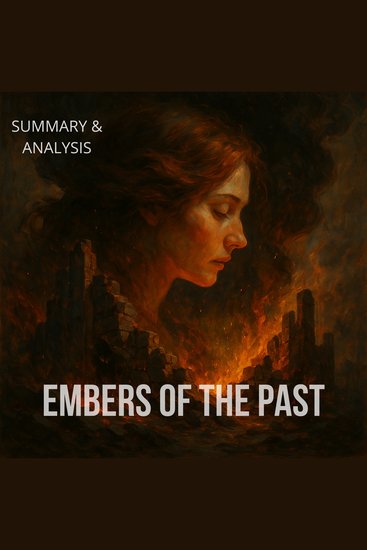
  • Embers of the Past: Book summary & analysis - cover

    Embers of the Past: Book summary...

    Margot Langley

    • 0
    • 0
    • 0
    This content is an independent and unofficial summary created for informational and educational purposes only. It is not affiliated with, authorized, approved, licensed, or endorsed by the original author or publisher. All rights to the original work belong to its respective copyright holders. This summary is not intended to substitute the original book, but to offer a concise overview and interpretation of its main ideas. 
    Embers of the Past is a poignant and evocative tale of memory, loss, and the quiet flames that refuse to die. In a world scarred by war and fractured by time, a lone survivor returns to the ruins of her homeland, seeking closure for the ghosts that haunt her. Among the ashes, she uncovers remnants of a forgotten story—one of love, betrayal, and a legacy buried beneath the smoke. As the embers stir and hidden truths ignite, she must confront the fire within and decide what deserves to rise from the ashes. Lyrical, haunting, and deeply human, Embers of the Past is a journey through grief, resilience, and the quiet triumph of remembrance. Ideal for listeners who crave emotional depth, reflective storytelling, and the beauty of a world trying to heal.
    Voir livre
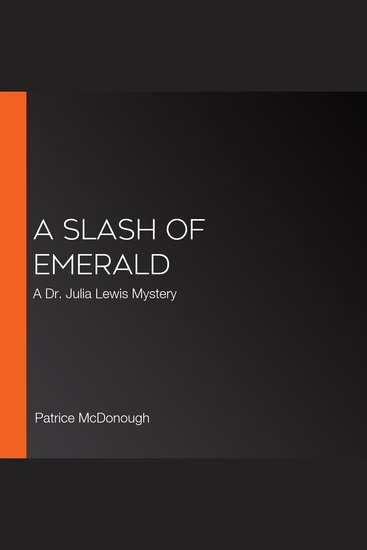
  • A Slash of Emerald - A Dr Julia Lewis Mystery - cover

    A Slash of Emerald - A Dr Julia...

    Patrice McDonough

    • 0
    • 0
    • 0
    London, 1867: Among the genteel young ladies of London society, painting is a perfectly acceptable pastime—but a woman who dares to pursue art as a profession is another prospect, indeed. Dr. Julia Lewis, familiar with the disrespect afforded women in untraditional careers, is hardly surprised when Scotland Yard shows little interest in complaints made by her friend, Mary Allingham, about a break-in at her art studio. Mary is just one of many "lady painters" being targeted by vandals. 


    Painters' sitters are vanishing, too—women viewed by some as dispensable outcasts. Inspector Richard Tennant, however, takes the attacks seriously, suspecting they're linked to the poison-pen letters received by other members of the Allingham family. For Julia, the issue is complicated by Tennant's previous relationship with Mary's sister-in-law, Louisa, and by her own surprising reaction to that entanglement. 


    But when someone close to them commits suicide and a woman turns up dead, the case can no longer be so easily ignored by "respectable" society. Layer after layer, Julia and Tennant scrape away the facts of the case like paint from a canvas. What emerges is a somber picture of vice, depravity, and deception stretching from London's East End to the Far East—with a killer at its center, determined to get away with one last, grisly murder . . .
    Voir livre
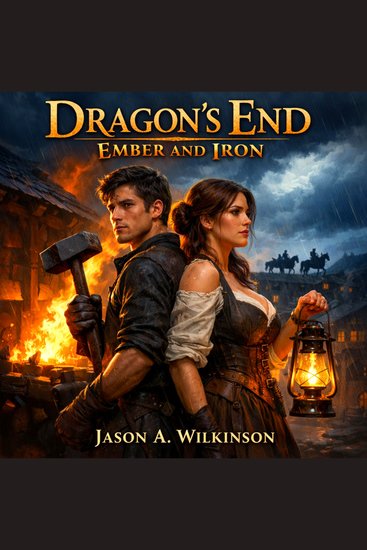
  • Dragon's End - Ember And Iron - cover

    Dragon's End - Ember And Iron

    Jason A. Wilkinson

    • 0
    • 0
    • 0
    A blacksmith. A hidden map. A kingdom built on secrets. 
    Jasper Alden never wanted to stay ordinary, but he never expected adventure to arrive in the form of damaged armor, dangerous nobles, and a legend powerful enough to change the fate of the realm. After helping save his village, Jasper should be able to return to iron, fire, and the woman he loves. 
    Instead, the mystery deepens. 
    The secret of Dragon’s End has opened the door to something older and far more dangerous than treasure: a buried chain of hidden holds, royal proofs, and forgotten wardships that powerful enemies are desperate to claim first. As whispers of Blackwater Hold spread and the next hunt begins, Jasper and his allies are forced out of the safety of the village and into a deadly race across a kingdom on the edge of war. 
    To protect his home, Jasper must forge more than weapons. He must forge trust, courage, and a future strong enough to survive the truth.
    Voir livre
  • Lunatics - Last Men on the Moon - cover

    Lunatics - Last Men on the Moon

    Brian d'Eon

    • 0
    • 0
    • 0
    Wernher von Braun, reluctant Nazi, personal friend of President Lyndon Johnson, and master builder of the Saturn V rocket, is on the verge of seeing his lifelong dream fulfilled as he joins to the crew of Apollo XX on mankind’s last visit to the Moon. All his life has been a struggle to get to this moment: surviving Allied bombing, uncomfortable accommodations with the SS, anti-German sentiment in post-war America, and the march of time itself—is he finally just too old to join the astronaut corps? On the moon, von Braun will reach the pinnacle of his professional life but there he also desperately hopes to exorcise demons from his past. 
    Landing men on the moon? Why bother? And, precariously, inside the bowels of Copernicus crater? Crazy? Impossible? And the men and women dedicated to this exploit? What to call them but Lunatics. 
    Two other voices play large roles in telling von Braun’s story: Mission Commander, Alan Bean, the only artist among the corps who hopes to capture the true essence of what it means to step on the moon. What it really looks like, feels like. Because if he doesn’t do it, who ever will? 
      
    The final voice belongs to fellow astronaut, Deke Slayton, a no-nonsense test pilot interested in neither science nor art. His mantra during the mission will be “don’t screw up”.
    Voir livre
  • The Keepers of the House - cover

    The Keepers of the House

    Shirley Ann Grau

    • 0
    • 0
    • 0
    A "beautifully written" Pulitzer Prize–winning novel about prejudice and a distinguished family's secrets in the American South (The Atlantic Monthly). 


    Seven generations of the Howland family have lived in the Alabama plantation home built by an ancestor who fought for Andrew Jackson in the War of 1812. Over the course of a century, the Howlands accumulated a fortune, fought for secession, and helped rebuild the South, establishing themselves as one of the most respected families in the state. But that history means little to Abigail Howland. 


    The inheritor of the Howland manse, Abigail hides the long-buried secret of her grandfather's thirty-year relationship with his African American mistress. Her fortunes reverse when her family's mixed-race heritage comes to light and her community—locked in the prejudices of the 1960s—turns its back on her. Faced with such deep-seated racism, Abigail is pushed to defend her family at all costs. 


    A "novel of real magnitude," The Keepers of the House is an unforgettable story of family, tradition, and racial injustice set against the richly drawn backdrop of the American South (Kirkus Reviews).
    Voir livre
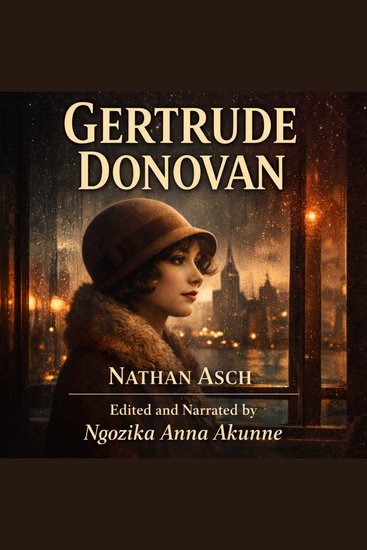
  • Gertrude donovan - cover

    Gertrude donovan

    NATHAN ASCH

    • 0
    • 0
    • 0
    GERTRUDE DONOVAN by Nathan Asch, is a painfully honest portrait of a young working-class woman standing at the crossroads between desire and reality. 
    Set in 1920s New York, the story follows Gerty Donovan, a stenographer whose company suddenly collapses, throwing her into financial uncertainty. But losing her job isn’t what truly shakes her. What unsettled her is the quiet realization that she may be settling for a life — and a man — she doesn’t truly want. 
    Gerty is caught between two worlds: 
    1. Jim Denby, the dependable, hardworking bookkeeper who offers safety, marriage, and a predictable future. 
    2. Harry Widener, the polished, distant junior partner who represents refinement, ambition, and the intoxicating possibility of something more. 
    The story unfolds almost entirely inside Gerty’s mind — in her fantasies, insecurities, daydreams, and silent rebellions. We watch her measure herself against other women. We see her struggle with beauty, money, class, and what it means to be “taken care of.” We feel her longing to be chosen — not out of convenience, but out of passion. 
    What makes Gertrude Donovan so relatable is how human Gerty is. She isn’t heroic. She isn’t cruel. She isn’t foolish. She is simply a young woman trying to understand her worth in a world that constantly tells her what she should want. 
    The story explores: The fear of unemployment and instability, Class differences and social aspiration, Romantic illusion versus emotional reality, The pressure on women to marry for security, and, The quiet tragedy of self-deception. 
    By the final scene, when Gerty whispers, “What did I do? What did I do?” the question feels larger than her. It becomes the question of anyone who has ever chosen security over longing — or mistaken one for the other. 
    This is not just a story about love, it is a story about identity, ambition, vulnerability, and the fragile line between fantasy and surrender.
    Voir livre