Begleiten Sie uns auf eine literarische Weltreise!
Buch zum Bücherregal hinzufügen
Grey
Einen neuen Kommentar schreiben Default profile 50px
Grey
Jetzt das ganze Buch im Abo oder die ersten Seiten gratis lesen!
All characters reduced
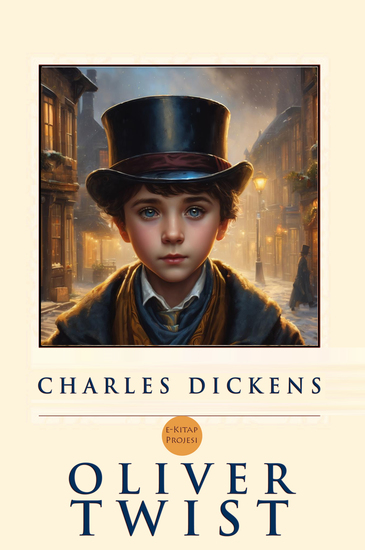
Oliver Twist - cover

Oliver Twist

Charles Dickens

Verlag: E-Kitap Projesi & Cheapest Books

  • 0
  • 0
  • 0

Beschreibung

Charles Dickens was born on 1812, in Portsea, England. His parents were middle-class, but they suffered financially as a result of living beyond their means. When Dickens was twelve years old, his family's dire straits forced him to quit school and work in a blacking factory, a place where shoe polish is made. Within weeks, his father was put in debtor's prison, where Dickens's mother and siblings eventually joined him. At this point, Dickens lived on his own and continued to work at the factory for several months. The horrific conditions in the factory haunted him for the rest of his life, as did the experience of temporary orphanhood. Apparently, Dickens never forgot the day when a more senior boy in the warehouse took it upon himself to instruct Dickens in how to do his work more efficiently. For Dickens, that instruction may have represented the first step toward his full integration into the misery and tedium of working-class life. The more senior boy's name was Bob Fagin. Dickens's residual resentment of him reached a fevered pitch in the characterization of the villain Fagin in Oliver Twist.

After inheriting some money, Dickens's father got out of prison and Charles returned to school. As a young adult, he worked as a law clerk and later as a journalist. His experience as a journalist kept him in close contact with the darker social conditions of the Industrial Revolution, and he grew disillusioned with the attempts of lawmakers to alleviate those conditions. A collection of semi-fictional sketches entitled Sketches by Boz earned him recognition as a writer. Dickens became famous and began to make money from his writing when he published his first novel, The Pickwick Papers, which was serialized in 1836 and published in book form the following year.

In 1837, the first installment of Oliver Twist appeared in the magazine Bentley's Miscellany, which Dickens was then editing. It was accompanied by illustrations by George Cruikshank, which still accompany many editions of the novel today. Even at this early date, some critics accused Dickens of writing too quickly and too prolifically, since he was paid by the word for his serialized novels. Yet the passion behind Oliver Twist, animated in part by Dickens's own childhood experiences and in part by his outrage at the living conditions of the poor that he had witnessed as a journalist, touched his contemporary readers. Greatly successful, the novel was a thinly veiled protest against the Poor Law of 1834.

In 1836, Dickens married Catherine Hogarth, but after twenty years of marriage and ten children, he fell in love with Ellen Ternan, an actress many years his junior. Soon after, Dickens and his wife separated, ending a long series of marital difficulties. Dickens remained a prolific writer to the end of his life, and his novels—among them Great Expectations, A Tale of Two Cities, A Christmas Carol, David Copperfield, and Bleak House—continued to earn critical and popular acclaim. He died of a stroke in 1870, at the age of 58, leaving The Mystery of Edwin Drood unfinished.

Oliver Twist opens with a bitter invective directed at the nineteenth-century English Poor Laws. These laws were a distorted manifestation of the Victorian middle class's emphasis on the virtues of hard work. England in the 1830s was rapidly undergoing a transformation from an agricultural, rural economy to an urban, industrial nation. The growing middle class had achieved an economic influence equal to, if not greater than, that of the British aristocracy.

In the 1830s, the middle class clamored for a share of political power with the landed gentry, bringing about a restructuring of the voting system. Parliament passed the Reform Act, which granted the right to vote to previously disenfranchised middle-class citizens. This desire gave rise to the Evangelical religious movement and inspired sweeping economic and political change.
Verfügbar seit: 25.01.2024.
Drucklänge: 600 Seiten.
Weitere Bücher, die Sie mögen werden

  • The Possessed or The Devils - cover

    The Possessed or The Devils

    Fyodor Dostoyevsky

    • 0
    • 0
    • 0
    Originally published in 1872, "The Possessed" (also known as "The Devils" or "Demons") is a political novel by the renowned Russian writer Fyodor Dostoyevsky. The story focuses on a group of revolutionaries plotting an uprising in a provincial Russian town, exploring their motives, philosophies, and interpersonal dynamics. It delves deep into the psychology of its characters, offering a scathing critique of radical ideologies and the intellectuals who espoused them during Dostoyevsky's time. As with much of his work, the narrative is a profound exploration of good and evil, freedom and enslavement, and the nature of power.
    Zum Buch
  • A Certain Freedom - cover

    A Certain Freedom

    Evelyn Hood

    • 0
    • 0
    • 0
    Not Yet Available
    Zum Buch
  • Taming the Twisted 2 Reconstructing Rain - cover

    Taming the Twisted 2...

    Jodie Toohey

    • 0
    • 0
    • 0
    It may have appeared that the Sinkey family had tamed the twisted, but with a war disrupting their world as much as the tornado, there’s even more to unravel. Alice Sinkey, Abigail’s younger sister, gets the chance to tell her story in Taming the Twisted 2 Reconstructing Rain – from her estranged relationship with her best friend to dealing with a scoundrel she thought had left their lives forever so she can leave her family safe when she escapes her stifling responsibilities to a new life. But she discovers that things aren’t always what they seem, and the world away from home isn’t always better.
    Zum Buch
  • The Short Stories of Leo Tolstoy - Epic collection of stories from the grandmaster of literature - cover

    The Short Stories of Leo Tolstoy...

    Leo Tolstoy

    • 0
    • 0
    • 0
    Leo Tolstoy was born in 1828 in the Russian province of Tula to a wealthy noble family. As a child, he had private tutors but he showed little interest in any formal education. When he went to the University of Kazan in 1843 to study oriental languages and law, he left without completing his courses.  Life now was relaxed and idle but with some writing also taking place.  Gambling debts forced an abrupt change of path and he joined the army to fight in the Crimean War.  He was commended for his bravery and promoted but was appalled at the brutality and loss of life.  He recorded these and other earlier experiences in his diaries which formed the basis of several of his works. 
     
    In 1852 ‘Childhood’ was published to immediate success and was followed by ‘Boyhood’ and ‘Youth’. 
     
    His experience in the army and the horrors he witnessed resulted in ‘The Cossacks’ in 1862 and the trilogy ‘Sevastopol Tales’. After the war he travelled around Europe, visiting London and Paris and meeting such luminaries as Victor Hugo and Charles Darwin.  
     
    It was now that Tolstoy began his masterpiece, ‘War and Peace’. Published in 1869 it was an epic work that changed literature. He quickly followed this with ‘Anna Karenina’.  
     
    These successes made Tolstoy rich and helped him accomplish many of his dreams but also brought problems as he grappled with his faith and the lot of the oppressed poor. These revolutionary views became so popular that the authorities now kept him under surveillance.  
     
    He led a life of asceticism and vegetarianism and put his socialist ideals into practice by establishing numerous schools for the poor and food programmes. He also believed in giving away his wealth, which caused much discord with his wife.  
     
    His writing continued to bring forth classics such as ‘The Death of Ivan Ilyich’ and many brilliant and incisive short stories such as ‘How Much Land Does A Man Need’.  
     
    In 1901 Tolstoy was excommunicated from the Church and controversially deselected for the Nobel Prize for Literature. 
     
    Whilst undertaking a pilgrimage by train in October 1910 with his daughter Aleksandra he caught pneumonia in the nearby town of Astapovo.  Leo Tolstoy died on November 9th, 1910, he was 82. 
    01 - Leo Tolstoy - A Short Story Collection - An Introduction 
    02 - Diary of a Lunatic by Leo Tolstoy 
    03 - A Dialogue Among Clever People by Leo Tolstoy 
    04 - Aloysha The Pot by Leo Tolstoy 
    05 - God Sees The Truth But Waits by Leo Tolstoy 
    06 - How Much Land Does A Man Need by Leo Tolstoy
    Zum Buch
  • Blood Before Dawn - cover

    Blood Before Dawn

    Jr. Daniel V. Meier

    • 0
    • 0
    • 0
    Volume 2 in The Dung Beetles of Liberia series. In April of 1979, Ken Verrier and his wife, Sam, return to Liberia to buy diamonds. They did not return to get caught up in a rice riot and a coup de'etat. But that's what happens. Ken witnesses and unwittingly participates in a period of Liberia's tumultuous yet poorly documented history---the overthrow of the Tolbert presidency and ultimately the end of the Americo-Liberian one hundred thirty-three years of political and social dominance. Details of President Tolbert's assassination are sketchy, but through Ken's association with his Americo friends from the past, the CIA agents he meets, and the Liberian military he is forced to deal with, a believable scenario emerges. While describing the once beautiful country and a kind and generous people, Meier intertwines terrifying tales of the atrocities committed that account for the future pain of an entire nation.
    Zum Buch
  • Great Expectations - cover

    Great Expectations

    Charles Dickens

    • 0
    • 0
    • 0
    "Great Expectations" by Charles Dickens is a novel written in the mid-19th century during the Victorian era. The story follows the life of a young orphan named Philip "Pip" Pirrip as he navigates social classes, personal ambitions, and the complexities of human relationships.  
    The narrative begins with Pip's fateful encounter with an escaped convict, setting the stage for themes of ambition, morality, and transformation. In the opening of the novel, Pip wanders through a churchyard, reflecting on his family history as revealed by the tombstones. His innocent musings are abruptly interrupted by a terrifying confrontation with a convict who demands food and a file, instilling fear in Pip.  
    As Pip grapples with the fear of being caught stealing food for the convict and the horror of his surroundings, we are drawn into the bleak marshes that significantly shape his childhood. This intense encounter not only establishes a sense of danger but also foreshadows Pip's future entanglements with crime and class disparity, as he later must navigate his relationships with individuals from both the convict's world and his own lower-class upbringing.
    Zum Buch