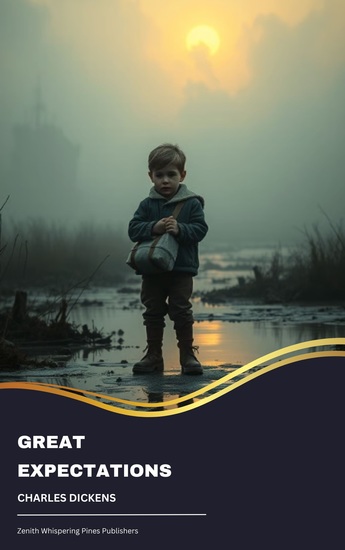
A mysterious fortune. A chance to change his life. A love that may break his heart.
When orphaned Pip is unexpectedly lifted from poverty into the world of gentlemen, he believes his dreams are finally within reach—especially the dream of winning the beautiful but cold Estella. But as secrets unravel and old ghosts return, Pip discovers that his "great expectations" come with painful lessons about loyalty, pride, and what true gentleness really means.
Praised as "one of Dickens's most unforgettable masterpieces," this novel blends mystery, romance, betrayal, and emotional growth into a story that resonates across generations. Its vivid characters—Pip, Estella, Miss Havisham, Magwitch—remain icons of English literature.
If you love coming-of-age stories filled with heart, tension, and moral depth, this classic will stay with you long after the final page.
Open the book—and follow Pip on a journey that reshapes everything he thinks he wants.
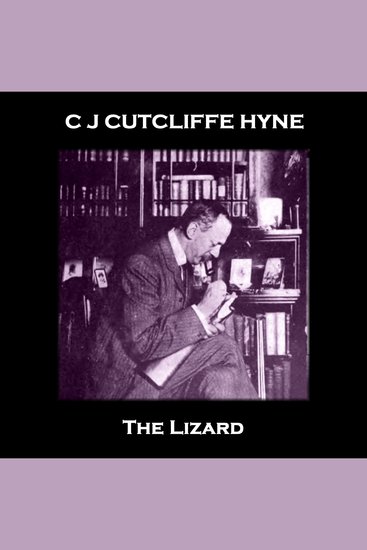
The bookshelves of British literature are incredible collections that have gathered together centuries of very talented authors. From these Isles their fame spread and whilst among their number many are now forgotten or neglected their talents endure. Among them is C J Cutcliffe Hyne.
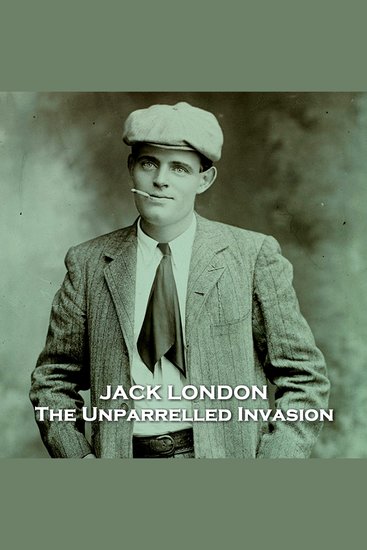
John Griffith Chaney was born on January 12th, 1876 in San Francisco.
His father, William Chaney, was living with Flora Wellman when she became pregnant. Chaney insisted she have an abortion. Flora's response was to turn a gun on herself. Although her wounds were not severe the trauma made her temporarily deranged.
In late 1876 his mother married John London and the young child was brought to live with them as they moved around the Bay area, eventually settling in Oakland where now, calling himself Jack, he completed grade school.
Jack worked hard at several jobs, sometimes 12-18 hours a day, but his dream was university. He studied hard and borrowed the money to enrol in the summer of 1896 at the University of California in Berkeley.
In 1897, at 21, Jack searched out newspaper accounts of his mother's suicide attempt and for the name of his biological father. He wrote to Chaney, then living in Chicago, who claimed he could not be Jack’s father because he was impotent and casually asserted that London's mother had relations with other men. Jack, devastated by the response, quit Berkeley and went to the Klondike. Other accounts suggest that his dire finances presented Jack with the excuse he needed to leave.
In the Klondike Jack began to gather material for his writing but also accumulated many health problems, including scurvy, which together with hip and leg problems he would carry for the rest of his life.
During the late 1890's Jack was regularly publishing short stories and by the turn of the century full blown novels.
By 1904 Jack had married, fathered two children and was now in the process of divorcing. A stint as a reporter on the Russo-Japanese war of 1904 was equal amounts trouble and experience. But that experience was always put to good use in a continuing and remarkable output of work.
In 1905 he married Charmian Kittredge who at last was a soul and companion who brought him some semblance of peace despite his advancing alcoholism and his incurable wanderlust.
Twelve years later Jack had amassed both wealth and a literary reputation through such classics as ‘The Call of the Wild’, ‘White Fang’ and many others. He had a reputation as a social activist and was a tireless friend of the workers.
Jack London died suffering from dysentery, late-stage alcoholism and uremia, aged only 40, on November 22nd 1916 at his property in Glen Elen in California.
Prince Hal parts from his past to fulfill his royal destiny, in this essential conclusion to Henry IV, Part 1.
Rebellion still simmers in England and King Henry's health is failing. Prince Hal has proved his courage but the king still fears that his son's pleasure-loving nature will bring the realm to ruin. Meanwhile, Falstaff and his ribald companions waste the nights in revelry, anticipating the moment when Hal will ascend the throne. Falstaff is in Gloucestershire when news arrives that the king has died. Has the dissolute old knight's hour come at last?
Hal is played by Jamie Glover and King Henry by Julian Glover. Richard Griffiths is Falstaff.
Returning to Russia from a Swiss sanatorium, the saintly Prince Myshkin finds himself entangled in a web of obsession, greed, and scandal. As he attempts to navigate the treacherous waters of St. Petersburg society, his innocence is tested by the dark passions of those around him. 'The Idiot' is a profound exploration of human nature and the conflict between spiritual purity and worldly vanity. Narrated with masterful sensitivity by George Baker.
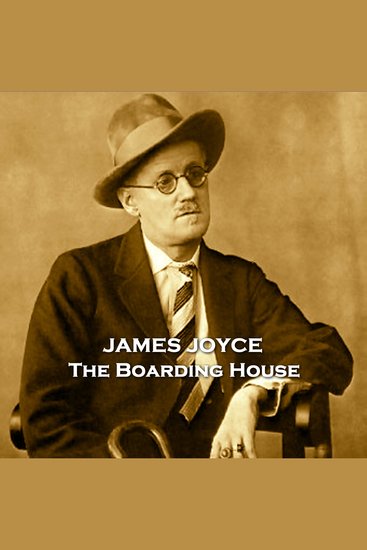
James Augustine Aloysius Joyce was born on the 2nd February 1882 in Dublin into a middle-class family, and the eldest of ten surviving siblings
Admired as a brilliant student he briefly attended the Christian Brothers-run O'Connell School before excelling at the Jesuit schools of Clongowes and Belvedere. From there he went on to attend University College Dublin from 1898, studying English, French and Italian
In 1902, Joyce was now in his early twenties, and went to Paris to study Medicine but soon abandoned his teachings. Back in Dublin to attend to his dying Mother he met Nora Barnacle. They bonded immediately into a life-long match. Together they decided to emigrate to Europe. The couple lived in Trieste, Rome, Paris, and finally Zürich where Joyce pursued a variety of jobs and ventures to supplement his literary pursuits but none of these paid off.
After publishing a poetry volume, ‘Chamber Music’, in 1907, his short story collection ‘The Dubliners’, in 1914, helped establish his talent in the rapidly changing world.
Although far from home Joyce’s literary heart and works were set in his recollections of Dublin. Characters are close resemblances of family and friends and indeed enemies. His landmark work ‘Ulysses’, published in 1922, is set in the streets and alleyways of the city as it parallels Homer’s Odyssey in a variety of styles including its famed stream of consciousness.
His pen continued to produce classics of the order of ‘A Portrait of the Artist as A Young Man’ and ‘Finnegan’s Wake’ together with several volumes of poetry and a play ‘The Exiles, in 1918.
On the 11th January 1941, Joyce underwent surgery in Zürich for a perforated duodenal ulcer. The next day he fell into a coma. On the 13th after a brief period of lucidity in which he called for his wife and son he passed. He was 58.
Joshua Albert Flynn was born in Sheerness, Kent, on 15th September 1863.
He was educated at private schools and later graduated from King's College, London.
His initial career was with the Civil Service where he thrived. A marriage to Ada Parkinson brought two sons and three daughters into their lives.
He worked in South Africa as a financial adviser to Lord Kitchener before stints at the Admiralty and the War Office. In 1916 he was appointed director-general of finance at the Ministry of Pensions. His stellar professional career brought him a Companion of the Order of the Bath in 1910 and a knighthood in 1919.
His career in literature, under the pseudonym ‘Owen Oliver’, started late and is almost forgotten today. Although he wrote a handful of novels, he was well regarded as the author of short stories for children. But amongst the 250 stories he wrote and published in the leading periodicals and the magazines of the day his ambitions spread much wider. He was able to write across a number of genres. His humourous stories received particular praise as did his many science fiction stories, where undoubtedly his time in Government helped bring across a particular way of imparting information into the structure of narratives as normal everyday folk came up against terrifying and dystopian happenings.
Owen Oliver, died in Streatham, south London on 8th October 1933. He was 70.
Ihr Account wird momentan auf einem anderen Gerät benutzt.
Es ist bereits eine Sitzung auf einem anderen Gerät geöffnet.
Abmelden
Erneut verbinden
Ihr Account wird momentan auf einem anderen Gerät benutzt.
Um darauf zugreifen zu können, müssen die Berechtigungen und obligatorischen Richtlinien (markiert mit *) überprüft und akzeptiert werden.
Wenn Sie Hilfe oder weitere Informationen benötigen, schreiben Sie an support@24symbols.com
Akzeptieren
Ihr Account wird momentan auf einem anderen Gerät benutzt.
OK
Bestätigungs-E-Mail noch einmal schicken
Ihr Account wird momentan auf einem anderen Gerät benutzt.
Wir haben versucht, Ihr Abo abzubuchen, aber es ist uns nicht gelungen. Das teilt uns Ihre Bank/Karte mit:
Wenn Sie weiterlesen möchten, müssen Sie sich möglicherweise an Ihre Bank wenden oder Ihre Zahlungsinformationen hier ändern:
Ich möchte meine Karte aktualisieren!
Haben Sie Fragen? Schreiben Sie uns an support@24symbols.com und wir werden Ihnen weiterhelfen.
Cookies helfen uns bei der Bereitstellung unserer Dienste. Durch die Nutzung unserer Dienste erklären Sie sich damit einverstanden, dass wir Cookies setzen.Mehr erfahren