Rejoignez-nous pour un voyage dans le monde des livres!
Ajouter ce livre à l'électronique
Grey
Ecrivez un nouveau commentaire Default profile 50px
Grey
Abonnez-vous pour lire le livre complet ou lisez les premières pages gratuitement!
All characters reduced
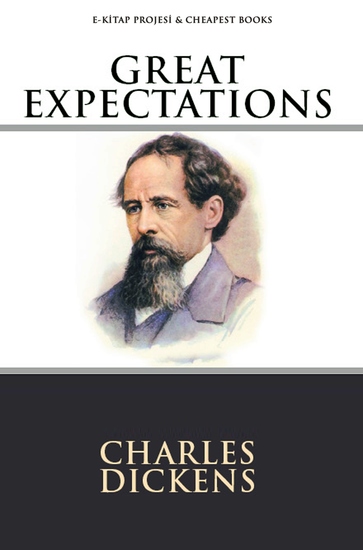
Great Expectations - cover

Great Expectations

Charles Dickens

Maison d'édition: E-Kitap Projesi & Cheapest Books

  • 0
  • 0
  • 0

Synopsis

Great Expectations is Charles Dickens's thirteenth novel. It is his second novel, after David Copperfield, to be fully narrated in the first person. Great Expectations is abildungsroman, or a coming-of-age novel, and it is a classic work of Victorian literature. It depicts the growth and personal development of an orphan named Pip. The novel was first published in serial form in Dickens' weekly periodical All the Year Round, from 1 December 1860 to August 1861. In October 1861, Chapman and Hall published the novel in three volumes.Great Expectations was to be twice as long, but constraints imposed by the management of All the Year Round limited the novel's length. Collected and dense, with a conciseness unusual for Dickens, the novel represents Dickens' peak and maturity as an author. According to G. K. Chesterton, Dickens penned Great Expectations in "the afternoon of [his] life and fame." It was the penultimate novel Dickens completed, preceding Our Mutual Friend.It is set among the marshes of Kent and in London in the early to mid-1800s. From the outset, the reader is "treated" by the terrifying encounter between Pip, the protagonist, and the escaped convict, Abel Magwitch. Great Expectations is a graphic book, full of extreme imagery, poverty, prison ships, "the hulks," barriers and chains, and fights to the death. It therefore combines intrigue and unexpected twists of autobiographical detail in different tones. Regardless of its narrative technique, the novel reflects the events of the time, Dickens' concerns, and the relationship between society and man.The novel has received mixed reviews from critics: Thomas Carlyle speaks of "All that Pip's nonsense," while George Bernard Shaw praised the novel as "All of one piece and Consistently truthfull." Dickens felt Great Expectations was his best work, calling it "a very fine idea," and was very sensitive to compliments from his friends: "Bulwer, who has been, as I think you know, extraordinarily taken by the book."
Disponible depuis: 19/01/2024.
Longueur d'impression: 600 pages.

D'autres livres qui pourraient vous intéresser

  • Valley of Spiders The (Unabridged) - cover

    Valley of Spiders The (Unabridged)

    H. G. Wells

    • 0
    • 0
    • 0
    Herbert George Wells (21 September 1866 - 13 August 1946) was an English writer. Prolific in many genres, he wrote dozens of novels, short stories, and works of social commentary, history, satire, biography and autobiography. His work also included two books on recreational war games. Wells is now best remembered for his science fiction novels and is often called the "father of science fiction", along with Jules Verne and the publisher Hugo Gernsback.
    THE VALLEY OF SPIDERS: Towards mid-day the three pursuers came abruptly round a bend in the torrent bed upon the sight of a very broad and spacious valley. The difficult and winding trench of pebbles along which they had tracked the fugitives for so long, expanded to a broad slope, and with a common impulse the three men left the trail, and rode to a little eminence set with olive-dun trees, and there halted, the two others, as became them, a little behind the man with the silver-studded bridle.
    Voir livre
  • Oscar Wilde : Four Stories - Lord Arthur Savile's Crime; The Canterville Ghost; The Sphinx Without a Secret; The Model Millionaire - cover

    Oscar Wilde : Four Stories -...

    Oscar Wilde

    • 0
    • 0
    • 0
    The four tales gathered here reveal Oscar Wilde’s gift for blending wit, irony, and moral reflection within the form of the short story.
    
     Lord Arthur Savile’s Crime is a darkly comic exploration of fate and free will, where polite society collides with the absurd. 
    
    
    The Canterville Ghost playfully turns the traditional ghost story on its head, offering satire as sharp as it is humorous. 
    
    
    In The Sphinx Without a Secret, Wilde meditates on mystery and illusion, showing how beauty and enigma may dissolve under the scrutiny of truth.
    
    
     Finally, The Model Millionaire provides a tender moral fable, reminding us that generosity and kindness carry more value than wealth or charm.


    Head Stories Audio presents "Oscar Wilde - Four Stories", with narration and original music by Simon Hester.
    Voir livre
  • HorrorBabble's Mysterious Forces - 10 Weird Tales of the Elements - cover

    HorrorBabble's Mysterious Forces...

    Algernon Blackwood, Wilford...

    • 0
    • 0
    • 0
    A collection of weird tales concerning strange, elemental forces of nature. 
    Contents: 
    The Swooping Wind by Wilford Allen (Weird Tales, 1927) 
    The story of a scientist with a strange connection to the winds. 
    The Spirits' Mountain by Gustavo Bécquer (The Contemporary, 1861) 
    A young man is tasked with the retrieval of a scarf from a haunted mountain. 
    The Glamour of the Snow by Algernon Blackwood (The Pall Mall Magazine, 1911) 
    A writer falls in love with a ghostly ice-skater in the Valais Alps. 
    The Transfer by Algernon Blackwood (Country Life, 1911) 
    The story of a child’s fascination with a barren patch of land in a big garden. 
    The Willows by Algernon Blackwood (The Listener and Other Stories, 1907) 
    The story of a strange adventure through a desolate portion of the River Danube. 
    The Tree of Life by Paul Ernst (Weird Tales, 1930) 
    A curious tree whose leaves could revivify a corpse. 
    Fog Country by Allison V. Harding (Weird Tales, 1945) 
    The story of a peculiar mist that occasionally settles over a small, coastal town. 
    Night Must Not Come by Allison V. Harding (Weird Tales, 1943) 
    Man has never allowed complete darkness, for evil things are waiting beyond the light. 
    Night of Impossible Shadows by Allison V. Harding (Weird Tales, 1945) 
    Shadows, doing things not meant to be done. 
    The Red Brain by Donald Wandrei (Weird Tales, 1927) 
    The tale of a strange cosmic dust that engulfs the universe.
    Voir livre
  • Reverie - cover

    Reverie

    Arthur C. Clarke

    • 0
    • 0
    • 0
    "Reverie" is a 1992 short story by Arthur C. Clarke, not a novel. It's a part of the collection "The Stories of Arthur C. Clarke" and is not as well-known as his other works like "Childhood's End" or "Rendezvous with Rama". The story involves the encounter with a giant, apparently abandoned, alien ship, and the subsequent exploration of its mysteries by a group of human astronauts.
    Voir livre
  • Cabbages and Kings - cover

    Cabbages and Kings

    O. Henry

    • 0
    • 0
    • 0
    "Cabbages and Kings" by O. Henry is a collection of short stories set in the fictional country of Anchuria, reflecting on human nature, love, and life's unpredictability. Through vivid characters and witty narratives, it explores themes of ambition, romance, and societal contrasts with O. Henry's signature twist endings.
    Voir livre
  • Frankenstein Alive - cover

    Frankenstein Alive

    Mary Shelley

    • 0
    • 0
    • 0
    Mary Shelley ) was an English novelist who wrote the Gothic novel Frankenstein; or, The Modern Prometheus in 1818, which is considered an early example of science fiction. She also edited and promoted the works of her husband, the Romantic poet, and philosopher Percy Bysshe Shelley. Her father was the political philosopher William Godwin and her mother the philosopher and feminist activist Mary Wollstonecraft. 
     
    Shelley's mother died less than a month after giving birth to her. She was raised by her father, who provided her with a rich if informal education, encouraging her to adhere to his own anarchist political theories. When she was four, her father married a neighbor, Mary Jane Clairmont, with whom Shelley came to have a troubled relationship. 
     
    In 1814, Shelley began a romance with one of her father's political followers, Percy Bysshe Shelley, who was already married. Together with her stepsister, Claire Clairmont, she and Percy left for France and traveled through Europe. Upon their return to England, Shelley was pregnant with Percy's child. Over the next two years, she and Percy faced ostracism, constant debt, and the death of their prematurely born daughter. They married in late 1816, after the suicide of Percy Shelley's first wife, Harriet. 
     
    In 1816, the couple and her stepsister famously spent a summer with Lord Byron and John William Polidori near Geneva, Switzerland, where Shelley conceived the idea for her novel Frankenstein. The Shelleys left Britain in 1818 for Italy, where their second and third children died before Shelley gave birth to her last and only surviving child, Percy Florence Shelley. In 1822, her husband drowned when his sailing boat sank during a storm near Viareggio. A year later, Shelley returned to England and from then on devoted herself to the upbringing of her son and a career as a professional author.
    Voir livre