Rejoignez-nous pour un voyage dans le monde des livres!
Ajouter ce livre à l'électronique
Grey
Ecrivez un nouveau commentaire Default profile 50px
Grey
Abonnez-vous pour lire le livre complet ou lisez les premières pages gratuitement!
All characters reduced
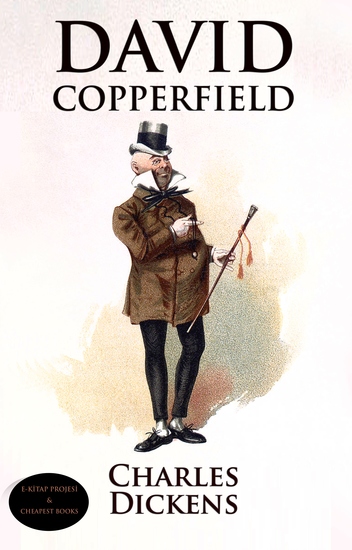
David Copperfield - cover

David Copperfield

Charles Dickens

Maison d'édition: E-Kitap Projesi & Cheapest Books

  • 0
  • 0
  • 0

Synopsis

Now a grown man, David Copperfield tells the story of his youth. As a young boy, he lives happily with his mother and his nurse, Peggotty. His father died before he was born. During David's early childhood, his mother marries the violent Mr. Murdstone, who brings his strict sister, Miss Murdstone, into the house. The Murdstones treat David cruelly, and David bites Mr. Murdstone's hand during one beating. The Murdstones send David away to school.

David's mother dies, and David returns home, where the Murdstones neglect him. He works at Mr. Murdstone's wine-bottling business and moves in with Mr. Micawber, who mismanages his finances. When Mr. Micawber leaves London to escape his creditors, David decides to search for his father's sister, Miss Betsey Trotwood—his only living relative. He walks a long distance to Miss Betsey's home, and she takes him in on the advice of her mentally unstable friend, Mr. Dick.

Miss Betsey sends David to a school run by a man named Doctor Strong. David moves in with Mr. Wickfield and his daughter, Agnes, while he attends school. Agnes and David become best friends. Among Wickfield's boarders is Uriah Heep, a snakelike young man who often involves himself in matters that are none of his business. David graduates and goes to Yarmouth to visit Peggotty, who is now married to Mr. Barkis, the carrier. David reflects on what profession he should pursue.

On his way to Yarmouth, David encounters James David apprentices himself at the London firm of Spenlow and Jorkins and takes up lodgings with a woman named Mrs. Crupp. Mr. Spenlow invites David to his house for a weekend. There, David meets Spenlow's daughter, Dora, and quickly falls in love with her.

In London, David is reunited with Tommy Traddles and Mr. Micawber. Word reaches David, through Steerforth. David journeys to Yarmouth to visit Peggotty in her hour of need. Little Em'ly and Ham, now engaged, are to be married upon Mr. Barkis's death. David, however, finds Little Em'ly upset over her impending marriage. When Mr. Barkis dies, Little Em'ly runs off with Steerforth, who she believes will make her a lady. Mr. Peggotty is devastated but vows to find Little Em'ly and bring her home.

Miss Betsey visits London to inform David that her financial security has been ruined because Mr. Wickfield has joined into a partnership with Uriah Heep. David, who has become increasingly infatuated with Dora, vows to work as hard as he can to make their life together possible. Mr. Spenlow, however, forbids Dora from marrying David. Mr. Spenlow dies in a carriage accident that night, and Dora goes to live with her two aunts. Meanwhile, Uriah Heep informs Doctor Strong that he suspects Doctor Strong's wife, Annie, of having an affair with her young cousin, Jack Maldon.

Dora and David marry, and Dora proves a terrible housewife, incompetent in her chores. David loves her anyway and is generally happy. Mr. Dick facilitates a reconciliation between Doctor Strong and Annie, who was not, in fact, cheating on her husband. Miss Dartle, Mrs. Steerforth's ward, summons David and informs him that Steerforth has left Little Em'ly. Miss Dartle adds that Steerforth's servant, Littimer, has proposed to her and that Little Em'ly has run away. David and Mr. Peggotty enlist the help of Little Em'ly's childhood friend Martha, who locates Little Em'ly and brings Mr. Peggotty to her. Little Em'ly and Mr. Peggotty decide to move to Australia, as do the Micawbers, who first save the day for Agnes and Miss Betsey by exposing Uriah Heep's fraud against Mr. Wickfield.
Disponible depuis: 25/01/2024.
Longueur d'impression: 800 pages.

D'autres livres qui pourraient vous intéresser

  • Great African American Literary Voices - cover

    Great African American Literary...

    Langston Hughes, Arna Bontemps,...

    • 0
    • 0
    • 0
    Hear rare recordings from five of the most-respected African American poets reading their own works: Langston Hughes, The Negro Speaks of Rivers; Arna Bontemps, Nocturne at Bethesda; Countee Cullen, Heritage; Gwendolyn Brooks, The Vacant Lot; and Sonia Sanchez, Black Magic. . 
    ©2009 Rick Sheridan (P)2009 Rick Sheridan
    Voir livre
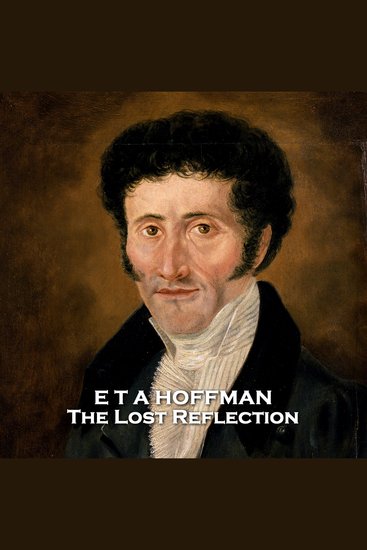
  • The Lost Reflection - From their pens to your ears genius in every story - cover

    The Lost Reflection - From their...

    E T A Hoffman

    • 0
    • 0
    • 0
    Ernst Theodor Wilhelm Hoffman was born on the 24th January 1776, the youngest of three children, in Königsberg, then in Prussia but now part of the Kaliningrad Russian enclave. 
    His parents separated when he was two and for many years life was to be provincial and, despite his talents for the creative arts and the classics, much was passing him by. 
    At 20 Hoffman obtained employment as a clerk and to the art that now surrounded him.  Two years later he was in Berlin attempting a career as a composer with an operetta called ‘Die Maske’.  His gift for drawing caricatures and sharing them often got him into trouble that was easier to avoid. 
    The years of Napoleon ravaging Europe were bad for Hoffman; he moved often and took on works as varied as theatre management and music critic.  In this his talents were now more evident.  His works on Beethoven where highly regarded by the master himself. 
    His literary breakthrough came in 1809, with ‘Ritter Gluck’, about a man who believes he has met the composer 20 years after his death.  However the various jobs and the wars continued and plagued any career advancement despite his constant travel for opportunities, often through dangerous territories. 
    In the wake of Napoleon’s defeat in 1814, Hoffmann returned to Berlin where his opera ‘Undine’ was performed by the Berlin Theatre.  Life was now more settled and many of his most famous works were written at his time. 
    From 1819, Hoffmann was struggling with both legal disputes and ill health.  Alcohol abuse and syphilis were physically weakening him and from 1822 paralysis set in.  His last works were dictated to his wife or to a secretary as all around him society descended into an anti-liberal agenda, stifling dissent with threats of legal action and even treason.  The ailing Hoffman was among them. 
    E T A Hoffmann died on the 25th June 1822 in Berlin of syphilis.  He was 46.
    Voir livre
  • Hamlet - cover

    Hamlet

    Tom Wheelwright, E.A. Copen,...

    • 0
    • 0
    • 0
    Shakespeare’s most famous play is one of the greatest stories in the literature of the world. 
    Distressed by his father’s death and his mother’s over-hasty remarriage, Hamlet, prince of Denmark is faced by a specter from beyond the grave bearing a grim message of murder and revenge. The young prince is driven to the edge of madness by his struggle to understand the situation he finds himself in and to do his duty. Many others, including Hamlet’s beloved, the innocent Ophelia, are swept up in his tragedy. 
    Hamlet is played by Simon Russell Beale. Imogen Stubbs plays Ophelia, Jane Lapotaire is Gertrude, and Bob Peck is Claudius. Polonius is played by Norman Rodway. 
    ACT IScene 1. The ghost of Old Hamlet, King of Denmark, has appeared to officers guarding the castle of Elsinore. When the apparition is witnessed by Horatio, friend of the Dead King’s son, he fears that it portends ill. He decides to tell young Hamlet, hoping that the ghost might reveal to him the cause of its restlessness.Scene 2. The dead king’s brother, Claudius, has assumed the crown and married the widowed Queen Gertrude. He dispatches emissaries to Norway where the king’s nephew Fortinbras is threatening Denmark with war. The King and Queen urge young Hamlet to cast off his dark mood. Once alone, the prince vents his violent grief at his father’s death and outrage at his mother’s “incestuous” remarriage. Wen Horatio tells Hamlet about the ghost, he too suspects foul play.Scene 3. Laertes warns his sister, Ophelia, not to take seriously Hamlet’s attentions because, being a prince, he is not free to make his own choices in matters of love. Scene 4. Hamlet and Horatio meet on the battlements. The ghost appears and beckons to Hamlet to follow him. Scene 5. The ghost describes to Hamlet how it was murdered by Claudius. It urges him to revenge the crime. 
    ACT IIScene 1. Polonius, a garrulous counsellor and father to Ophelia and Laertes, instructs Reynaldo to investigate the kind of life Laertes is leading in Paris. Ophelia describes Hamlet’s bizarre behavior to Polonius who attributes this to her recent rejection of him.Scene 2. The King and Queen ask Rosencrantz and Guildenstern, old friends of Hamlet, to discover the cause of the prince’s erratic behavior. The King of Norway has stopped Fortinbras’ preparations for war against Denmark. Polonius takes Hamlet’s scathing and capricious wit as proof of his insanity. Hamlet greets Rosencrantz and Guildenstern warmly, but becomes suspicious of their motives. He is, however, pleased to hear that a company of players has arrived at Elsinore. Once alone, he berates himself for his failure to undertake his revenge. He plans to have the players enact King Hamlet’s murder and to observe Claudius’ reaction as a way of ascertaining his guilt. 
    Act IIIScene 1. Rosencrantz and Guildenstern have failed to uncover the reason for Hamlet’s behavior. Hamlet shocks Ophelia with his crude and bitter contempt for women and marriage. Their conversation is overheard by Claudius, who recognizes that it is not thwarted love that is responsible for Hamlet’s dangerous instability. He resolves to send him on a diplomatic mission to England to get him away from the court. Polonius suggests that Gertrude should persuade Hamlet to confide in her; he himself will eavesdrop on their conversation.Scene 2. Hamlet tells Horatio to watch Claudius during the play for signs of guilt. As a murder identical to that of King Hamlet is enacted, Claudius rises in fright and calls for lights, thus ending the performance. Hamlet is summoned to his mother’s closet and vows to “speak daggers to her, but use none.”Scene 3. Claudius orders Rosencrantz and Guildenstern to accompany Hamlet to England. Once alone he expresses agony at his dreadful crime. Hamlet comes upon him trying to pray, but desists from killing him on the grounds that, were Claudius to die in prayer, his soul might go to heaven rather than hell.Scene 4. Hamlet harangues
    Voir livre
  • Moby-Dick; or the Whale - A sweeping epic of maritime obsession perilous seas and the fathomless depths of the human soul - cover

    Moby-Dick; or the Whale - A...

    Herman Melville

    • 0
    • 0
    • 0
    "Call me Ishmael." 
    With those three immortal words, the gates swing open to the greatest maritime adventure ever written. Driven by an unrelenting melancholy, a young drifter named Ishmael takes to the sea, seeking the untamed majesty of the global oceans. But what he finds is a floating purgatory, commanded by a man whose soul is consumed by a single, catastrophic obsession. 
    In Moby-Dick; or, the Whale, Herman Melville crafts a sprawling, encyclopedic tapestry of nineteenth-century whaling, intertwining gritty high-seas realism with profound philosophical terror. You will brave the frozen wharves of New Bedford, share a room with the tattooed cannibal harpooneer Queequeg, and ultimately set sail aboard the doomed Pequod. 
    Masterfully narrated by Andre Reaves, this production breathes thundering new life into a literary leviathan. Reaves captures the salt, the spray, and the encroaching madness, pulling listeners straight into the howling gales of the Atlantic and the Pacific. From Father Mapple's fire-and-brimstone sermon to the terrifying mythos of the great white whale himself, this is not just a book to be heard—it is a voyage to be survived. 
    Are you ready to cast off your lines and face the tempest?
    Voir livre
  • A Christmas Tree - cover

    A Christmas Tree

    Charles Dickens

    • 0
    • 0
    • 0
    "I have been looking at a real Christmas tree, which stood in the middle of a great round table."
    
    Before the world knew the full breadth of his holiday legacy, Charles Dickens penned this enchanting "meditation" on the centerpiece of the Victorian home. A Christmas Tree is not a traditional narrative, but a brilliant stream-of-consciousness exploration of memory. Looking upon the glittering branches of a tree, Dickens takes the reader on a nostalgic tour of the toys, the stories, and the spectral shadows that define our earliest holiday experiences.
    
    A Toybox of the Imagination: Dickens vividly recreates the wonder of a child's world. He describes the "tumbling" dolls, the magic lanterns, and the leaden soldiers that once sparked his own imagination. Through his prose, we see the tree not just as a decoration, but as a living record of our growth—from the tangible excitement of childhood play to the more reflective, often haunting, memories of adulthood.
    
    Ghosts of Christmas Past: In typical Dickensian fashion, the light of the tree is balanced by the shadows of the fire. The story delves into the "ghost stories" that were once an essential part of the midwinter tradition. Dickens reminds us that the holiday season is a time for remembering those who are no longer at the table, blending warmth with a poignant, Gothic sensibility that is uniquely his own.
    
    Experience the heart of the holidays through the eyes of a master. Purchase "A Christmas Tree" today and rediscover the timeless magic of the season.
    Voir livre
  • The Name Tree - From their pens to your ears genius in every story - cover

    The Name Tree - From their pens...

    Mary Webb

    • 0
    • 0
    • 0
    Mary Gladys Meredith was born on 25th March 1881 at Leighton Lodge in the village of Leighton, near Shrewsbury in Shropshire.  
    Mary was home-schooled by her father before being sent to a finishing school in Southport in 1895. Her longs walks in the countryside helped her develop a heightened sense of observation and description, of both people and places, which later infused both her poetry and prose. 
    When she was 20 she developed symptoms of Graves' disease, a thyroid disorder that caused bulging protuberant eyes and throat goitre. This caused life-long ill health and was a possible contributor to her early death.  
    Mary was first published as a teenager when her brother sent to a local newspaper her poem on a recent rail accident.  Mary, who was in the habit of destroying her work was appalled though placated when she discovered that it had received some positive appreciation in readers letters. 
    1912 brought marriage to Henry Bertram Law Webb, a teacher. He supported her literary work which, in 1917, resulted in the publication of her novel ‘The Golden Arrow.’ 
    A few years later they acquired a property in London where, it was hoped, recognition of her literary talents would be more easily recognised.   
    Her 1924 novel, ‘Precious Bane’, won the Prix Femina Vie Heureuse, the prestigious French literary prize awarded by an all-female jury. 
    Most of her poetry and various other works were only published after her death. 
    By 1927 her health was deteriorating and her marriage failing.   
    Mary Webb died on 8th October 1927 at St Leonards-on-Sea, East Sussex.  She was 46.
    Voir livre