Rejoignez-nous pour un voyage dans le monde des livres!
Ajouter ce livre à l'électronique
Grey
Ecrivez un nouveau commentaire Default profile 50px
Grey
Abonnez-vous pour lire le livre complet ou lisez les premières pages gratuitement!
All characters reduced
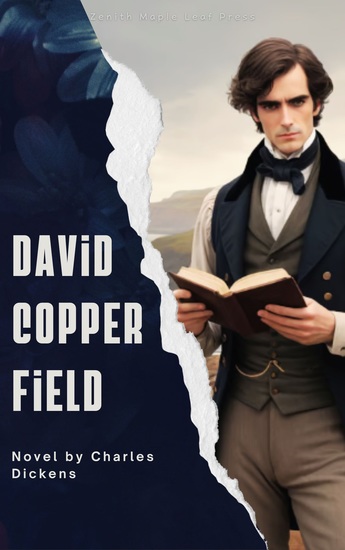
David Copperfield - The Beloved Coming-of-Age Masterpiece of Love Loss and Self-Discovery - cover

David Copperfield - The Beloved Coming-of-Age Masterpiece of Love Loss and Self-Discovery

Charles Dickens, Zenith Maple Leaf Press

Maison d'édition: Zenith Maple Leaf Press

  • 0
  • 0
  • 0

Synopsis

"Of all my books, I like this the best." – Charles Dickens
Spanning the life of its title character from childhood to maturity, David Copperfield is Charles Dickens's most personal and deeply felt novel—a rich tapestry of hardship, hope, ambition, and resilience.

Born to a widowed mother and tormented by a cruel stepfather, David endures a youth marked by poverty, injustice, and betrayal. Along the way, he meets some of Dickens's most unforgettable characters—the ever-optimistic Mr. Micawber, the sly Uriah Heep, the gentle Agnes Wickfield, and the charming but flawed James Steerforth.

Blending humor, heartbreak, and triumph, David Copperfield is both an intimate portrait of personal growth and a sweeping commentary on Victorian society.

"A masterpiece of storytelling, filled with unforgettable characters and emotional truth."
– The Guardian

"The novel Dickens cherished most—a reflection of his own life and heart."
– The New York Times

✅ Why Readers Love It:
📚 One of the greatest coming-of-age novels ever written

👫 Filled with rich character portraits and emotional depth

🖋️ A semi-autobiographical work revealing Dickens's own struggles and dreams

🎯 Click 'Buy Now' to embark on David Copperfield's unforgettable journey—from an uncertain boyhood to the making of a man.
Disponible depuis: 08/08/2025.
Longueur d'impression: 1083 pages.

D'autres livres qui pourraient vous intéresser

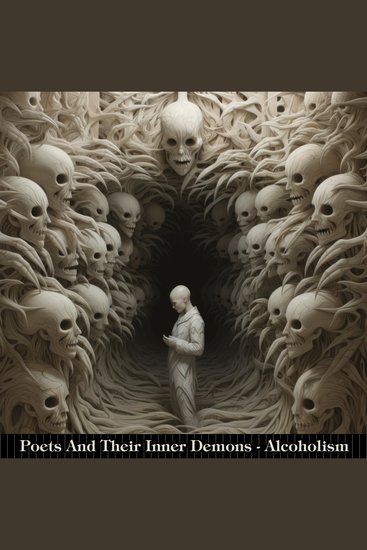
  • Poets & Their Inner Demons – Alcoholism - Poems by poets all linked by suffering similar issues - cover

    Poets & Their Inner Demons –...

    Samuel Taylor Coleridge, Charles...

    • 0
    • 0
    • 0
    The stereotypical image of a poet is one of unknown talent starving in a garret and who’s faithfulness and legacy to the art is discovered only after their death. 
    In some cases this is undoubtedly true, but Poets being human and with the same building blocks of physical and mental health as the rest of us, also had the same afflictions and problems as the rest of us.   
    The long roll call of names and the truncated legacies that were left behind is filled with these lost talents. 
    In this volume we bring together the poems and verse of those wordsmiths whose lives were blighted by drink and the seemingly unending consumption of it.   
    The long roll call and the truncated legacies that were left behind is filled with the names of these lost talents.
    Voir livre
  • Down - cover

    Down

    Sarah Dowling

    • 0
    • 0
    • 0
    How can we carve private spaces from discarded publics?
       
    DOWN takes junk language – with cameos by Frank O’Hara, Frank Ocean, Aaliyah and the Temptations – and distresses it, building sonically dense poems that are caught between the poignancy and flatness of their source texts. Disorientation and defamiliarization yank fresh feeling from banal sentiments in this playful collection.
       
    ‘I’ve believed in Dowling’s poems for a long time with you. Or maybe you’re just now catching up to how the genius is working her machine on our minds? Gravity of letter in the word measured and dispensed with inimitable grace. The words are familiar, yes, but we get them again from this magnificent poet who is not going to let us just trample the smallest of them. I have tremendous respect for any poet who strives to be even half as great as Sarah Dowling.’
       
    —CAConrad
       
    ‘After all of the previous avant-garde’s perpetual rediscoveries of Gertrude Stein's formal innovations, Dowling reminds us that her best poetry was, above all, sexy. Where Dowling surpasses is in her recognition of the phatic, the emphatic, the obsessive understanding of the cultural syntax of infatuation. Everything in DOWN is palpably cloudy in its thick description: I am starstruck.’
       
    — Craig Dworkin
    Voir livre
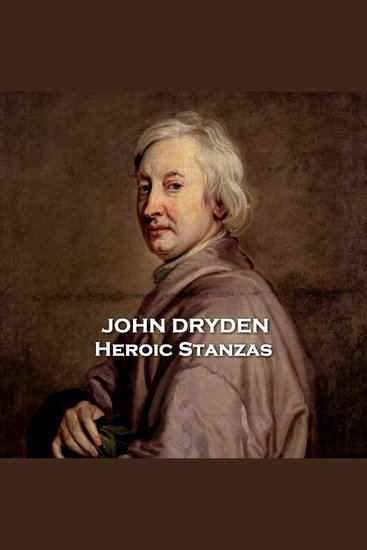
  • Heroic Stanzas - The Age of Dryden' is a fitting marker for why he stood above all the others of his age - cover

    Heroic Stanzas - The Age of...

    John Dryden

    • 0
    • 0
    • 0
    John Dryden was born on August 9th, 1631 in the village rectory of Aldwincle near Thrapston in Northamptonshire. As a boy Dryden lived in the nearby village of Titchmarsh, Northamptonshire. In 1644 he was sent to Westminster School as a King's Scholar.  
    Dryden obtained his BA in 1654, graduating top of the list for Trinity College, Cambridge that year.  
    Returning to London during The Protectorate, Dryden now obtained work with Cromwell's Secretary of State, John Thurloe. 
     At Cromwell's funeral on 23 November 1658 Dryden was in the company of the Puritan poets John Milton and Andrew Marvell.  The setting was to be a sea change in English history. From Republic to Monarchy and from one set of lauded poets to what would soon become the Age of Dryden. 
    The start began later that year when Dryden published the first of his great poems, Heroic Stanzas (1658), a eulogy on Cromwell's death.  
    With the Restoration of the Monarchy in 1660 Dryden celebrated in verse with Astraea Redux, an authentic royalist panegyric. 
     With the re-opening of the theatres after the Puritan ban, Dryden began to also write plays. His first play, The Wild Gallant, appeared in 1663 but was not successful. From 1668 on he was contracted to produce three plays a year for the King's Company, in which he became a shareholder. During the 1660s and '70s, theatrical writing was his main source of income.  
    In 1667, he published Annus Mirabilis, a lengthy historical poem which described the English defeat of the Dutch naval fleet and the Great Fire of London in 1666. It established him as the pre-eminent poet of his generation, and was crucial in his attaining the posts of Poet Laureate (1668) and then historiographer royal (1670). 
    This was truly the Age of Dryden, he was the foremost English Literary figure in Poetry, Plays, translations and other forms. 
    In 1694 he began work on what would be his most ambitious and defining work as translator, The Works of Virgil (1697), which was published by subscription. It was a national event.  
    John Dryden died on May 12th, 1700, and was initially buried in St. Anne's cemetery in Soho, before being exhumed and reburied in Westminster Abbey ten days later.
    Voir livre
  • Not Enough Time - My Poetry Book - cover

    Not Enough Time - My Poetry Book

    Etanie Samuels

    • 0
    • 0
    • 0
    Not Enough Time is written in the form of a mini bio in a poetry form. Each chapter is designed with life, purpose, motivation, and reality.
    Voir livre
  • Mingle - cover

    Mingle

    Caleb Parkin

    • 0
    • 0
    • 0
    Caleb Parkin's dark and mischievous second poetry collection Mingle stirs up the toxicities between landscapes, ecosystems and bodies, in poems bubbling over with hyper-wealth and haunted by tarnished ideals. Through creatures, compounds and chemicals, the poems probe what makes up our world's matter, and how we use it for good or ill. From gold to hydrocarbons, radioactive gardening to viral memes, the resulting mixture is a potent poetic cocktail…
    Here, intimate connections and grand narratives are unsettled; we are implicated in prickly histories and weird futures and the natural world reminds us of its unruliness – as well as our own. Reflections warp in noxious ponds and voices distort and echo in uncanny landscapes. At times hyperreal and surreal, adventurous and technicolour, Mingle fizzes with the possibilities of queered language and altered states of poetic form.
    Voir livre
  • Slows: Twice - cover

    Slows: Twice

    T. Liem

    • 0
    • 0
    • 0
    SHORTLISTED FOR THE 2023 A.M. KLEIN PRIZE FOR POETRY 
    LONGLISTED FOR THE 2024 RAYMOND SOUSTER AWARD 
    CBC BOOKS CANADIAN POETRY COLLECTIONS TO WATCH FOR IN SPRING 2023 
    Backward and forward: a double book of mirrored poems about identity in all its forms.This is a book of slow hours, days, and years – how they can collapse into one another, how it can feel like we are living one day repeating itself. From within this collapse, the speaker seeks connection everywhere. They visit their father’s birthplace, Jogjakarta; they listen to a stranger’s phone call at the Motel 6 in Alberta; they linger in the so-called ethnic aisle of the grocery store. From all of these places the speaker is discouraged but tries to imagine a future joyously incomprehensible to the present.Slows: Twice is a collection of revisions and repetitions; every poem in one half of the book has an alternate version, or a mirror poem, in the other half. The poems are tied to themes of work and labour, consumption and waste, family and home, as shapers of identity and relationships. The act of revising and repeating – slowly – is meant to be a resistance to efficiency, a resistance to being an always-productive body under capitalism. 
     
    "The poems of Slows: Twice collect in resonance, contemplate the construction of selves, with modes of repetition, sequencing, and mirroring, the way language assembles an identity or points to itself as it points away.  'The clouds // disappear the sky sometimes; or they become it.' Storied and cubistic, palindromic and cleaved, Liem’s poems reveal relationships to time, noise, and duration, and the possibility of joy given painful pasts." – Hoa Nguyen, author of A Thousand Times You Lose Your Treasure 
    "T. Liem is one of my favorite poets working in Canada. I welcomed this book into my life like sudden sunlight. Slows: Twice is a book about how urgently we need to read differently. I loved its mischievous relation to form and expectation as well as its burning intelligence. I once described T. as an inheritor of the tradition of language poetry, but what Slows: Twice proves is that T. is less an inheritor and more so an innovator, an inventor in their own right. I read it in one frenzied sitting." – Billy-Ray Belcourt, author of A Minor Chorus 
    "It’s breathtaking to watch words drip from a page into a silver river cutting through a canyon of time. T. Liem sculpts poetry with steady, curious fingers, pushing against the filaments we think hold us together that have been quietly collecting cracks, from buried violence and whispered histories to the fragile connections tying us together. Obits. captured my heart; Slows: Twice now affirms it." – Teta, founder of diasporic Indonesian publication Buah zine 
    "'For everything I was, I am now something else.' Revision of self and world are core to this innovative, unruly book that manages somehow to be at once formally wacky and emotionally clear. These poems seem to ask: if language is a box heavy with histories and inadequacies and which we nevertheless must carry, can language also carry us somewhere, elsewhere, strangely? Rarely have I encountered a book so at home in the unresolved, in the tension between a longing for declaration and a commitment to questions. T. Liem’s work conjures the figure of Janus: god of duality and gates, one face facing an end, the other looking through a new door, right in the eye of a dream." – Chen Chen, author of Your Emergency Contact Has Experienced an Emergency 
    "T. Liem's Slows: Twice is a fascinating exercise in revision and remaking, each repetition of its text accomplishing the arduous task of stretching time and geopolitical fixity. 'asking and repeating/ we are made' declares Liem, and that utterance produces the book's essential maxim, 'language is change/ changed by prosody.' In between these cracks of time, language becomes a miracle suture for love and connection where the hard reality of one's circumstances may produce infinite ruptures. This is a book that peers into the fissure, holding these moments of fracture as still and clearly as possible--a future of proximates." – Muriel Leung, author of Imagine Us, the Swarm
    Voir livre