Begleiten Sie uns auf eine literarische Weltreise!
Buch zum Bücherregal hinzufügen
Grey
Einen neuen Kommentar schreiben Default profile 50px
Grey
Jetzt das ganze Buch im Abo oder die ersten Seiten gratis lesen!
All characters reduced
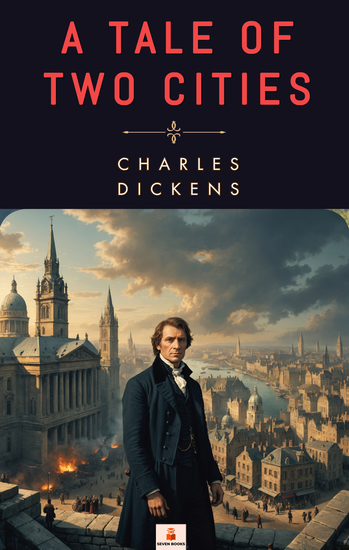
A Tale of Two Cities - cover

A Tale of Two Cities

Charles Dickens

Verlag: Seven Books

  • 0
  • 0
  • 0

Beschreibung

A Tale of Two Cities is a historical novel published in 1859 by English author Charles Dickens, set in London and Paris before and during the French Revolution. The novel tells the story of the French Doctor Manette, his 18-year-long imprisonment in the Bastille in Paris, and his release to live in London with his daughter Lucie whom he had never met. The story is set against the conditions that led up to the French Revolution and the Reign of Terror.As Dickens's best-known work of historical fiction, A Tale of Two Cities is said to be one of the best-selling novels of all time. In 2003, the novel was ranked 63rd on the BBC's The Big Read poll. The novel has been adapted for film, television, radio, and the stage, and has continued to influence popular culture.
Verfügbar seit: 11.12.2024.
Drucklänge: 300 Seiten.
Weitere Bücher, die Sie mögen werden

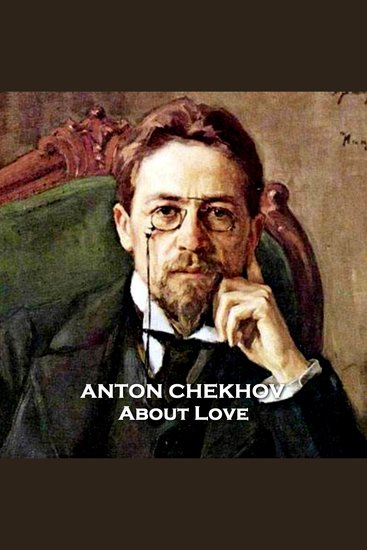
  • About Love - From their pens to your ears genius in every story - cover

    About Love - From their pens to...

    Anton Chekhov

    • 0
    • 0
    • 0
    Anton Pavlovich Chekhov was born on 29th January 1860 in Taganrog, on the south coast of Russia.  
    His family life was difficult; his father was strict and over-bearing but his mother was a passionate story-teller, a subject Chekhov warmed to. As he later said; ‘our talents we got from our father, but our soul from our mother’.  
    At school Chekhov was distinctly average. At 16 his father mis-managed his finances and was declared bankrupt. His family fled to Moscow. Chekhov remained and eked out a living by various means, including writing and selling short sketches to newspapers, to finish his schooling. That completed and with a scholarship to Moscow University obtained he rejoined his family. 
    He was able to help support them by selling satirical sketches and vignettes of Russian lifestyles and gradually obtained further commissions. In 1884, he qualified as a physician and, although it earned him little, he often treated the poor for free, he was fond of saying ‘Medicine is my lawful wife, and literature is my mistress.’ 
    His own health was now an issue as he began to cough up blood, a symptom of tuberculosis.  Despite this his writing success enabled him to move the family into more comfortable accommodation.  
    Chekhov wrote over 500 short stories which included many, many classics including ‘The Kiss’ and ‘The Lady with a Dog’.  His collection ‘At Dusk’ won him the coveted Pushkin Prize when was only 26.  
    He was also a major playwright beginning with the huge success of ‘Ivanov’ in 1887.   
    In 1892 Chekhov bought a country estate north of Moscow. Here his medical skills and money helped the peasants tackle outbreaks of cholera and bouts of famine. He also built three schools, a fire station and a clinic.  It left him with less time for writing but the interactions with real people gained him detailed knowledge about the peasantry and their living conditions for his stories.  
    His most famous work, ‘The Seagull’ was received disastrously at its premiere in St Petersburg. It was later restaged in Moscow to highlight its psychological aspects and was a huge success. It led to ‘Uncle Vanya’, ‘The Three Sisters’ and ‘The Cherry Orchard’.  
    Chekhov suffered a major lung hemorrhage in 1897 while visiting Moscow. A formal diagnosis confirmed tuberculosis and the doctors ordered changes to his lifestyle.  
    Despite a dread of weddings the elusive literary bachelor quietly married the actress Olga Knipper, whom he had met at rehearsals for ‘The Seagull’, on 25th May 1901. 
    By May 1904 with his tuberculosis worsening and death imminent he set off for the German town of Badenweiler writing cheerful, witty letters to his family and assuring them his health was improving.  
    On 15th July 1904 Anton Chekhov died at Badenweiler.  He was 44.
    Zum Buch
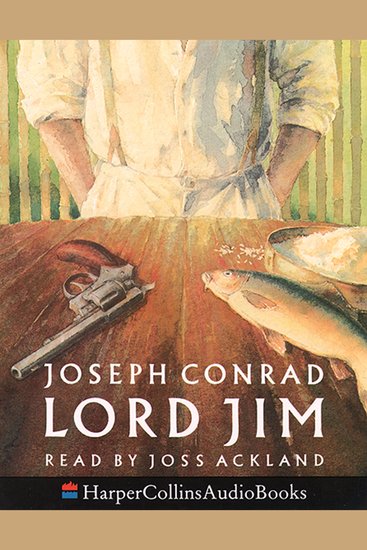
  • Lord Jim - cover

    Lord Jim

    Joseph Conrad

    • 0
    • 0
    • 0
    ‘Who could tell what forms, what visions, what faces, what forgiveness he could see in the glow of the west!’ 
    Jim is a well-bred young romantic who takes to the seas with hopes of adventure and the aspiration to prove his mettle. When the boat he sails in threatens to sink, Jim abandons ship in fear in order to save himself, leaving the other passengers to their fate. However, the ship does not sink and guilt-ridden Jim admits to the maritime court of inquiry that he deserted the boat and is consequently stripped of his sailing papers. Blighted by his own cowardice, Jim’s subsequent self-exile to a remote Malaysian trading post gives Conrad the opportunity to explore the question of moral identity and through his hero, he embodies the values and deterioration of the declining empire of late Victorian Britain. With its rich descriptions of an unknown, exotic world and beautifully constructed prose, Lord Jim is considered one of Conrad’s greatest works. 
    Conrad's Lord Jim is a classic fiction that masterfully explores the themes of guilt and moral identity. This top-tier narrative is a reflexion of the values and deterioration of the declining empire of late Victorian Britain. 
    For fans of William Faulkner (As I Lay Dying & The Sound and The Fury & Light In August & Absalom, Absalom), Cormac Mccarthy (The Crossing), Franz Kafka (The Unhappiness of Being a Single Man), Graham Greene (The Quiet American), and Enoch Abiodun (The Story of a Lover).
    Zum Buch
  • Dubliners - cover

    Dubliners

    James Joyce

    • 0
    • 0
    • 0
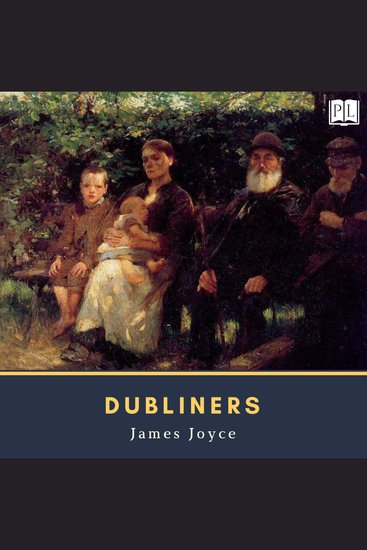
    Dubliners is a collection of picturesque short stories that paint a portrait of life in middle-class Dublin in the early 20th century. Joyce, a Dublin native, was careful to use actual locations and settings in the city, as well as language and slang in use at the time, to make the stories directly relatable to those who lived there.
    The collection had a rocky publication history, with the stories being initially rejected over eighteen times before being provisionally accepted by a publisher - then later rejected again, multiple times. It took Joyce nine years to finally see his stories in print, but not before seeing a printer burn all but one copy of the proofs. Today Dubliners survives as a rich example of not just literary excellence, but of what everyday life was like for average Dubliners in their day.
    Zum Buch
  • Marcella's Reward - cover

    Marcella's Reward

    Lucy Maud Montgomery

    • 0
    • 0
    • 0
    Lucy Maud Montgomery (November 30, 1874 – April 24, 1942), published as L. M. Montgomery, was a Canadian author best known for a series of novels beginning in 1908 with Anne of Green Gables. The book was an immediate success. The title character, orphan Anne Shirley, made Montgomery famous in her lifetime and gave her an international following.
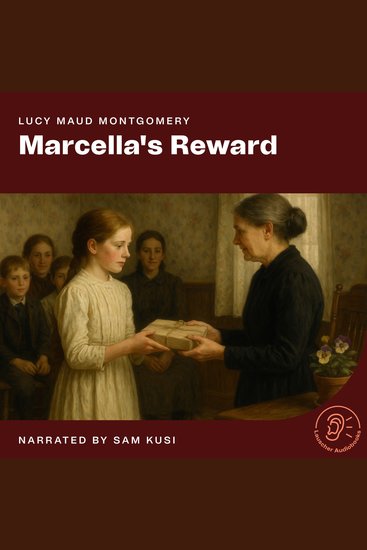
    Marcella's Reward: Dr. Clark shook his head gravely. "She is not improving as fast as I should like to see," he said. "In facter she seems to have gone backward the past week. You must send her to the country, Miss Langley. The heat here is too trying for her."
    Zum Buch
  • Goldfinger - A James Bond Novel - cover

    Goldfinger - A James Bond Novel

    Ian Fleming

    • 0
    • 0
    • 0
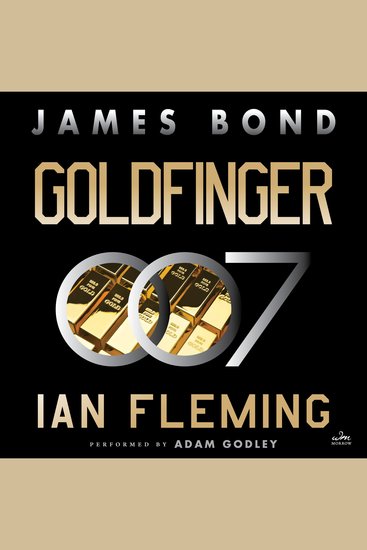
    JAMES BOND MUST STOP A GOLD-OBSESSED MILLIONAIRE AND THE HEIST OF THE CENTURY 
    Auric Goldfinger is the richest man in England―though his wealth can’t be found in banks. He’s been hoarding vast stockpiles of his namesake metal, and it has attracted the suspicion of Bond’s superiors at MI6. 
    Sent to investigate, Bond uncovers an ingenious gold-smuggling scheme, as well as Goldfinger’s most daring caper yet: Operation Grand Slam, a heist so audacious it could bring down the world economy and put the fate of the West in the hands of SMERSH. Only 007 can stop the enigmatic millionaire and his murderous mania for gold.
    Zum Buch
  • How It Happened - From their pens to your ears genius in every story - cover

    How It Happened - From their...

    Arthur Conan Doyle

    • 0
    • 0
    • 0
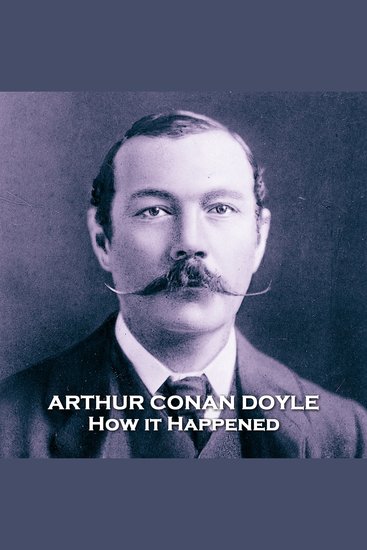
    Arthur Conan Doyle was born in Edinburgh, Scotland on 22nd May 1859.  His childhood was blighted by his father’s heavy drinking which for some years broke up the family. Fortunately, wealthy uncles were willing to support them by paying for education and clothing.  
    He was accepted at the University of Edinburgh to study medicine and also began to write short stories the first, ‘The Haunted Grange of Goresthorpe’, was published in Blackwood’s Magazine.  Despite several other stories and some articles in the British Medical Journal his medical studies took priority. 
    When these finished he was appointed as Doctor on the Greenland whaler ‘Hope of Peterhead’ in 1880 and then, after graduation, as ship’s surgeon on the SS Mayumba on its voyage to West Africa. 
    1882 saw a move to Plymouth and his own independent practice. With few patients he resumed writing and completed his first novel, ‘The Mystery of Cloomber’, although most of his output was short stories based on his experiences at sea.  
    He married Louisa Hawkins in 1885. However, two years later he met and fell in love with Jean Elizabeth Leckie, though they remained platonic out of respect for, and loyalty to, his wife. 
    His literary career suddenly burst into life in November 1886 with ‘A Study In Scarlet’, the first of the fabulously successful Sherlock Holmes stories.  
    With two children to support he now revisited his haphazard commercial arrangements and curtailed everything save for commissions from the Strand Magazine.  
    As a sportsman he was remarkably proficient. He was goalkeeper for Portsmouth Association Football Club and played ten first-class cricket matches for the Marylebone Cricket Club as well as captain of the Crowborough Beacon Golf Club in East Sussex.  
    In 1891 tired of writing Holmes stories, he began a series of historical novels and even went so far as to apparently kill off Holmes in a lethal brawl with his arch-nemesis Moriarty. 
    Despite heavy and sustained criticism he continued to write in support of the Boer War, a fact he thought contributed to his knighthood in 1902.  The following year to great relief and acclaim he brought Sherlock Holmes back from the dead in his first outing for a decade. 
    Sadly, his wife Louisa died from TB in 1906 and, a year later, he at last married Jean.  
    During the War and for several years after family deaths had left him depressed. In a search for solace and answers he alighted upon spiritualism and, such was his interest, that he wrote several books on the subject. 
    On 7th July 1930 Conan Doyle was discovered in the hall of Windlesham Manor, his house in East Sussex, clutching his chest dying of a heart attack.  He was 71.
    Zum Buch