Rejoignez-nous pour un voyage dans le monde des livres!
Ajouter ce livre à l'électronique
Grey
Ecrivez un nouveau commentaire Default profile 50px
Grey
Abonnez-vous pour lire le livre complet ou lisez les premières pages gratuitement!
All characters reduced
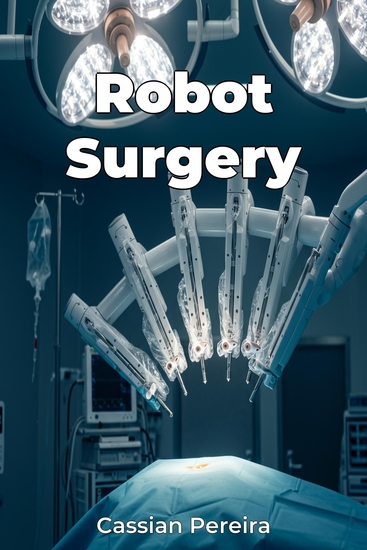
Robot Surgery - cover

Robot Surgery

Cassian Pereira

Traducteur A AI

Maison d'édition: Publifye

  • 0
  • 0
  • 0

Synopsis

Robot Surgery explores how surgical robots are transforming medical practices, merging medical science with cutting-edge technology. It highlights how these systems offer the potential for less invasive procedures, reduced recovery times, and enhanced surgical accuracy.

 
The book delves into the evolution of surgical robots, from initial prototypes to systems performing intricate maneuvers, and emphasizes the rigorous training required for surgeons. Did you know that robot-assisted surgery can allow surgeons to remove tumors with greater precision?

 
The book also examines the learning curves involved in mastering these complex systems. The book progresses by first introducing the mechanics of robotic arms and imaging systems, and then details specific surgical applications in areas like cardiology and urology. Each case study compares robotic techniques to traditional methods and analyzes patient outcomes.

 
Finally, it addresses the practical and ethical considerations of robot surgery, including cost-effectiveness and the changing role of surgeons. This approach makes the book valuable for medical professionals, students, and anyone interested in the future of healthcare technology.
Disponible depuis: 06/03/2025.
Longueur d'impression: 77 pages.

D'autres livres qui pourraient vous intéresser

  • Quando l'audiolibro è donna: io faccio audiolibri Domani smetto - cover

    Quando l'audiolibro è donna: io...

    Valerio Di Stefano

    • 0
    • 0
    • 0
    Questo è il primo di una serie di cinque piccoli volumetti sulla mia esperienza con gli audiolibri.Non si tratta di manualistica o del solito metodo miracoloso per far soldi, bensì di vita vissuta, di quello che si tocca con mano davvero e non in ipotesi in questo particolarissimo settore dell'editoria. Una sorta di "case history" a puntate o a episodi su audiolibri e podcast, ma da leggere. Possibilmente con un sorriso.  
    Valerio Di Stefano (1964) è filologo, linguista e ispanista. Siccome non sapeva cosa fare, quindici anni fa è penetrato nella gabbia degli audiolibri e non è più riuscito a uscirne, ma si sta già attrezzando. Come narratore ha pubblicato, tra gli altri, “La voce nel deserto”, “Malinverno”, “Confessione d’un amore fascista”, “La mossa del cavillo” e il recentissimo “Minchia, Signor Tenente!”. In realtà nella vita è padre di Adele Marie e ‘tato’ di Birba che gli ha regalato soltanto dodici cuccioli.
    Voir livre
  • Brain Weaver - Creating the Fabric for a Healthy Mind through Integrative Medicine - cover

    Brain Weaver - Creating the...

    MD Andrew Newberg, MD Daniel A....

    • 0
    • 0
    • 0
    Though adult cognitive development has previously been thought to be unyielding and static, Brain Weaver offers new hope and empowerment to remain mentally vibrant for a lifetime. 


    Doctors Newberg and Monti's team at Thomas Jefferson University's Marcus Institute of Integrative Health are at the forefront of research in brain functioning and applications of the most advanced understanding in real-world strategies to expand options for optimizing our complex neurophysiology. 


    Their findings show that optimal brain health is achievable by successfully weaving together a tapestry of our bio-psycho-social-spiritual dimensions. Brain Weaver also coincides with a decades-long surge in the public's interest in whole-person treatments—body, mind, and spirit evidence-based integrative therapies that include pharmaceuticals, electromagnetics, nutrition, and meditation. Brain Weaver's timeliness is all the more important now to address a new paradigm for post-pandemic wellness that emphasizes our individual and collective responsibility for proactive healthcare.
    Voir livre
  • Treat and Shrink Fibroids Naturally – The Self-Help Book: How to Uncover the Causes of Fibroids and Successfully Treat Them Naturally – incl Immediate Relief Tips for Acute Symptoms - cover

    Treat and Shrink Fibroids...

    Elisabeth Cornelsen

    • 0
    • 0
    • 0
    Self-Treating and Shrinking MyomasYour body is your most valuable asset, so I am pleased to welcome you to a topic that affects a large portion of the female population: myomas. First, some good news: in most cases, myomas do not cause lasting harm to the body. However, fascinating as they may be, they are a disruptive factor in daily life, potentially painful, and certainly worrying—or at the very least, annoying.Given that we are all—men and women, young and old—already burdened with countless everyday struggles, we should not have to subject ourselves to the stress of possibly unnecessary surgeries, medications, or other avoidable treatments.I am happy to share with you the knowledge I have gathered, which includes approaches to independently treat the female challenge called "myoma."Not only will you receive understandable medical background information, but you will also gain the tools to recognize, identify, and alleviate symptoms and discomfort—without the fear of major interventions.My greatest wish is that you discover how to gently and naturally bring your body back into balance, allowing you to regain the highest possible level of vitality and quality of life.
    Voir livre
  • The Phone Fix - The Brain-Focused Guide to Building Healthy Digital Habits and Breaking Bad Ones - cover

    The Phone Fix - The...

    Dr Faye Begeti

    • 0
    • 0
    • 0
    What is really happening in your brain when you use your phone, and how to harness it. 
     
    Humans are often fearful of the day the world will be ruled by machines, but have they not already taken over? The average person spends 4-5 hours a day on their phone, about a third of the time they are awake. We self-interrupt our work and social lives, forgo sleep, procrastinate important tasks and opt for digital distraction when we're bored or feel uncomfortable. 
     
    NHS neurology doctor and neuroscientist Faye Begeti describes what is happening in our brain when we use our phones and why we have formed so many fixed and negative habits around them. She reflects on both deliberate choices and automatic behaviours, whilst also challenging myths around digital 'addiction', how dopamine actually works and the harmfulness of blue light. 
     
    Rather than recommending a quick fix digital diet, or total abstinence - unviable for most people - The Phone Fix offers a practical guide, based on neuroscientific techniques, on building supportive digital habits. Technology is not inherently bad or frightening and by better understanding what is happening in our brains, we can replenish our willpower and improve our focus, forming a healthier relationship with our phones ¬- and therefore the real people around us.
    Voir livre
  • How to Make AI Useful - Moving Beyond the Hype to Real Progress in Business Society and Life - cover

    How to Make AI Useful - Moving...

    Bryan Reimer, Magnus Lindkvist

    • 0
    • 0
    • 0
    We’ve heard it all before: AI will upend industries, kill jobs and remake everything from healthcare to art. But between the hype and the hand-wringing lies a simpler, more pressing question: Is AI actually useful? And if so, useful for what, and for whom? 
    In How to Make AI Useful, MIT researcher Dr Bryan Reimer and Swedish futurologist Magnus Lindkvist cut through the noise. Blending decades of research, trendspotting and hands-on experience, they chart AI’s journey from dazzling gimmick to disruptive force—and now to indispensable tool. 
    This isn’t another book about robot overlords or utopian tech dreams. Instead, it’s a rough guide to AI’s messy middle—the phase where machines meet human complexity. From automating the tedious to amplifying creativity, Reimer and Lindkvist show how to harness AI’s potential for real progress, long after today’s bubble bursts.
    Voir livre
  • The Importance of Being Educable - A New Theory of Human Uniqueness - cover

    The Importance of Being Educable...

    Leslie Valiant

    • 0
    • 0
    • 0
    If we hope to share our planet successfully with one another and the AI systems we are creating, we must reflect on who we are, how we got here, and where we are heading. The Importance of Being Educable puts forward a provocative new exploration of the extraordinary facility of humans to absorb and apply knowledge. The remarkable "educability" of the human brain can be understood as an information processing ability. It sets our species apart, enables the civilization we have, and gives us the power and potential to set our planet on a steady course. While we can readily absorb systems of thought about worlds of experience beyond our own, we struggle to judge correctly what information we should trust. 


    In this visionary book, Leslie Valiant argues that understanding the nature of our own educability is crucial to safeguarding our future. After breaking down how we process information to learn and apply knowledge, and drawing comparisons with other animals and AI systems, he explains why education should be humankind's central preoccupation. 


    Will the unique capability that has been so foundational to our achievements and civilization continue to drive our progress, or will we fall victim to our vulnerabilities? If we want to protect our collective future, we must better understand and prioritize the importance of being educable.
    Voir livre