Begleiten Sie uns auf eine literarische Weltreise!
Buch zum Bücherregal hinzufügen
Grey
Einen neuen Kommentar schreiben Default profile 50px
Grey
Jetzt das ganze Buch im Abo oder die ersten Seiten gratis lesen!
All characters reduced
Human Rights Defenders - cover

Human Rights Defenders

Cassia Vaughn

Übersetzer A AI

Verlag: Publifye

  • 0
  • 0
  • 0

Beschreibung

Human Rights Defenders explores the lives of activists and lawyers dedicated to defending fundamental human rights, often at great personal risk. The book delves into the strategies used to challenge oppression and the personal sacrifices made in the pursuit of social justice. You'll discover how these individuals have shaped landmark legal battles and social movements, offering insight into the evolving definition of human rights in the face of modern challenges. 

 
The book examines the evolution of human rights law since World War II and highlights the importance of civil disobedience and legal advocacy. Through detailed accounts of specific cases and campaigns, the book emphasizes the critical role of individual agency in advancing human rights. For instance, it explores how activists have investigated state-sponsored violence and fought for environmental justice, showcasing the power of grassroots efforts. 

 
The book progresses by introducing key concepts, presenting case studies, and then culminating in practical applications for current and future activists.
Verfügbar seit: 03.04.2025.
Drucklänge: 80 Seiten.

Weitere Bücher, die Sie mögen werden

  • Pax Romana: A Captivating Guide to Ancient Rome during the Roman Peace Period - cover

    Pax Romana: A Captivating Guide...

    Captivating History

    • 0
    • 0
    • 0
    Did you know that the biggest territorial expansion in ancient Rome took place during the reign of its first emperor, who also ruled the longest out of all of the rulers prior to the fall of the Western Roman Empire? 
    The Roman Empire reached its zenith within the first two centuries of the fall of the Roman Republic, expanding its territory and spreading its influence well beyond the borders of Europe. During that time, a sort of global peace was achieved, which historians call the Pax Romana. But what exactly is the Pax Romana, and how does one delve into this huge, ever-expanding subject? 
    Like many other segments of Roman history, the Pax Romana is riddled with murky areas, contradictory information from contemporary sources, and fascinating archaeological finds. In this book, you’ll discover what made Rome tick during those roughly two hundred years of relative peace. 
    Throughout the pages of this tome, you’ll get brief glimpses of the reigns of many emperors who made the Pax Romana into what it was. Discover the Pax Romana’s long-term effects and how it managed to cement the Roman Empire as the go-to empire for many later civilizations to try and emulate. 
    Among other things, you’ll gain new knowledge on the following facts:How the empire evolved from the former republic and who the men were that brought about the changes What made the reign of each emperor uniqueWho the best emperors during the Pax Romana were, and which ones were considered the worstWhat role the provinces and territorial expansion played in the growth and development of the empireHow the imperial Romans were stratifiedWhat societal changes came about with the abolition of the republic and the return to a monarchic model 
    Scroll up, and give that “add to cart” button a click to learn more about the Pax Romana!
    Zum Buch
  • Eyewitnesses to the Indian Wars 1865–1890 - The Struggle for Apacheria - cover

    Eyewitnesses to the Indian Wars...

    Peter Cozzens

    • 0
    • 0
    • 0
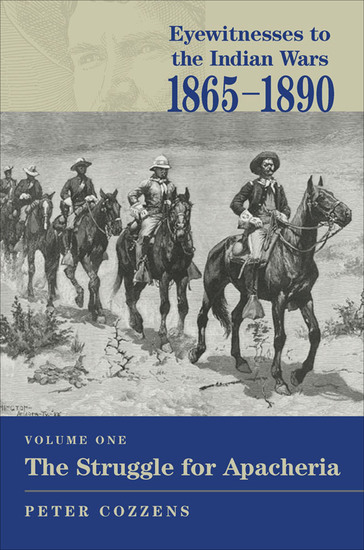
    This volume explores the history of the Apache Wars of the late 19th century Southwest through diaries, army reports, and other primary sources. Stretching from the Colorado River to the mountains east of the Rio Grande, and from northern Arizona into Sonora, Mexico, is the sprawling region once known as Apacheria. By the time the first Americans ventured into the region, the indigenous peoples known as the Apache had already been clashing with Spanish and Mexican interlopers for some time.   Eyewitnesses to the Indian Wars, 1865–1890: The Struggle for Apacheria presents a selection of outstanding original accounts pertaining to the epic struggle between American and the Apache for those coveted lands. It is the first in a five-volume series telling the saga of the military struggle for the American West in the words of the soldiers, noncombatants, and Native Americans who shaped it
    Zum Buch
  • Urban Preparation - Young Black Men Moving from Chicago's South Side to Success in Higher Education - cover

    Urban Preparation - Young Black...

    Chezare A. Warren, James Earl...

    • 0
    • 0
    • 0
    Chezare A. Warren chronicles the transition of a cohort of young Black males from Urban Prep Charter Academy for Young Men to their early experiences in higher education. A rich and closely observed account of a mission-driven school and its students, Urban Preparation makes a significant contribution to our understanding of how young males of color can best be served in schools throughout the United States today. 


    A founding teacher at Urban Prep, Warren offers a detailed exploration of what this single-sex public high school on the South Side of Chicago has managed to accomplish amid profoundly challenging circumstances. He provides a comprehensive portrait of the school—its leaders, teachers, and professional staff; its students; and the community that the school aims to serve—and highlights how preparation for higher education is central to its mission. 


    Warren focuses on three main goals: to describe Urban Prep's plans and efforts to prepare young Black males for college; to understand how race, community, poverty, and the school contributed, in complex and interrelated ways, to the academic goals of these students; and to offer a wide-ranging set of conclusions about the school environments and conditions that might help young Black males throughout the country succeed in high school and college.
    Zum Buch
  • Taj Mahal - Its History Its Construction and Its Purpose - cover

    Taj Mahal - Its History Its...

    Kelly Mass

    • 0
    • 0
    • 0
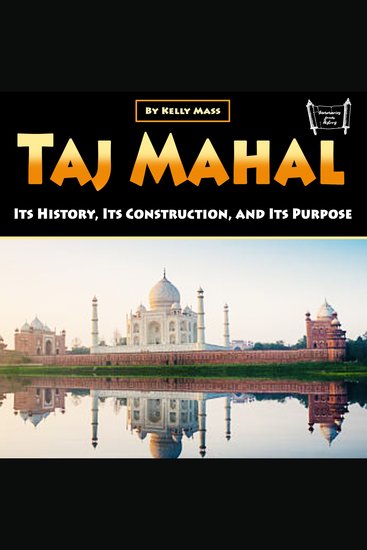
    The Taj Mahal stands as a breathtaking testament to Indo-Islamic architecture, celebrated as one of the most exquisite examples of this style in the world. Its origins are steeped in the emotional backdrop of its commission, reflecting the rich culture and history of the Mughal Empire, which wielded power over vast regions of India during the 16th and 17th centuries. The monument was commissioned by Mughal Emperor Shah Jahan in memory of his beloved wife, Mumtaz Mahal, who died during childbirth in 1631. Her passing left an indelible mark on the emperor, inspiring him to create a monument that would embody his love and devotion.While the majestic, domed marble mausoleum is the most iconic aspect of the Taj Mahal, the complex itself encompasses an extensive area of 22.44 hectares (55.5 acres) and comprises a variety of architectural features and landscaped gardens. Surrounding the central tomb are subsidiary tombs, a sophisticated system of waterworks, and the small town of Taj Ganji to the south. Additionally, a 'moonlight garden' lies to the north of the River Yamuna, designed to enhance the ethereal quality of the monument.
    Zum Buch
  • The Laws and the Land - The Settler Colonial Invasion of Kahnawà:ke in Nineteenth-Century Canada - cover

    The Laws and the Land - The...

    Dr. Daniel Rück

    • 0
    • 0
    • 0
    As the settler state of Canada expanded into Indigenous lands, settlers dispossessed Indigenous people and undermined their sovereignty as nations. One site of invasion was Kahnawà:ke, a Kanien’kehá:ka community and part of the Rotinonhsiónni confederacy. The Laws and the Land delineates the establishment of a settler colonial relationship from early contact ways of sharing land; land practices under Kahnawà:ke law; the establishment of modern Kahnawà:ke in the context of French imperial claims; intensifying colonial invasions under British rule; and ultimately the Canadian invasion in the guise of the Indian Act, private property, and coercive pressure to assimilate. What Daniel Rück describes is an invasion spearheaded by bureaucrats, Indian agents, politicians, surveyors, and entrepreneurs.This original, meticulously researched book is deeply connected to larger issues of human relations with environments, communal and individual ways of relating to land, legal pluralism, historical racism and inequality, and Indigenous resurgence.
    Zum Buch
  • The Eurasian Century - Hot Wars Cold Wars and the Making of the Modern Century - cover

    The Eurasian Century - Hot Wars...

    Hal Brands

    • 0
    • 0
    • 0
    We often think of the modern era as the age of American power. In reality, we're living in a long, violent Eurasian century. That giant, resource-rich landmass possesses the bulk of the global population, industrial might, and potential military power. Eurasia is a strategic prize without equal—which is why the world has been roiled, reshaped, and nearly destroyed by clashes over the supercontinent. 


    Since the early twentieth century, autocratic powers have aspired for dominance by seizing commanding positions in the world's strategic heartland. Offshore sea powers, namely the United Kingdom and America, have sought to make the world safe for democracy by keeping Eurasia in balance. America's rivalries with China, Russia, and Iran are the next round in this geopolitical game. If this new authoritarian axis succeeds in enacting a radically revised international order, America and other democracies will be vulnerable and insecure. 


    Hal Brands argues that a better understanding of Eurasia's strategic geography can illuminate the contours of rivalry and conflict in today's world. The Eurasian Century explains how revolutions in technology and warfare, and the rise of toxic ideologies of conquest, made Eurasia the center of twentieth-century geopolitics—with pressing implications for the struggles that will define the twenty-first.
    Zum Buch